
Description
Long Pond is a 1,780-acre great pond and largest natural pond in Massachusetts. Long Pond has an average depth of 6 feet, a maximum depth of 15 feet, and the waters are stained with a transparency of roughly 5 feet. The pond is fed by numerous small streams and drains to the Long Pond River (also known as the Snake River) into Assawompset Pond and eventually the Nemasket River. The 11 miles of shoreline are heavily developed with year-round homes. When on the water, keep an eye out for submerged boulders which can present boating hazards.
Recreational access
The Town of Freetown manages a concrete boat ramp and associated parking area with space for 47 trailers located off Route 18 in Freetown on the Southeast corner of the pond (get directions). A parking fee may apply on weekends and holidays. Shore access is restricted to areas adjacent to the ramp. Please contact town of Freetown for additional information, fee structure and/or restrictions pertaining to public access of Long Pond.
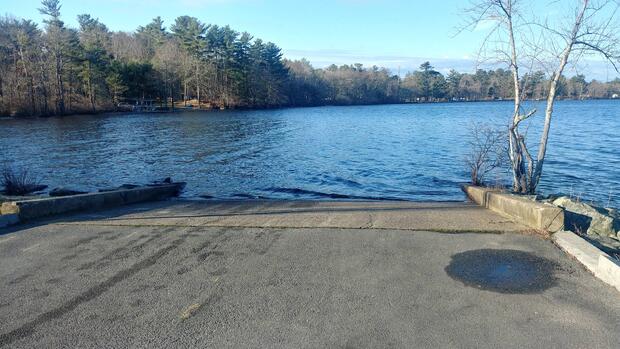
The concrete boat ramp located on the southeast side of Long Pond.
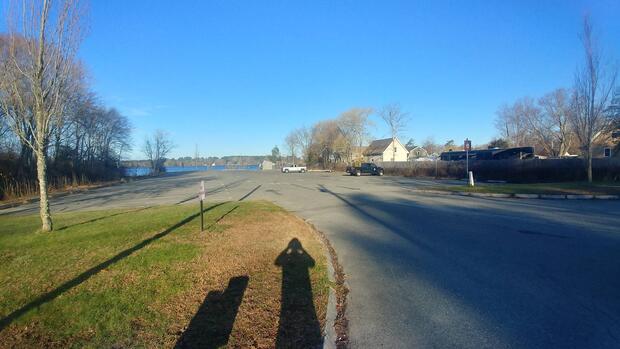
Associated parking for the concrete boat ramp of Long Pond.
Fish populations
The following fish species were found during MassWildlife surveys:
- largemouth bass
- chain pickerel
- yellow perch
- white perch
- bluegill
- pumpkinseed
- brown bullhead
- white sucker
- alewife
- blueback herring
- golden shiner
- tessellated darter
Note: A population of invasive Asian clams (Corbicula sp.) has been found in the pond and anglers should take extra care to empty live wells and remove aquatic plants from boats and trailers after leaving the pond.
Fishing
Long Pond is known for its largemouth bass population and is a popular site for bass tournaments. Fishing is also good for white and yellow perch. Long Pond has produced brown bullhead, chain pickerel, largemouth bass, black crappie, yellow perch, white perch, and sunfish that meet minimum sizes for recognition by the Freshwater Sportfishing Awards Program.
More fishing resources:
Stop aquatic hitchhikers
Prevent the transport of nuisance species; clean all recreational equipment. Visit ProtectYourWaters.net to learn more.