
Description
Long Pond is a 227-acre kettle hole and great pond with an average depth of 45 feet and a maximum depth of 111 feet which makes it one of the deepest ponds in the state. The water is transparent to roughly 18 feet and the bottom is mostly sand and rubble. Long Pond is fed by groundwater and an inlet from Little Long Pond and eventually drains via groundwater into Halfway Pond. The pond has 3.3 miles of shoreline which are heavily developed with year-round homes and summer camps.
Recreational access
The Department of Conservation and Recreation (DCR) manages a concrete boat ramp and parking area with space for 29 trailers located off Clark Rd (get directions). A 50 horsepower limit on outboard motors is enforced by the Town of Plymouth. Shore fishing is available in areas adjacent to the ramp or by wading the shore. Please contact DCR offices of Myles Standish State Forest for additional information, fee structure, and/or restrictions pertaining to public access of Long Pond.
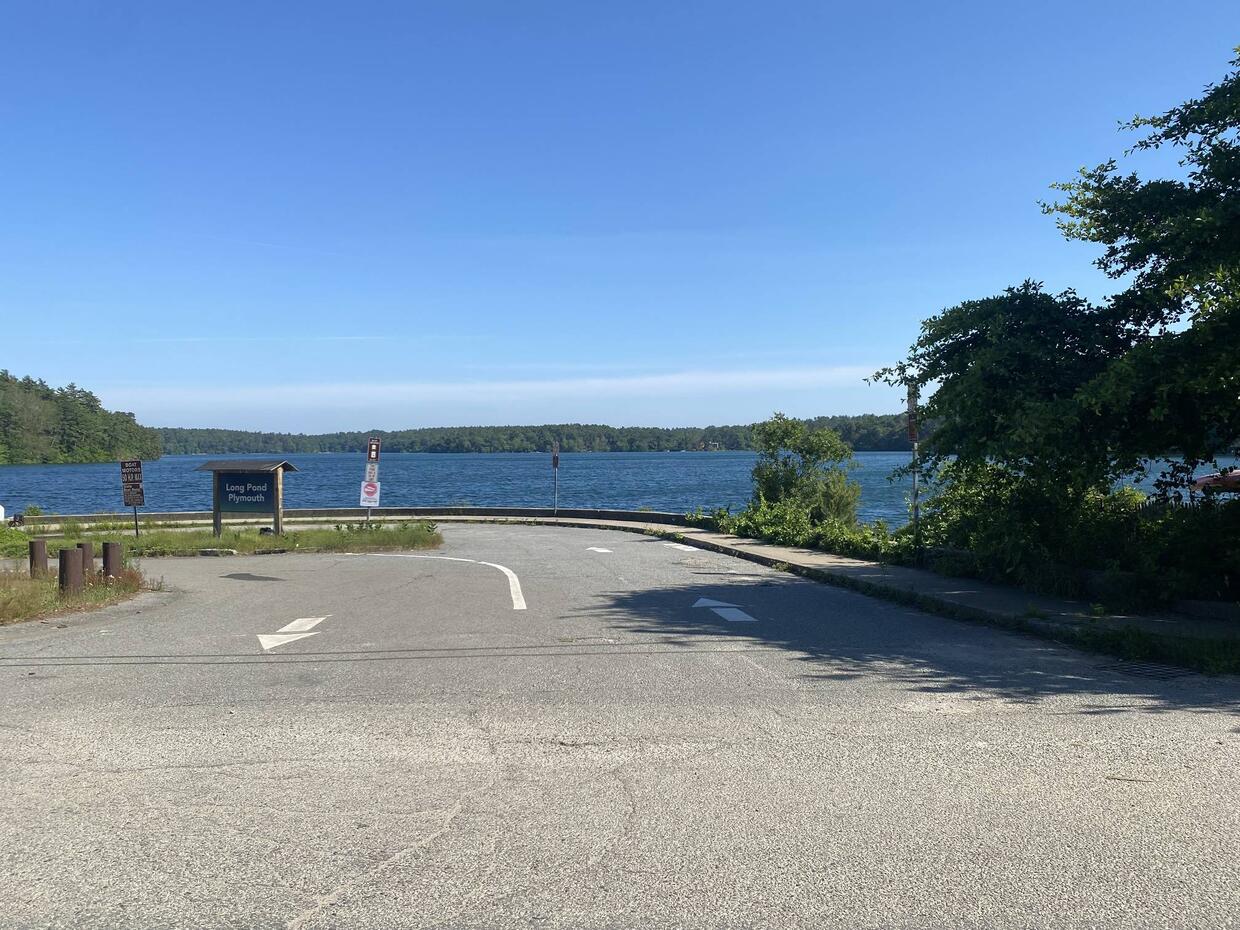
Entrance to the ramp at Long Pond.
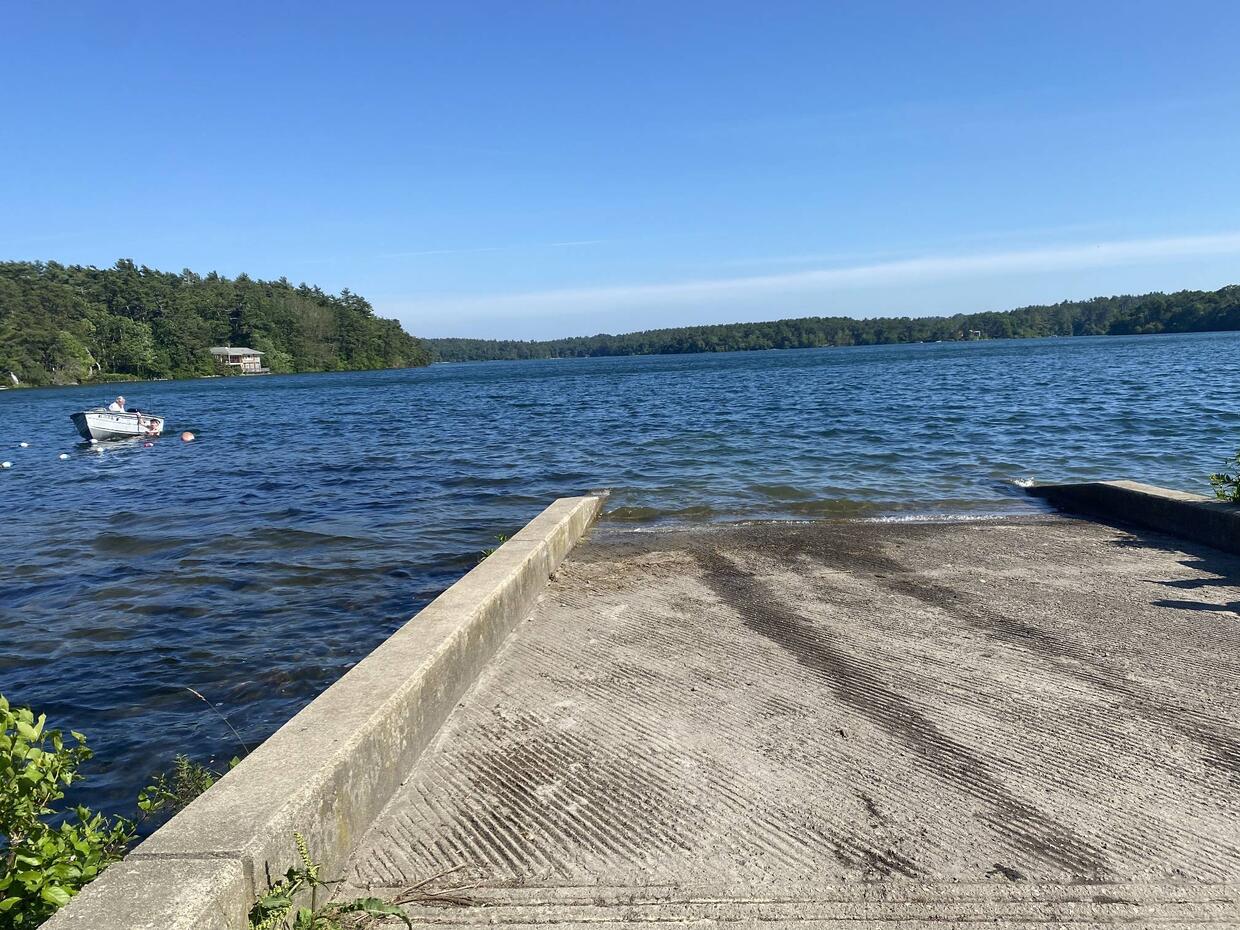
Boat ramp at Long Pond.
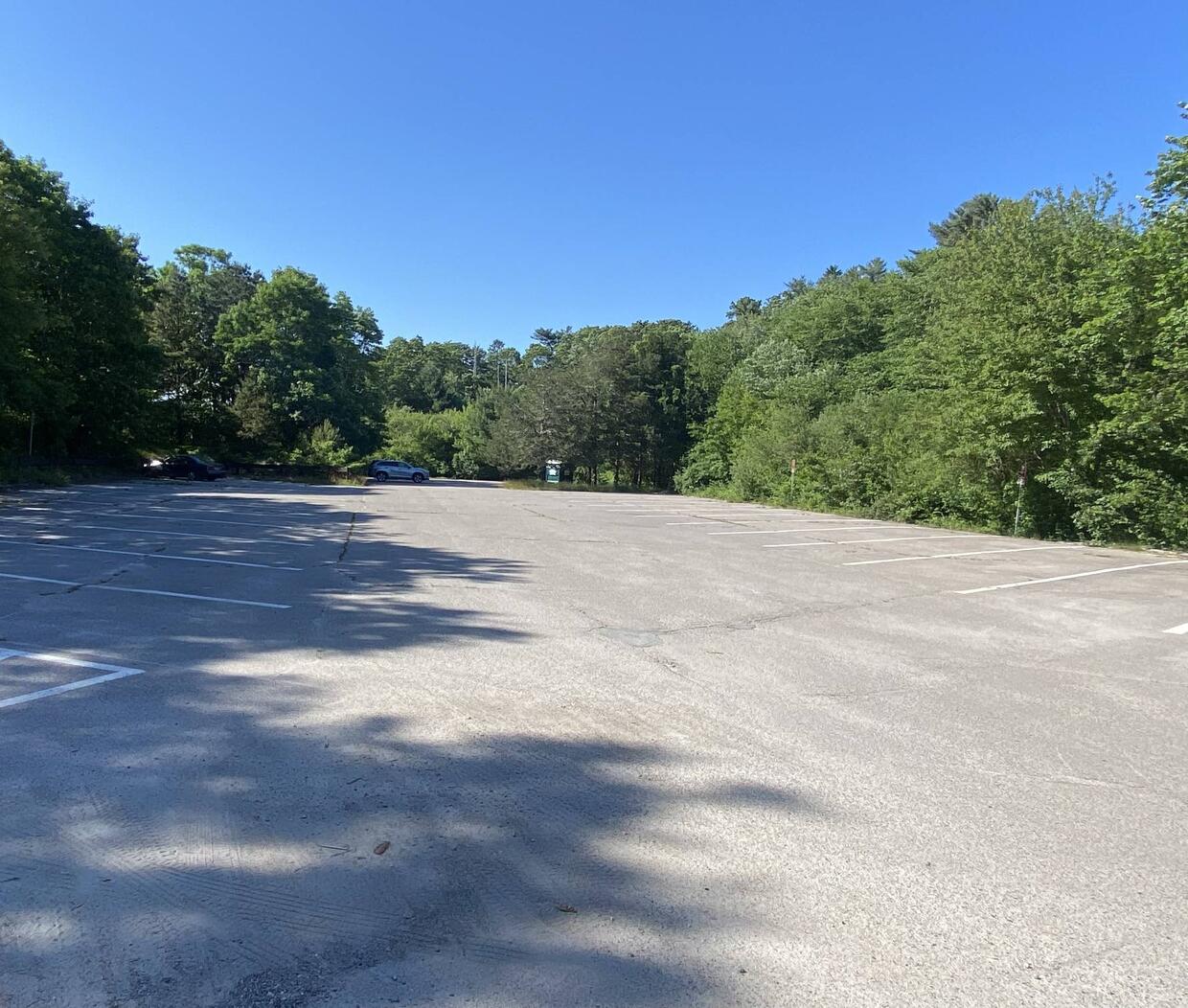
Parking for Long Pond.
Fish populations
The following fish species were found during MassWildlife surveys:
- largemouth bass
- smallmouth bass
- yellow perch
- white perch
- pumpkinseed
- bluegill
- brown bullhead
- banded killifish
- white sucker
- American eel
Long Pond is stocked each spring and fall with trout.
Fishing
Long Pond maintains a layer of cold oxygenated water throughout the warm summer months which enables trout to holdover for multiple seasons. Trout can be caught anywhere during spring and fall but retreat to 30-60 feet of water during summer. Large trout, particularly brown trout, are caught on a regular basis, mostly by trolling. While anglers tend to concentrate on trout here, don’t overlook the smallmouth bass. Long Pond has produced largemouth bass, smallmouth bass, chain pickerel, white catfish, black crappie, yellow perch, white perch, bullhead, sunfish, brook trout, rainbow trout, brown trout, and tiger trout that meet minimum sizes for recognition by the Freshwater Sportfishing Awards Program.
More fishing resources:
Stop aquatic hitchhikers
Prevent the transport of nuisance species; clean all recreational equipment. Visit ProtectYourWaters.net to learn more.