
Description
Lower Highland Lake is a 96-acre impoundment of the West Branch of the Mill River located off of Rt. 112 in Goshen. Lower Highland Lake has an average depth of 9 feet, a maximum depth 19 feet, and the bottom consists of rubble and rock with limited aquatic vegetation. The northern portion of the lake lies within D.A.R. State Forest, and its shores are completely forested. The southern shores are developed with residences.
Recreational access
The Department of Conservation and Recreation (DCR) manages a gravel ramp suitable for cartop boats at the end of a paved access road emanating from a DCR parking area (get directions). The parking area, which also serves the Upper Highland Lake beach, requires a fee during the swim season. Some parking is also available at the end of the access road to the launch. A short portage is required when water levels are low. Only electric motors are allowed. Shore fishing on Lower Highland Lake is possible in areas around the launch within the D.A.R. State Forest. Please contact the DCR offices of the D.A.R. State Forest for additional information, fee structure, and/or restrictions pertaining to public access of Lower Highland Lake.
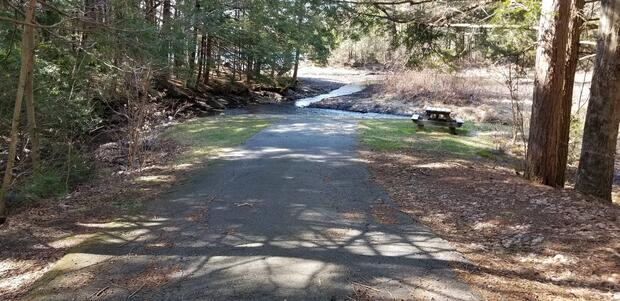
Cartop access at Lower Highland Lake.
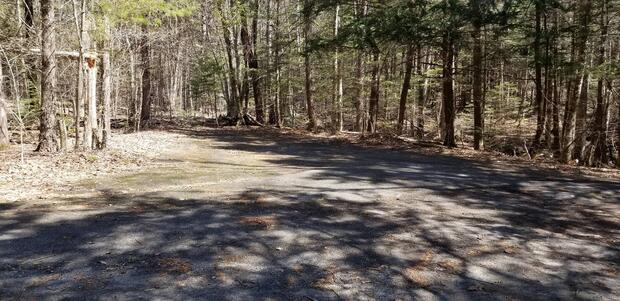
Parking at the end of the access road into Lower Highland Lake.
Fish populations
The following fish species were found during MassWildlife surveys:
- largemouth bass
- smallmouth bass
- chain pickerel
- yellow perch
- rock bass
- black crappie
- pumpkinseed
- bluegill
- golden shiner
Fishing
Lower Highland Lake is popular with largemouth bass anglers particularly during the ice fishing season. Its proximity to Upper Highland Lake is beneficial as a slow morning in one lake can translate to a better afternoon in the other. Lower Highland Lake has produced largemouth bass, smallmouth bass, yellow perch, black crappie, and sunfish that meet minimum sizes for recognition by the Freshwater Sportfishing Awards Program.
More fishing resources:
Stop aquatic hitchhikers
Prevent the transport of nuisance species; clean all recreational equipment. Visit ProtectYourWaters.net to learn more.