

How is climate change a public health concern?
This website provides tools and resources to help reduce the health impacts of climate change. Climate change is expected to cause:
- more extreme heat
- poor air quality days
- inland and coastal flooding
- sea-level rise
- poor water quality
- extreme storms
Use the climate change tracking tool to the left to view rainfall and extreme heat projections for any city or town in Massachusetts. Understanding extreme heat and rainfall projections can help municipal officials and communities plan adaptations to protect residents from extreme heat and flooding.
Historically, climate change has been considered an environmental concern; however, there are many ways climate change negatively impacts human health. Climate change can cause increases in temperature leading to more unhealthy heat events. Climate change creates additional hazards like poor outdoor air quality and more pollen in the air. Sea-level rise, flooding, and extreme weather can also result in both acute and chronic health impacts, including mental health. View the Conceptual Pathways for Climate Change Hazards and Health diagram for more information about the public health impacts of climate change.
What climate hazards are expected in Massachusetts?
A climate hazard is any threat to human health that results from climate change. In Massachusetts, the most serious climate-related health hazards result from:
- Increasing numbers of extreme heat (>90°F) days
- Increasing precipitation leading to flooding
- Increasing storm-related inland and coastal flooding
- Rising sea levels
Climate change is expected to increase the number of days over 90°F each year, which may increase hospitalizations for heat-related illnesses. Climate change may also alter existing patterns of environmentally-related diseases, such as asthma, and result in new health threats, such as tropical mosquito-borne illnesses.
How are people exposed to climate hazards?
Exposure to climate hazards depends on the type of hazard and where a person lives or works. For example, people who work outdoors, live in urban areas with limited greenspace, or lack air conditioning are more likely to experience heat illness during extreme heat events. People who live near rivers or coastlines that experience flooding may contact contaminated flood waters or experience respiratory impacts from mold growth in homes or buildings damaged by water. People anywhere in the Commonwealth may be exposed to extreme weather such as ice storms, hurricanes, or heavy rainfall.
Who is most vulnerable to climate change?
While climate change affects everyone, some people may be more at risk during climate events such as extreme heat events or severe storms. This may be due to where they live, their access to official government information, availability of resources to prepare and respond, and whether they already have health problems. These include:
- Children under 5 and people over 65
- Pregnant people
- People of color due to systemic racism
- People who speak little or no English, and who may not receive emergency messages in their native language
- People with medical conditions such as diabetes, heart disease, kidney disease, and mental illness
- People with compromised immune systems
- People with asthma, allergies, and other respiratory conditions
- People using medical equipment that requires electrical power or medications that require refrigeration
- People with disabilities
- People working or exercising outdoors
- People who live alone
Understanding vulnerability and identifying these populations within a community can improve climate change planning. During extreme heat, storms, or flooding, more public health and emergency assistance will be needed in areas with populations vulnerable to climate hazards. The DPH Climate Change Vulnerability Mapping Tool allows users to create custom maps that identify vulnerable populations and climate hazards, such as flood zones and storm surge zones.
How can Massachusetts prepare for climate change?
Actions taken to prepare for and minimize the effects of climate change are called climate adaptations. Adaptations reduce exposure and vulnerability to climate hazards in ways that protect both public health and built infrastructure. Climate adaptation strategies that protect public health include:
- Building flood-resistant emergency services complexes
- Raising awareness of ways to avoid contact and exposure to flood water
- Improving the baseline health of a community so that residents are more resistant to climate change hazards
How will climate change impact local health departments in Massachusetts?
Evidence indicates that the health effects of climate change will be felt most directly and severely at the local level. Local health departments will be key players in preparing for climate impacts and delivering health services to the public.
What is DPH doing about climate change and health?
DPH is promoting resilience to climate-related health impacts in communities throughout the Commonwealth. Climate and health preparation and prevention activities include:
- Promoting awareness of climate-related hazards and health risks in Massachusetts
- Providing technical assistance to communities seeking to protect residents from the health impacts of climate change
- Identifying and locating areas within municipalities where vulnerable residents live
- Identifying actions and strategies that promote strong, healthy and resilient communities
- Promoting understanding of climate change-related health impacts within state and local government agencies
- Coordinating with the ResilientMass Action Team and the Office of Climate Innovation and Resilience on climate and health issues
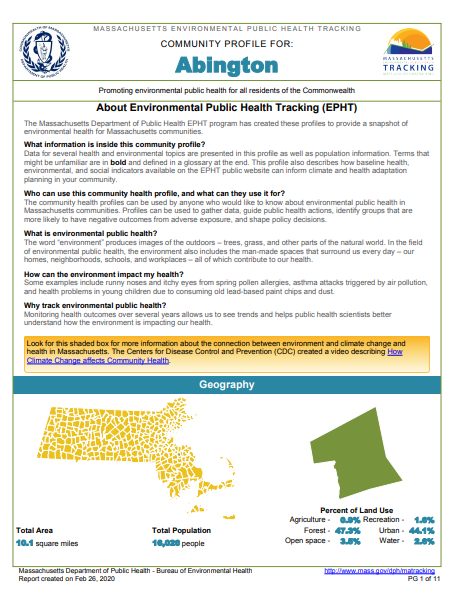
The DPH Climate Enhanced Community Profile provides information and resources on climate change hazards, vulnerable populations, and environmental health for each of the 351 cities and towns in Massachusetts. This profile was produced by DPH, supported by the CDC EPHT and CDC CRSCI (Climate Ready States and Cities Initiative) cooperative agreements.
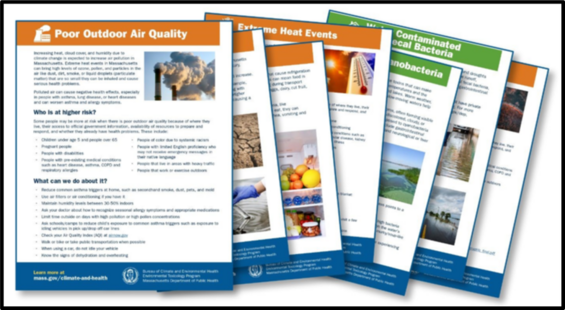
The Bureau of Climate and Environmental Health has published a series of fact sheets on climate and health. These fact sheets, available in 16 languages, provide basic information on preparing for and responding to health threats from climate change.
What state-wide activities support climate adaptation?
DPH contributed public health and climate change expertise to the 2022 Massachusetts Climate Change Asessment and the 2023 ResilientMass Plan, required under Executive Order 569 “Establishing an Integrated Climate Change Strategy for the Commonwealth.” This statewide plan combines the 5-year update of the FEMA State Hazard Mitigation Plan with climate change projections and adaptation information. Visit the ResilientMass webpage to learn more.
The Massachusetts Municipal Vulnerability Preparedness (MVP) program (created under Executive Order 569 and administered by the Executive Office of Energy and Environmental Affairs [EEA]), funds climate change assessment and adaptation planning workshops in cities and towns throughout the Commonwealth. Program information and community adaptation reports are available on the MVP website.
What are some examples of climate adaptations at the local level?
The MVP Action Grants administered by EEA provide support for communities to plan and design adaptations to climate change hazards, which also protect public health. A complete listing of funded projects and reports may be found on the program’s webpage.
The following examples show how communities used MVP grants to take actions to reduce the health impacts of climate change:
- Extreme Heat and Flooding: The city of Cambridge created a series of flyers and toolkits for residents and businesses on how to prepare for extreme heat and flooding from climate change
- Extreme Heat and Flooding: The town of Athol received a grant to reduce heat impacts and runoff issues in Lord Pond Plaza, a heavily paved area in the center of town
- Extreme weather: The town of Holden evaluated “green” electrical power backup systems to maintain the function of its municipal water systems during storm-related power outages
- Sea level rise: The city of Newburyport assessed the vulnerability of their wastewater treatment facilities to increased flooding risks during storms and due to rising sea levels
- Inland Flooding: The city of Northampton developed a plan to reduce climate change-related flooding risks using nature-based solutions
For other examples of local adaptation initiatives, see the MVP Action Grants.
Related links
Additional resources
Massachusetts
- Massachusetts Climate Change Adaptation Report: MA EOEEA Climate Change Adaptation Report with a chapter on “Human Health and Welfare”
- Office of Climate Innovation and Resilience: Link to the Massachusetts Office of Climate Innovation and Resilience webpage
- DCR Office of Climate Resilience: Information on activities by the Massachusetts Department of Conservation & Recreation to address climate change impacts
National Sources
- CDC Climate and Health Program: Examines the link between climate and health
- Intergovernmental Panel on Climate Change (IPCC): Leading international body created by the United Nations to provide policymakers with regular scientific assessments on climate change