
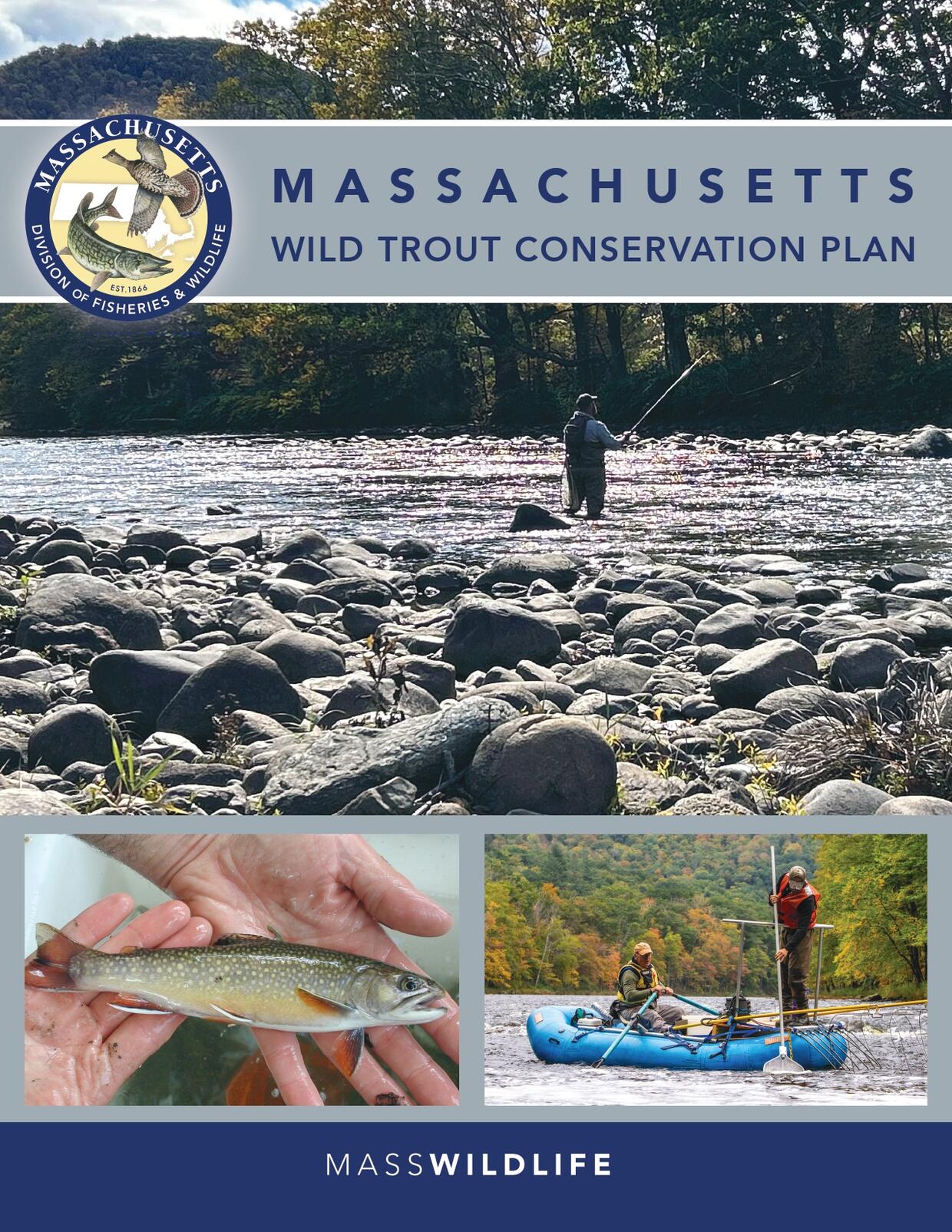
Despite being a small, densely populated state, Massachusetts is home to an abundance of coldwater streams and rivers that support vibrant populations of wild trout. These self sustaining populations of brook, brown, and even a few rainbow trout not only represent a critical component of the state’s natural heritage but also serve as indicators of ecosystem health and provide exceptional recreational fishing opportunities. Recognizing their ecological, recreational, and cultural significance, MassWildlife has organized, assessed, and summarized available data on wild trout populations in the Commonwealth. The result is the development of the Massachusetts Wild Trout Conservation Plan, which serves as a roadmap for managing, conserving, and restoring wild trout and their habitats. The four objectives of the plan are:
- Current status: Provide a comprehensive overview of the current state of wild trout populations and their habitats.
- Management objectives: Outline actionable goals for conserving and managing wild trout fisheries based on their biological and recreational potential.
- Research and monitoring: Identify additional research and monitoring needs to address knowledge gaps and refine conservation strategies.
- Public engagement: Make information about wild trout resources accessible to anglers, conservation organizations, government agencies, and the public to inspire greater engagement and stewardship.
This plan builds on decades of dedicated work by MassWildlife biologists and managers. It outlines strategic approaches for conserving coldwater habitats through land acquisition, public outreach and regulations, while addressing emerging threats such as climate change, water withdrawal, pollution, and habitat alteration.
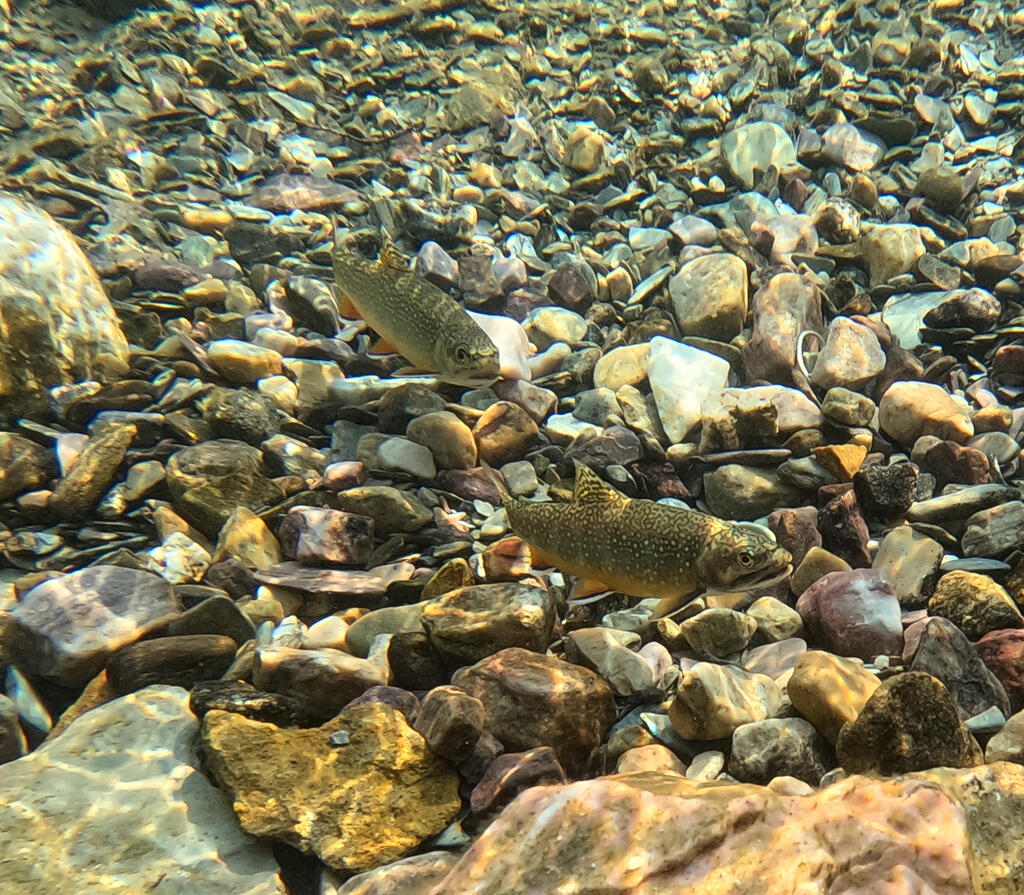
As of March 2026, there are 1,337 recognized wild trout streams in Massachusetts from the coast to the Berkshires, that range in size from the iconic Deerfield River to brooks only a large step wide. A key feature of the plan is the establishment of the Wild Trout Stream Classification System, which categorizes streams based on trout abundance relative to stream order and dominant trout species. This classification system aims to connect Massachusetts residents with the state’s rich trout resources and foster public support for conservation efforts.
Wild trout are at the heart of the state’s coldwater ecosystems, and their conservation is vital not only for maintaining biodiversity but also for safeguarding Massachusetts’ legacy of high quality fishing opportunities. This plan establishes a framework for adaptive management, ensuring that as new data emerge, strategies evolve to address changing conditions and threats. By conserving wild trout and the habitats on which they depend, this plan secures a future where these important fish continue to thrive in Massachusetts for generations to come.
Contact
Online
| Date published: | November 24, 2025 |
|---|