
Description
Norton Reservoir is a 589-acre impoundment of the Rumford River and is located immediately south of the intersection of Route 140 and interstate 495 in Norton. Norton Reservoir has an average depth of 4 feet and a maximum depth of 11 feet, and the bottom is hard sand and mud. The water is extremely fertile with transparency of less than a foot during certain times of the year. Aquatic vegetation is found throughout the reservoir.
Recreational access
The town of Norton manages several access points around the reservoir. The primary access is an unimproved sand boat ramp suitable for trailered craft with parking for 6 cars at the end of Juniper Lane (get directions). A second unimproved ramp suitable for trailered craft is located at the corner of Sunset Rd. and Evergreen Rd with parking for 3 cars (get directions). Cartop access is provided behind the Norton Parks department building off of Mansfield Ave. (get directions) and at the end of Alder road (get directions), parking is limited to a few spaces at each of these sites. Shore fishing is available at each launch and at the dam from parking at pull-offs of Reservoir Street (get directions). Please contact the town of Norton for additional information and/or restrictions pertaining to public access of Norton Reservoir.
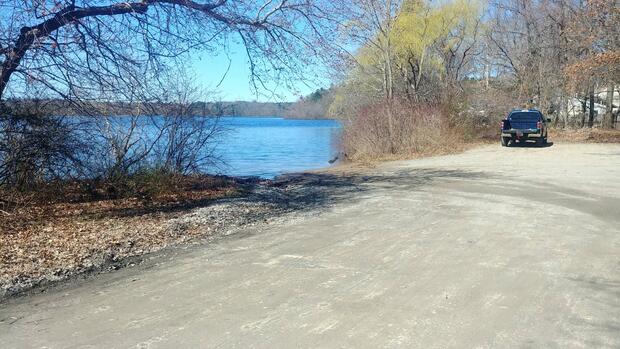
The primary sand launch at Norton Reservoir at the end of Juniper Lane.
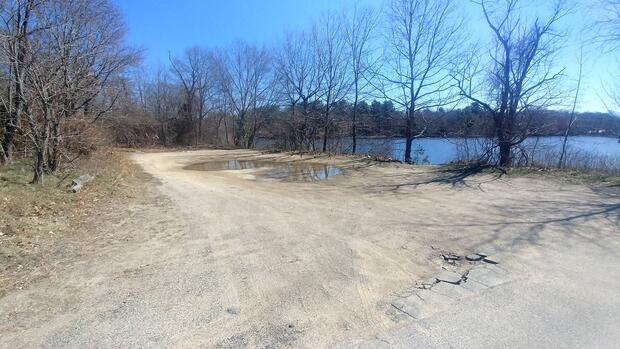
Parking at the end of Juniper Lane.
Fish populations
The following fish species were found during MassWildlife surveys:
- largemouth bass
- chain pickerel
- yellow perch
- white perch
- black crappie
- bluegill
- pumpkinseed
- brown bullhead
- white sucker
- American eel
- golden shiner
Fishing
Norton Reservoir has an excellent reputation for producing large chain pickerel and largemouth bass. Norton Reservoir has produced largemouth bass, chain pickerel, and brown bullhead that meet minimum sizes for recognition by the Freshwater Sportfishing Awards Program.
More fishing resources:
Stop aquatic hitchhikers
Prevent the transport of nuisance species; clean all recreational equipment. Visit ProtectYourWaters.net to learn more.