
Description
Paradise Pond is a 72-acre impoundment of Keyes Brook located roughly 4 miles from Princeton Center on Route 31 in Leominster State Forest. Paradise Pond has an average depth of 4 feet, a maximum depth of 7 feet and the waters brown in color with limited transparency. Aquatic vegetation becomes dense as the season progresses, and the shoreline is completely forested and undeveloped. Paradise Pond is popular with paddlers due to its natural setting and numerous islands, inlets, and coves which provide countless exploring opportunities.
Recreational access
There are numerous unimproved dirt access points suitable for shore fishing and launching cartop boats along Rt. 31 with roadside parking (get directions) (get directions). Watch out for the asphalt lip when pulling off the road; only non-motorized boats are allowed. Some access points are easier than others and may require a 20ft to a 100ft carry to get to the water. The Shoreline is also accessible via hiking trails within Leominster State Forest. Please contact the offices of Leominster State Forest for additional information, fee structure, and/or restrictions pertaining to public access of Paradise Pond.
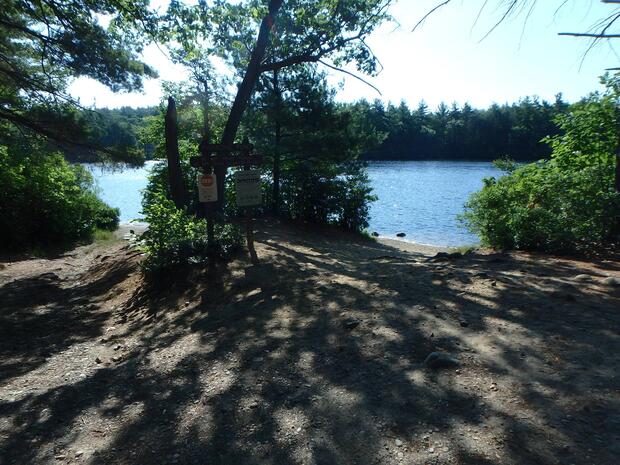
An example of an unimproved cartop launch into Paradise Pond off Rt. 31.
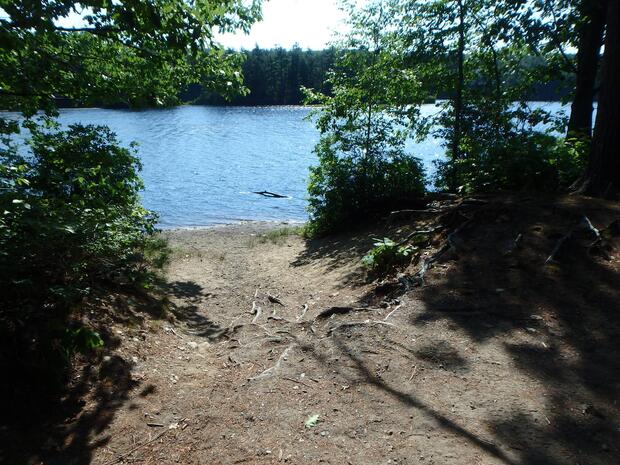
An example of an unimproved cartop launch into Paradise Pond off Rt. 31.
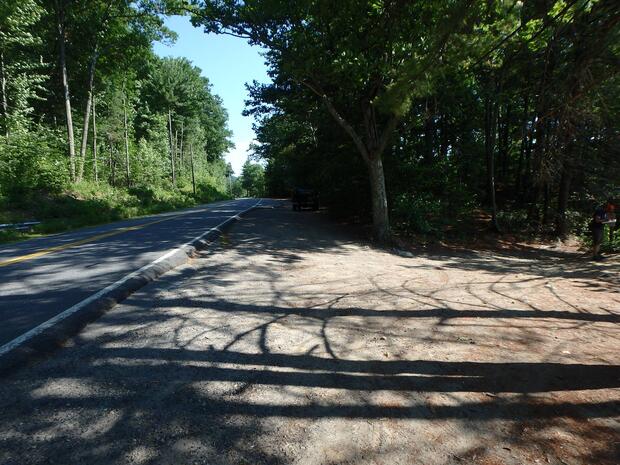
Parking alongside Rt. 31. Watch out for the asphalt lip when pulling off the road.
Fish populations
The following fish species were found during MassWildlife surveys:
- largemouth bass
- chain pickerel
- black crappie
- yellow perch
- bluegill
- pumpkinseed
- brown bullhead
- yellow bullhead
- golden shiner
Fishing
Paradise Pond and its natural setting is a great spot to spend an afternoon paddling and fishing. During winter, ice typically holds well here making it a popular ice fishing destination. Paradise Pond has produced largemouth bass and black crappie that meet minimum size for recognition by the Freshwater Sportfishing Awards Program.
More fishing resources:
Stop aquatic hitchhikers
Prevent the transport of nuisance species; clean all recreational equipment. Visit ProtectYourWaters.net to learn more.