
Group Goals and Objectives
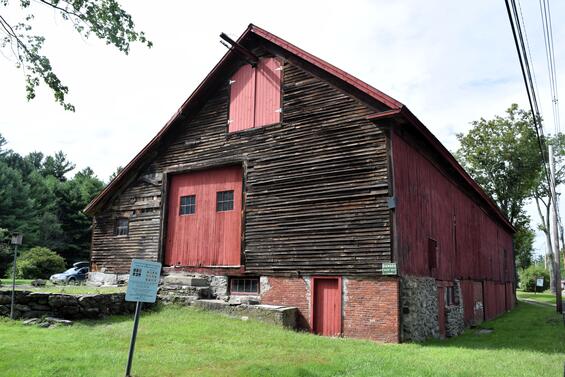
- Identify, prioritize and execute high quality preservation projects
- Identify and pursue preservation partnership opportunities
- Provide technical advice to DCR departments, DCR lessees and permittees and outside parties
- Advocate for reuse of historic buildings for DCR purposes, minimizing waste stream inputs and capturing embodied carbon
- Connect and network with other preservation organizations to hear community priorities, leverage resources and develop partnerships
Historic Rehabilitation and Reuse Planning
Finding new life for DCR’s underused historic properties through annual planning and strategic preservation initiatives, including:
- Historic Properties Program
An annual cultural resource fund guided by a comprehensive historic resource capital prioritization plan. - Vacant Historic Building Initiative
A database developed to assist DCR in documenting and promoting reuse opportunities for its dozens of underused but significant historic properties. - Deconstruction and Salvage Initiative
A pilot project establishing a formal process to salvage valuable building materials from historic building demolitions for reuse on DCR preservation projects.
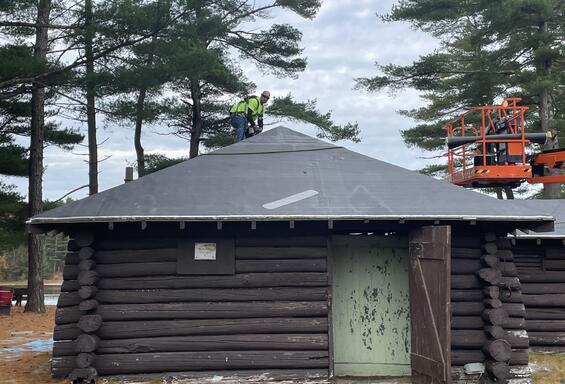
Roof stabilization at the Civilian Conservation Corps-built Fearing Pond Bathhouse (1936), Myles Standish State Forest, Plymouth, through the Historic Properties Program.
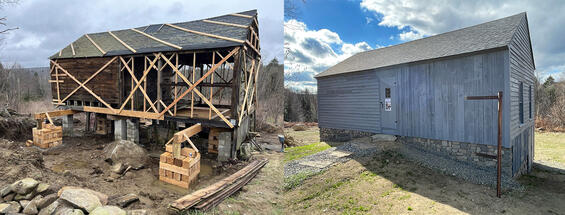
BEFORE and AFTER: The abattoir (slaughterhouse), c. 1830, at Spectacle Farm in Otis State Forest, Sandisfield, was preserved through the Historic Properties Program. Most of the materials used were salvaged from adjacent historic buildings as part of the Deconstruction / Salvage Initiative pilot.
Historic Curatorship Program
A public-private preservation partnership program that pairs DCR’s vulnerable historic buildings with outside investors who rehabilitate, maintain and manage them in return for a long-term lease.
Since the DCR’s Historic Curatorship Program’s inception in 1994, over $42 million in private funds has been leveraged toward the preservation of dozens of the state’s unused but historically significant properties. The program has become a national model, inspiring other public and private property stewards to add this innovative public-private partnership to their preservation toolbox.
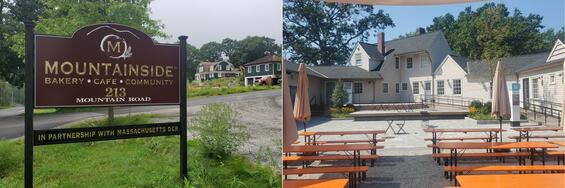
Left: Wachusett Superintendent's House (1903), preserved and revitalized by Mountainside Market through the Historic Curatorship Program.
Right: A former park headquarters, the Charles River Speedway (1899), has been preserved and converted into a vibrant public eating, dining and shopping hub in the Brighton neighborhood of Boston.
Preservation Partnerships Program
The Preservation Partnerships Program acts as a central hub for identifying, managing, developing, and supporting DCR partners who utilize historic buildings. The Program also actively seeks and develops new preservation and conservation-oriented partnerships while acting as a liaison for existing ones.Partners include non-profit groups, "Friends" groups, student service groups, vocational educational institutions, permittees, and lessees.
Note: The programs described above refer to DCR owned properties only.
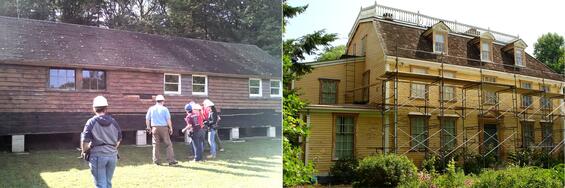
Left: Students from Blackstone Valley Technical High School learning how to repair historic clapboards on the Civilian Conservation Corps Administration Building, Upton State Forest.
Right: The Preservation Partnerships Program serves as a liaison to partners and stewards like the Daughters of the American Revolution to support preservation planning and projects at DCR owned properties, like the Dorothy Quincy Homestead in Quincy.
Contact
Online
Phone
Open M-F 9am-5pm