

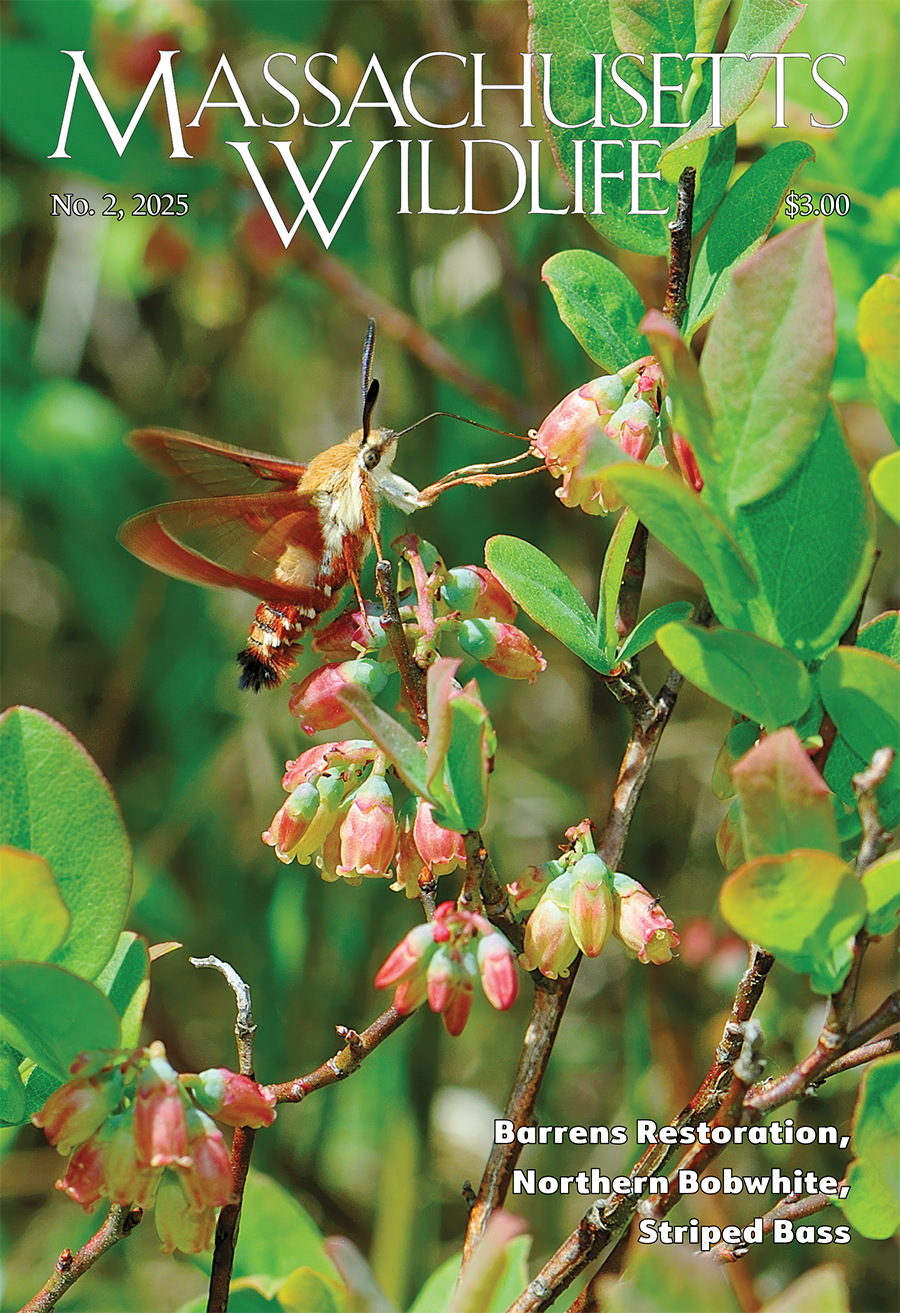
This article was originally published in Massachusetts Wildlife magazine in 2025.
Muddy Brook WMA is a large landscape within a long, deep valley between the Ware River to the east and the Swift River (whose historical channel now flows below the Quabbin Reservoir) to the west. The geological key to this landscape is its glacial history. Advancing glaciers carved out this deep valley from the surrounding bedrock during the last Ice Age, and, during the glacier’s retreat, gigatons of sand and gravel were distributed across the valley floor by the resulting glacial meltwater. Since that time, Muddy Brook has meandered across the valley floor for the past 10,000 years, supplemented and kept cold by countless seeps and upwellings of groundwater from the deep sand and gravel below.
This glacial influence is also the valley’s key ecological driver. The vast deposits of sand and gravel in the Muddy Brook Valley result in nutrient-poor and extremely dry, fire-prone conditions that can only be tolerated by a suite of plants and animals that are adapted to these harsh settings. The plant assemblages, or natural communities, associated with these landscapes are often referred to as barrens, a term originating from the fact that European settlers saw little value in these dry, harsh landscapes because they produced few crops and poor-quality timber. However, the negative connotation of the term barrens is misleading: From a regional perspective, barrens communities are biodiversity hotspots, supporting an enormous array of highly specialized plant and animal species that often do not occur anywhere else. In fact, nearly half of the terrestrial species listed under the Massachusetts Endangered Species Act (MESA) rely on fire-influenced natural communities like barrens for significant parts of their life histories.
Barrens communities are disturbance-dependent natural communities, meaning that they require periodic disturbance events to sustain their species composition and structure. Historically, the primary disturbance agent in barrens has been fire. Regularly occurring fire results in three broad impacts on a landscape. First, it reduces the presence of fire-intolerant species (generalists, like white pine) while promoting fire-tolerant species (specialists, like oak and pitch pine). Second, it maintains a more open vegetative structure on the landscape. And, third, regularly occurring fire continuously reduces the build-up of organic material on the landscape, keeping the soil naturally harsh, maintaining conditions that support these specialized plants and animals. In the absence of regular disturbance, fire-intolerant generalist species quickly become dominant, changing the species composition by overwhelming and ultimately replacing highly specialized plants and animals until the community is obscured and nearly unrecognizable.
Obscured barrens communities have come to be known as cryptic barrens, and the Muddy Brook project has confirmed that an obscured barrens community is not necessarily permanently lost. In fact, barrens communities are incredibly resilient and often highly restorable because of the life-history strategies of plants and animals that rely on barrens, known as barrens-obligate species. As seen in the plants and animals spotlighted below, these species have evolved to take advantage of times of high-quality habitat (when disturbance is prevalent), and adjust by either shifting to other barrens occurrences or quietly persisting during periods of poor-quality habitat (times between disturbance events when generalists have obscured the habitat).
The realization of Muddy Brook as a cryptic barrens community, followed by its subsequent restoration, is an important benchmark in regional biodiversity conservation. While barrens communities have long been identified as critical conservation targets, opportunities for their restoration had been limited by what was perceived as their restricted footprint on the landscape. Prior to the Muddy Brook project, barrens communities were thought to be mostly relegated to the coastal plain of New England, New York, and New Jersey. In Massachusetts, other historical—and very large—examples of inland barrens have long been recognized in the southern Connecticut River Valley, but most of the footprint of these occurrences have been lost in the development of cities and towns like Springfield, Chicopee, and Ludlow. Modern interior examples were considered extremely rare and limited to just a handful of sites, including Montague Plains, the site of the former Fort Devens, the Granby Sandplains, and scattered ridgetop occurrences. This is primarily because interior sites such as Montague Plains had persisted as relatively high-integrity barrens communities into the later twentieth century, while obscured sites like Muddy Brook were overlooked because they were no longer immediately recognizable as barrens communities.
Since the start of the Muddy Brook project, our understanding of cryptic barrens has greatly increased, and we now know that, historically, interior barrens communities played a more important role in the composition of the Massachusetts landscape than previously thought. These interior communities were not just a handful of relatively small, isolated exceptions, but instead occurred as a meaningful collection of sites that sustained their specialized species across the state and beyond. Considering the critical elements that barrens communities contribute to regional biodiversity, any additional opportunities to increase the current barrens footprint through the restoration of interior cryptic sites is very exciting. With the restoration of cryptic barrens now a part of the Commonwealth’s overall conservation strategy, this unique ecological legacy can once again persist in a sustainable manner. Thoughtful restoration of these communities will reestablish historical populations of otherwise rapidly declining rare and imperiled species; build resiliency so these populations can adapt in the face of ever-increasing environmental stressors; increase the genetic health of these species by reconnecting habitat patches across the landscape; and conserve expressions of barrens communities that are different from those found on the coastal plain or on interior ridgetops.
Restoration and Response
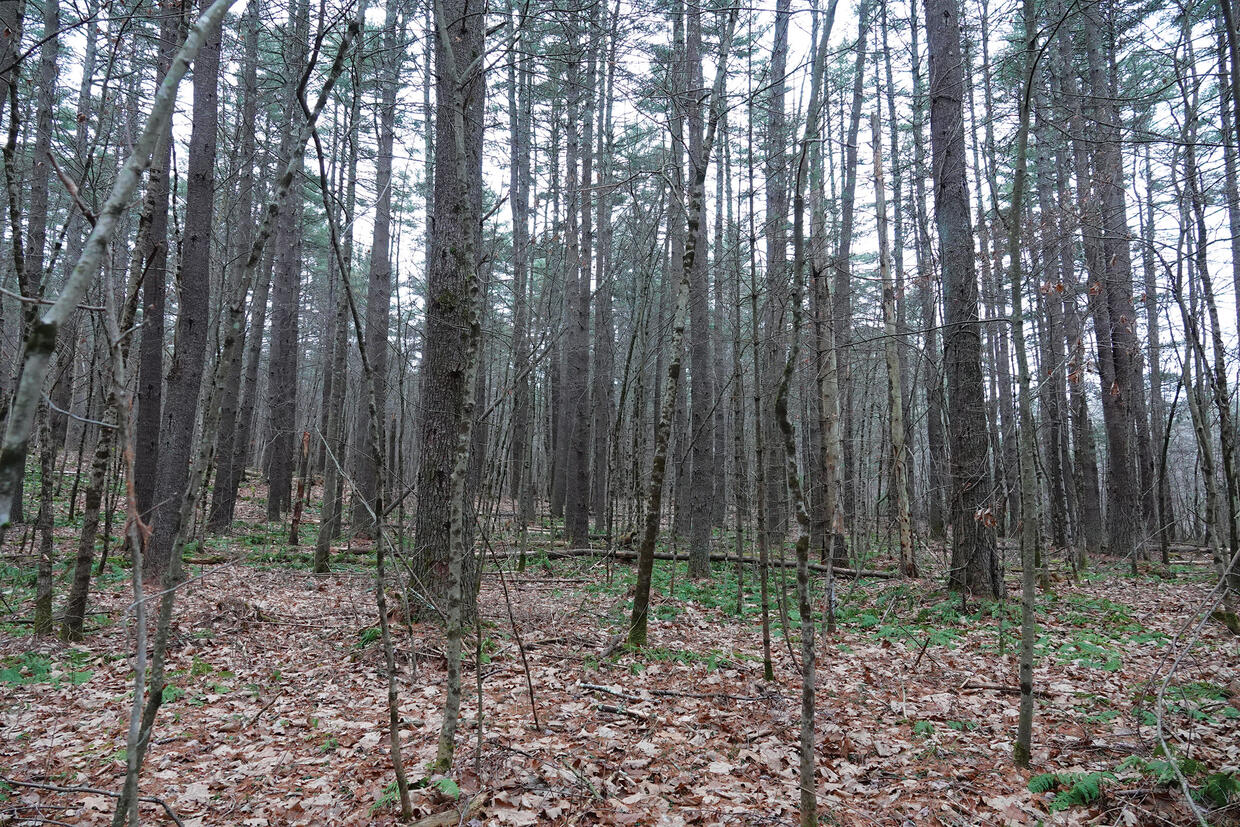
Prior to restoration, dense stands of white pine and other fire-intolerant tree species, present due to a lack of disturbance on the landscape, obscured the barrens community at Muddy Brook WMA.
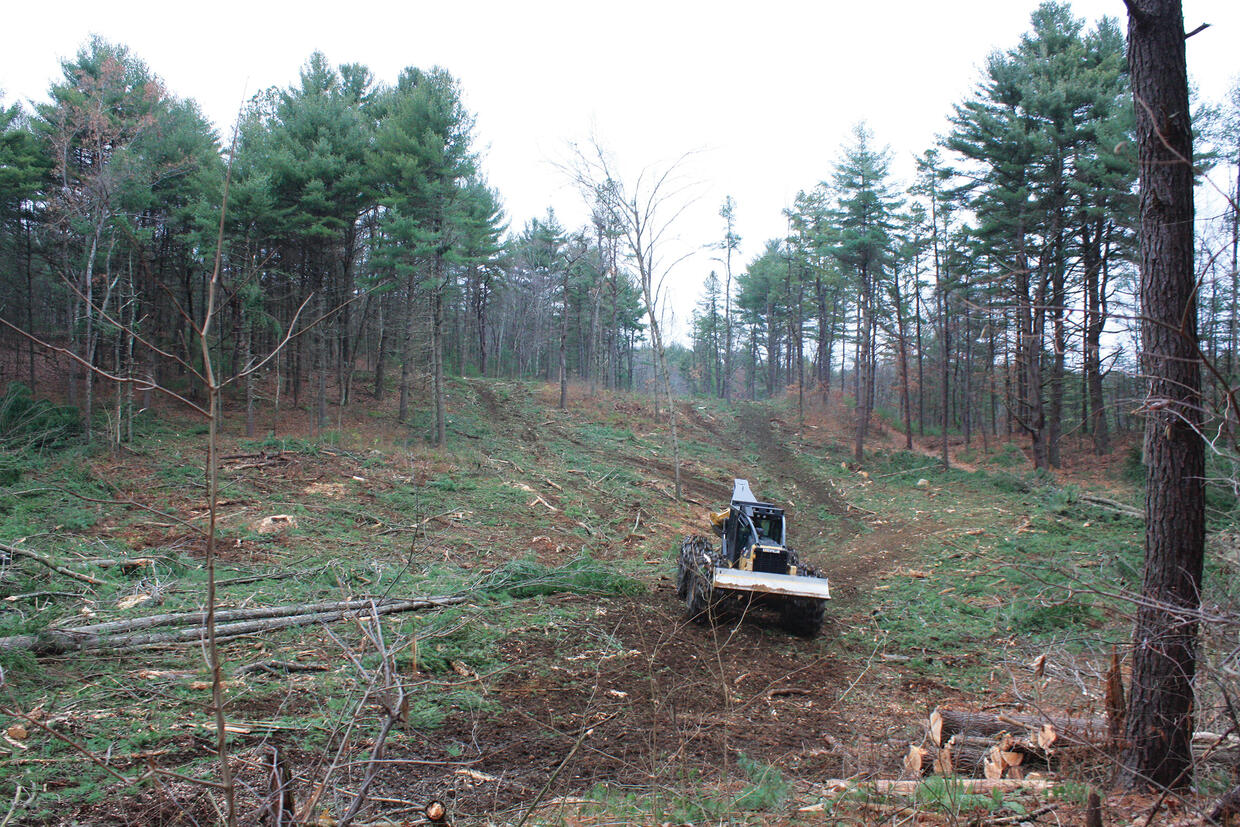
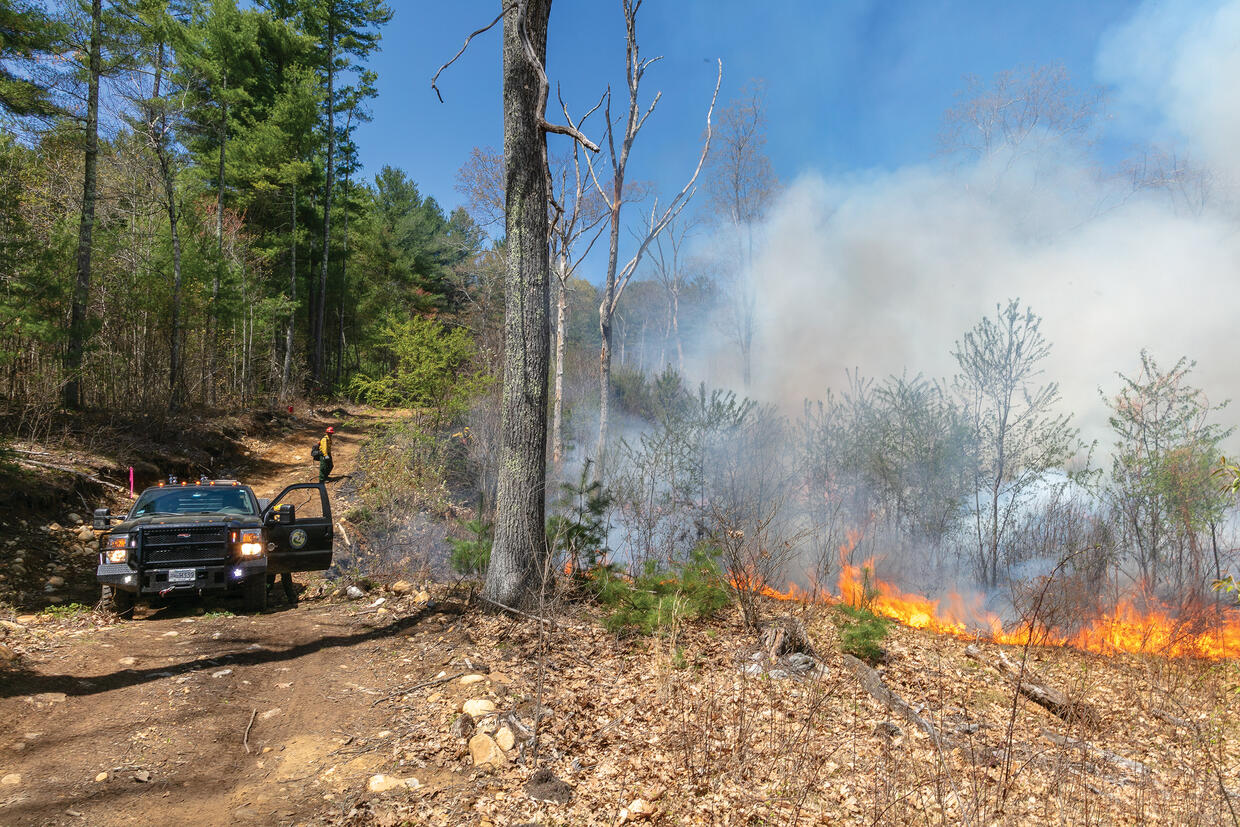
An initial timber harvest and the reintroduction of fire through periodic prescribed burns by MassWildlife staff and its partners are restoring the Muddy Brook Valley to a high-integrity barrens community.
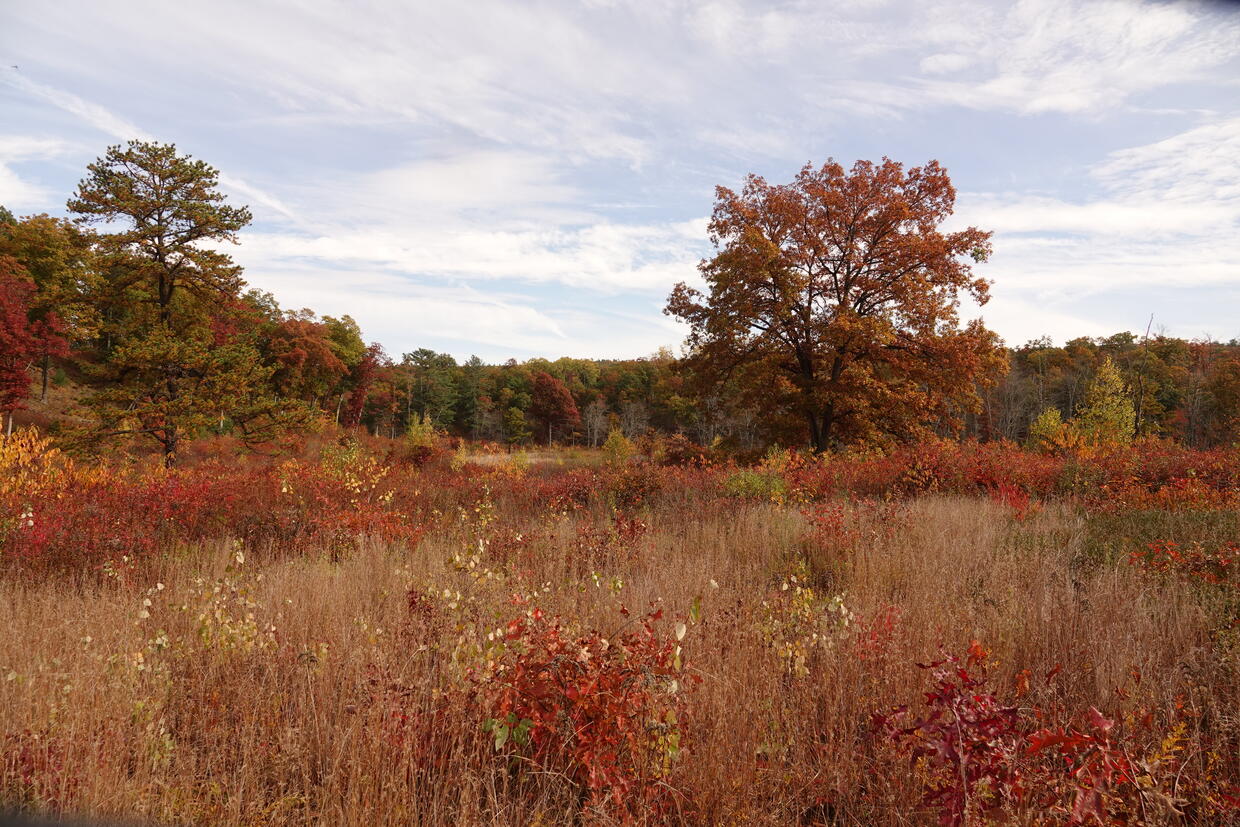
With initial restoration mostly complete and natural processes restored to the landscape, the ecosystems of the Muddy Brook Valley have quickly responded to emerge as one of the state's most important concentrations for rare, highly specialized and often imperiled species.
Muddy Brook was first identified in 2004 as a cryptic barrens site by MassWildlife staff who found clues in the widespread presence of key barrens community indicator species, such as pitch pine, scrub oak, native warm-season grasses, and large aggregations of low-bush blueberry. A closer look then revealed remnants of more specialized barrens obligates, such as New Jersey tea, bird’s foot violet, and wild yellow indigo. The presence of these species, especially on massive sand and gravel deposits embedded within a large matrix of oak woodlands, prompted deeper research that found accounts of the valley’s rich fire history, as well as historical records of other important barrens indicator species, such as wild lupine and whip-poor-will.
Once Muddy Brook was identified a cryptic-barrens community, MassWildlife and its partners spent ten years studying and inventorying the site, assessing its restoration potential, and documenting its current species and natural-community composition. During this pre-restoration period, a total of seven species were identified that are listed by the MESA, as well as seven species included on MassWildlife’s Natural Heritage and Endangered Species Program’s Plant Watch List. Interestingly, most of these fourteen species are associated with wetlands or waterways, and are not true barrens obligates; a testament to the quality and diversity of the wetlands and waterways of the Muddy Brook Valley. Documenting the presence of these species prior to restoration planning is critical because it ensures that restoration prescriptions are drafted in ways that are not detrimental to these species, but that will instead benefit them. This approach is a key to successful natural-community restoration: By focusing restoration efforts at the landscape level and tailoring all management prescriptions to each specific landscape feature present, the high-integrity communities that result will support a very wide array of wildlife and plants with very diverse ecological needs. In other words, landscape-scale restoration should never be an either-or scenario (in this case, barrens obligates versus non-barrens species). Instead, a successful restoration will end up supporting the complete biodiversity potential of the entire site.
After this decade of study, MassWildlife was ready to move forward with restoration at Muddy Brook. Generally speaking, the restoration approach in cryptic barrens is often a two-step process. Step one involves a timber harvest designed to remove generalist tree species like white pine and reset the composition and structure of the historical community. Keystone tree species in barrens communities, such as oak, pitch pine and hickory, are retained in various configurations, depending on restoration goals. Step two reintroduces periodic prescribed fire to the landscape.
Because Muddy Brook was one of the first large-scale restorations of a cryptic barrens in Massachusetts, there was no true reference site to help set expectations for what successful biodiversity conservation would look like post-restoration. Therefore, initial markers that measure both the scale and the integrity of the restored barrens natural communities were established. This is because a mosaic of high integrity representations of barrens communities is fundamental to supporting barrens obligate species. The expectation was that these communities would take about ten years to begin expressing a high level of integrity, at which point further success could be measured by the presence of highly specialized barrens-obligate species.
It did take about ten years with regular management for much of this treated landscape to begin expressing high-integrity barrens natural communities. However, one of the most impressive outcomes was the near-immediate response of barrens-obligate species, many of which established within just two years following the initial timber harvest. As of this writing, there is now a total of 20 MESA-listed species on Muddy Brook Wildlife Management Area, 13 of which have been established as a direct result of the restoration work, plus an additional 5 MESA-listed species that were reintroduced or translocated onto the site now that it has regained its barrens integrity. Further, the site now hosts 13 Watch List species, and a very long list of other uncommon, highly specialized barrens-obligate plants and animals. The following section will highlight the stories of a few of these species at Muddy Brook.
Plants
The ground is often bare immediately following the timber harvest that begins the restoration of a cryptic barren. This scarification is due to skidders dragging the cut timber across the landscape, which is a purposeful aspect of the restoration design. The goal of the skidding is to break up the duff (organic) layer that established over the sandy parent material due to years of fire exclusion. This scarification resets the substrate to the historically harsh barrens soils and exposes the long-latent seedbank that had been suppressed by the duff layer. Exposing this seedbank is critical because, once released from the duff, this seedbank will provide the groundcover that directly reflects the species composition when the barrens community was last functioning at high integrity.
This approach takes advantage of a common life-history strategy of many barrens-obligate plants: the ability to produce seeds that remain viable for very long periods of time, coupled with the required germination triggers of exposure to warmth from sunlight and direct contact with mineral soil. This evolved strategy fits perfectly into the cyclic nature of disturbance-dependent natural communities. Seeds will lay dormant for decades and only germinate when triggered by open, recently disturbed conditions. Conversely, they will not germinate in the absence of these triggers. Simply put, evolution has provided a pathway for these species to germinate only when survival—and more seed-setting—is likely.
In the case of Muddy Brook, the sedge community was the first to reestablish post-restoration, in June of the first growing season. This was true across all treatment areas, even in places where there was no existing groundcover prior to restoration because of a dense overstory of white pine and up to eight inches of accumulated duff. The last major disturbance to occur at Muddy Brook was a wildfire in 1942, suggesting that the seeds emerging following the 2014 restoration effort had likely remained dormant for a half-century or more.
It’s always rewarding to witness that first surge of sedges during the growing season following the initial timber harvest, but this is often just the beginning. By the second growing season, other barrens-obligate species became more noticeable as they grew taller and began producing flowers. This is when it became apparent that a true barrens community was reestablishing on the site. At Muddy Brook, an amazing diversity of barrens-obligate plants began to recolonize the landscape from the seedbank. This included nearly 50 native disturbance-dependent species that were not present on the site immediately prior to the initial restoration. Of these, there were 4 endangered, 1 threatened, 1 special concern, and 4 watch list species. Further, other barrens-obligate species that had still been growing on the site prior to restoration went from just a few individuals to becoming dominant once again. A few specific examples of this response are as follow:
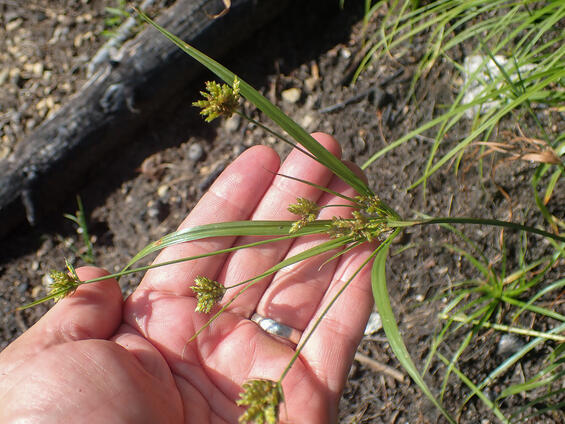
Over 400 rare Houghton's flat-sedge (Cyperus houghtonii) are now present at Muddy Brook WMA following restoration, which included prescribed fire.
Houghton’s flat-sedge (Cyperus houghtonii): Endangered: Houghton’s flat-sedge is critically imperiled in Massachusetts and vulnerable (in the IUCN Red List) across its global range (eastern North America). It is a disturbance-dependent, fire-influenced grass-like plant that occurs in harsh, sandy areas and exposed bedrock ridgetops. Considering the degraded pre-restoration conditions at Muddy Brook, the possibility of Houghton’s flat-sedge historically occurring at Muddy Brook hadn’t been considered prior to the restoration because the plant is so rare and so specialized. However, it’s now clear that this species was once prominent here. In 2022, two individuals of Houghton’s flat-sedge were observed growing in an open, scarified section of a sandy restoration area that just two years prior was covered in dense white pine and suppressed by several inches of duff. Then, in May of 2023, MassWildlife conducted the first prescribed fire in this section, and by the following July, a stunning 400+ plants were seen where the fire had skimmed off the last layer of duff and exposed additional latent seeds. Muddy Brook WMA now supports by far the largest extant population of this species in New England, and, subsequently, several additional sub-populations were discovered in other treated sections of the WMA.
Few-flowered nut-sedge (Scleria pauciflora var. pauciflora) and Bush’s sedge (Carex bushii): Endangered: These two species were the first state-endangered species found pioneering from the seedbank following the initial restoration. Though both species are disturbance-dependent and thrive on fire-influenced landscapes, they were not on the post-restoration radar at Muddy Brook due to their regional rarity and high habitat specificity. However, now that the site has undergone restoration, the post-restoration conditions where each of these species occur strongly reflect the expected habitat of these species and suggest past conditions. The population of Bush’s sedge is expanding, in part because it has experienced several prescribed fires since its discovery. The population of few-flowered nut-sedge is not yet expanding, but prescribed fire is scheduled at the nut-sedge site in 2025, after which the population is expected to also begin to increase.
Bicknell’s geranium, Nantucket shadbush and mountain fly-honeysuckle: Plant Watch List: These three species are grouped because they represent three different aspects of life-history adaptations on fire-influenced landscapes.
Bicknell’s geranium (Geranium bicknellii) is a classic seedbank species that thrives immediately following disturbance. At Muddy Brook, this species was not growing anywhere on the pre-restoration landscape, but immediately following the initial timber harvest, this rare species quickly emerged in the most-heavily scarified areas and several hundred plants soon flowered and dropped thousands of seeds. Interestingly, within three years, Bicknell’s geranium was no longer seen growing on the landscape, suggesting this is likely a primary successional species that emerges only in short bursts to repopulate the seedbank.
Nantucket shadbush (Amelanchier nantucketensis) is also a species of fire-influenced landscapes that was not observed growing at Muddy Brook prior to restoration. This small, woody plant produces comparatively few seeds, and instead may have persisted on the landscape as rootstock supported by stunted, shade-repressed growth. This is a strategy employed by several other deep-rooted barrens-obligate species such as scrub oak and low-bush blueberry. Nantucket shadbush is now setting seed once again across the Muddy Brook Valley.
Mountain-fly honeysuckle (Lonicera villosa) is a rare (in Massachusetts) native woody shrub associated with peaty wetlands that experience periodic fire events. While the presence of fire in wetlands can be an overlooked element when considering the greater fire-influenced landscape, fire can be just as important in wetland situations as it is in terrestrial settings. The wetlands of Muddy Brook support a large and widespread population of mountain-fly honeysuckle with well over 1,000 individuals, and these plants have likely held on during the years of fire exclusion because their associated wetlands have sustained open canopies for a longer period than the adjacent uplands. However, few of the plants flowered until an experimental tree-cutting to release the understory from the wetland forest canopy was initiated. Now that these plants are once again blooming, getting prescribed fire into their associated wetlands is expected to reduce thatch on the otherwise peaty substrate, and a new surge of germination should follow.
Birds
Unlike plants, which are unable to simply move away from habitats in decline, birds can shift across a landscape in response to ever-changing conditions and continually find suitable breeding habitat. The rapid colonization of specialized breeding birds at Muddy Brook is not only a testament to this amazing ability, but is also a measure of the quality of the early successional habitat available on the post-restoration landscape.
Eastern whip-poor-will: The eastern whip-poor-will is a nocturnal bird that, amid a precipitous 60-year decline, was listed as a Massachusetts Species of Special Concern in 2011. Its once near-ubiquitous call on moonlit summer nights had fallen mostly silent across the state, save for a handful of strongholds associated with managed barrens communities like the Myles Standish Complex, Montague Plains WMA, and Manuel Correllus State Forest. Whip-poor-wills were last present at Muddy Brook in the 1980s, and, as the site shifted away from a barrens community, its whip-poor-will calls faded with it. Then, in 2016—just two years after the initial timber harvest—the first whip-poor-will arrived at the site, announcing itself with its classic nocturnal song. Additional calling birds arrived in 2017, and, by the summer of 2024, over 20 whip-poor-will territories were documented in the restoration area, making Muddy Brook now one of the largest inland congregations in the state.
Common nighthawk: Common nighthawks are one of the rarest breeding birds in Massachusetts, with the last documented nest in a natural setting occurring in the barrens of Myles Standish State Forest in 1982. With such a status, it was unexpected when a male nighthawk began performing evening courtship displays over the recently timber-harvested restoration area at Muddy Brook. This unusual activity began in late May 2016, and soon this regularly displaying male was joined by a female in its courtship flights. Common nighthawk pairs have now been observed in courtship flights from May through June every breeding season since 2016. In fact, nighthawk behavior was particularly interesting in 2023, when a courting pair was observed immediately shifting their display flights from a large, sedge-dominated section of the site to a still-smoldering unit following a prescribed fire, indicating their strong affinity for recent disturbance. And though nesting hasn’t yet been confirmed at the site, the annual presence of displaying pairs is a strong indication of the quality of this barrens habitat.
The songbird suite: The steady decline of North America’s songbirds is one of the most concerning and readily documented issues associated with biodiversity conservation in Massachusetts. The reasons for this decline are many, with the loss of suitable breeding habitat being a primary factor. This is especially true for species dependent upon early successional habitats, as these landscapes are either lost to development or once-diverse sites like Muddy Brook shift to closed-canopy, generalist communities. Fortunately, these birds have an innate ability to locate and pioneer into new early successional habitats as soon as they are available, and the restoration work at Muddy Brook has established an incredible suite of otherwise-declining songbirds. Surveys indicate that many now-abundant early successional breeding birds like prairie warbler, field sparrow, brown thrasher, blue-winged warbler, and eastern towhee were either absent from this landscape or only occurring in trace numbers prior to restoration. And, just as important, this recovery of early successional birds did not happen at the expense of interior-forest nesting birds. Surveys show that interior-forest birds were either not present in the dry, white pine-dominated forest of Muddy Brook prior to restoration (e.g., wood thrush and black-throated blue warbler), or that they simply continued breeding in the restored oak woodlands (e.g., scarlet tanager and eastern wood pewee). Additionally, post-fledgling studies conducted at Muddy Brook and similar sites show that early successional habitats play a critical role in supporting interior-forest species during the post-nestling dispersal phases of their lives.
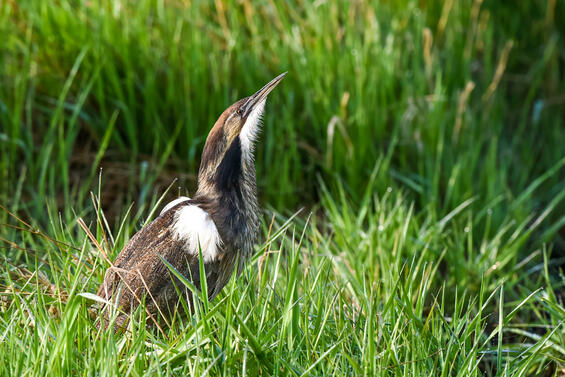
Muddy Brook is now one of the few places in Massachusetts where you can sit in one location and hear American bittern (pictured above), eastern whip-poor-will, Wilson’s snipe, and dozens of American woodcock simultaneously.
American bittern: Endangered: American bitterns are heron-like birds that require very large patches of open marsh for nesting sites. They are rare in Massachusetts and listed as endangered. The American bittern is not a barrens-obligate species, but the Muddy Brook project does offer an excellent example of how targeted landscape-level habitat management can have important impacts on specialist species. American bitterns are area-sensitive, meaning their habitat patches must be large, open, and unfragmented. With this in mind, a particularly large sedge marsh on Muddy Brook that appeared suitable for American bittern was regularly surveyed in the ten-year period prior to restoration. These initial surveys, which continued several years after the restoration began in 2014, did not turn up American bittern in this marsh. Then, after several years of evaluation, a border of red maple along the edge of this sedge marsh was removed in the winter of 2019 with the specific purpose of increasing the perceived size of the marsh for the area-sensitive American bittern. By the spring of 2021, the first American bittern was documented setting up a territory here, and it has been observed displaying here each year since. Further, this marsh now supports other breeding marsh birds, such as Virginia rail, Wilson’s snipe, and marsh wren, as well as a robust population of the locally rare mountain-fly honeysuckle in the area of the maple removal.
Muddy Brook is now one of the few places in Massachusetts where you can sit in one location and hear American bittern, eastern whip-poor-will, Wilson’s snipe, and dozens of American woodcock simultaneously.
Insects
Insects are fundamental elements of biodiversity and ecosystem health due to their great number of species, highly specialized life histories, their important interrelations with other species, and the critical ecosystem services they provide. Not only is their presence an important indicator of the natural community’s integrity, but specialized insects in restored barrens communities show the incredible resilience of these fascinating species.
Bees: Since 2011, MassWildlife has partnered with the University of Massachusetts to conduct ongoing research to better understand how natural community restoration plays a role in native bee conservation. The documented response of native bees to the Muddy Brook restoration was impressive and almost immediate. Pre-restoration bee surveys totaled just 36 bee species at the site, while post-restoration surveys in 2016—two years following initial timber harvest—documented a total of 103 bee species: a 286% increase. And by 2024, 179 of the state’s approximately 400 bee species have been recorded at Muddy Brook, a five-fold increase. Many of these species are barrens specialists that are otherwise rare and rapidly declining across the region. The recovery of the bee fauna at this site is a great example of how highly functional natural communities will support a much greater diversity of species.
Perhaps the best example of the impacts of natural community restoration on bee fauna is the colonization of macropis oil bees at Muddy Brook. There are two species of macropis oil bees in Massachusetts, and both are uncommon and of conservation concern. Macropis oil bees are highly specialized, as each species relies upon just one or two species of native loosestrife (Lysimachia) for nectar and to provide the oils necessary to support the walls of their underground nest chambers. Following the initial restoration at Muddy Brook, the renewed presence of native loosestrife in large amounts, coupled with access to bare ground for nesting, offered the perfect conditions to support these bees, and, very quickly, both species colonized the site. This, in turn, set the stage for the Threatened macropis cuckoo bee (Epeoloides pilosulus) to arrive at Muddy Brook. This extremely rare bee—which was thought to be globally extinct as recently as 2002—is a highly specific brood parasite that will only lays its eggs in the nests of macropis oil bees. The presence of the macropis cuckoo bee at Muddy Brook demonstrates how natural community integrity is the foundation for multiple levels of ecological interaction and specialization.
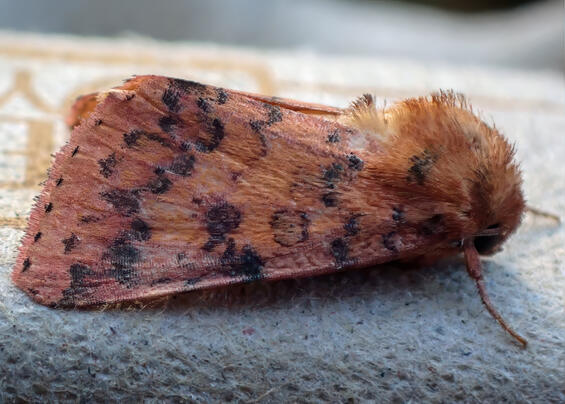
Orange sallow moth (Pyrrhia aurantiago)
Moths: Moths are excellent indicators of natural community integrity because many species are highly specialized in their habitat needs. Surveys have documented over 1,500 species of moths in the Muddy Brook Valley since 2005, many of which are associated with fire-influenced natural communities, including six species listed under MESA. None of these MESA-listed species were detected on the WMA prior to large-scale restoration efforts, and most of them had likely been lost to the WMA over the years due to habitat degradation. But, as post-restoration conditions improved, those that were lost recolonized.
One example is the rare orange sallow moth (Pyrrhia aurantiago), a specialist of fire-influenced natural communities whose larvae only feed on the flowers, seeds, and leaves of false foxgloves (Aureolaria spp.). Neither the orange sallow moth nor the false foxgloves had been documented in the Muddy Brook Valley prior to restoration, but false foxglove had been present at the WMA historically, as revealed when a small population emerged from the seedbank in 2019. By the summer of 2023, this population had grown to over 1,000 plants, and, that fall, the orange sallow moth had found the plants, most likely colonizing from a small population about five miles away. This is one example of how restoring a cryptic natural community led to the reestablishment of a long-dormant plant, in turn allowing recolonization of an associated rare species from an adjacent population. This post-restoration scenario has also occurred for the other state-listed moth species at Muddy Brook WMA; an affirmation of the importance of not only restoring individual sites, but also the importance of ensuring that there are multiple examples of these natural communities across the landscape in close enough proximity that recolonization is possible.
Conclusion
From its inception, one of the primary goals of the Muddy Brook project was to use this landscape as a demonstration site to inform regional biodiversity conservation efforts. As a result, the Muddy Brook Valley has provided a model for how to identify cryptic barrens on the landscape, a template for assessing their restoration potential, and has informed a restoration process for returning these areas to their full ecological function. The Muddy Brook project has also highlighted just how high that restoration potential can be, as well as the important role that inland barrens once played in supporting regional biodiversity. For broad-scale biodiversity conservation to occur, places like Muddy Brook should never be considered standalone features that simply warehouse elements of unusual biodiversity. Instead, these places need to be complemented by the surrounding landscape in ways that amplify their role and allow for the exchange of biodiversity between them. This concept is critical to achieving large-scale landscape resilience, which, in turn, is fundamental to realizing broad and truly sustainable biodiversity conservation.
Fortunately, the lessons of Muddy Brook are now radiating out from the site as restoration of the state’s remaining cryptic barrens is gaining momentum. Many projects are now underway, taken on by a diverse set of conservation interests, including MassWildlife’s sister agencies on both the state and federal level, numerous non-profit organizations, many municipalities, and private landowners. And most of these projects are already showing results similar to what was observed in the early days of the Muddy Brook restoration. Each scenario is unique, but basic to all is the need to understand the landscape from a natural-community perspective and then to conduct restoration in ways that take advantage of the community’s natural resiliencies. And the more restoration opportunities are realized, the greater is the landscape’s ability to sustain these gains throughout a constellation of complementary sites. In retrospect, it feels as though the state’s inland cryptic barrens had reached a nadir in the early 2000s in terms of their condition, their contribution to regional biodiversity, and their potential to even be recognized, let alone restored. A lot has happened in that short period, and it’s exciting to watch these places emerge from their obscurity before they were lost forever.
About the Author:
Chris Buelow, MassWildlife’s Senior Restoration Ecologist, has worked for the past 25 years assisting with the conservation of the Commonwealth’s full array of biodiversity. Much of this work has focused on the targeted restoration of the state’s most specialized natural communities with the goal of rebuilding sustainable regional populations of otherwise rare and vulnerable species. He is a ninth-generation resident of Hardwick where, from an early age, the Muddy Brook Valley played an important role in informing his overall conservation ethic. Over the past 20 years of planning and working on the restoration of the Valley, he has especially enjoyed witnessing the long arc of its cultural and ecological histories reemerge, as well as seeing the lessons taken from this work inform restoration across the region.