
Description
South Watuppa Pond is a 1,460-acre enlarged great pond, which has an average depth of 14.5 feet and a maximum depth of 23 feet. The pond receives water from North Watuppa Pond, Sawdy Pond via Stony Brook Stafford, and the Bleachery Ponds Pond via Sucker Brook and several other small tributaries. The pond's outlet is the Quequechan River which feeds into the Taunton River and eventually Mount Hope Bay. Transparency is low at three feet and aquatic vegetation is scant. Algae blooms in the summer often color the water green while the rest of the year the water is tea colored. The bottom is composed of rubble, rock, and muck, and there are numerous rubble-strewn shoals. The shoreline is heavily developed with residential and commercial buildings.
Recreational access
The city of Fall River manages a two-lane concrete boat ramp at the end of Jefferson Street on the northwestern shore (get directions). Parking is available for approximately 50 vehicles and shore access is possible on state owned land around the ramp. Please contact the city of Fall River for additional information, fee structure, and/or restrictions pertaining to public access of South Watuppa Pond.
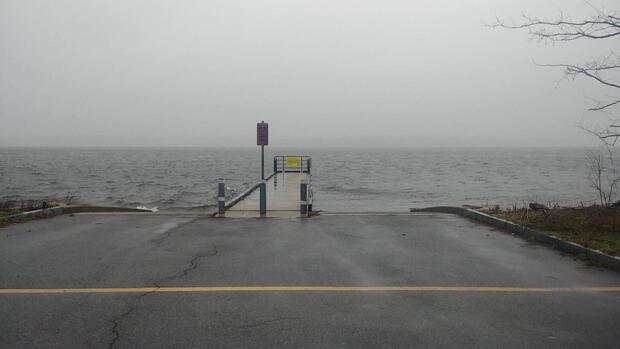
The City managed two lane concrete boat ramp at South Watuppa Pond.
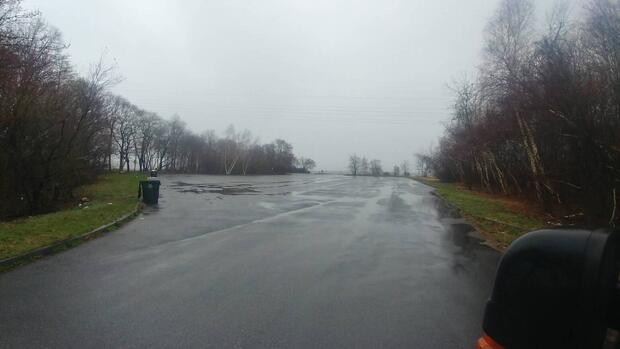
Parking lot at boat ramp of South Watuppa Pond.
Fish populations
The following fish species were found during MassWildlife surveys:
- largemouth bass
- smallmouth bass
- chain pickerel
- yellow perch
- white perch
- black crappie
- bluegill
- pumpkinseed
- brown bullhead
- white sucker
- golden shiner
- banded killifish
Fishing
South Watuppa Pond is a popular site for bass tournaments and contains large populations of both smallmouth and largemouth bass. Look for smallmouth over rocky shoals and steeper sections of the shoreline. Yellow perch, black crappie, and sunfish are also abundant. South Watuppa has produced largemouth bass, chain pickerel, bullhead, black crappie, white perch, and sunfish that meet minimum sizes for recognition by the Sportfishing Awards Program.
More fishing resources:
Stop aquatic hitchhikers
Prevent the transport of nuisance species; clean all recreational equipment. Visit ProtectYourWaters.net to learn more.