
This FY24/25 project established and fostered connections between individuals, local community-based groups, and local government that result in sustained public advocacy for Newburyport's Climate Resilience plan.
- This page, Newburyport MVP Action Grant: Collaboration & Capacity Building, is offered by
- Executive Office of Energy and Environmental Affairs
Community Overview
Newburyport is a coastal city on the North Shore, uniquely defined by its scenic geography, rich maritime history, and strong community spirit. The population of the city of is 18,250. According to the 2020 census, Newburyport has two Environmental Justice blocks, which encompass two census tracts identified based on income. Additional climate-vulnerable communities include residents of Plum Island and other flood-prone areas, as well as elderly and youth populations.
The city sits at the mouth of the Merrimack River, bordered by the Atlantic Ocean, and features a historic downtown waterfront that serves as the civic and commercial heart of the community. Newburyport’s geography makes it both beautiful and vulnerable. The city is part of three watersheds and has significant exposure to coastal and riverine flooding, with over 20% of its area in the FEMA 1% flood zone. The city’s infrastructure and economy are closely linked to its natural systems, requiring proactive planning for climate resilience.
Video: Newburyport MVP Action Grant (FY24) - Community Collaboration & Capacity Building
Skip this video Newburyport MVP Action Grant (FY24) - Community Collaboration & Capacity Building.Grant Details
- Year: FY24/25
- Project Type: Type 3: Construction and On-the-Ground Implementation
- MVP Region: Northeast
- Grant Amount: $191,377
- Match Amount: $79,261
- In-Kind source: In-Kind Services
- Municipal Lead: Planning & Development
MVP Core Principles Addressed
While this project addressed multiple MVP Core Principles, it primarily focused on:
- Conducting robust community engagement
- Pursuing innovative approaches through comprehensive community collaboration and capacity building.
Project Goals
Goal 1: Employing nature-based solutions
- Many projects used nature-based solutions, including:
- Pay-What-You-Can Seedling Sale
- Expanded gardens supplying food banks
- Dune grass restoration and tree planting
- Education on invasive species identification and native species promotion
- Garden tours to highlight drought and extreme weather resilient planting
- Expanded pollinator gardens with public education, working specifically with affordable housing organizations
- Programming on stormwater management and water conservation
- Raised garden beds to increase self-reliance and sustainability
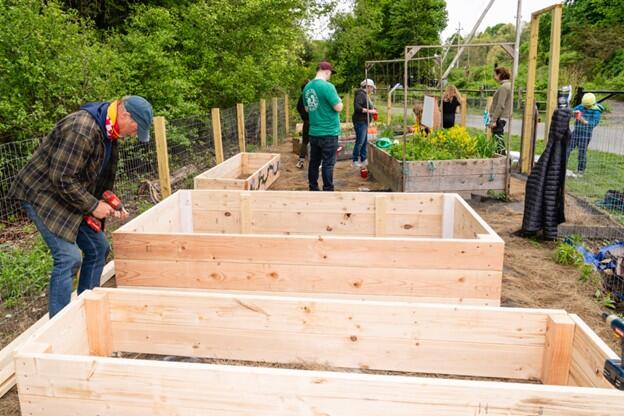
Goal 2: Improving equitable outcomes for and fostering strong partnerships with EJ and other Climate Vulnerable Populations
- Provided gift cards to EJ residents attending Community Forums
- Nature-based projects directly in or adjacent to EJ blocks
- Conducted events in accessible EJ locations
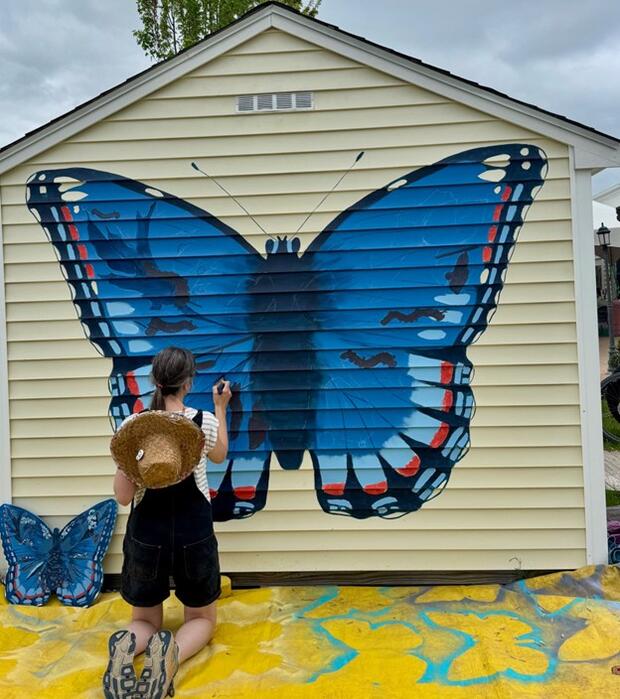
- Housing Authority climate mural project involving youth and seniors
- Educated EJ residents on local climate vulnerabilities and advocacy strategies
- Strengthened environmental health knowledge through youth STEM programs and water quality education
Goal 3: Providing Regional Benefits
- Water supply protection education benefited residents of neighboring towns as Newburyport supplies water to these communities
- Community Partner projects attracted participants from across the region through events like film festivals, concerts, educational programs, and nature-based solution demonstrations
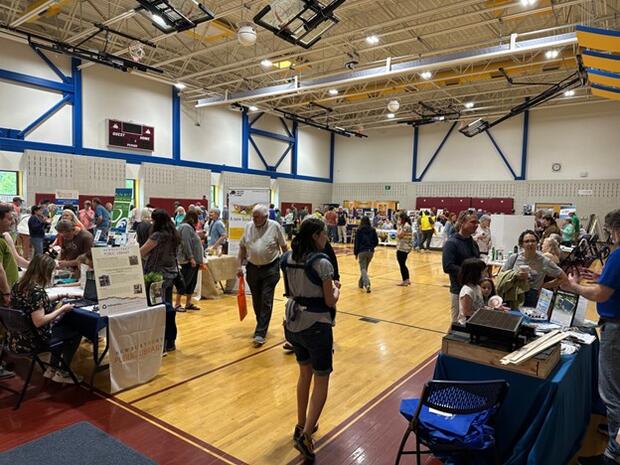
- The capstone Green Expo 2025 was specifically designed as a Lower Merrimack Valley event that successfully engaged participants about climate resiliency, energy, and waste management.
Project Outcomes
- Funded 26 local organizations to deliver community climate action projects, including:
- Arts Action Projects
- Youth Engagement Projects
- Ecosystem Services Projects
- Built Environment Projects
- Alternative Transportation Projects
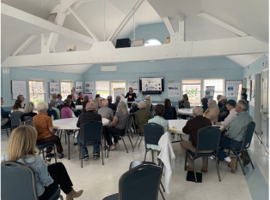
- Delivered 4 community forums to educate residents on climate risks and solutions
- Conducted dialogues with city staff, Mayor, City Council members, and board/commission members
- Host capstone regional event in Spring 2025
- Develop communication strategy including creation of logo, social media, StoryMaps, video montage, and public calendar of events
Partners and Other Supporters
- Creative Action Institute and UMASS Boston/UHI
- UMASS/Collins Center
- Theater in the Open
- Port Parks Alliance
- Friends of Newburyport Trees
- Mass Audubon
- Museum of Old Newbury
- Plum Island Foundation
- Nourishing North Shore
- Newburyport Choral Society
- Tinker Haus
- Greenscapes
- Newburyport Chamber Music
- Housing Authority
- PEG Center for Arts and Activism
- Newburyport Documentation Film Festival
- Earth Port Film Festival
- Forever Green 2024
- Jeanne Geiger Crisis Center
- Newburyport Schools
- Pollinator Powerworks
- Climate café
- Saphire Events
Lessons Learned
- Effective community engagement requires consistent and continual effort and must be built into every city project as a necessary part of the process.
- Geographic Proximity Matters: The project was more successful engaging residents in flood-prone areas by holding forums directly in their neighborhoods and engaging neighbors as community liaisons.
- Local Champions Work: Using community members from within specific populations as liaisons proved more effective than external outreach.
- Identifying and engaging with external experts was critical to the success of the project.
Challenges
- The project required approximately 1,500 volunteer hours over two years.
- EJ and priority population engagement proved more challenging to achieve than initially anticipated. The team hopes that continued efforts through the MVP 2.0 program will improve reach within EJ populations.
- Partner Capacity Variations: Three community partner projects were not completed due to various internal challenges such as regulatory approval barriers, timeline coordination and organizational issues, and administrative follow-through gaps.