- Division of Fisheries and Wildlife
Media Contact
Media Contact, MassWildlife
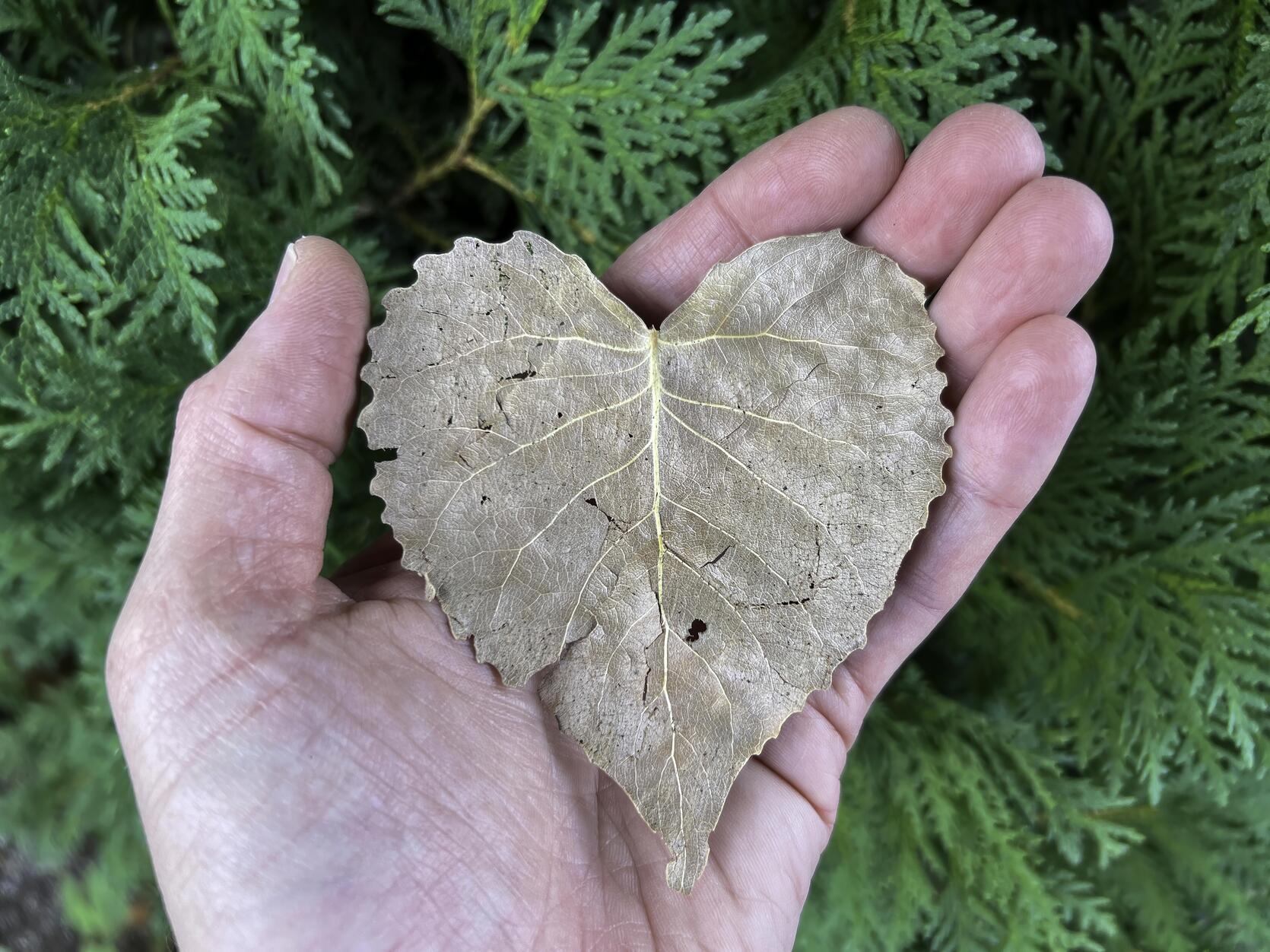
The chilly weather of February makes it the best month to get cozy on the couch and dive into a book or movie. And who doesn’t love getting swept up in storylines with complicated relationships? Nature has its love tropes too! From fiery awakenings to soulmate pairings and holiday flings, here are five classic relationship dramas playing out in the forests and fields of Massachusetts.
Soulmates: the orange sallow moth & the false foxglove plant
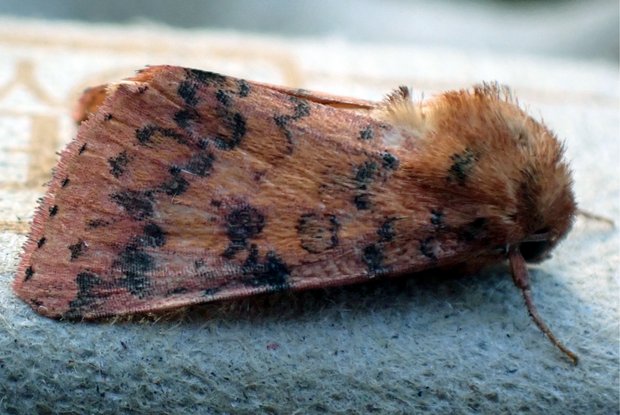
In Massachusetts, the orange sallow moth is a rare sight, turning up only where the conditions are just right. Listed as a species of special concern, this moth’s larva (caterpillar) feeds exclusively on a single host plant—its “soulmate”— the false foxglove. Naturally, the orange sallow moth is only found in fire-influenced habitats where false foxglove is present. Learn more about how MassWildlife fosters this epic love story.
The holiday romance: red foxes
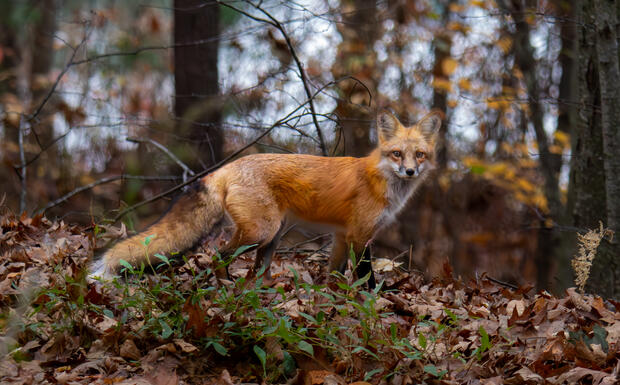
With a mating season that stretches from January to February, red foxes make full use of the Valentine’s Day holiday. This time of year, you can often hear red fox romance in the air as they make a number of unique sounds, including a high-pitched and slightly unsettling scream to attract mates. These vocalizations are sometimes mistaken for a person screaming, a “ferocious” fisher, or a distressed animal, but rest assured, this is a normal part of a red fox’s winter pursuit of passion. Following mating season, red fox kits are born in March and April and start to emerge from their dens 4–5 weeks later in late April and May.
The sleeping curse: wild lupine & fire
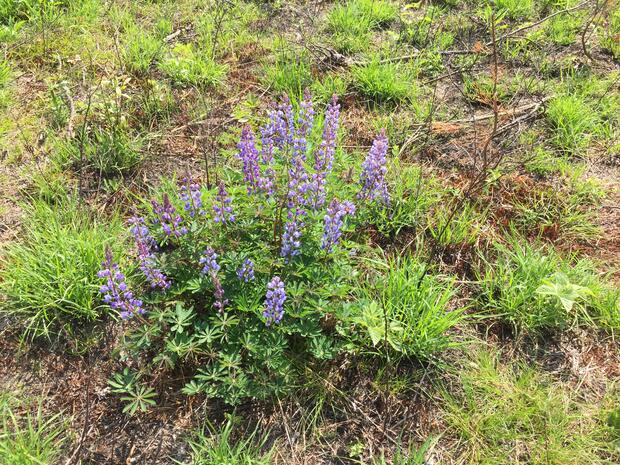
You have likely noticed that many animals slow down during the winter, and most plants are dormant for many months of the year. But, you might be surprised to know that the seeds of some plants can wait decades in the soil, until conditions are just right, before germinating. Like sleeping beauty, some plants will stay dormant until they are “kissed” by fire. Wild lupine, a native purple perennial in the pea family, has declined by ~90% in the US due to habitat loss and fire suppression. When fire is re-introduced to an area with wild lupine seeds in the soil, the heat breaks through the tough seed coat and triggers germination. Additionally, fire reduces competing woody vegetation, providing a perfect home for the wild lupine to flourish.
The femme fatale: eastern dwarf mistletoe & black spruce
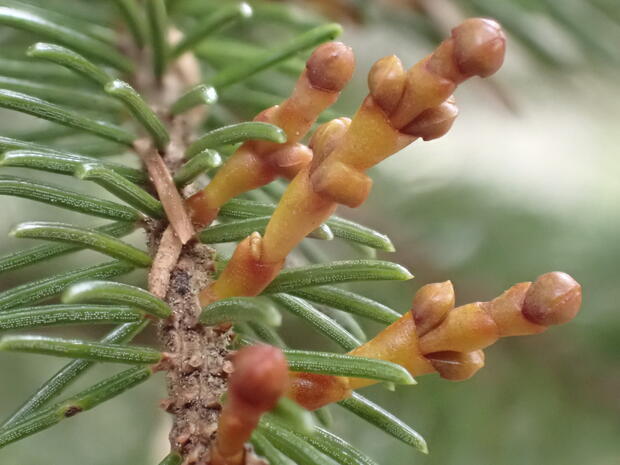
Looks can be deceiving. The eastern dwarf mistletoe plant spends all its time with black spruce trees, making them look like the best of friends. But the small shrub is actually a parasite. In the fall, fruits from the dwarf mistletoe burst, sending seeds up to 30 feet in the air in search of a new black spruce host. The mistletoe spreads beneath the bark of its host and extracts nutrients. Over time, clumps of swollen, infected branches, sometimes called “witches’ brooms,” weaken and sometimes kill the tree.
The bodyguard: skunk cabbage & insects
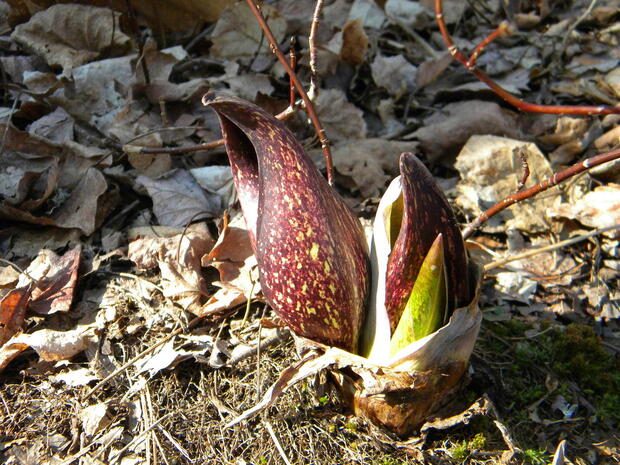
At first whiff, skunk cabbage hardly seems like a plant that would inspire partnership. But its foul, rotting-meat odor actually attracts certain flies and beetles. Skunk cabbage is uniquely adapted to generate heat, allowing it to melt surrounding snow and emerge among the first plants in spring. Their off-putting odor and their hood (called a “spathe”) make skunk cabbage the perfect bodyguard for flies and beetles to lay their eggs. The skunk cabbage benefits too! When the flies move between plants, they facilitate cross-pollination.