
- Office of Consumer Affairs and Business Regulation
- Division of Occupational Licensure
June is recognized as Trench Safety Month, an annual campaign dedicated to raising awareness of trenching and excavation hazards and promoting safe work practices across the construction and inspection industries.
In 2012, Dan Kilburn joined the Division of Occupational Licensure’s (DOL) Office of Public Safety and Inspections (OPSI), then known as the Department of Public Safety, as a Boiler and Pressure Vessel Inspector, and in 2013 he became supervisor of engineering. While interviewing Kilburn, he expressed that the opportunity to help protect public safety in many areas that includes hazards presented by unattended trenches is the most fulfilling thing about his role.
The Division enforces Jackie’s Law in conjunction with the Executive Office of Labor and Workforce Development to protect children and adults from the dangers of open trenches.
What is a trench?
Massachusetts law defines a trench as “an excavation which is narrow in relation to its length, made below the surface ground in excess of three feet below grade and the depth of which is, in general, greater than the width, but the width of the trench, as measured at the bottom, is no greater than 15 feet.”
What does a typical day look like for a trench inspector?
Trenches are discovered and inspected by our inspectors while they are performing other routine functions. At times, inspectors will engage with excavators at active trenches to conduct educational outreach.
How does a contractor or excavator obtain the license or permit required to perform trench work?
Pursuant to Jackie's Law and 520 CMR 14, municipalities are required to establish a trench permit authority and issue permits. Permit requirements include a completed application, a certificate of insurance, and a fee.
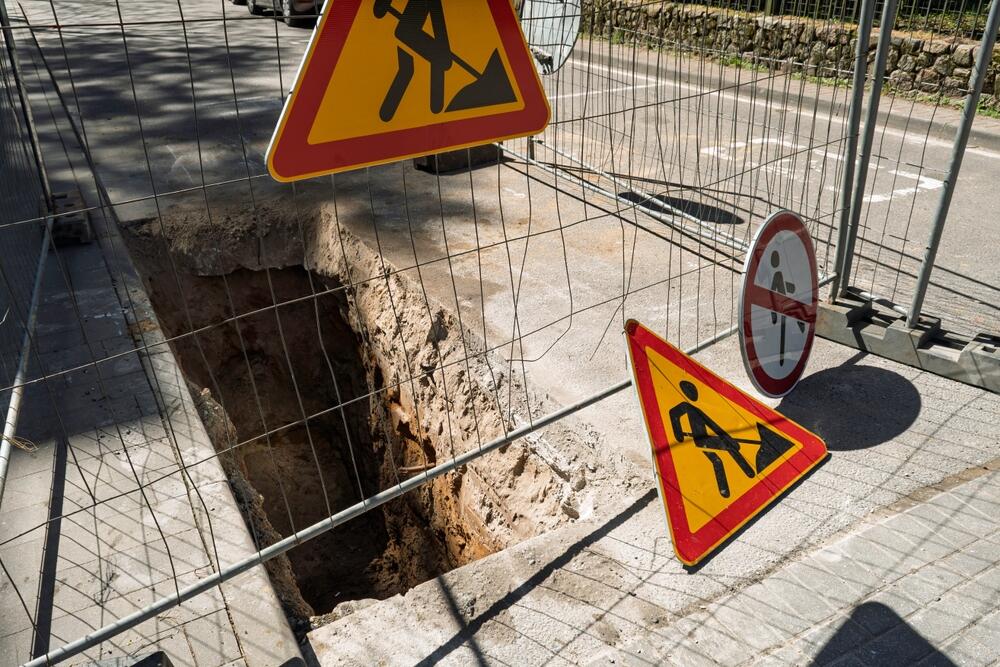
What does making a trench safe actually look like?
here are three ways to make a trench safe.
Trenches can be fenced in with six-foot or higher construction fence to limit access, be covered with steel plates no less than ¾ of an inch thick, or be backfilled.
Backfilling the trench sounds more extreme than it is. It generally takes less time to backfill and re-dig the following morning than it would to obtain materials and erect the fence or set up road plates.
When re-digging a trench, construction workers know where everything is, and sometimes workers throw plywood down (referred to as a witness board) before backfilling to mark the bottom of a trench. Obviously, this is not true when trench shoring is placed in the trench for personnel protection and preventing collapse and cave-ins.
If a Massachusetts resident notices an unattended trench that appears unsafe, what should they do?
They should report the trench using the Massachusetts Emergency Management Agency (MEMA) Control hotline at (508) 820-2000 or (508) 820-1444.
See frequently asked questions about trenches for more information.