- Division of Marine Fisheries
Derelict fishing gear—lost traps, nets, and lines—can create hazards for boaters, risks for fishermen, endanger wildlife, and litter our beaches. Gear lost at sea due to storms or accidental vessel interactions can wash ashore or settle on the seafloor, sometimes lingering for years. Historically, Massachusetts law treated all fishing gear as private property, even if it was abandoned, broken, or no longer usable. This meant that removing old lobster traps or marine debris would technically be considered theft, thus making the removal of derelict gear difficult.
In 2022, the Massachusetts Division of Marine Fisheries (DMF) established the Derelict Gear Task Force in partnership with Department of Fish & Game (DFG) and Massachusetts Environmental Police (MEP) staff, commercial fishing industry representatives, and NGOs to study problems and develop solutions relevant to derelict fishing gear. In 2024, the Task Force published a white paper on the subject. The Massachusetts Legislature’s Coastal Caucus championed the cause and pursued the task force’s recommendation and amended state law to maintain private property rights for fishing gear but differentiate fishing gear “debris” and allow DMF to regulate its clean-up. Final regulations were implemented in January 2026 following approval by the Marine Fisheries Advisory Commission and DFG.
The public can now safely remove fishing gear debris found shoreside above the mean low water line. DMF can also issue Special Project Permits for qualified organizations to recover gear below mean low water during targeted cleanup efforts, including grappling and diving operations. Commercial mobile gear fishers are also permitted to remove derelict gear accidentally recovered during lawful fishing while being strictly prohibited from injuring fishing gear. DMF encourages those involved in clean-up efforts to attempt to return gear to its original owner if the gear is functional or salvageable and clearly identifiable.
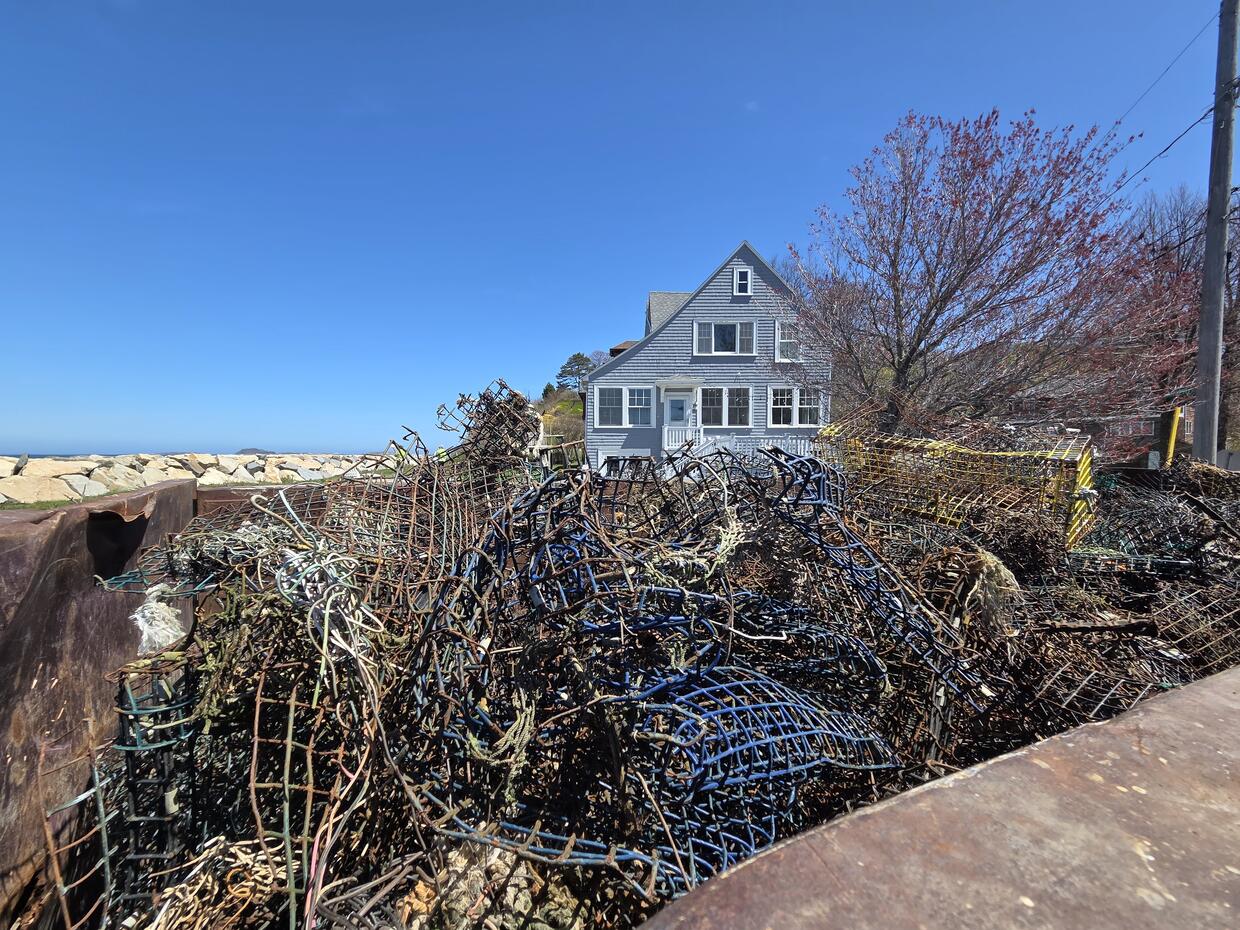
Despite the regulatory changes, disposing of derelict gear can sometimes still be challenging. Many waste facilities have restrictions on what they can accept, constraining the ability to dispose of gear debris once brought ashore or cleaned up from the shoreline. To help combat this problem, State Senator Bruce Tarr earmarked $50,000 to DMF to fund municipal and organizational derelict gear removal programs through fiscal year 2026. Since initiated, eight programs across the state have been awarded funds to tackle the issue.
Most programs placed dumpsters near commercial fishing docks, while others organized targeted beach cleanups or maintained fishing gear storage and recycling facilities. As of early June, over 42,000 pounds of derelict gear have been collected, including roughly 17,000 pounds of rope and nets and 24,500 pounds of traps, wire, and metal gear. Some investments will continue benefiting communities for years: one town purchased a hoist for safely lifting heavy gear from vessels, and another secured a permanent dumpster, saving over $1,000 a month in disposal costs. Educational efforts, including seminars and informal talks, helped fishermen and the public learn about proper disposal, future collection sites, and the new DMF regulations.
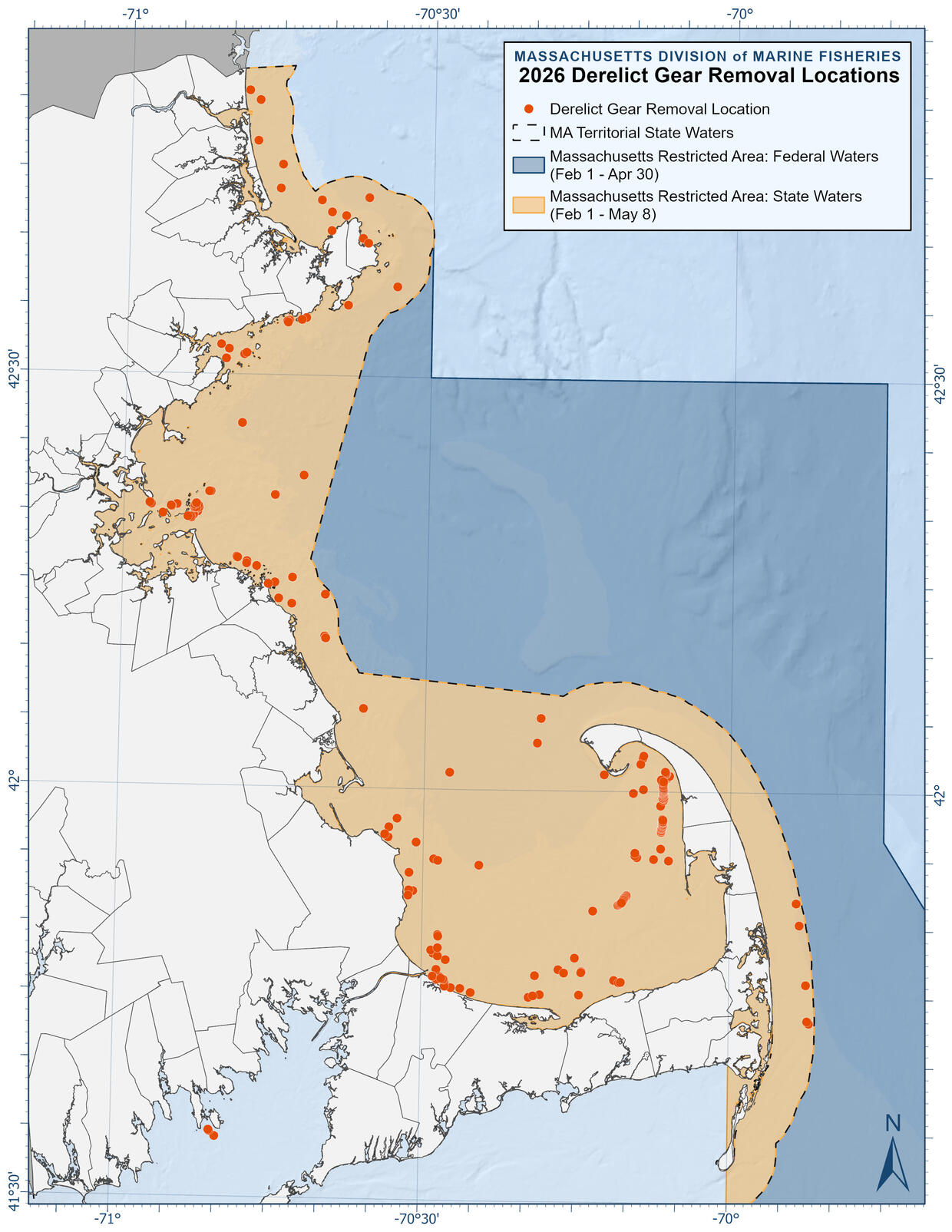
DMF crews also worked hard this winter removing trap gear from the Massachusetts Restricted Area closure, which protects the endangered North Atlantic right whale by prohibiting trap fishing from February 1 through May 15. Across 16 trips and five chartered lobster vessels, crews removed a total of 625 traps and 245 buoys/endlines. Most of the recovered traps were commercial (564), with the remainder recreational (59) or unidentifiable (2).
These combined efforts are making Massachusetts waters cleaner, safer, and more sustainable by protecting whales, other marine life, and coastal communities for years to come.
By Emma Fowler, Protected Species Specialist