- Department of Fish and Game
- Division of Ecological Restoration
Media Contact
Julia E. Hopkins, Communications Director
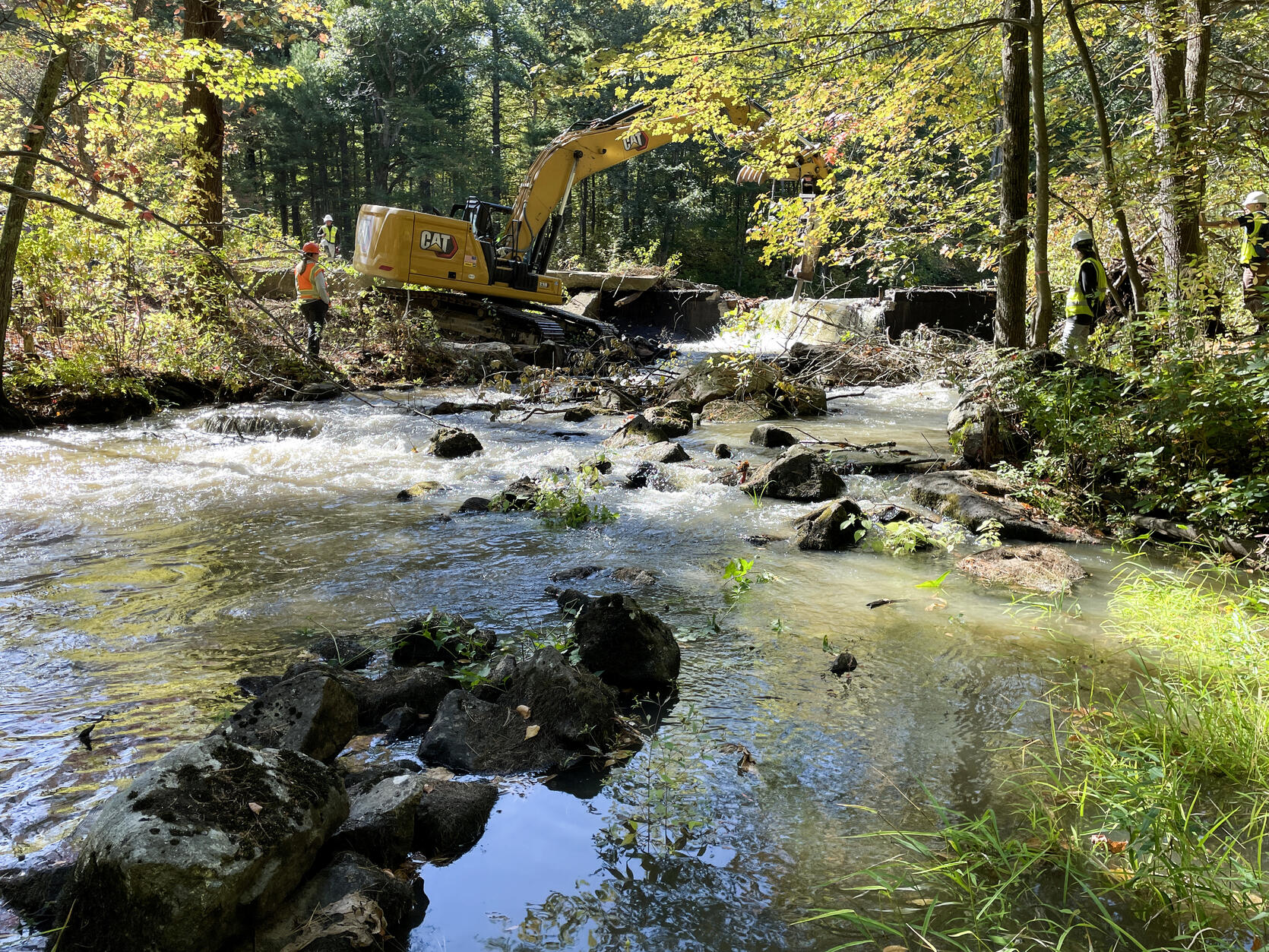
BOSTON — The Massachusetts Division of Ecological Restoration (DER) released its 2025 Annual Report, Restoration in Action for People & Nature, detailing the most impactful year of ecological restoration in the Division’s history. In 2025, DER and its partners advanced river and wetland restoration projects in every region of the state, restoring habitat for fish and wildlife and strengthening resilience to climate change.
“This was a watershed year for ecological restoration in Massachusetts,” said Department of Fish & Game Commissioner Tom O’Shea. “From reconnecting more than 600 miles of rivers to restoring wetlands and streams to leading the nation in dam removal to building community resilience to climate change, DER’s work directly advances the Commonwealth’s biodiversity and climate resilience goals. These accomplishments reflect the power of strong partnerships and our commitment to investing in local communities.”
DER’s impact included the removal of five dams, replacement of six culverts, restoration of 86 acres of freshwater wetlands, assessment of more than 1,200 culverts statewide, and nearly $7 million in state and federal funding for restoration in 45 cities and towns. The report also highlights major project milestones, including progress on the Herring River Estuary Restoration, the largest tidal restoration project ever undertaken in the Northeast, the removal of Becker Pond dam in Mount Washington, and the completion of the Upper Coonamessett River Restoration in Falmouth. DER’s capacity building programs, including the Regional Restoration Partnerships Program, Dam Busters Series, and Culvert Replacement Training Initiative, continued to grow, reaching more than 1,700 people statewide.
“We are proud of what our team and partners achieved this year,” said Division of Ecological Restoration Director Beth Lambert. “Communities across the Commonwealth are seeing the benefits of healthier rivers, safer roadways, and restored wetlands. As we look to 2026, we’re excited to take on new projects, expand regional partnerships, and continue to act as a catalyst for collaborative conservation in Massachusetts.”
The report also highlights the Healey-Driscoll Administration’s major investments and policy commitments for restoration in Massachusetts, including a $200 million for culvert upgrades, the introduction of the MassReady Act, and the launch of the Massachusetts Biodiversity Goals.
Read or download the full 2025 Annual Report.
###