
- Department of Fire Services
Media Contact
Jake Wark, Public Information Officer
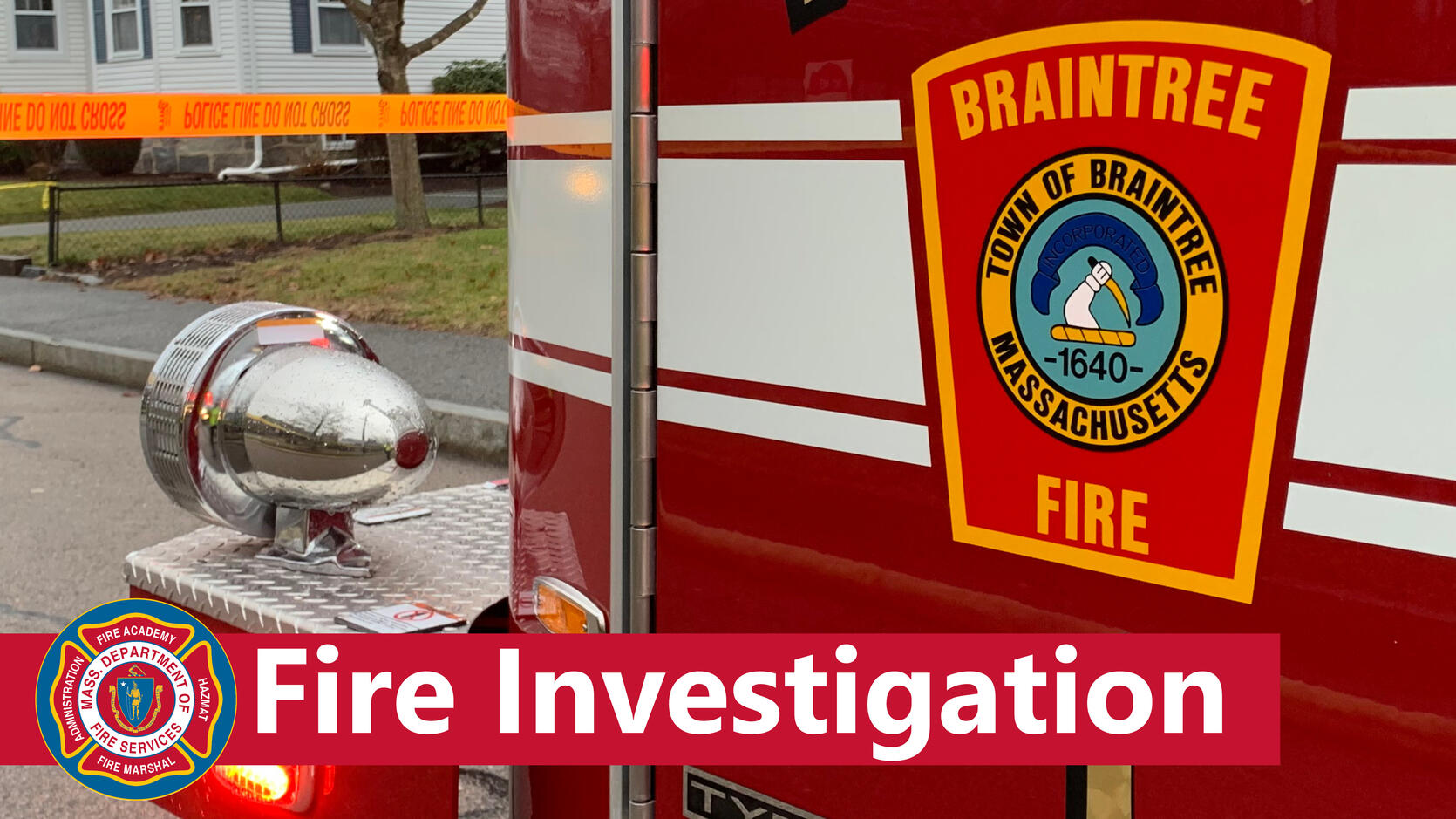
BRAINTREE — The fire that claimed a Warren Avenue resident’s life appears to be accidental, said Braintree Fire Chief Frederick Viola, State Fire Marshal Jon M. Davine, and Norfolk District attorney Michael W. Morrissey.
“The Braintree Fire Department extends its deepest condolences to the victim’s family, friends, and loved ones during this difficult time,” said Chief Viola.
The Braintree Fire Department responded to 16 Warren Avenue at about 2:40 on Saturday afternoon to find smoke and flames coming from the single-family home. Notified of a person trapped inside, firefighters immediately made entry to attack the fire and locate the occupant.
One older adult was rescued from the home and transported to an area hospital, where that person was pronounced deceased. The Office of the Chief Medical Examiner will determine the cause and manner of death.
The Braintree Fire Department, State Police fire investigators assigned to the State Fire Marshal’s office, and State Police assigned to the Norfolk DA’s office determined that the fire began in the living room. Preliminarily, investigators are looking at candles and smoking materials as potential factors. The Department of Fire Services’ Code Compliance & Enforcement Unit found no working smoke alarms at the scene.
“The importance of working smoke and carbon monoxide detectors in your home cannot be overstated,” Chief Viola said. “Please take a moment to check your smoke and carbon monoxide detectors. Replace batteries as needed and make sure all detectors are working properly. A few minutes today could save a life tomorrow.”
State Fire Marshal Davine said there were six fire deaths in Massachusetts last month, and only two took place in homes with working alarms.
“If you didn’t check your alarms when you changed your clocks yesterday, please take a few minutes and do it today,” State Fire Marshal Davine said. “The manufacturing date is printed on the back. Smoke alarms should be replaced after 10 years and carbon monoxide alarms should be replaced after 5, 7, or 10 years, depending on the model. If your alarms are still in date and take alkaline batteries, put fresh batteries in so you’re protected all winter long.”
###