- Department of Fire Services
Media Contact
Jake Wark, Public Information Officer
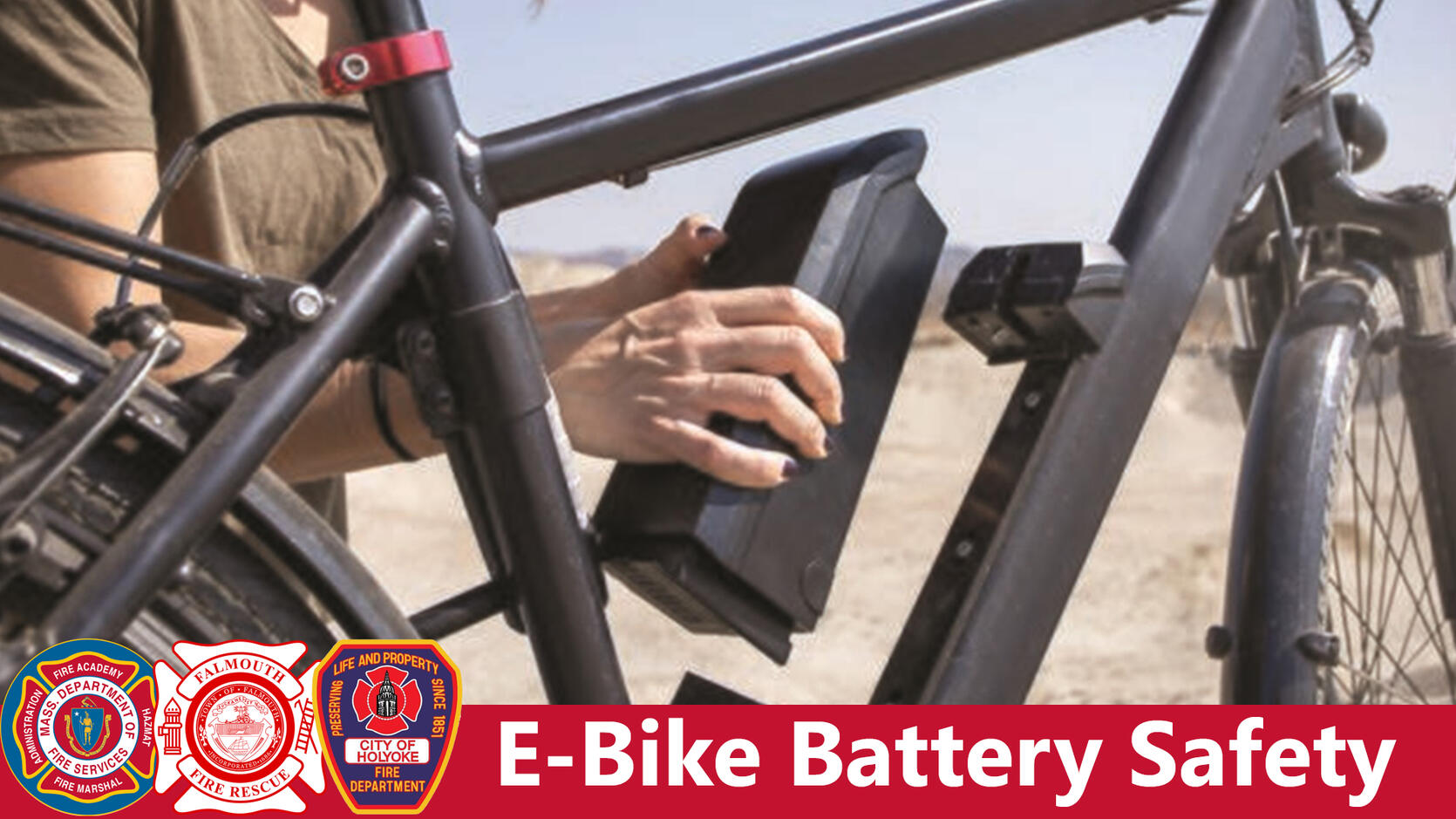
STOW — After two recent house fires involving the batteries from electric bicycles, Massachusetts fire officials are reminding residents of safety measures they can take to reduce their risk.
“As more people use e-bikes and other micromobility devices, it’s important to spread the word about buying, charging, and storing them safely,” said State Fire Marshal Davine. “The lithium-ion batteries in these devices can fail rapidly and violently if they’re damaged, defective, or recalled.”
On the morning of April 15, Falmouth Fire/Rescue responded to a Club Valley Drive home after a resident called 9-1-1. On arrival, firefighters found heavy fire in the attached garage, with flames spreading to the main structure. Firefighters brough the fire under control within about 40 minutes and rescued a family pet. No injuries were reported but all residents were displaced.
The origin and cause of the fire were investigated by the Falmouth Fire Department and State Police fire investigators assigned to the State Fire Marshal’s office. They collectively determined that the fire began in the garage with the apparent failure of an e-bike’s lithium-ion battery.
“When you’re buying an e-bike or other equipment powered by lithium-ion batteries, look for the mark of an independent testing lab like UL or Intertek/ETL,” said Falmouth Acting Fire Chief Chad Absten. “Listed products meet important safety standards.”
The next afternoon, the Holyoke Fire Department responded to a report of a fire in an Essex Street apartment building, where firefighters were able to contain the fire to one unit. Holyoke Fire and State Police fire investigators learned that an occupant had been charging his e-bike battery and noticed it getting hot and beginning to smoke. He placed it in the kitchen sink, where it caught fire. Residents safely escaped and no injuries were reported.
“Always read and follow the manufacturer’s instructions, use the manufacturer’s charging equipment, and disconnect it when the device is fully charged,” said Holyoke Fire Chief John Kadlewicz. “Aftermarket accessories and overcharged batteries have been linked to serious fires.”
E-bikes and other micromobility devices have accounted for more than 20% of the incidents reported through an investigative checklist in use by the State Fire Marshal’s office and many local fire departments since 2023.
State Fire Marshal Davine, Acting Chief Absten, and Chief Kadlewicz provided these safety tips for e-bikes and other devices powered by lithium-ion batteries:
Storage:
- Read and follow follow the manufacturer's storage instructions.
- Store lithium-ion batteries and the devices they power at room temperature whenever possible. Don't leave them in a hot car, in direct sunlight, or in freezing temperatures.
- Keep these items away from combustible materials.
- Store scooters and e-bikes outdoors if possible. If you must store them indoors, keep them away from doors, windows, and stairways. Always keep these routes clear so you can escape and emergency personnel can enter.
Charging:
- Read and follow the manufacturer's charging instructions.
- Always use the manufacturer’s battery, cord, and power adapter made specifically for the device. Aftermarket and generic accessories have been linked to serious Li-ion battery fires.
- Plug the charger directly into a wall outlet, not a power strip or extension cord.
- Don't leave a device unattended while charging. Disconnect the charger when the device is fully charged: do not overcharge the device.
- Charge devices on a hard, stable surface -- never on a bed, couch, or pillow.
Use:
- Read and follow the manufacturer's instructions for use.
- Use the battery designed for your device.
- Stop using the battery if it's damaged.
- Stop using the battery if you notice an unusual odor, change in color, change in shape, leaking, or odd noises. If you can do so safely, move the device away from anything that can burn and call your local fire department.
Disposal:
- Do not discard lithium-ion batteries in the trash. Recycling is the best option.
- If and when it’s time to dispose of the battery, don’t put it in the trash. Lithium-ion batteries should be recycled.
- Visit www.call2recycle.org/locator to find a battery recycling location near you.
###