- Division of Capital Asset Management and Maintenance
Media Contact
Hannah Carrillo, Director of External Affairs
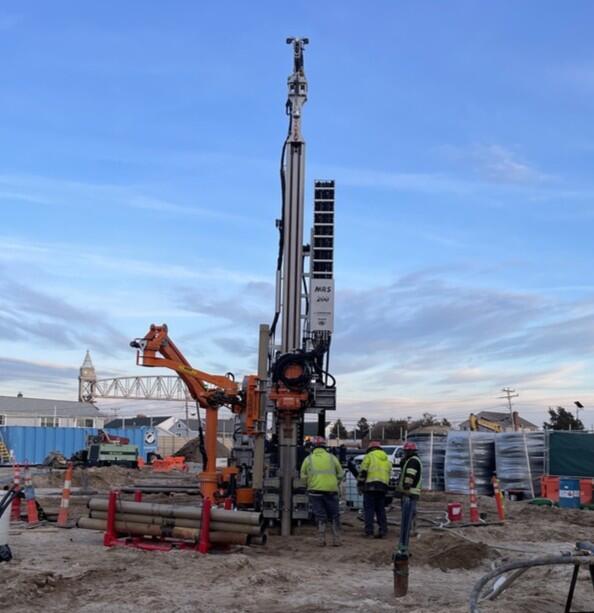
Bourne — Today, Lieutenant Governor Kim Driscoll, alongside congressional and state officials gathered at the Massachusetts Maritime Academy (MMA) campus to “close the loop,” on phase 1 of the state’s first campus-scale geothermal and energy efficiency project. Ground source heat pumps connected to a geothermal wellfield are the most efficient way to heat and cool a campus and deliver on Governor Maura Healey’s goal of advancing more geothermal projects in Massachusetts. The new system will dramatically reduce campus energy use, lowering costs and emissions for MMA, and heat and cool its buildings with a clean, renewable energy source.
“We need an all-of-the-above approach to energy in Massachusetts – and geothermal is key,” said Governor Healey. “That’s why my recent Executive Order to increase our energy supply ramps up geothermal projects, which will also be supported by new financing tools in my energy affordability legislation to lower bills for campuses and ratepayers alike. Mass Maritime has always led the way, and I commend the team on the completion of this exciting project phase.”
“Our colleges and universities are showing us how we can save money, lower emissions, and improve our campuses,” said Lieutenant Governor Driscoll. “This geothermal project is also a win for cadet comfort and wellness now that more buildings on campus will be air conditioned. My thanks to MMA leadership and their collaboration across agencies to make this project a reality.”
Attendees signed a piece of pipe that was later lowered into the ground and connected to the system. Elected officials, cadets and anyone involved in the project had the opportunity to add their names to the piece of innovative infrastructure, which will become part of a system of 252 geothermal wells once complete.
“It is always special to be on campus alongside community members and cadets to celebrate the forward-thinking work being done at the Academy,” said Congressman Bill Keating. “This is a remarkable project that will have positive long-term impacts on our community and region for decades to come.”
Currently, most campus buildings operate gas-powered furnaces and boilers, with the exception of one building that already relies on a smaller geothermal well system. The new system will ultimately cut the amount of gas burned on campus by roughly half once additional instructional buildings are upgraded and connected.
Few MMA buildings have air conditioning, and they have grown increasingly uncomfortable as climate change worsens summer heat. Like many large campuses, MMA is seeking solutions to improve the indoor environment while lowering energy costs and avoid the increasing volatility that comes from reliance on natural gas.
“I am proud of the forward-thinking nature of this project, and excited for the major impact it will have across our campus,” said MMA Admiral Francis X. McDonald. “Massachusetts Maritime Academy is doing its part to reduce our emissions and transition to renewable energy, and we appreciate the strong support of our state partners in achieving that goal.”
Ground source heat pumps, or geothermal heat pumps, utilize the stable, moderate temperature of the earth to transfer energy and provide heating and cooling for the buildings. The new campus-wide geothermal heat loop will initially serve three buildings and is designed with enough capacity to serve all existing and future campus facilities. This project will both heat and cool all the buildings it serves and once complete, it is projected to save MMA roughly $50,000 annually in utility costs, which will also result in savings to the state and taxpayers.
“It takes a clear vision to plan and execute such a comprehensive stand-alone energy project, and I commend the commitment of the Academy, the Commonwealth and our design and construction partners required to make this project happen,” said DCAMM Commissioner Adam Baacke. “DCAMM sees this project as a model to replicate on other campuses as it works to eliminate carbon emissions from state buildings.”
Today marked the completion of phase 1 of the project, which included drilling the first 120 wells. Phase 2, which will drill the remaining 132 wells, is already underway, and the project is expected to be fully completed by Summer 2026. The nearly finished STEM building will be the first to connect to the new geothermal heat loop. Additional information about the project can be found on the project webpage.
“vanZelm Engineers is thrilled to see the master planning and design concepts we developed come to fruition in this project”, said vanZelm Senior Vice President David Madigan.
“This project will bring many benefits to the MMA campus and the Commonwealth as a whole, and we feel it represents a great template for other institutions to consider, whether public or private in nature.”
In addition to this project, other geothermal wellfields are being incorporated into large, active construction projects in Holyoke, Taunton, Framingham and Salem, and on both the UMass Amherst and Dartmouth campuses. These and many other energy efficiency, heat-pump and solar projects at state facilities are part of the Commonwealth’s efforts to meet emissions reduction targets established in Executive Order 594 that prioritize reducing emissions coming directly from on-site fossil fuel combustion resulting from state government operations. These projects will further contribute to the Healey-Driscoll Administration’s commitment to advancing geothermal, lowering energy costs, and reducing statewide climate-warming emissions.
Governor Healey’s Energy Affordability, Independence, and Innovation Actuses innovative financing to significantly reduce the upfront costs of geothermal projects, which are significantly more affordable to operate once built. This change is ideal for large college, business, and hospital campuses looking to lower their energy use, costs, and emissions. Governor Healey also recently signed an Executive Order to increase Massachusetts’ energy supply. Her Executive Order directs state agencies to identify opportunities for geothermal and speed up licensing, permitting, and other hurdles to advancing geothermal in Massachusetts.
Statements of Support:
Senator Dylan Fernandes
“I am proud to join Massachusetts Maritime Academy in celebrating the completion of phase one of the Energy Transfer Loop, a major campus decarbonization project. Mass Maritime provides students with a world-class, hands-on education and this project showcases their national leadership in clean energy innovation and sustainability.”
Representative Steven Xiarhos
“I’m proud to celebrate this milestone at the Massachusetts Maritime Academy. This campus-wide decarbonization project reflects the Commonwealth’s commitment to clean energy, innovation, and sustainability. By investing in solutions like the Energy Transfer Loop and geothermal wellfield, we’re reducing our environmental impact and preparing our students and community for a greener, more resilient future. Go Bucs!”
Climate Chief Melissa Hoffer
“This project is a prime example of what a ‘whole of government approach’ on climate looks like. I commend Massachusetts Maritime Academy and DCAMM for committing to a campus-scale project which will not only improve conditions in the short term, but will also enhance MMA’s resiliency in mitigating climate change impacts in the future as well.”
Executive Office of Energy and Environmental Affairs Secretary Rebecca Tepper
“Mass Maritime’s geothermal system lowers energy costs with clean, efficient technology. We’re trying to make projects like this easier to do across the state. Governor Healey filed energy affordability legislation to make it more affordable to finance these big projects over time and her recent Executive Order on Energy Supply is also going to make it faster to build. Congratulations to Mass Maritime for their leadership.”
Executive Office of Education Secretary Dr. Stephen Zrike
“Massachusetts Maritime Academy is showing what is possible when innovation and sustainability come together. By installing a campus-wide geothermal system, MMA is not only reducing emissions and energy costs but also creating a more comfortable and resilient learning environment for its students.”
Executive Office of Administration and Finance Secretary Matthew Gorzkowicz
“The state’s $39million investment in this project is not only in support of the campus, but also a testament to our commitment to climate resilient, forward-thinking projects that benefit state agencies and the communities they serve. It is always remarkable to see those investments come to life.”
Department of Energy Resources Commissioner Elizabeth Mahoney
“Congratulations to Mass Maritime for leading by example with this exciting project. Public campuses across Massachusetts are showing how innovative projects like geothermal systems can address energy costs and climate change at the same time. We are proud to provide a grant to MMA to support this project, which will provide comfortable, healthy learning spaces for the cadets and cut pollution from MMA’s buildings, benefitting the broader community.”
Department of Higher Education Commissioner Noe Ortega
“When we invest in the physical infrastructure of institutions like Massachusetts Maritime Academy (MMA), we’re investing in our students and the future of our Commonwealth. This project strengthens the student experience at MMA and grows sustainability, and I’m grateful for the dedication of our state leaders, President McDonald, and the team at MMA as they reach this crucial milestone.”
###