
- Governor Maura Healey and Lt. Governor Kim Driscoll
- Executive Office of Housing and Livable Communities
Media Contact
Jacqueline Manning, Press Secretary
STURBRIDGE — Governor Maura Healey today announced the launch of “Move-In Mass,” a new initiative to expand homeownership opportunities across Massachusetts by supporting innovative, cost-effective approaches to building starter homes. The program is expected to support at least 20 homes in its first round, with financing designed to be repaid and reinvested in future housing developments.
Move-In Mass will encourage the use of manufactured, modular and other innovative construction methods that can reduce development costs, shorten construction timelines and make homes more affordable for first-time homebuyers. The initiative aims to build quality homes at lower costs while reducing reliance on state subsidies, allowing public investments to support additional housing opportunities over time.
“Buying your first home should be an exciting milestone, but for too many people in Massachusetts, it feels out of reach. We're working to change that by helping first-time homebuyers with down payments and building more housing to bring down costs,” said Governor Maura Healey. “Move-In Mass is another way we're making homeownership more attainable by lowering the cost of building starter homes. We want more people to have the opportunity to put down roots, build equity and raise their families right here in Massachusetts.”
“Governor Healey and I want Massachusetts to be a place where people can grow up, get a good job, buy their first home and build a future,” said Lieutenant Governor Kim Driscoll. “That's why we're focused on creating more opportunities for first-time homebuyers, from making down payments more affordable to increasing the supply of starter homes. Move-In Mass gives us another tool to work with communities and developers to build quality homes at lower costs and help more families achieve the dream of homeownership.”
“We cannot solve our housing shortage by relying on the same approaches alone. We need to embrace innovation and find ways to deliver quality homes at a cost that working families can afford,” said Housing and Livable Communities Secretary Juana Matias. “Move-In Mass is designed to do exactly that. By supporting more efficient construction methods and reinvesting proceeds into future homes, we can make our housing investments go further while opening doors to homeownership and the generational wealth that comes with it.”
“This exciting pilot program brings the state together with homebuilders and manufacturers, to explore new ways of delivering high-quality, code-compliant, and mortgage-ready manufactured homes to Massachusetts communities,” said MassHousing CEO Chrystal Kornegay. “Construction innovation can help deliver more modestly priced homes to first-time homebuyers. Move-In Mass will provide upfront, recyclable financing to kickstart new home construction, and ultimately, help new home construction methods grow to scale.”
Through Move-In Mass, MassHousing is making $10 million in financing available to developers interested in using manufactured, modular or other cost-effective construction methods to build starter homes. The program will accept proposals from across Massachusetts for detached single-family homes, townhouses and duplexes. MassHousing will work with the Executive Office of Housing and Livable Communities (HLC) to award financing to qualified developers with projects ready to move forward.
The program is designed to recover much of its initial investment through home sales, allowing MassHousing to reinvest that funding in additional housing developments. Proposals will be evaluated based on their ability to lower construction costs, reduce the need for subsidies, shorten development timelines and return financing to support future projects.
At least 20 percent of the homes in each project must be affordable to qualifying first-time homebuyers earning no more than 80 percent of the area median income, with affordability restrictions maintained for 15 years. Eligible affordable homes may receive subsidies of up to $150,000 per unit when necessary to close the gap between development costs and appraised values or meet affordability requirements.
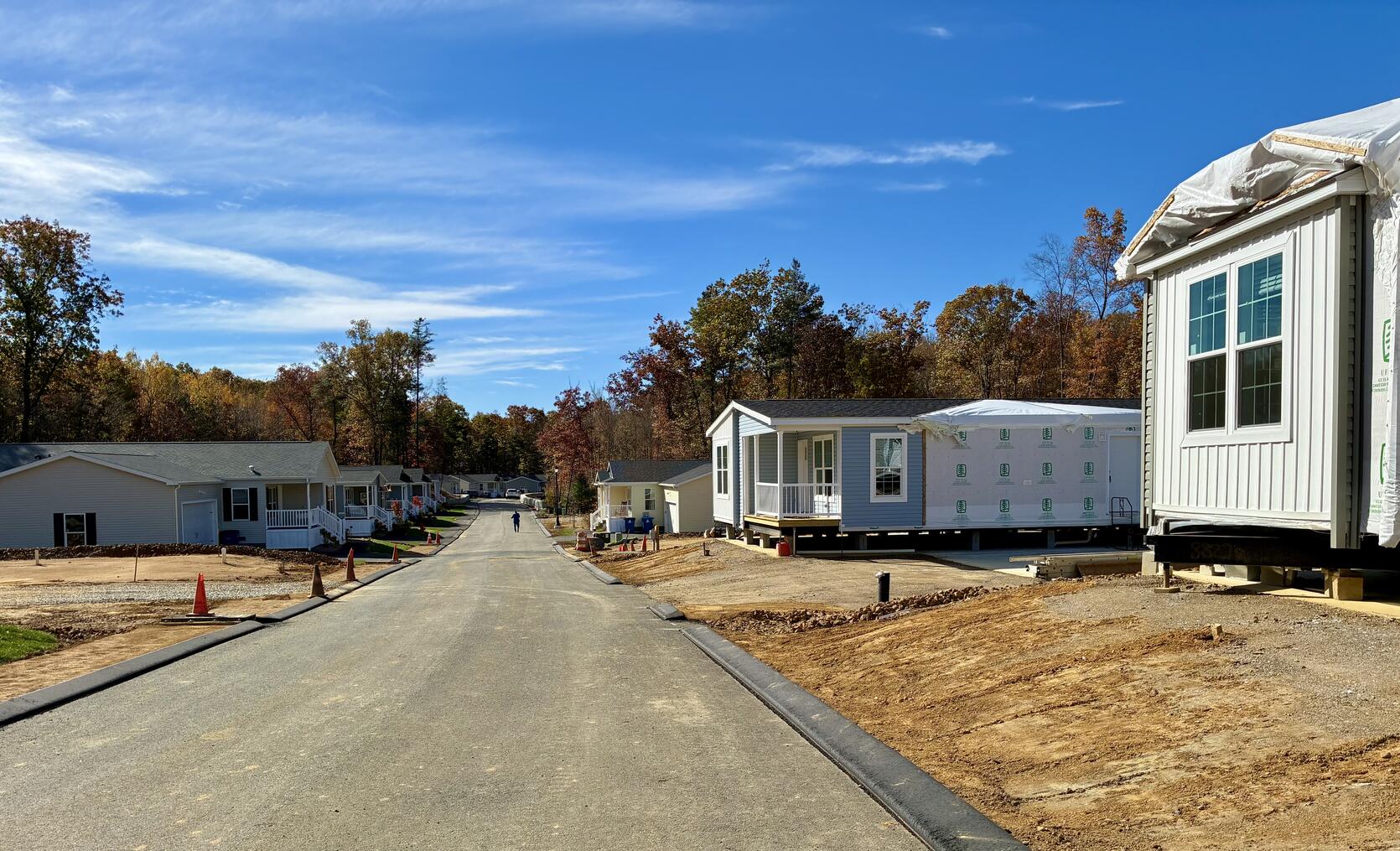
The initiative will place particular emphasis on manufactured and modular homes built on permanent foundations, including CrossMod homes, which combine the cost efficiencies of manufactured housing with features of traditional single-family homes. These construction methods have the potential to reduce costs while delivering quality homes that meet applicable building requirements and mortgage financing standards.
MassHousing and the Executive Office of Housing and Livable Communities (HLC) will work with developers, manufacturers and municipalities to identify participation and identify opportunities for projects across the state. The request for proposals opens today, with responses due Feb. 25, 2027. Awards are expected to be announced in April 2027.
Today's announcement took place at Blueberry Hill Estates in Sturbridge, a manufactured housing community where Lieutenant Governor Driscoll and administration officials toured homes that demonstrate the innovative construction methods Move-In Mass aims to encourage.
Move-In Mass is part of Governor Healey’s broader commitment to building more housing, expanding homeownership opportunities and lowering costs for Massachusetts residents. In 2024, Governor Healey signed the $5.16 billion Affordable Homes Act, the largest housing bond bill in state history. The law, together with the administration’s other initiatives such as converting vacant state-owned land into housing, commercial-to-housing conversions, the MBTA Communities Law, creation of the Momentum Fund and sizable increases in housing tax credits and subsidies, are already delivering results for the people of Massachusetts. Massachusetts added more than 34,500 new homes in 2025, and the administration continues to advance new housing through investments in affordable and public housing, commercial conversions, transit-oriented development and other tools to help communities build more homes.
###