
- Division of Capital Asset Management and Maintenance
Media Contact
Hannah Carrillo, Director of External Affairs
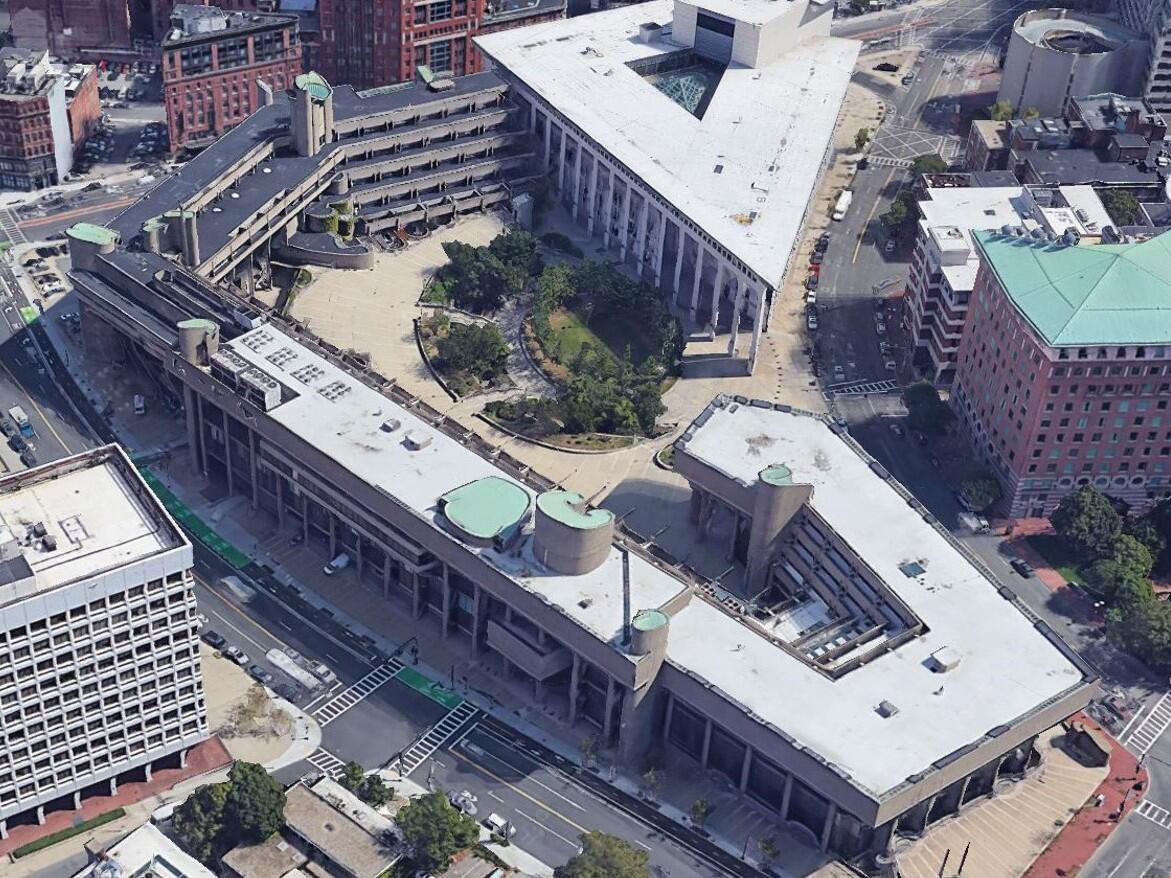
Boston — Today, the Healey-Driscoll Administration released an Offering Memorandum (OM) for the reimagining and redevelopment of the Erich Lindemann Mental Health Center and the Charles F. Hurley Building located at the Boston Government Services Center (BGSC). Issued by the Division of Capital Asset Management and Maintenance (DCAMM) in collaboration with the Department of Mental Health (DMH), the OM initiates a multi-step solicitation process that is tailored to the scale and complexity of these buildings, and the deep history of the 6.5-acre site located in Boston’s West End. This OM reflects the Administration’s previously announced vision for the redevelopment of this site to create new housing, a shift from a previous effort which included lab and office use.
“This site represents one of the most significant housing development opportunities in Boston,” said Governor Maura Healey. “We're turning underutilized state property into new homes, preserving important parts of this historic site, and ensuring that critical mental health services continue uninterrupted. This is exactly the kind of partnership and creativity we need to lower housing costs, create more opportunity and make Massachusetts more affordable.”
“This redevelopment is an opportunity to create hundreds of new homes in the heart of Boston while strengthening connections between the West End and surrounding neighborhoods,” said Lieutenant Governor Kim Driscoll. “By bringing together housing, open space, historic preservation and modern facilities for residents receiving care, we're creating a vision for this site that reflects the needs of Massachusetts today and for generations to come.”
The OM is available on our project page, and provides informational materials about the property and redevelopment objectives. This summer, DCAMM will release a Call for Offers, which will invite developers to submit proposals. Initiating the process through an OM provides developers with ample time to digest the complex elements of this major redevelopment prior to submitting a proposal.
“Redeveloping the Lindemann and Hurley buildings represents a once‑in‑a‑generation opportunity to strengthen our community,” said Senator Lydia Edwards, State Senator for the Third Suffolk District. “By expanding housing options and modernizing the state’s mental health care infrastructure, this project moves us closer to a more inclusive, more resilient future. We are committed to a process that reflects the needs of residents and delivers meaningful public value for decades to come. I want to thank DCAMM for their thoughtful and timely process ensuring our neighborhood gets the community investments needed to thrive.”
“The re-development of the Lindemann and Hurley buildings provides a unique opportunity for much-needed new housing and significant upgrades of mental health facilities,” said Representative Livingstone, State Representative for the Eighth Suffolk District. “I appreciate DCAMM's inclusive, public process that has led us to today's announcement and I look forward to continuing to support this endeavor and working with interested parties, my fellow elected officials, and local stakeholders.”
The property is also included in the Administration's State Land for Homes inventory, a set of state-owned properties that are being disposed of and redeveloped as new homes at an accelerated pace. The inventory has over 5,600 new homes in the pipeline including this project. A central priority of this redevelopment is the creation of substantial new housing across a range of income levels, and it is expected that the redevelopment will be consistent with City of Boston affordability requirements, including Inclusionary Zoning standards.
“Every underutilized state property represents a chance to think differently about how we build more housing,” said Housing and Livable Communities Secretary Juana Matias. “Through State Land for Homes, we are moving suitable public properties into the housing pipeline more quickly and putting them back to work for communities. The Lindemann-Hurley site reflects the scale of that opportunity, with the potential to create new homes, support economic growth and return valuable property to the tax rolls.”
Throughout this project, the Administration will ensure that approximately 115 existing residential beds currently serving vulnerable populations in the Lindemann Center are maintained either on-site or in close proximity. New facilities for this purpose are a required component for any redevelopment of the site.
“I look forward to being part of the planning process for a reimagined Lindemann building,” said Department of Mental Health Commissioner Emily Bailey. “This project will add much needed housing to the neighborhood and provide updated facilities for DMH clients and staff.”
Historic preservation and adaptive reuse will be key considerations for this project. Developers are encouraged to think creatively about reuse to preserve architecturally significant aspects of the site as a whole, in addition to better integration of the site with the surrounding community. Notably, the site was planned by, and the Lindemann Building in particular was also designed by famed architect Paul Rudolph. DCAMM has engaged with preservation experts, advocates and other stakeholders to better understand additional historic preservation requirements in particular. Proposers will also be expected to follow design guidelines first issued by DCAMM in 2021 and updated in 2026 in conjunction with this latest effort.
With appreciation for the history and meaning of the site for many Bostonians, DCAMM has conducted extensive community engagement regarding this site’s future, and has gathered input from a range of stakeholders, including former West End residents, the West End Civic Association, and The West End Museum. The selected developer will be expected to lead a robust community engagement effort as part of the permitting process.
"As the City Councilor for the West End, I am proud to support this exciting vision to revitalize a historic site while bringing much-needed housing to the neighborhood,” said Boston City Councilor Sharon Durkan. “This project is an incredible example of the possibilities of adaptive reuse—preserving our historic resources while supporting the needs of current and future residents and strengthening our city as a whole. I am grateful to our state partners for engaging neighborhood stakeholders to help shape this vision and for their leadership in bringing it to life."
“This offering is a unique opportunity to have a generational impact on the fabric of the City,” said DCAMM Commissioner Adam Baacke. “Thoughtful blending of historic preservation and complementary measures to improve access and connections to and through the site, while adding significant new housing and meeting state facility needs will require a robust partnership among a visionary development team, the Commonwealth, the City of Boston, and community stakeholders.”
DCAMM anticipates selecting a development partner in 2027. The project is expected to require several years for design, permitting, and financing prior to the start of construction, which may occur in multiple phases. For more information and project updates as they arise, please visit the project page.
###