- Division of Marine Fisheries
Bay scallops support commercial and recreational fisheries in southern Massachusetts, particularly the Cape and Islands, where these highly prized shellfish are harvested each fall and winter by commercial and recreational fleets. Bay scallops are typically collected using small drags (some call them “dredges”) towed behind skiffs in coastal waters and embayments. This is often in eelgrass habitat due to the habit of bay scallop larvae (after an initial phase in the water column) to attach to eelgrass blades and other structures where they are able to evade many of the predators waiting below on the seafloor. As the small (“seed”) scallops grow, they eventually detach from these predator refuges and spend the remainder of their lives on the seafloor. Given this close association, the bay scallop fishery often overlaps with eelgrass, a critical but declining fisheries habitat in Massachusetts waters.
Eelgrass in Massachusetts is threatened by a variety of human activities, including coastal development, the spread of invasive species, ocean warming, and inputs of nitrogen to coastal waters from septic systems, fertilizer, and other sources. Collectively, these and other threats have resulted in the loss of about half of the eelgrass in Massachusetts waters over the past two decades. Bay scalloping has the potential to contribute to this eelgrass decline through the creation of turbidity and physical removal of plants by drags. For these reasons, the Massachusetts Division of Marine Fisheries (DMF) conducted a study to assess potential impacts to this important fisheries habitat from bay scallop dragging.
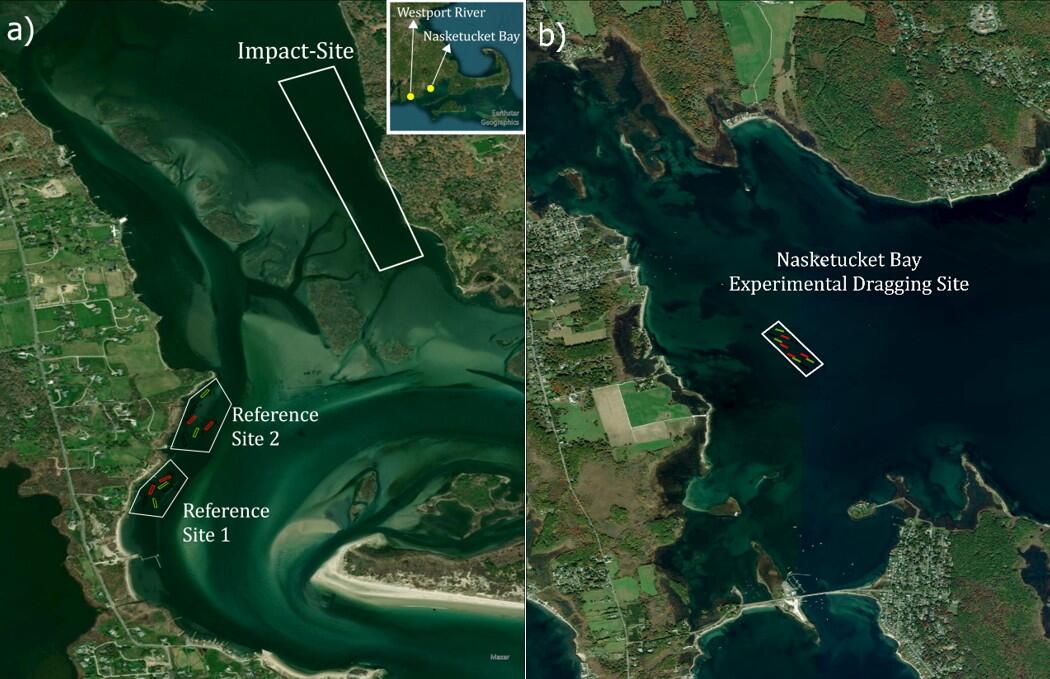
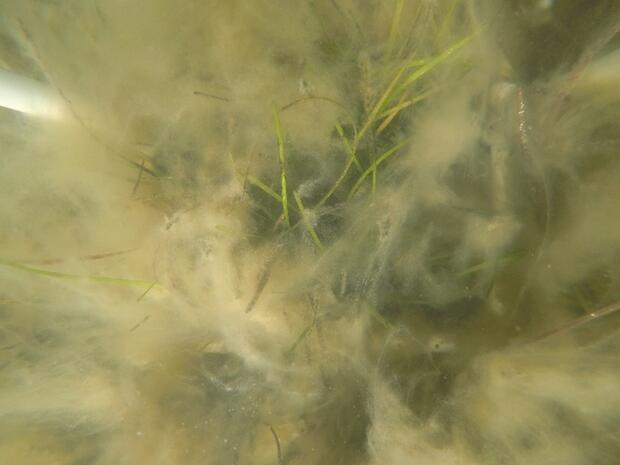
Coincident with the planning phase of the study, the Westport River experienced a historic bay scallop set in the fall of 2017 that led to intensive recreational and commercial harvest over the ensuing 2017-2018 bay scallop fishing season. This single season of intensive scalloping activity provided a unique opportunity to monitor eelgrass bed response to bay scallop dragging. Starting with the ensuing growing season, DMF monitored an eelgrass bed that was the site of high-intensity fishing effort as well as neighboring, unfished beds using both drop camera as well as side-scan sonar imaging to characterize eelgrass bed health (Figure 1). The drop camera images were assessed for percent cover, the total percent of each image containing live eelgrass vegetation, while side-scan sonar was used to identify any visible signs of bare, unvegetated seafloor. Both survey methods were repeated for three consecutive growing seasons and the side-scan sonar survey was continued for an additional two years. Some localized scarring was visible in side-scan imagery during the first growing season post-harvest, likely created by scallop drags or propeller scouring in this shallow eelgrass bed. However, this type of physical disturbance was not observed in the subsequent four years of side-scan sonar monitoring. Instead, the most dramatic documented effect was the near-total disappearance of the northern half of this bed following a diatom bloom (Figure 2) that was most likely related to poor water quality rather than the previous bay scalloping activity.
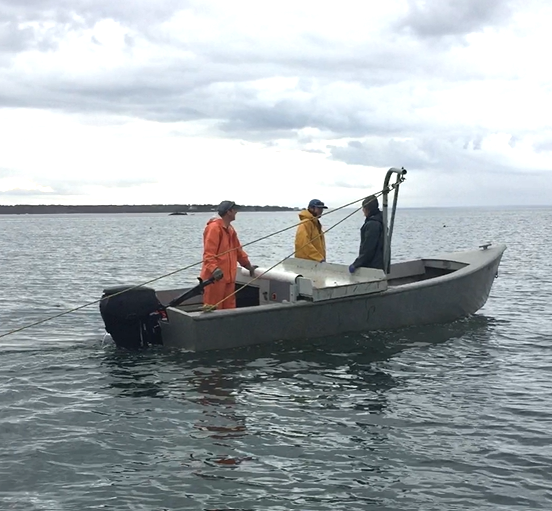
DMF also conducted experimental bay scallop dragging experiments on eelgrass beds located in the Westport River in Westport and Nasketucket Bay in Fairhaven for three consecutive years. For each site, the bed was randomly divided up into smaller sections where bay scallop dragging (Figure 3) was performed at different intensities as well as other sections that were left unfished to serve as controls. These beds were also monitored using both drop camera and side-scan imagery. Neither monitoring method detected any changes in eelgrass at the Westport River experimental site. For the Nasketucket Bay site, eelgrass percent cover was significantly lower at the higher intensity dragging areas relative to the unfished controls after the second year of experimental dragging, but this effect did not persist in the third and final year of the study. Study results were recently published in the journal Estuaries and Coasts.
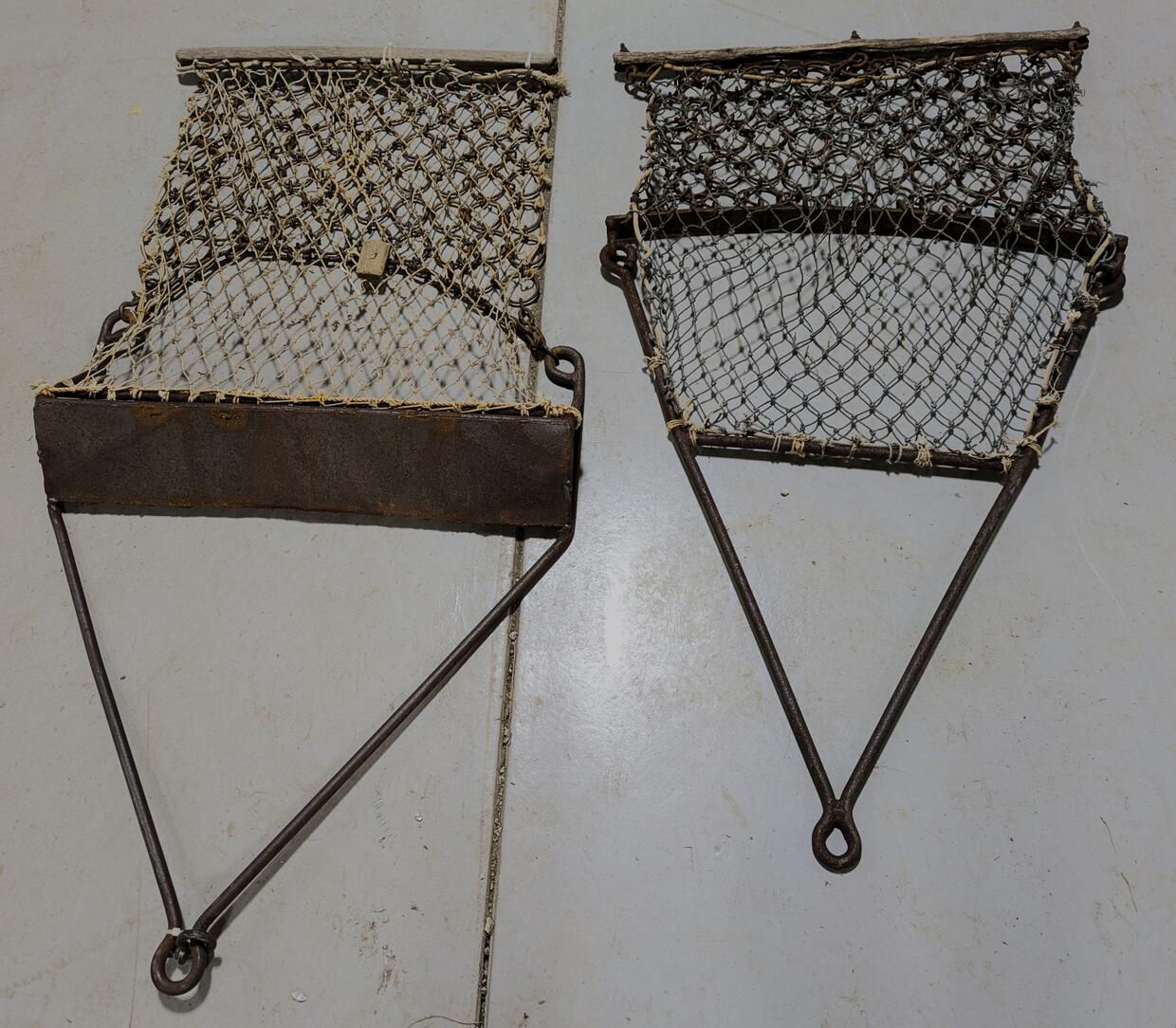
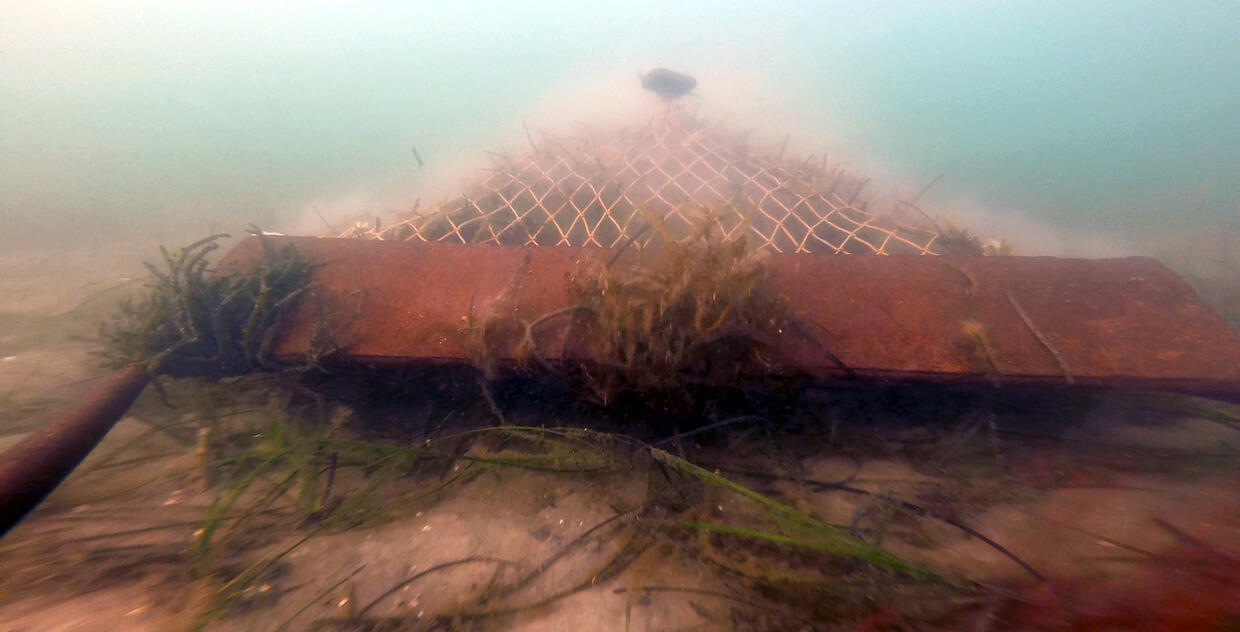
Overall, the DMF study detected only temporary impacts to eelgrass and generally showed that bay scallop dragging that follows best management practices can occur sustainably in eelgrass habitat. However, the study also noted that several aspects of bay scalloping not assessed in the study have the potential to cause eelgrass loss and should be considered in future management of this fishery. Specifically, propeller scouring from any motorized vessels is a potential threat to shallow-water eelgrass beds whether the vessel is involved in bay scalloping or simply a recreational boater making their way to a navigational channel from a float or boat ramp. The DMF study actively avoided this form of impact by only conducting experimental dragging at the shallow-water Westport River site around high tide. The Nasketucket Bay site was in deeper water where propeller scouring was not a threat. The drags used in the DMF study were traditional “pan” and “bar” drags commonly used in the fishery (Figure 4). When fished properly, these drags glide slightly above the seafloor and so effectively avoid uprooting eelgrass vegetation (Figure 5). Other drags designs, like “toothed” dredges, have the potential to dig into the seafloor, potentially causing greater impacts to eelgrass habitat.
DMF recommends that towns consider these types of potential impacts to eelgrass in developing their shellfishing regulations. With the adoption of appropriate best management practices like avoiding shallow water eelgrass beds or only fishing such sites at high tide, bay scalloping and eelgrass should be able to co-exist well into the future.
By John Logan, PhD, Environmental Review