- Division of Ecological Restoration
Media Contact
Julia E. Hopkins, Communications Director
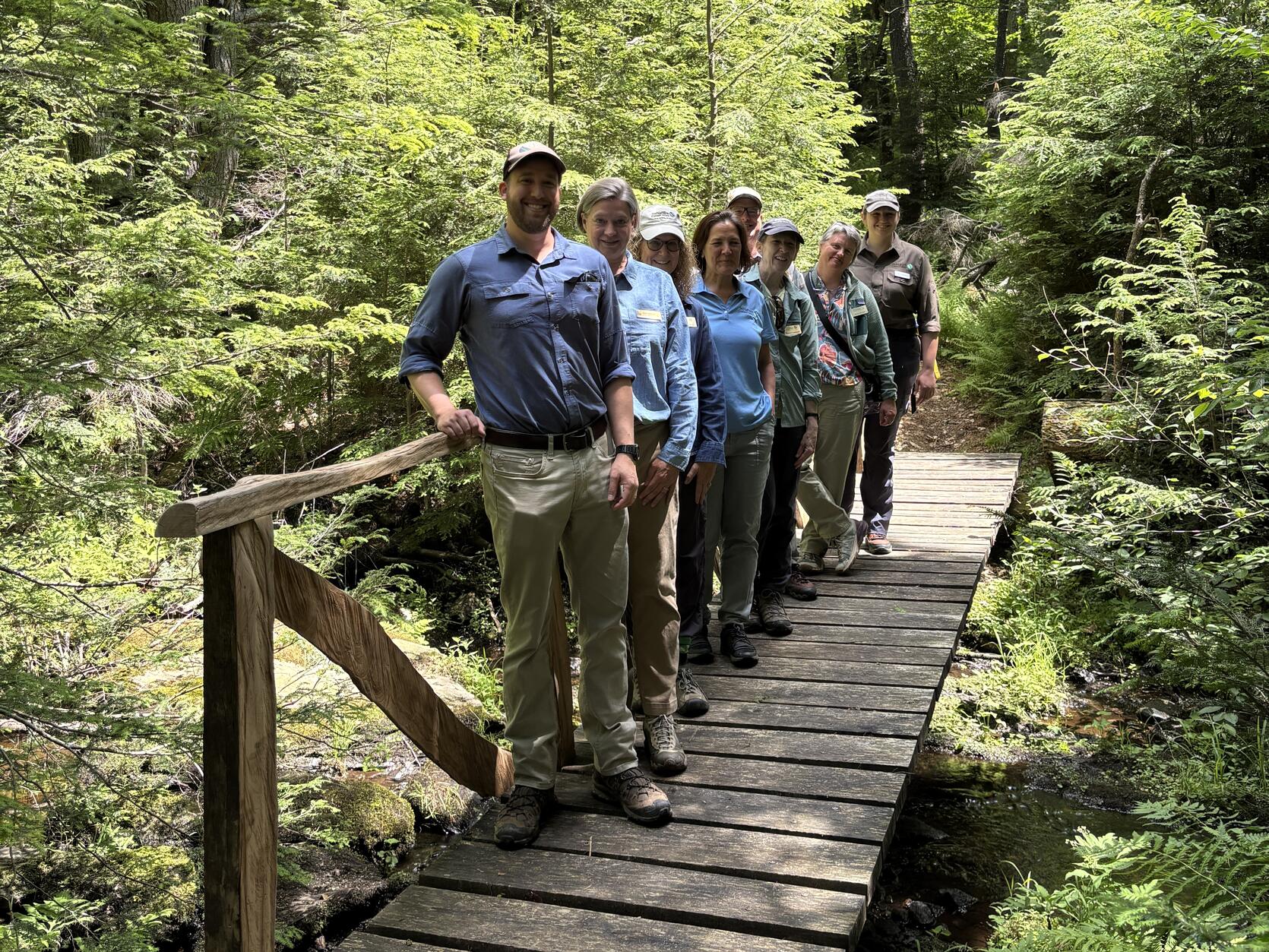
MOUNT WASHINGTON — The Healey-Driscoll Administration, state and local officials, and community partners have notched a win for nature and public safety through the successful removal of Becker Pond Dam. The Department of Fish and Game’s Division of Ecological Restoration (DER), The Nature Conservancy (TNC), town officials, and Mt. Washington residents celebrated the milestone and the dedication of the new Hallig Trail at an event in late June. The projects reopen a popular part of TNC’s Mount Plantain Preserve and restore a free‑flowing coldwater stream that had been impounded for nearly a century.
The Becker Pond Dam Removal is a designated DER Priority Project, reflecting the Commonwealth’s highest level of partnership and investment in river restoration. DER contributed $784,877 and technical support toward the multi‑year effort, which was led by TNC with additional support from the Massachusetts Environmental Trust and others.
“The removal of Becker Pond Dam reflects the growing momentum for river restoration across Massachusetts,” said DER Director Beth Lambert. “Since 2005, DER and its partners, including the Nature Conservancy, have advanced more than 70 dam removal projects statewide, reconnecting hundreds of miles of rivers and streams and strengthening the Commonwealth’s resilience to climate change. We are proud to see another barrier removed and river restored thanks to the leadership of TNC, the Town of Mt. Washington, and our strong community of partners.”
The Becker Pond Dam and its associated bridge had deteriorated significantly, forcing closure of the preserve’s former trail system in 2016. Removing the dam eliminated a long‑standing safety hazard and restored natural hydrology to a stream that flows into Sage’s Ravine and Schenob Brook, one of the region’s most important coldwater systems supporting native brook trout.
With the dam removed, TNC has constructed the new Hallig Trail, providing safer, more resilient access to the Mount Plantain Preserve and reconnecting visitors to the nearby Appalachian Trail corridor. The trail dedication was a highlight of the event, which TNC hosted for community members and project partners.
“The new Hallig Trail and the Becker Pond Dam removal share a common purpose: strengthening connections,” said Kris Sarri, State Director of The Nature Conservancy in Massachusetts. “A new trail invites people to experience and value the outdoors, while removing a dam restores the natural connections that fish and wildlife depend on. By investing in both, we’re building healthier ecosystems, protecting nature, and creating lasting benefits for our communities and the generations that follow."
The project also contributes to a broader conservation strategy to restore and connect lands and waterways throughout the Appalachian region, a 2,000‑mile corridor stretching from Alabama to Canada that provides essential migration pathways for plants and wildlife.
Dam removal remains one of the Commonwealth’s most effective tools for restoring rivers, improving biodiversity, and preparing for climate change. With more than 3,000 dams across Massachusetts, many aging, unsafe, or no longer serving a purpose, DER helps communities and dam owners remove obsolete structures, reduce flood risk, improve water quality, and reopen habitat for fish and wildlife.
In 2025, Massachusetts led the nation with 15 dam removals, demonstrating the impact of sustained state investment and strong local partnerships.
The Division of Ecological Restoration (DER), part of the Department of Fish and Game, restores and protects rivers, wetlands, and watersheds across Massachusetts. DER collaborates with municipalities, nonprofits, and community partners to advance nature‑based solutions that improve climate resilience, support biodiversity, and strengthen public safety.
###