- Department of Fire Services
Media Contact
Jake Wark, Public Information Officer
STOW — At 12:04 pm on June 30, 1996, Governor Bill Weld signed Chapter 151 of the Acts of 1996. The moment marked a lasting change to how the Commonwealth organized fire service leadership, training, prevention, investigation, and emergency response. Thirty years later, it remains a turning point in Massachusetts fire service history.
View this article in .PDF format here.
Chapter 151 of the Acts of 1996 established the Massachusetts Department of Fire Services and placed it within the Executive Office of Public Safety. As written, the legislation contemplated four operational divisions responsible for firefighter training, fire safety, hazardous materials, and underground storage tanks (later transferred to the Department of Environmental Protection), all under the “supervision and control” of the state fire marshal. But while the agency was newly created, these divisions reflected a mission that dated back more than 100 years.
The Office of the State Fire Marshal was first created in 1894. The Massachusetts Firefighting Academy was established in 1971 under the oversight of the Division of Occupational Education but grew out of the mid-1960s Central Massachusetts Fire Training Academy. Hazardous Materials response had been coordinated at the regional level since the 1980s. All of them operated independently, without the cohesion or collaboration that are a hallmark of the fire service.
Stephen D. Coan served as director of the Fire Academy for more than a decade, leading the monumental effort to rebuild it into a modern fire training facility after the Stow campus was burned down by arsonists in 1982. Many years later, he recounted how DFS was, in effect, born on a chalkboard in an Academy classroom as fire service leaders sketched out how the Fire Marshal’s office, the MFA, Hazmat, administrative services, legal counsel, public information, and other functions could come together under a single umbrella.
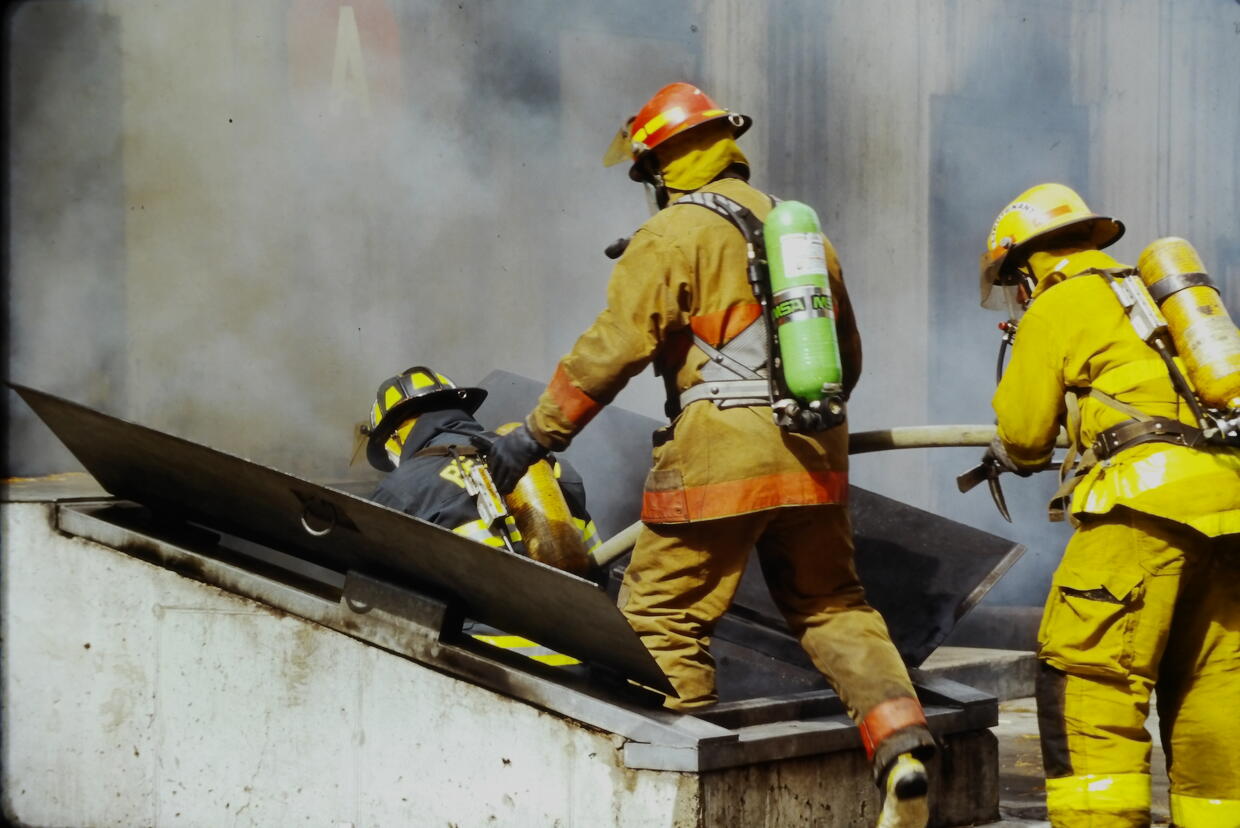
In 1995, Coan became the last Massachusetts fire marshal to be appointed by the governor. A year later, he became the first to be appointed by the Fire Service Commission, which was granted that authority by the same legislation that established DFS. He selected Tom Leonard – who previously served as chief of the Mansfield Fire Department and later as deputy director of the Academy – as deputy state fire marshal.
Though the title remained the same, the fire marshal’s role had changed. For much of its history, the job was focused solely on fire investigation, later expanding to include prevention, education, and code development. Now, the office was responsible for a multimillion-dollar agency that required big-picture administrative, organizational, and budgetary skills. With appointing authority transferred to the Fire Service Commission, the marshal was now selected by a group that included fire chiefs, firefighters, union representatives, and the insurance industry in addition to state officials. That structure gave the fire service a formal voice in selecting a statewide agency head they would depend upon for leadership and vision. Just as importantly, it helped insulate the position from routine political turnover.
The early years were not seamless. Deputy Leonard recalled the cultural shift that followed bringing Fire Marshal’s office employees from 1010 Commonwealth Avenue in Boston to Stow created physical pressure on an academy campus that was not yet ready to hold such an influx of staff. While the site had been sufficient for MFA staff and students, the consolidation into DFS tripled the staff onsite, with many working in “temporary” structures that were occupied full-time for years.
Five years earlier, the Massachusetts Firefighting Academy had rededicated the Stow drill yard after years of construction and development. Now, Marshal Coan recalled, some Academy staff worried that the addition of so many new agency staff and programs would divert resources from training. Longtime employees who had moved from Boston to Stow grumbled about working in trailers, sheds, and Conex boxes. Those concerns were part of the growing pains of merging cultures, missions, and budgets. Yet the result was a state agency that could support local communities in ways that were never before possible.
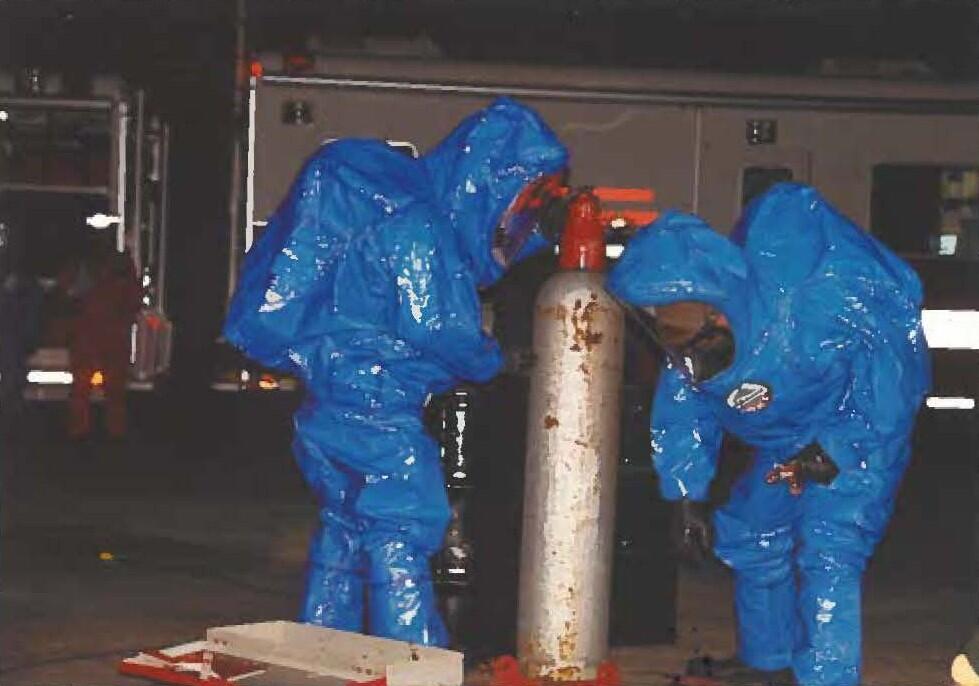
One of the clearest examples was hazardous materials response. The state’s hazmat system grew from earlier incidents and years of debate over training, funding and regional responsibility. Marshal Coan and Deputy Leonard described a system that was built around the regional teams that had existed since the 1980s, with new coordination at the state level. DFS now provided consistent, statewide funding, training, support, and apparatus while local fire chiefs retained complete authority over incidents in their communities. That balance helped make the program acceptable to chiefs while giving most cities and towns access to a resource they could not have built independently. In addition to conventional hazards like tanker rollovers and chemical spills, the Hazardous Materials Emergency Response Division, as it is formally known, was instrumental in the state’s response to the Anthrax crisis following the 9/11 attacks and in standing up COVID testing sites during the early days of the pandemic.
The same logic shaped what would become the Special Operations branch. A service that began with a donated bus for firefighter rehabilitation grew into broader incident support units, communications, logistics, heating, cooling, and other resources that could be brought to local incidents. DFS did not replace local incident command: it gave incident commanders new tools.
Fire investigation had been under the fire marshal’s purview since the 19th century, and State Police had been assisting with this duty since the Cocoanut Grove nightclub fire in 1942. From the 1970s to the mid-1990s, each of Massachusetts’ district attorneys had a State Police fire investigator assigned to his or her Crime Prevention and Control (CPAC) unit. These investigators also responsible for investigating homicides, sexual assaults, and other violent crimes but were designated as the fire marshal’s representative for suspicious fires. This changed when the State Police established the Fire & Explosion Investigation Section, which was assigned to the State Fire Marshal’s office and comprised both the Fire Investigation Unit and Hazardous Devices Unit, later known as the Bomb Squad.
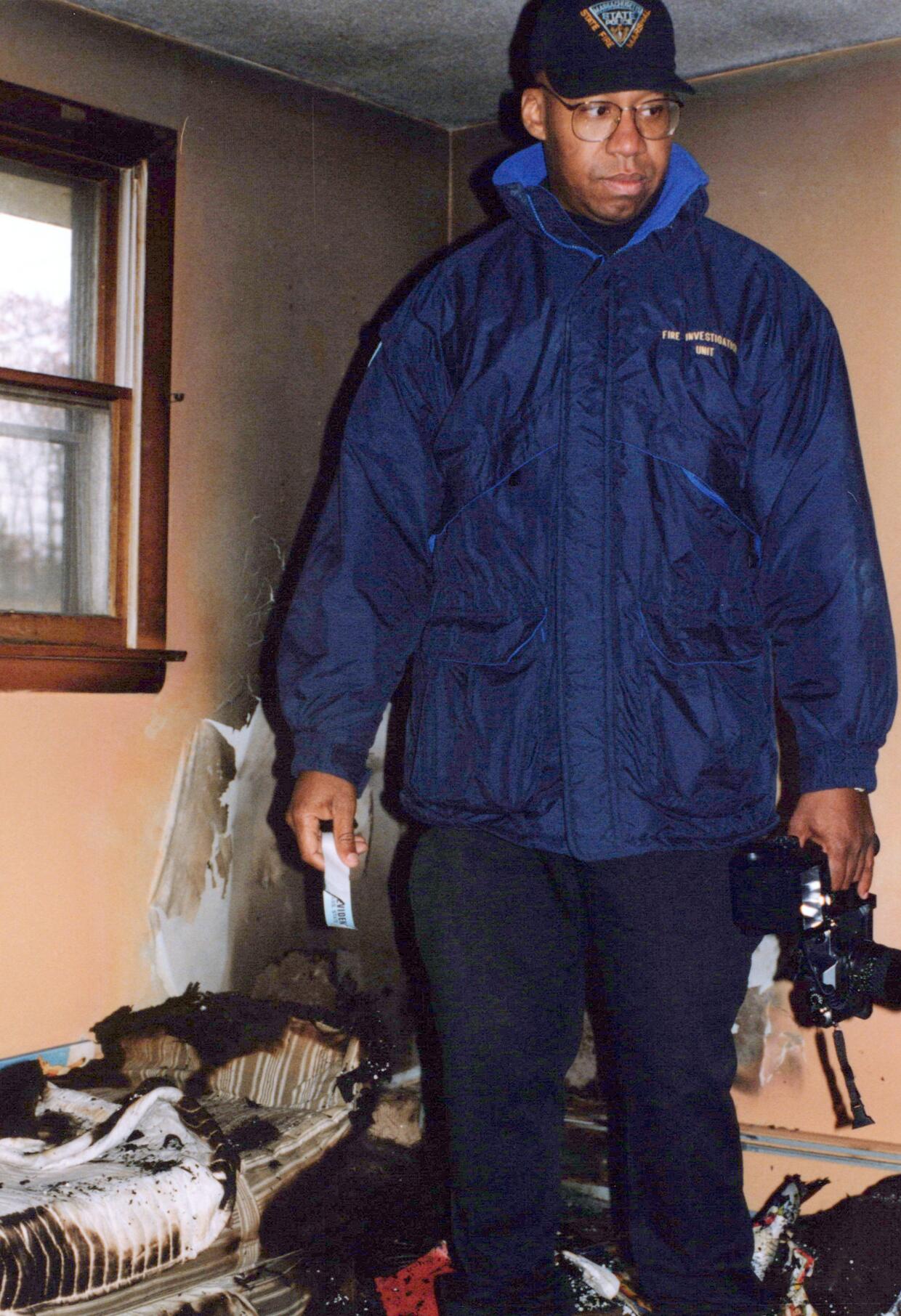
In the years that followed, the Fire & Explosion Investigation Unit was called out to some of the most devastating incidents in Massachusetts history. These included the Worcester Cold Storage Fire of 1999, the Danversport chemical explosion of 2006, the Boston Marathon bombing of 2013, and the Gabriel House fire in Fall River in 2025. Its members continued to advance the unit’s professionalism and capabilities through training, certification, and deployment of the latest tools and technology. While they once relied on explosive and ignitable liquid detection K9s trained by the Connecticut State Police, the unit now boasts its own in-house K9 training program with about two dozen labrador retrievers supporting troopers at fire investigations, security sweeps, and other functions.
DFS also became the vehicle for major post-tragedy reforms. After the Worcester Cold Storage fire, the agency helped to develop firefighter equipment grants and supported abandoned building initiatives, such as the placards that Worcester FD developed. These markings were incorporated into the State Fire Code and were later adopted nationwide. After the Station nightclub fire in Rhode Island, where many victims were from Massachusetts, DFS reviewed public assembly safety and advanced changes involving sprinklers, crowd managers, inspections, and enforcement. After a 2010 explosion at a Norfolk home, DFS successfully pushed for better testing of propane to ensure that the highly flammable gas was adequately odorized when shipped into Massachusetts. And after two Boston firefighters died in a 2014 fire that started with unpermitted welding, DFS pushed for hot work training and regulations that became mandatory in Massachusetts. More recently, as the growing use of lithium-ion batteries contributed to a rising number of fires, DFS launched an awareness program and tracking system to better understand and address the hazard.
Other programs reflected the same pattern. After more than two dozen child fire deaths in 1994, the Student Awareness of Fire Education (SAFE) program was launched to bring trained firefighter-educators into schools to teach children about fire safety and prevention. Both Marshal Coan and Deputy Leonard connected the program to long-term reductions in fire deaths, especially among children: the number of children lost to fire never again reached even half that recorded in the mid-1990s, and after 25 years fell by nearly 80%. In 2014, DFS launched the Senior SAFE program to extend prevention work to older adults, sending firefighters into senior centers, councils on aging, and even performing personalized home safety visits.
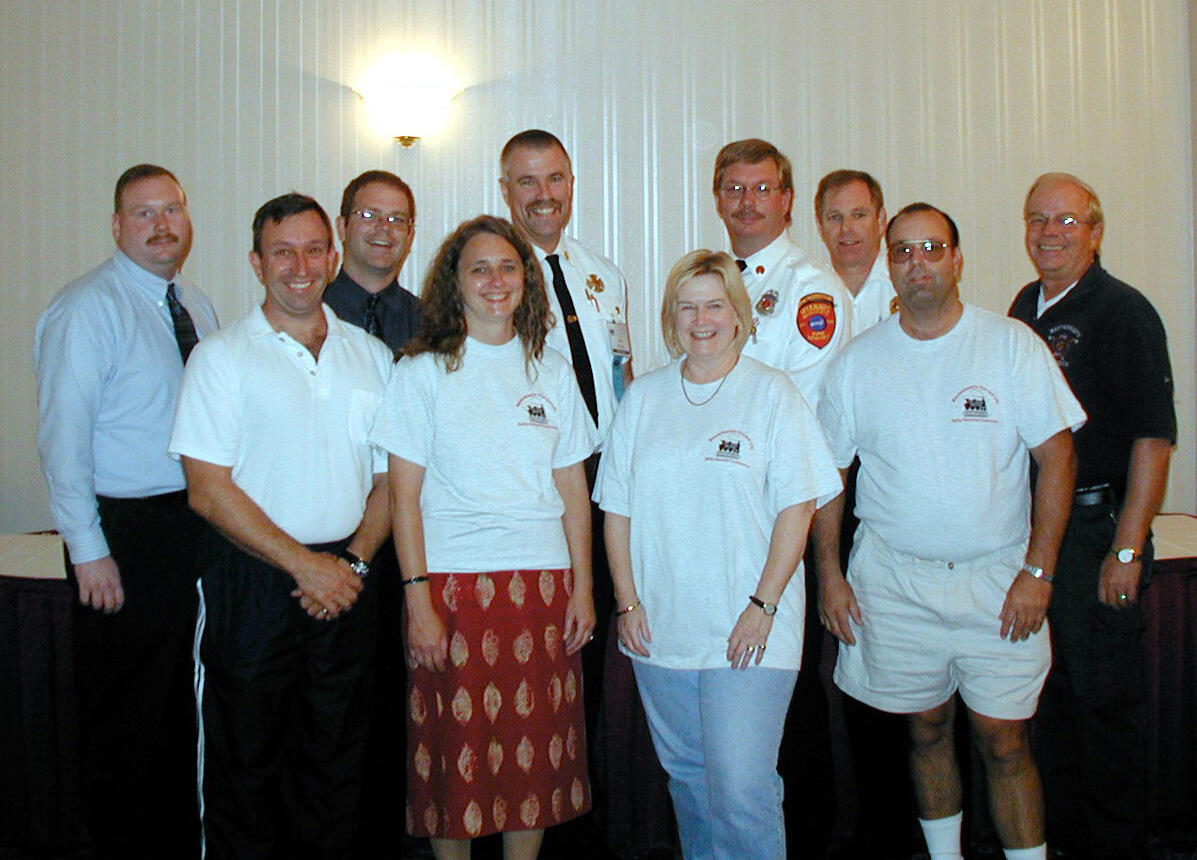
Those changes reflected a consistent philosophy: when a major fire, explosion, or similar incident exposed a gap, DFS took action to prevent another tragedy. This extended to non-fire crises, including occupational cancer in the fire service. DFS launched a cancer awareness, prevention, and early detection program through the Massachusetts Firefighting Academy. It was kickstarted with the assistance and initiative of Dr. Christine Kannler – inspired by her brother, Peter, who had been a Chelsea firefighter and MFA instructor until esophageal cancer claimed his life at the age of 37.
The DFS story is also physical. The Stow campus on State Road grew in phases from modest buildings and temporary space into the center of statewide fire service operations. By 2011, it was one of the most functional and aesthetic buildings in state government. The Springfield campus opened in 2016, modernizing a site used by the Springfield Fire Department and giving western Massachusetts access to the same quality training, props, equipment, and instructors. The latest expansion is the Bridgewater campus – once a Department of Correction facility and now the site of a four-story search and rescue prop and modern burn building, with a proposed technical rescue facility on the horizon. All together, the three campuses embodied the same idea behind DFS itself: statewide resources should be accessible enough, practical enough, and organized enough to serve every fire department in Massachusetts.
Thirty years after its creation, DFS is no longer new. Its programs are considered a standard of the Massachusetts fire service. And this is one clear measure of its impact: what required monumental political skill, audacious legislative maneuvering, and difficult cultural change in 1996 has become a fundamental part of Massachusetts’ public safety infrastructure.
From 1996 to 2025, Massachusetts fire incidents overall showed a modest decline of about 11%. But during that same period, fire deaths declined by more than 40% and the state went an unprecedented two and a half years without losing a single child to fire. It is true that Massachusetts has world-class medical facilities, and advances in medical treatment have improved outcomes for serious fire-related injuries that might otherwise have been fatal. But the number of fire-related injuries to firefighters and civilians alike has also declined to some of the lowest on record.
What makes this progress all the more striking is that Massachusetts’ population has increased by nearly a million people — more than 18% — since Governor Weld signed Chapter 151 of the Acts of 1996.
Through training, investigation, education, emergency response, code development, and enforcement, DFS has delivered untold resources to urban, suburban, and rural fire departments across Massachusetts over the past 30 years. But without question, its greatest success has been in helping the state’s firefighters mitigate, to the greatest degree humanly possible, the terrible toll that fire exacts on people, families, and communities.
###