The Massachusetts Department of Public Health (MDPH) Asthma Prevention and Control Program (APCP) aims to eliminate inequities in asthma outcomes and reduce the overall burden of asthma across the Commonwealth.
Asthma Basics
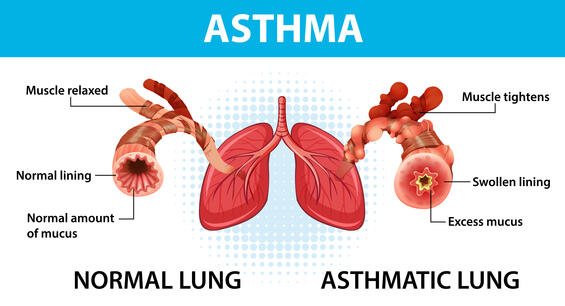
Asthma is a chronic (lifelong) inflammatory lung disease that can make it difficult to breathe. For people with asthma, difficulty with breathing can happen. This is because their airways can narrow, become inflamed, and produce excessive mucus.
Asthma can affect individuals of all ages, but most often starts in childhood. Common symptoms of asthma can include coughing, a tight feeling in the chest, shortness of breath, and wheezing. Although there is no cure for asthma, it can be controlled and people with asthma can live healthy, active lives.
It is not clear why some people get asthma, while others do not. However, new evidence on what causes the disease and how it can be prevented is emerging.
Researchers have learned that a person’s environment, in combination with their genes, can cause asthma. For example, exposure to:
- Tobacco smoke
- Poor air quality
- Some substances that people are exposed to at work. These can include formaldehyde, epoxy, isocyanates, diesel exhaust, and other chemicals can cause or worsen asthma
Some communities have higher rates of exposure to environmental risk factors because of the direct influence of structural racism and the Social Determinants of Health. Inequities in housing policies, environmental exposures, the health care system and beyond are examples of this structural racism. These inequities are felt across generations, most acutely in communities of color. Significant inequities in asthma outcomes persist within Massachusetts, with rates of asthma-associated hospitalization and emergency department visits for Black non-Hispanic and Hispanic residents three to four times higher than those of White non-Hispanic residents.