Environmental Justice at the Massachusetts Department of Conservation and Recreation (DCR)

All people have a right to be protected from environmental hazards and to live in and enjoy a clean and healthy environment.

As the steward of nearly half a million acres of public lands, including forests, beaches, ponds, parks, reservations, rivers, golf courses, skating rinks, pools, and more—the Department of Conservation and Recreation (DCR) is committed to ensuring that all of our properties are safe, welcoming, and accessible to every resident and visitor of Massachusetts, regardless of race, language, or income. Through the agency’s Environmental Justice Strategy, DCR is working to remove barriers to outdoor recreation, expand language access, improve public engagement, and ensure that historically underserved communities can fully benefit from the natural and recreational resources we manage.

This page can be translated into multiple languages by toggling the “Select Language” button at the top of the page.

What is Environmental Justice and how does the Office of Energy and Environmental Affairs (EEA) define it?

Environmental Justice (EJ) is based on the principle that all people have a right to be protected from environmental hazards and to live in and enjoy a clean and healthful environment. EJ is the equal protection and meaningful involvement of all people with respect to the development, implementation, and enforcement of environmental laws, regulations, and policies and the equitable distribution of environmental benefits.

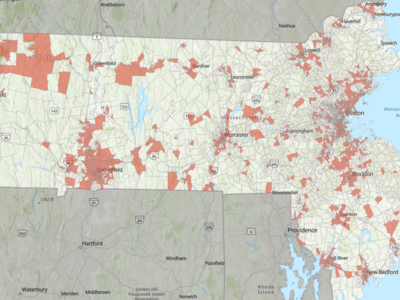
Environmental Justice (“EJ”) Population means: (1) a Neighborhood that meets one or more of the following criteria: (a) the annual median household income is not more than 65 percent of the statewide annual median household income; (b) minorities comprise 40 percent or more of the population; (c) 25 percent or more of households lack English language proficiency; or (d) minorities comprise 25 percent or more of the population and the annual median household income of the municipality in which the neighborhood is located does not exceed 150 percent of the statewide annual median household income; or (2) a geographic portion of a neighborhood designated by the Secretary of EEA as an EJ population in accordance with the law.  - Environmental Justice Policy of Executive Office of Energy and Environmental Affairs, June 21, 2004.

DCR Programs in Environmental Justice Communities

Our focus extends beyond providing equitable access to green spaces—we are actively integrating climate resiliency and environmental stewardship into our programs and policies. Below are just some of the ways DCR is working to promote Environmental Justice and ensure that our services are accessible to all.

Help Us Improve Mass.gov  with your feedback

Please do not include personal or contact information.
Feedback