
Project Details
Project Title
Flowing Toward Resilience: Climate Change and Hydraulic Capacity of Culverts
Municipality
Billerica
MVP Region
Northeast
Award Year
FY2025
Grant Award
$129,500
Project Length
One Year
Community Overview
- Billerica has a population of 42,119 (2020 U.S. Census) and is located approximately 18 miles northwest of Boston. Outside of Lowell, Billerica has the highest population density in the Greater Lowell region.
- The Town has Environmental Justice (EJ) communities within its boundaries. Billerica contains a total of eight EJ Block Groups designated based on minority status.
- In Billerica, rivers, streams, and waterbodies attract residents and visitors. The Town’s green spaces and parks provide a space for recreation and community gatherings, and Nutting Lake provides recreation during extreme heat.
- Billerica is traversed by US Route 3, and is within minutes of Routes 128, 495, and 93. Billerica’s location, with access to multiple major highways (Route 3, I-495, and I-95/Route 128), make it a critical connection between Metro Boston and the Metro West area.
- Per the 2018 Open Space and Recreation Plan, “the Town has become a major regional employment center and is home to several high technology firms. The town’s business sector currently employs approximately 23,000 people.”
- Billerica has significant wetland areas and floodplains and is intersected by two rivers: the Concord River and the Shawsheen River. The Concord River flows south to north roughly through the geographic center of town. In addition to being the Town’s drinking water supply, the southern segment is part of the wild and scenic river designation of the Sudbury, Assabet, and Concord Rivers. The Shawsheen River passes through the southeastern portion of town. Many tributaries run into the Concord and Shawsheen Rivers in Billerica.
Project Description and Goals
- Where was the project located?
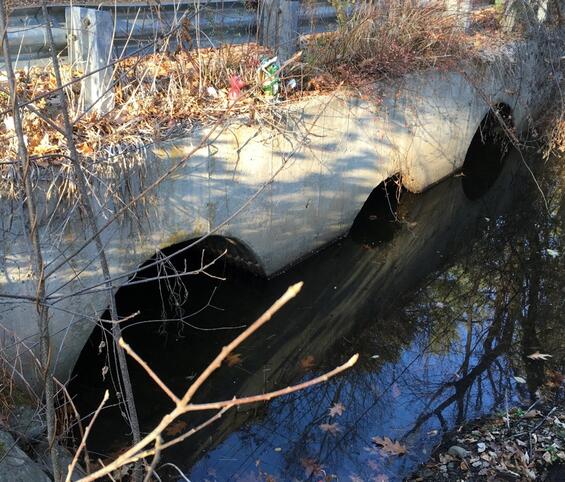
- This project developed a prioritized list of higher-risk culverts within the Town of Billerica. This planning effort built on the Town’s 2023 Stormwater Asset Management Program (AMP) which included an initial condition assessment of municipal culverts throughout the Town. The results of the 2023 AMP show that many culverts do not function as designed and are submerged.
- What climate change impacts did the project address?
- Inland Flooding
- What were the specific goals and tasks of the project?
- Prioritize Culverts: Applied a benefits scoring to Billerica’s culverts to re-prioritize culvert replacement projects with broad and multiple community benefits using criteria such as EJ communities, climate impacts, ecological criteria, and public health.
- Site Visits: Conducted site visits to collect information on existing conditions and identify data needs for hydrologic and hydraulics analysis. Completed targeted inspections of the culverts using an underwater drone where necessary and feasible.
- Hydraulic Analysis: Completed planning-level hydraulic calculations and developed culvert sizing recommendations for the highest prioritized undersized culverts using climate resilience tools to apply future extreme rainfall predictions.
- Community Outreach: Conducted community engagement, particularly within EJ communities, by holding neighborhood meetings and soliciting resident feedback in areas throughout Town that experience routine flooding.
- Deliverables: A summary of work completed under each Task of the project was developed, including relevant culvert replacement and sizing recommendations. Conceptual sketches of proposed structure replacement types were developed for the top 3 culverts that are undersized and located in a priority area where replacement would have significant community benefits.
- Did your project meet the goals:
- These goals were met at the completion of this project.
Results and Deliverables
- Provide a brief summary of project deliverables with web links, if available.
- Project deliverables include: Community Engagement Summary Report, Culvert Ranking and Data Collection Summary Memorandum, Hydrologic and Hydraulic Evaluation Memorandum, Conceptual Design Drawings and Memorandum. See the Community Engagement neighborhood meetings presentation.
Lessons Learned
- What lessons were learned as a result of the project?
- Residents raised concerns about drainage system and flood management. The Town sees the value in ongoing community engagement to target projects that will have the greatest community benefit.
- Learned many culverts are undersized and would need to be upsized to pass the current 50-year storm and future storms due to climate change.
- With the condensed project schedule, the field work and culvert prioritization had to occur prior to/during community meetings. It would have been beneficial to have had the meetings in advance, so that resident input may have been included in the initial fieldwork planning process.
Partners and Other Support
- Tighe & Bond – engineering consultant
- BMC Corp. – culvert maintenance
- Linguistic Services – translation of neighborhood meeting materials
- Veterans Services Department – sponsor of a neighborhood meeting
- Town Hall – location for neighborhood meeting
- Hajjar School – location for neighborhood meeting
- Council on Aging – sponsor and provided location for neighborhood meeting
- Ditson School – location for neighborhood meeting