
Purchasing the Native Plants - April 22-25, 2024
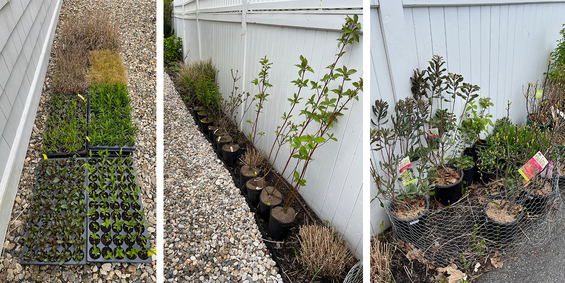
The plants in the above photos were purchased through Native Plant Trust and New England Wetland Plants and represent a mix of native shrubs, perennials, and grasses. A few plant species on the original planting plan were unavailable and replaced with other native equivalents. The final plant selection included 50 each of little bluestem, switchgrass, tufted hairgrass, blue vervain, and New England aster, along with 100 swamp and butterfly milkweeds, three common mountain mint, two wild strawberry, three winterberry, six each of bayberry, red twig dogwood, and Virginia rose, and a wildflower seed mix. Small plugs, which are typically less expensive to purchase and require less initial water and care, were used.
Arranging the Potted Plants - May 7, 2024
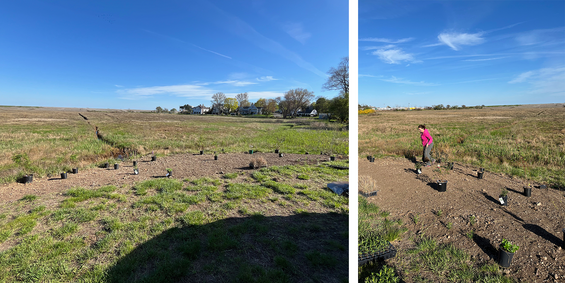
The potted plants were placed on the site to get a good idea of spacing and to show view corridors when plants mature. Before laying the plants out, a local landscaping company removed the existing lawn grass and cleared the area—leaving the 3- to 4-foot no-disturb zone in place.
Digging Holes and Planting - May 7-8, 2024
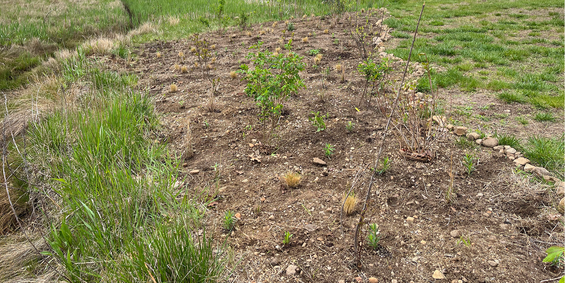
Digging holes was difficult in the rocky and sandy soil, and the shrubs, potted perennials, and plugs of perennials and grasses were installed over two days. Wire cages were placed around the two strawberry plants to protect them from rabbits.
Installing Drip Tubing - May 10, 2024
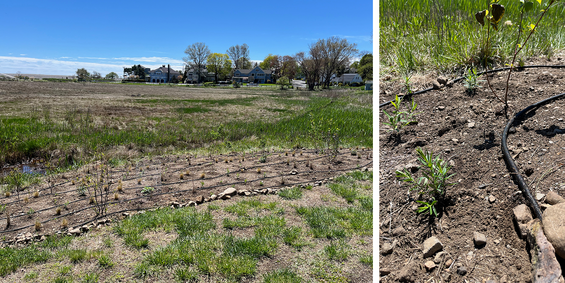
A few days later, temporary drip tubing was carefully laid out between plants to provide a consistent and efficient supply of water for the first growing season. A neighbor generously allowed the hoses to be hooked up to their water spicket and provided water for the plants through July. Tip: Be sure to run drip tubing so it flows downhill to allow gravity to assist with the water pressure, especially for the farthest reaches of the tubing. A few relocations were necessary here to get it right!
Applying Compost - May 31, 2024
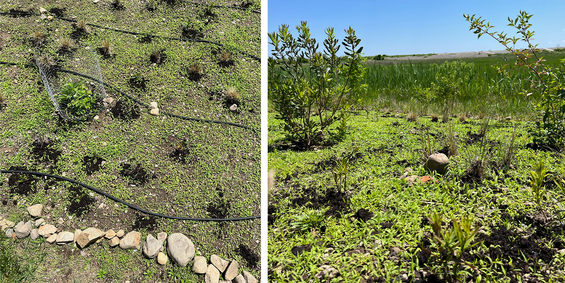
To help the plants get established in the nutrient-poor soils, a handful of compost was placed around each plant (left photo). The compost was applied during a rain-free week to avoid the possibility of it getting washed out. Crabgrass (right) temporarily filled in the area around the plants, which provided a nice “cover crop” and reduced potential sediment runoff into the marsh.
Progress in Plant Growth - July 23, 2024
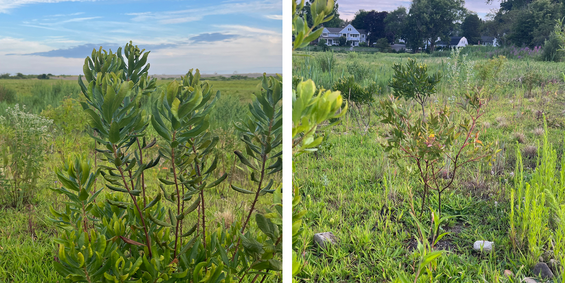
During July of the first summer, the bayberry shrubs (left) took off and established themselves quickly. The Virginia rose, red-twig dogwood, and winterberry shrubs had slower starts but hung in there (right).
More Plant Growth in High Summer - August 19, 2024
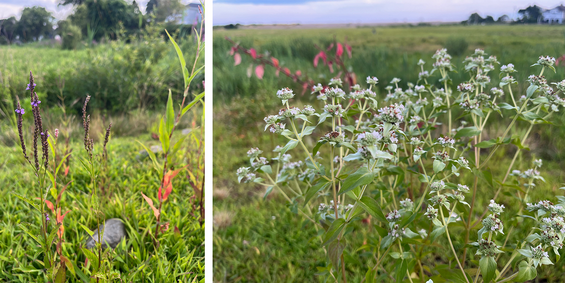
By mid-August, perennials, such as blue vervain (left) and mountain mint (right), began to mature and flower and pollinating insects made an appearance.
Continued Growth Come Autumn - October 2, 2024
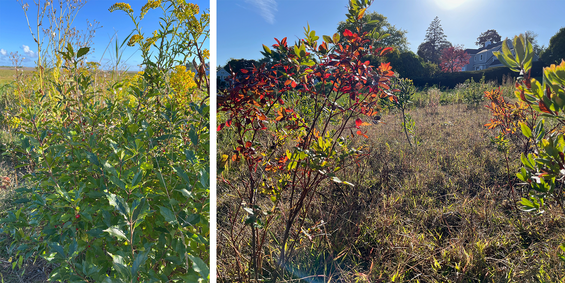
In the fall, goldenrod (which may have grown from the wildflower seed mix or other seedbank) produced late-season flowers (left) and the red-twig dogwood foliage turned a beautiful deep red (right).
Buffer in Year Two - July 11, 2025
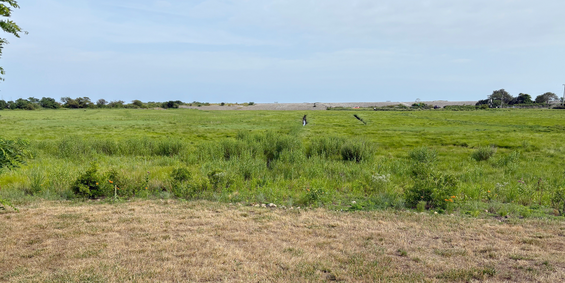
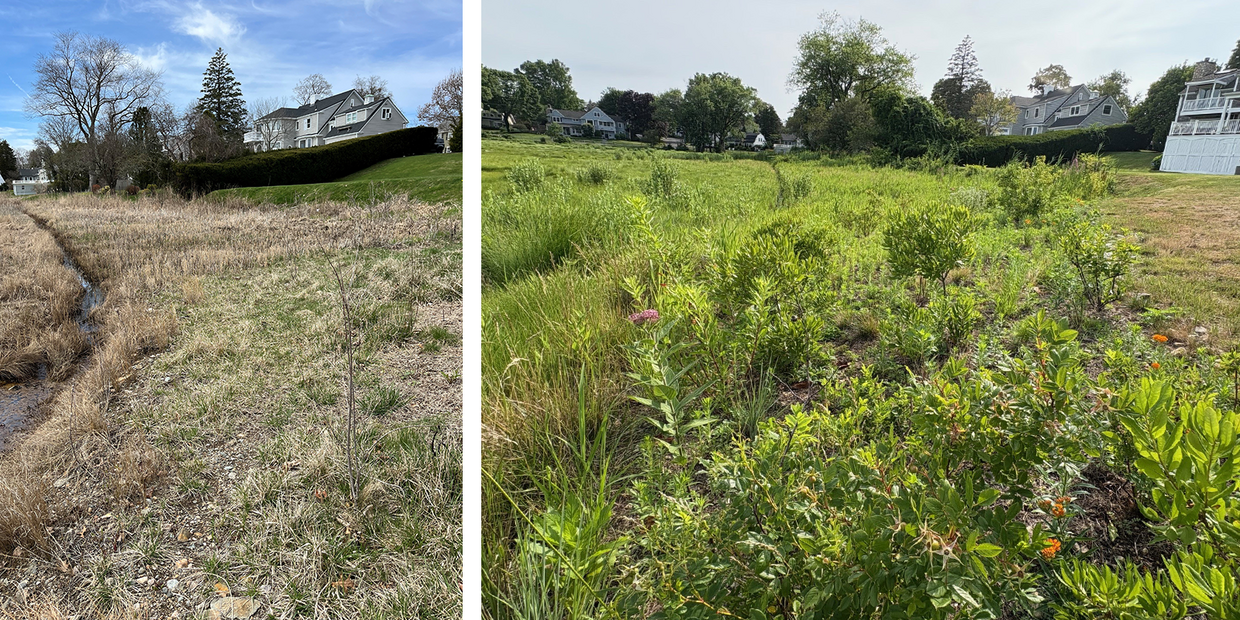
This photo shows the meadow buffer from the adjacent lawn in early July of year two. The lawn grasses were noticeably dry, scorched, and unattractive, while the buffer remained lush and green during the many dry spells of summer. No supplemental water was supplied to the buffer plantings in year two, while the lawn was watered and still remained brown.
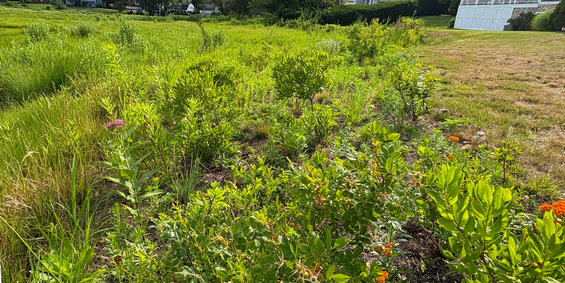
This view from the side shows how the plants filled in and provided a substantially healthier and more attractive buffer than the lawn grasses.
Plant Growth Progress - July 11, 2025
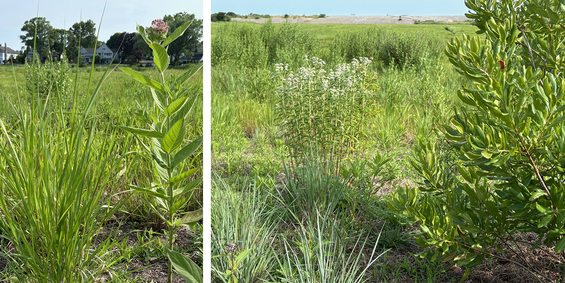
Switchgrass and milkweed (left), along with little bluestem, mountain mint, and bayberry (right), became well established by mid-July.
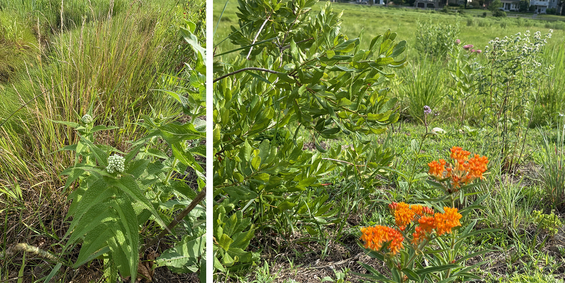
Boneset, which was in the wildflower seed mix planted in year one, made an appearance (left), and bright-orange butterfly milkweed (right) showed off early in the summer.
Progress Continues - July 30, 2025
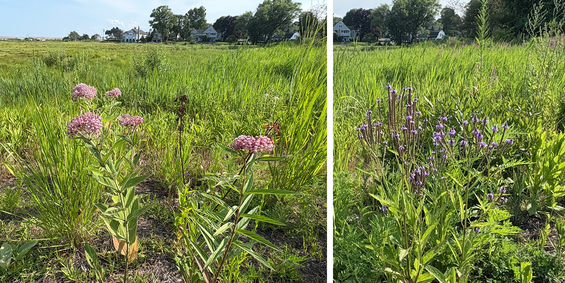
Colorful swamp milkweed (left) and blue vervain (right) proliferated later in July.
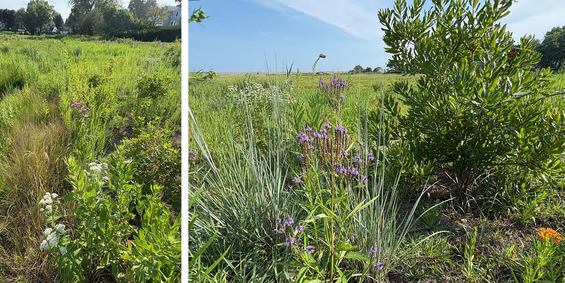
The area closest to the marsh substantially filled in with dense plants (left), while higher up in the buffer, the warm-season little bluestem became more established and finally made its mark.
Pulling Weeds and Seeing Benefits - August 19, 2025
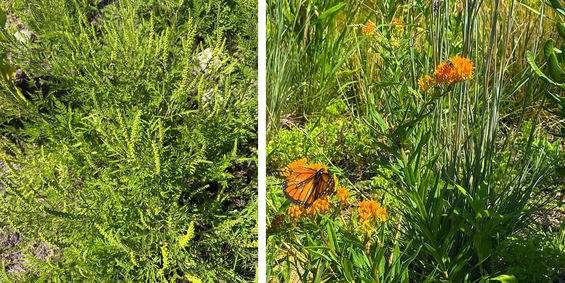
This low-maintenance buffer still required some maintenance. A few hours were spent in mid-August pulling out some ragweed (left) and other undesirable species before they became a problem. The effort paid off when butterflies and other pollinators were seen flitting around and sourcing nectar from butterfly milkweed (right) and other perennials.
Growth of Grasses - September 2, 2025
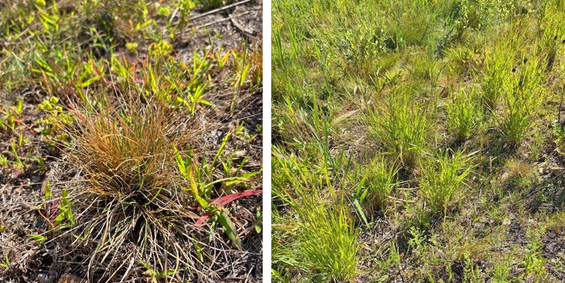
Though the plugs of tufted hairgrass (left) were the first grasses to appear in the late spring (since they are a cool-season grass that thrive in cooler temperatures), they remained small and did not seem to be fully established even by September. Conversely, switchgrass (right), which is a warm-season grass, began to thrive in the heat of mid-summer and filled in nicely by September.
Established Buffer by Summer’s End - September 2, 2025
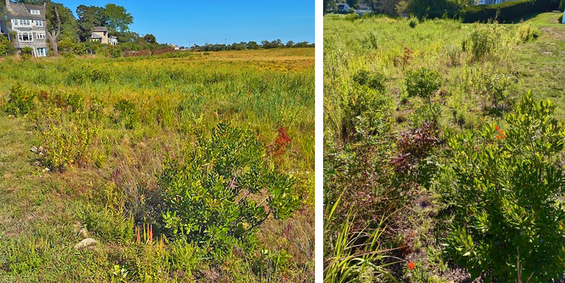
These photos show the buffer in late summer of year two. Note: New England asters did not appear this year, likely due to their being favored by rabbits. To improve the odds for this late-season pollinator favorite, plant asters within clumps of mountain mint. Similarly, wild strawberry disappeared over the growing season due to rabbit pressure, but the strong roots and runners of this plant may help it resume growth next spring.
Buffer in Year Three - June 13, 2026
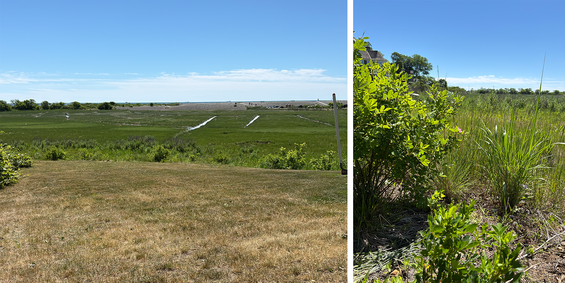
By June of year three, the perennial grasses and plants, such as switchgrass and butterfly milkweed, were noticeably more mature than they were in previous years at the same time. The shrubs also gained substantial size. While the adjacent lawn was once again dry and struggling, the buffer was green with growth, even when no supplemental water had been added.
Plant Progress - July 8, 2026
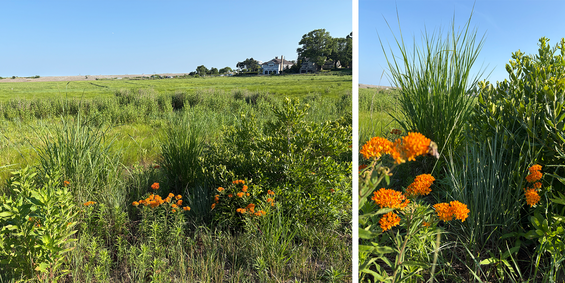
Butterfly milkweed, switchgrass, little bluestem, bayberry, and Virginia rose are now well established and cover more surface area.
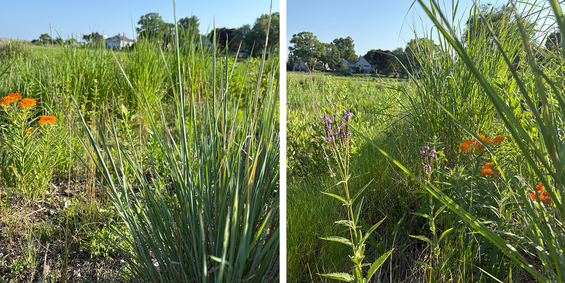
The blooms of bright-orange butterfly milkweed and purple blue vervain attract many pollinating insects, including the monarch butterfly, common buckeye, orange sulphur, and wood nymph. Switchgrass and little bluestem grasses act as a larval host plant for many species of butterflies and provide crucial overwintering shelter and nesting sites for native bees.
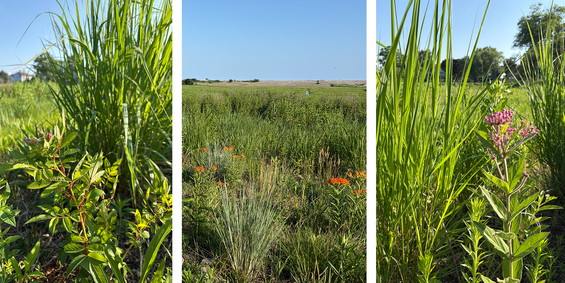
Each year, more ground is covered by native plants that were either planted or seeded. Some perennials and grasses will re-seed or spread by their rhizomes, some will fall off but may come back if there is a seed bank available. This meadow is expected to be a moving, shifting, living environment that is an attempt to bring nature back and enhance the ecological value of the property.
In the coming years, the meadow buffer will continue to be monitored for growth, succession, progression, and lessons. Stay tuned for updates and further inspiration!
Additional Information
See the following pages for more about coastal plants and landscaping:
- Landscaping Near a Salt Marsh: Planting a Meadow Buffer and the Sample Landscape Plan for a Meadow Buffer to Salt Marsh provide more on planting a meadow buffer, including recommended plants.
- The CZM Coastal Landscaping website has extensive information about planting on the coast.
- CZM’s StormSmart Properties fact sheets include a range of options to effectively reduce erosion and storm damage while minimizing impacts to shoreline systems on coastal properties.
- The Goldthwait Reservation website gives details on the Goldthwait salt marsh, land trust, and planting project.