
Description
Fearing Pond is a 26-acre kettle pond located in the southern portion of Myles Standish State Forest off of Fearing Pond Rd. in Plymouth. The average depth of Fearing Pond is 10 feet, the maximum depth is 23 feet and the water transparency extends to roughly 13 feet. The bottom is mainly sand with some rubble and aquatic vegetation is sparse. The majority of the 0.7 miles of shoreline is taken up by woods and a Department of Conservation and Recreation (DCR) campground and swimming beach.
Recreational access
The Department of Conservation and Recreation manages a beach and parking area with space for approximately 50 cars in the southeast corner of the pond (get directions). Cartop boats can be carried in and launched and there is a fee to park; electric motors only. There is a wide sandy beach around the entire shoreline which makes for easy shore fishing. Please contact DCR offices of Miles Standish State Forest for additional information, fee structure and/or restrictions pertaining to public access of Fearing Pond.
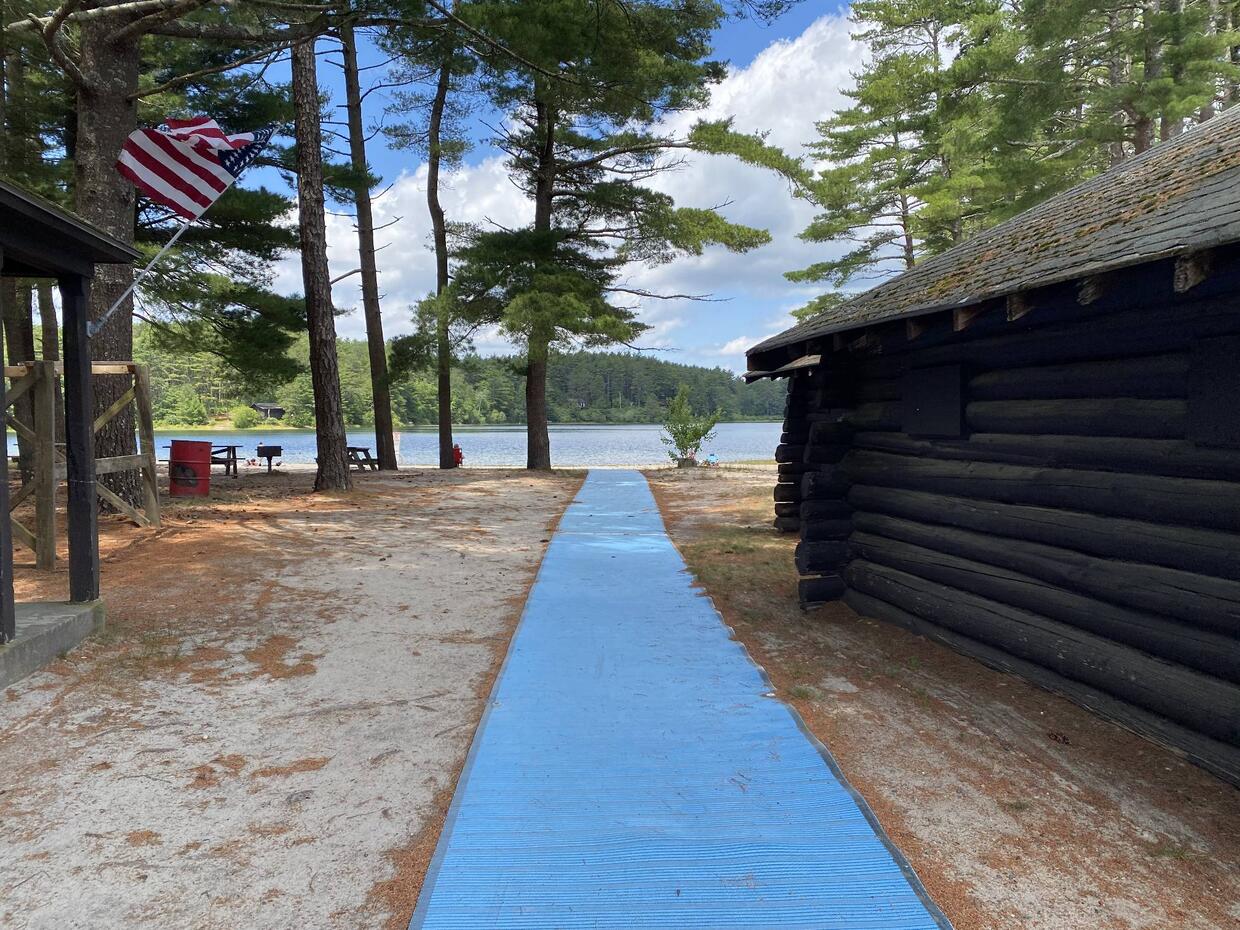
Walking mat from the parking lot to the beach at Fearing Pond.
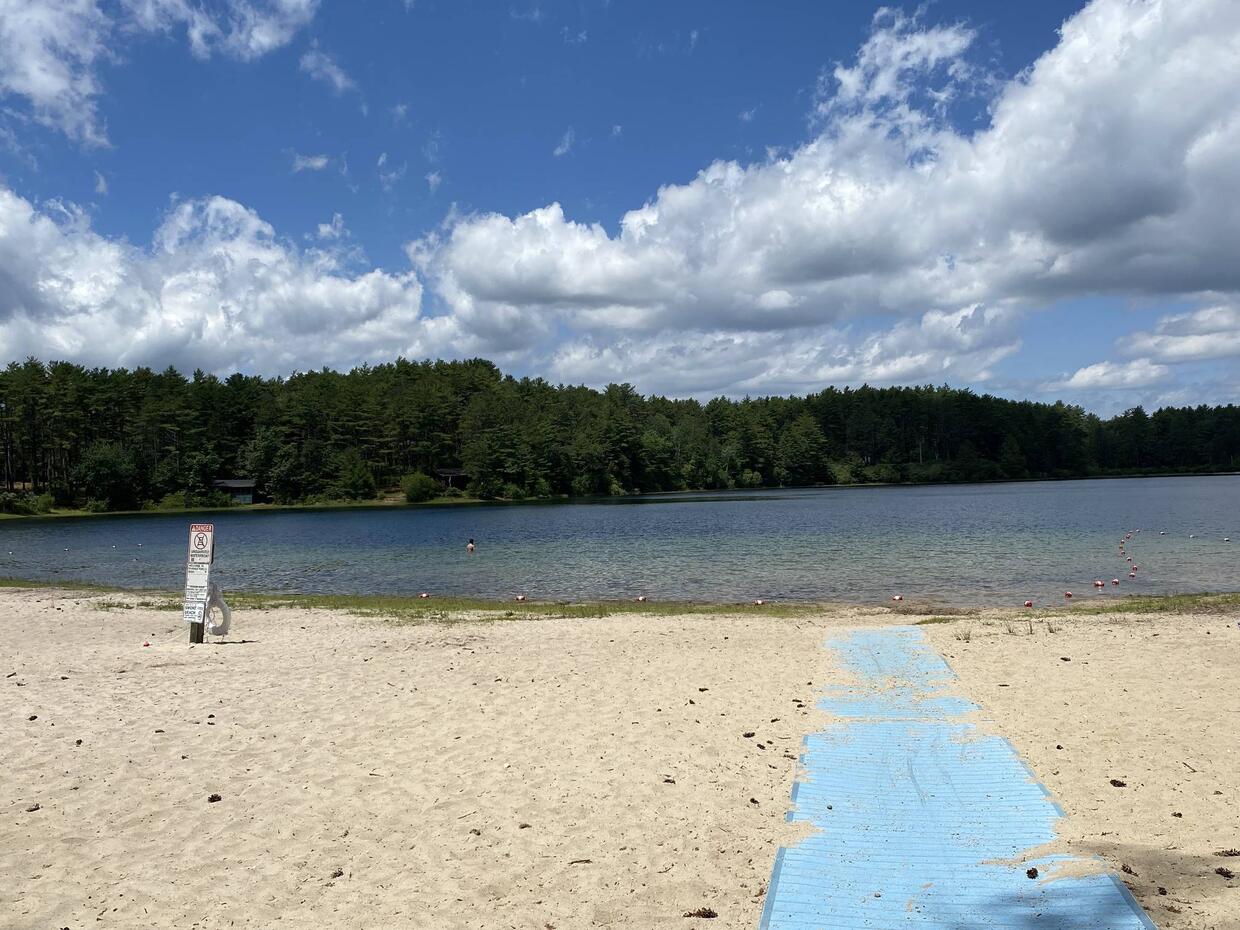
Shore and cartop boat access at Fearing Pond.
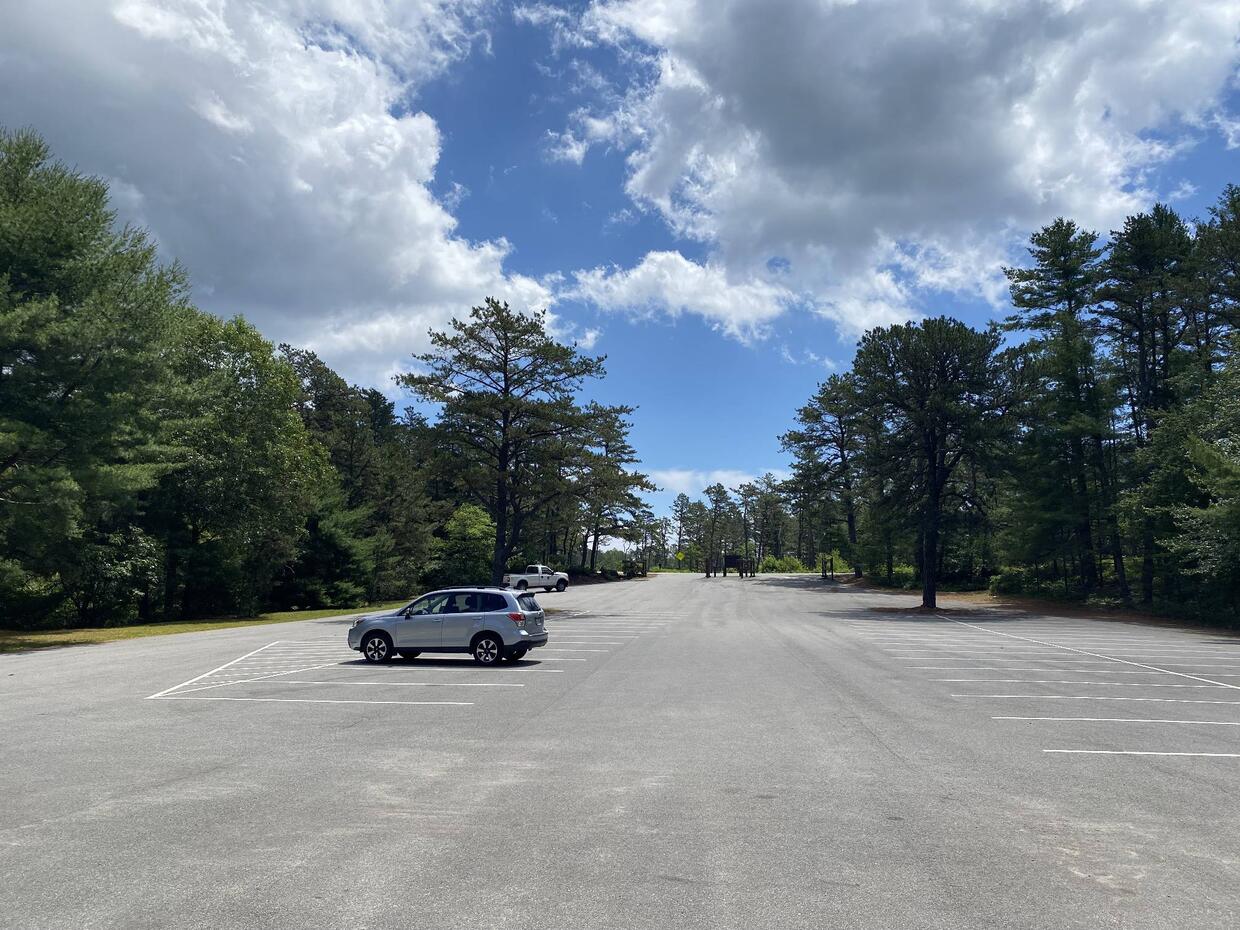
Parking lot for Fearing Pond.
Fish populations
The following fish species were found during MassWildlife surveys:
- largemouth bass
- smallmouth bass
- yellow perch
- brown bullhead
- bluegill
- pumpkinseed
- banded killifish
- golden shiner
Fearing Pond is stocked each spring and fall with trout.
Fishing
Fearing Pond is managed as a trout pond and is the only pond in the Myles Standish State Forest that is stocked with trout. Trout are the primary species of interest to anglers, although yellow perch, sunfish and largemouth bass are also present. Fearing Pond has produced brook trout, brown trout, rainbow trout, yellow perch, largemouth bass, bullhead, and sunfish that meet minimum sizes for recognition by Freshwater Sportfishing Awards Program.
More fishing resources:
Stop aquatic hitchhikers
Prevent the transport of nuisance species; clean all recreational equipment. Visit ProtectYourWaters.net to learn more.