

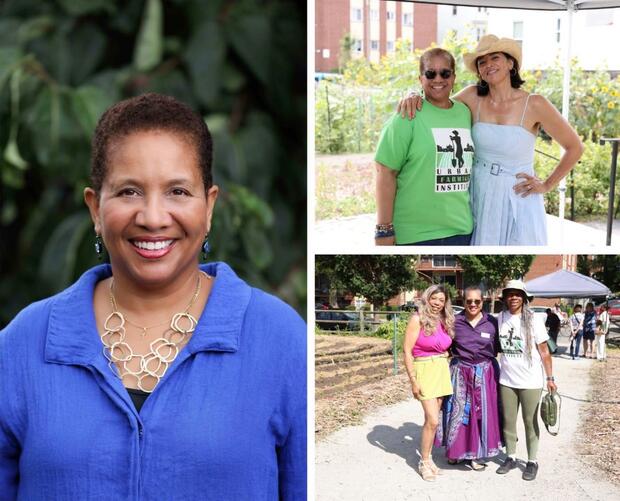
For more than a decade, Pat has built the Urban Farming Institute of Boston into a six-site enterprise, addressing food insecurity in the Dorchester, Mattapan, and Roxbury neighborhoods. In 2024, they purchased the historic Fowler Clark Epstein site on Norfolk St. which now serves as their headquarters and is home to a Friday Farm Stand which not only features freshly grown produce but family friendly programming including live music for residents to enjoy while shopping locally.
Pat's love of agriculture started young when her Jamaican grandparents grew food in their Roxbury backyard, canning and pickling their produce to last them through the winter and sharing with their friends and family. Later on, her mom bought additional land next to their home in Dorchester where all kinds of vegetables and flowers were grown and to this day, she still grows in that space, even teaching her sons how to grow food.
For Pat, working in agriculture—and specifically being a woman farmer—means ensuring that everyone who can grow food has the opportunity to do so and make a viable living. She views creating economic opportunities as a vital necessity, focusing heavily on paving pathways for future generations by providing training, land access, jobs, and supplies. Beyond production, Pat believes farm sites should serve as vehicles for joy, self-care, and healing. By blending food with arts and culture, her work helps stave off isolation, providing dedicated places and spaces where women can heal, thrive, and grow themselves and their families.
Driven by this shared vision, Pat advises new and aspiring women farmers to be dogged and unrelenting in their desire to cultivate food for their communities. She emphasizes that every person growing food directly strengthens the overall health, wellness, and resiliency of the population. In her view, fresh food builds the physical and mental strength needed to fight larger systemic battles like housing, healthcare, and education. Because the success of local youth and the longevity of elders depend on access to chemical-free, culturally relevant produce, Pat encourages emerging farmers to hold a bold, unwavering vision. She urges them to listen closely to the community's health needs, engage every local sector in the fresh food movement, and always let any "No" simply be the start of a good conversation on how to grow more.