
What do I need to know about my health and health care?
Find tools to help you learn about your health and talk with your health care provider about your needs.
Learning about your health can be empowering and at times difficult. It is very important to know about your health because it can help make it easier to:
- Make choices
- Talk with your providers
- Plan for emergencies
- Ask for the support you need
Use this section to learn about your health and how to take care of yourself.
Routine care
Taking care of your health starts with simple everyday choices. This includes eating healthy, exercising, taking your medicine, and staying clean. It also means going to your health care appointments and planning for the future. Use these tips to stay healthy and keep track of your appointments:
- Make sure to visit your primary care provider at least once a year, even if you don't feel sick. They can help you keep track of your health and stay healthy.
- If you have multiple health conditions and specialists, make sure to see your specialists regularly. Each one helps with a different part of your health.
- Make sure to visit your dentist every six months. Health conditions in your mouth can lead to other health problems in your body. Regular dental appointments can keep your teeth healthy and help catch problems early.
Learning about my health
No matter how old you are, you can always learn more about your health. Some things to start learning about:
- Any health conditions you have
- The medicines you take
- What you may be allergic to and how to stay safe
- What to do and where to go if you’re having a health emergency
If you feel ready to learn more about taking care of your health, you can use the tip sheets below to help. Remember, everyone is different and needs different types of support. It’s okay if you aren’t ready to learn all the skills for your age right now. The important thing is to set goals and keep working to reach them.
Who can support me in understanding and talking about my health?
Everyone needs support! Think about who in your life helps you with your health. Even if you're trying to be more independent, you can always ask for help.
You can talk with your parents or caregivers about your health. They know a lot about your health and can help you understand your health conditions. You can also talk with your providers. They can answer questions your parents/caregivers are not sure about. Remember, you can talk to your providers alone if you have questions that you may not want to ask your parents or caregivers. It is important to feel comfortable and confident having conversations with your provider.
You can contact these DPH programs that can help support your health:
Community Support Line:
- DPH has a Community Support Line that connects young adults with special health needs, their families, providers, and community members to resources and support. A Resource Specialist will evaluate your needs and provide information about the programs you may be eligible for. They can help connect you to state and local resources including:
- Enhanced care coordination for those eligible
- Public benefits information and eligibility
- Family-to-family support
- Community-based resources
- Disability and condition-specific resources
- Other programs within DPH
- They have Resource Specialists from different cultures, who speak different languages. You can visit their website or call (800) 882-1435.
Care Coordination:
- DPH has a Care Coordination Program that provides enhanced care coordinationin partnership with families of children and youth, birth to age 22, with medical complexities. Enhanced care coordination focuses on your family’s needs, preferences, and values. Experienced Care Coordinators can help you with:
- Understanding and addressing your or your child’s and family’s medical, social, developmental, behavioral, educational, and financial needs
- Becoming a stronger advocate
- Connecting with other young adults or families who face similar challenges
- Accessing community resources, educational events, and trainings in multiple languages
- Planning for transitions including transition to adult services
- They have Care Coordinators available from different cultures, who speak different languages. You can call the Community Support Line at 800-882-1435 to see if you are eligible for this resource.
Health and Disability Linkage Coordination:
- The DPH Health and Disability Linkage Coordination Program supports people age 18 and older with intellectual and developmental disabilities. They can provide information about health topics, connect you to health services, and help with the skills needed to manage your health and healthcare. You can visit their website or call (617) 279-3730.
How can I create a plan to prepare for different emergencies?
It’s best to get ready for emergencies before they happen. You can also learn from emergencies you've already had, so you're ready next time. There are some emergencies that everyone must plan for like fires or big storms. There are other emergencies that are specific to your health conditions. Knowing what may cause an emergency and how to handle them can make them feel more manageable.
There are many different types of emergencies you, your family, and support system should prepare for. Some might include:
- A personal medical or health emergency
- A parent/caregiver medical or health emergency
- An emergency that prevents you from leaving home (like COVID-19 or a snowstorm)
- An emergency that forces you to leave your home (like a fire or flooding)
- An emergency where your home might lose electricity
- A community health illness (like COVID-19)
It's important to keep all your health information in one place, in case you have an emergency. This helps you share important information quickly. You can also have a bag packed with important health supplies in case you need to leave your home quickly. Learn more about preparing for emergencies at the CDC’s Children and Youth with Special Health Needs in Emergencies website.
How can I organize my health information?
Learn about where you can find your health information and how you can organize it.
It’s important to keep your health information and medical records organized. This makes it easier to keep track of your medicines, current conditions you have, and health history. You’ll need this information when you visit a new provider or if there is an emergency.
It’s also important to know how your medicines affect your health. Missing your medicine, taking it at the wrong time, or taking the wrong amount can be dangerous. If you have a smartphone, you can set an alarm or use an app that can remind you to take your medicine. It is also important to know:
- Does your medicine need to be taken with food?
- Can your medicine be taken at the same time as other medicines?
- Is drinking alcohol while taking your medicine dangerous?
- Are you allergic to any medicines?
Talk with your parents, caregivers, or providers about your medicines and how to stay safe.
If you need help organizing your medicines, visit this How to Create a Medicines List tool. You can also use the linked daily medicine charts and tips.
- Use the chart weekly based on your needs
- Give this chart to anyone who helps you with your medicines
- Keep this chart with your medicines or put it somewhere where you can see it every day
How can I find and store my personal medical records?
It’s important to have a list of your health information for your appointments or other health reasons. Many health care providers have websites called patient portals where you can see your health information. Try using your patient portal. Call your health care provider's office if you don't have a portal and need to find your medical records.
- Patient portals require a password. You can share your password with your parent, caregiver, or person you trust in case of an emergency.
- You can also print out your medical records to bring to appointments. If you print your records, put them in a folder or binder to stay organized. You can also ask your health care provider to print a summary of your appointment after each visit.
- Medical records can be long. If you want to print parts of your records, talk with your health care provider or parents/caregivers. They can help decide which parts are most important to keep. Important records might include:
- Personal information
- Medicines
- Notes about reactions to medicines
- A list of your providers
- Medical device information
- A list of your health conditions or diagnoses, with the dates you learned about them
- A list of any surgeries you’ve had, with the dates you had them
- Notes or summaries from any of your important health care appointments
You can use this example table to keep note of your basic health information.
What is a medical ID?
Medical IDs have important information about your health, like:
- Allergies
- Serious health conditions
- Who to call in an emergency
Many people carry their medical ID in case they have an emergency. Someone might not be able to tell others about their health needs in an emergency because:
- They have different ways of communicating
- They can’t communicate because of their condition
- They are having an emergency and cannot communicate because they are not awake
Medical IDs don't have space for a lot of information so it’s important to keep other necessary information with you, either on paper or elsewhere on your mobile phone. That way, you can easily tell others about your health if you need to.
How can I organize my appointments with my provider?
Learn how to schedule, keep track, and prepare for appointments.
This section can help you learn how to get ready for your health care appointments. It covers how to schedule and keep track of your appointments, what to bring, what to ask, and plan how to get there. Learning these skills can help you become more independent in taking care of your health.
How can I make a health care appointment?
Making an appointment with your health care provider can feel scary or confusing if you’ve never done it before. It’s important to learn how to do it and how to ask for help when you need it. The next time your parent or caregiver makes an appointment for you, ask if you can practice doing it with them. If you want to set up an appointment on your patient portal, you can practice logging into your portal and sending messages to your provider. You can also ask your parent or caregiver if you want help using your patient portal.
You can practice making health care appointments with the tool below adapted from the Academic Autistic Spectrum Partnership in Research and Education.
How to make a health care appointment:
| What to do | Examples of what to say |
|---|---|
| Call your provider’s office on the phone or message them in your online patient portal. | “Hello, my name is [your name] and I’m calling to make an appointment with [your provider’s name].” |
| Tell the provider’s office what your appointment is for. | “The reason that I am making the appointment is [your reason].” |
| Know the days and times that you’re free for an appointment and have your calendar or schedule in front of you. Tell your provider’s office the days and times that work for you. | “I’m free for an appointment at these [dates/times].” |
| Ask how long the appointment should take. | “About how long should my appointment take?” |
| Be sure you know where your appointment will be. If you don’t know, be sure to ask for the address and write it down so you remember. | “What’s the address of my provider’s office? Are there any special directions I need to know to get to my appointment including a floor or suite number?” |
| Tell the provider’s office any accommodation you might need. Examples might be an interpreter, a wheelchair accessible entrance, or a longer appointment. | “I will need [your accommodation], is that something you can provide?” |
| Ask your provider’s office if there is anything you need to do before or bring to your appointment. | “Is there anything special I should do to prepare for the visit? Should I bring anything with me?” |
| Tell your provider’s office your (or your parent/caregiver’s) name and phone number, so they can call you if they need to. | “If your office needs to call me back, they should call [name] at [phone number].” |
What should I talk about at my appointments?
It’s important to learn about your health, what keeps you healthy, and what hurts your health. Some people may have more to learn about their health than others and some people may need more time to learn about their health.
A good way to start is by asking questions during your provider appointments. Before you go, make a list of questions to ask. This helps you learn about your health and makes sure you don't forget any important questions. You could ask questions like:
- What should I know about my conditions or medicines?
- Are there any vaccinations or tests that I need?
- How can I care for my health at home?
- When do I need another appointment?
It’s also important to know how you feel and tell your provider about your symptoms or changes in your health. You can also use this example symptoms chart to help you understand how to talk about what you are feeling. The example chart was replicated from the Transition to Adulthood: A Health Care Guide for Youth and Families.
How can I keep track of my appointments?
Keeping track of many appointments can be difficult! It is helpful to keep a list of all of your appointments in one place. You can make reminders to keep track of your appointments on a paper calendar, on your phone, or on your computer. It’s also helpful to put the appointment information in your calendar or phone right after you schedule it, so you don’t forget.
You can use this example appointments table to help you keep track of your appointments. It can also help keep a summary of your appointments.
- Complete the “Before appointment” section with your parent or caregiver. Complete the “During appointment” section with your health care provider.
- Before you go to your appointment, you can make a list of questions you want to ask.
What should I bring to my appointments?
It’s important to bring items to your appointments, so your provider has the information they need to help you. You can also bring items that make you feel comfortable.
Use this What to Bring Worksheet (page 13) or this example thing-to-bring table adapted from AASPRIE to learn about what to bring to an appointment. You may not need everything that’s suggested. You may also want to add other items not mentioned.
How can I get to my health care appointments?
It’s important to plan ahead so you can get to your appointments on time. How you get there might depend on where you live. This could mean walking, driving, getting a ride, or taking a bus or train. If you need help getting to appointments, talk to your support system early. Below are some available services if you need help getting to an appointment.
- MassMobility supports people with disabilities who do not have transportation. They can help you find transportation services for your needs. This includes: public transit, volunteer driver services, carpool services, taxis, and other options.
- MassRideMatch has information for people looking for accessible transportation in Massachusetts. You can visit their website to learn about what’s available in your area.
- Public transportation in Massachusetts: In Massachusetts, the MBTA and other transportation organizations have services to help people travel. People with disabilities might qualify for:
- Lower prices
- Shared ride services
- Direct door-to-door services
- Training to learn about traveling independently
- Other options for health care transportation: Talk to your provider’s office if you are not sure how to get to your appointment. They may be able to help you set up transportation. Some towns have additional ride services. Look on your town’s website for more information.
How can I make a plan for a healthy life?
Using the Charting the LifeCourse framework, learn how to set and work towards goals for a healthy and happy life.
One part of self-management for your health is creating and working towards goals. It’s important to plan goals, both by yourself and with your support system. It’s also important to list what people and resources can help you reach your goals. One tool that can be used to plan for your future and a healthy life is the Charting the LifeCourse framework.
How can I use the Charting the LifeCourse framework?
The Charting the LifeCourse Framework can help you plan for a good and healthy life. It can help you figure out what supports, resources, and people you need to reach your goals. It also gives you tools to help you speak up for what you need. Anyone can use this plan, but it’s especially helpful for young adults with special health needs and their families.
You can learn more about Charting the LifeCourse on the Life Course Nexus website. They have online and paper tools that can be used to help plan for the future. Their YouTube channel has videos from parents and caregivers who use the tools to help plan for their child’s future. Some resources that may be useful from this framework include:
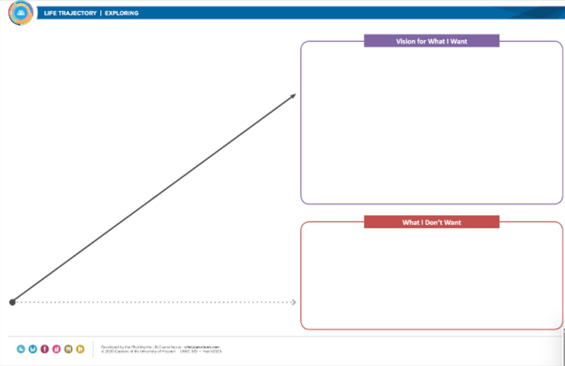
- Trajectory for Exploring: This tool can help you explore what you want and don’t want in your life. You can take time to think and write down what your hopes for your life are and what your fears are. You can then choose to share this with your parent, caregiver, family member or support system. They can help you achieve your health and life goals.
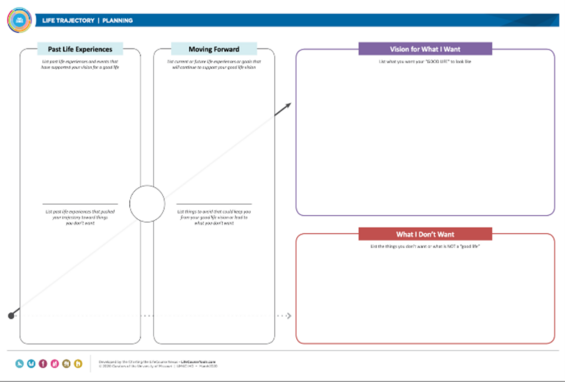
- Trajectory for Planning: This tool can help you think about how you want to have a good and healthy life. You can take time to think about how things in your past have pushed you closer or further from what you want. You can then think about the steps you can take in the future to help you reach your vision. Your parents or caregivers can also use the Trajectory Planning Tool for Families if they want to share their hopes for you.
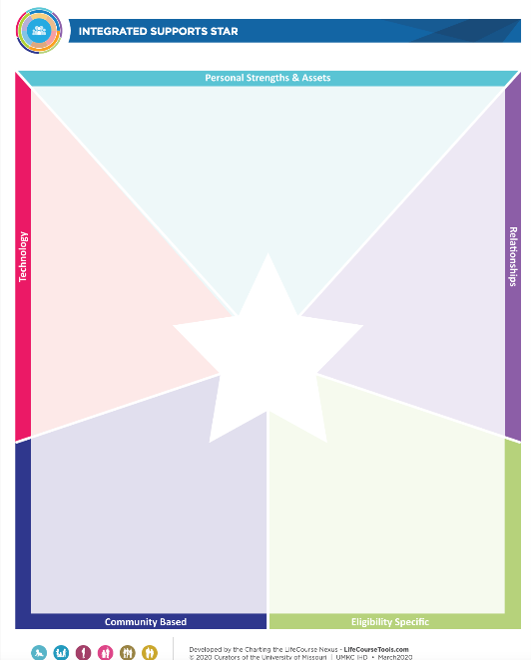
- Integrated Support Star: This tool can help you and your family members see what strengths and supports you have right now. These can include people like friends and family or things you are good at. It can include supports like:
- School
- Your community
- Resources like Medicaid
- Technology that helps you every day.
The tool can also show what help or resources you might need.
What are other resources that can help my health transition?
Find groups that help young people with special health needs and their families.
These organizations can help you and your family in your health transition.
- Easter Seals of Massachusetts: Easter Seals provides services to help children and adults with disabilities in Massachusetts. They offer programs related to:
- Employment
- Rehabilitation
- Youth mentoring
- Assistive technology
- Becoming more independent
- Got Transition®: The aim of Got Transition® is to help make the transition from child health care to adult health care easier. Their website provides information about different resources that can help young adults.
- TeensHealth: This website helps young adults learn about:
- Different conditions
- Managing your health
- Understanding food and nutrition
- Coping with stress
- The Federation for Children with Special Needs: The Federation provides trainings to support transition for young adults with special needs and their parents/caregivers. They also provide information about education, health care, and family engagement.
- FamilyTies of Massachusetts: FamilyTies is part of the Federation for Children with Special Needs. The program is driven by families of children with special needs. They provide support, information, and training for parents or caregivers.
Definitions list
Use this list of definitions for this toolkit chapter.
Find definitions of words specific to this chapter of the toolkit.
These definitions are to help youth, young adults, and their families understand this chapter. These definitions were created by the Division for Children and Youth with Special Health Needs for use with the toolkit only.
- Dose:The amount of a medicine someone takes. This includes the amount of the medicine used, the strength and the frequency.
- Health care provider: Doctors, nurses, physician assistants, therapists, or other providers who help care for someone's health.
- Health care transition: When a young adult switches from having child health care providers to adult health care providers.
- Health conditions: Range of physical, developmental, behavioral, emotional conditions, or symptoms that can affect someone's health and wellbeing.
- Health insurance: Plans people can get through the government, work, or a private company that helps pay for some or all their medical care.
- Health transition: The time of life when a young adult starts learning and taking more responsibility of their own health and switches from child health to adult health systems.
- Medical or health emergency: A serious medical concern or issue that needs immediate medical attention from a provider or hospital.
- Medical records: Information online or on paper that explains someone's conditions, symptoms, medicines, and/or past surgeries and treatments.
- Medicine: This could be a drug, pill, cream, injection, breathing treatment, or other things taken or used to help treat a symptom or condition.
- Patient portal: A website where people can find their health information with their provider.
- Personal identification information: Information that helps say who someone is, including their name and birth date. This can be found on licenses, state-issued ID, student IDs, and medical ID cards.
- Self-management: Learning about and taking more care of one's health independently and with support.
- Skills: Activities or behaviors that someone can learn.
- Support system: Includes parents, caregivers, family members, friends, mentors, and community that can help someone in different parts of their life.
- Symptom: A feeling, issue, or pain that someone can feel physically, mentally, or emotionally and that can be related to a condition. This can be a new feeling or feelings that have been felt in the past.
- Young adults with special health needs: People who have or are at increased risk of chronic physical, developmental, behavioral, or emotional conditions.