
What is swollen bladderwort?
Swollen bladderwort (Utricularia inflata) is a carnivorous, mat-forming aquatic plant with a native range in the United States from Texas and Florida to Delaware. As of 1999 this plant had spread to waterways of the Adirondack Mountains, and it is now present in several northeastern states, including Massachusetts, where it is considered an aquatic invasive species.
How is swollen bladderwort different from native bladderworts?
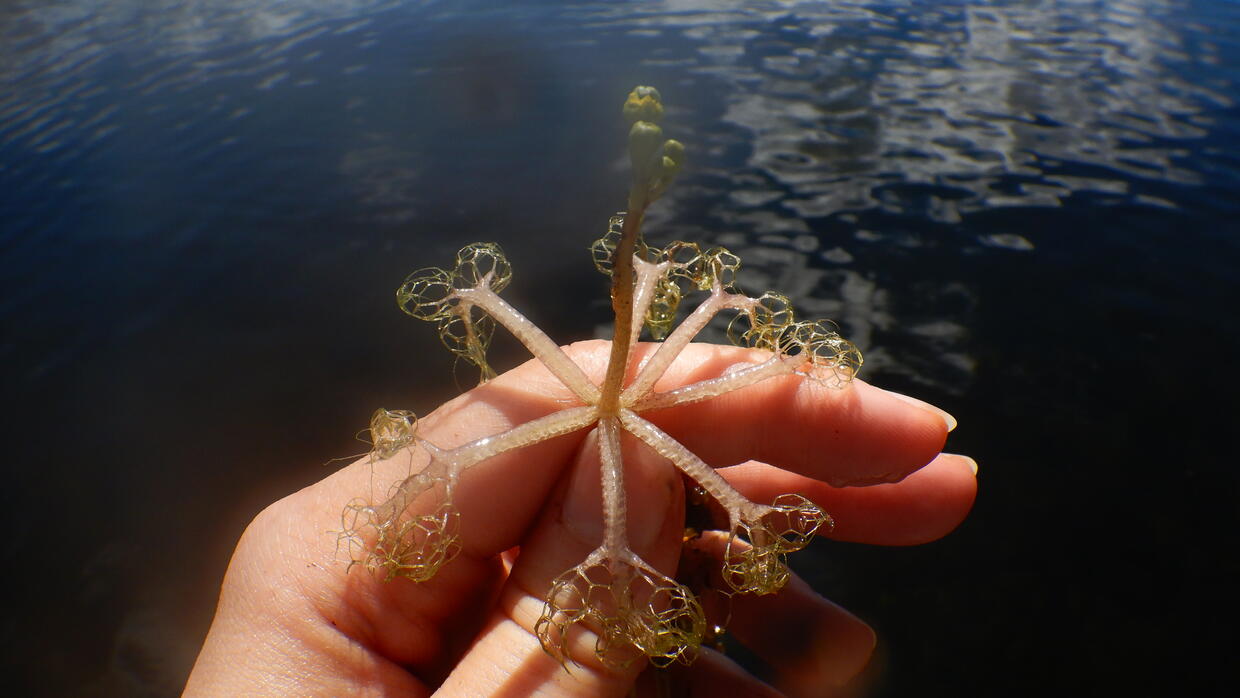
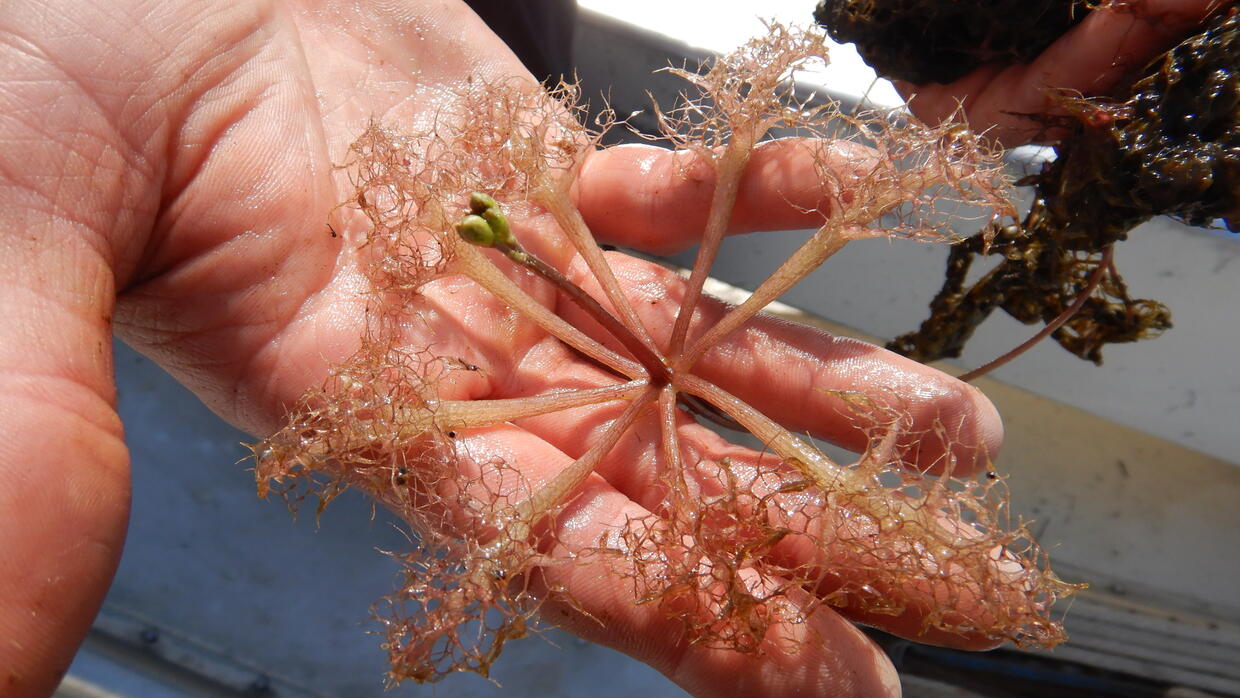
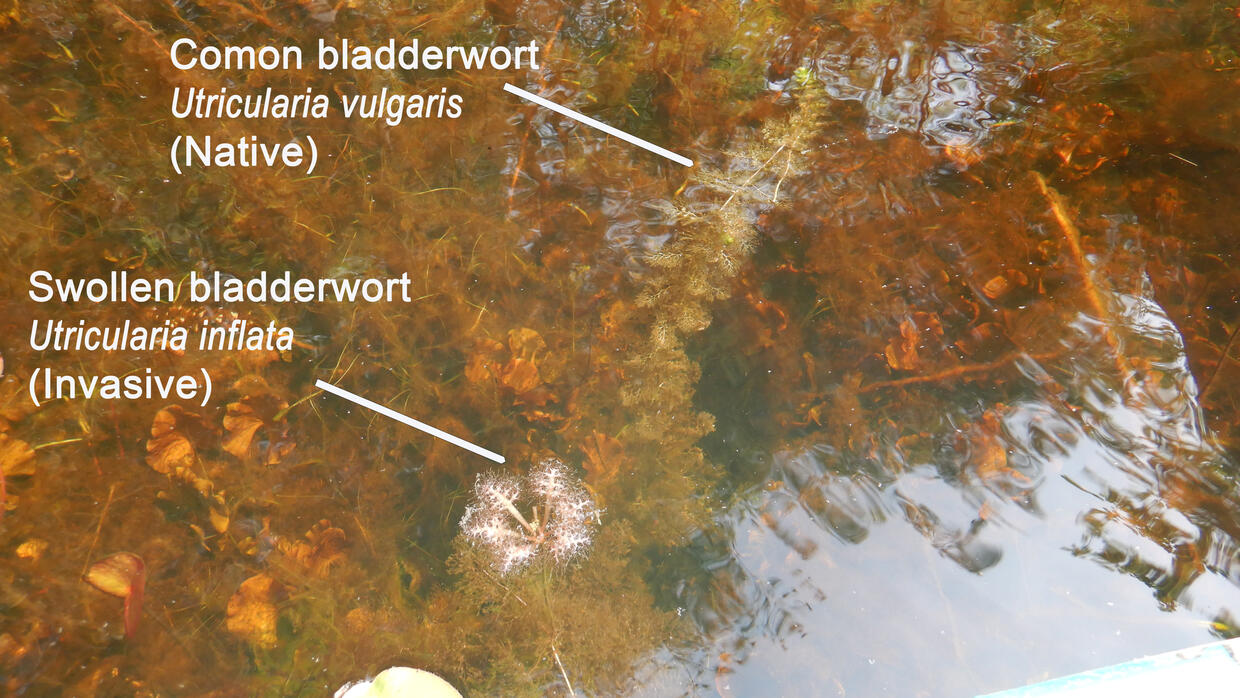
Swollen bladderwort is one of only two species of bladderwort that form floating structures which hold their flowers above the water’s surface. Compared to the bladderwort native to Massachusetts (Utricularia radiata), Swollen bladderwort is generally larger, with more flowers and denser underwater sections, and tends to have an earlier growth and decay season. As an invasive species, swollen bladderwort can take over large areas, impacting native plants, animals, and water quality.
When and where was it discovered at Quabbin Reservoir?
Swollen bladderwort was first discovered in the Quabbin watershed in 2017. A single plant was found near Boat Launch Area 2 in the northern-most cove of the Quabbin Reservoir. It was removed; surveys since then have not found it again at this location.
However, in May 2023, several swollen bladderwort plants were found at the fragment barrier on Pottapaug Pond, DCR’s regulating pond located above the Quabbin Reservoir Boat Launch Area 3. Surveys by DCR and contractors hired by the Massachusetts Water Resources Authority (MWRA) following the 2023 discovery have observed swollen bladderwort throughout Pottapaug Pond, in neighboring O’Loughlin Pond, and in limited adjacent areas of Quabbin Reservoir.
Why is this plant a concern for water quality and the environment?
Swollen bladderwort can have several environmental and water resource management impacts:
- Dense mat formation can increase water temperature, decrease dissolved oxygen, impact pH, and decrease light availability for other native aquatic plants.
- Changes in water quality may result in more frequent and harmful algal blooms.
- Mat formation can also cause recreational issues such as clogged propellers, fouled fishing lines, and difficulty paddling.
- Dense mats could clog water intake and other management structures.
- The plant can disrupt the food web, competing with young fish and other predators that eat aquatic insect nymphs and zooplankton, .
- May outcompete native aquatic plants, threatening native biodiversity.
How is DCR responding to this Aquatic Invasive Species?
When swollen bladderwort was discovered in Pottapaug Pond in 2023, DCR/DWSP closed private boat access to the pond for the remainder of the season. This action was taken to prevent further spread of this species to other waterbodies, most importantly to the nearby Quabbin Reservoir. In addition, an emergency management contract was issued by MWRA, and contractors were hired to remove this species from designated areas in Pottapaug Pond. Unfortunately, by the time contractors mobilized in late Summer 2023, the plants had already decayed, making it difficult to identify the invasive species.
The decision was made in 2024 to prohibit all private and rental boat fishing on both Pottapaug and O’Loughlin ponds so DCR could focus on Aquatic Invasive Species identification and removal. Contractors were again hired by MWRA. Management activities included full pond surveys and 21 days of harvesting and removal. Contractors harvested and removed over 1,500 gallons of plant material from the ponds (mainly from Pottapaug) in summer 2024.
Pottapaug Pond and O’Loughlin Pond remained closed to all boat fishing for the entirety of 2025 while management and removal efforts continued. Additional surveys were held on Quabbin Reservoir in areas adjacent to BLA3. A new fragment barrier was installed on Pottapaug Pond to limit fragmentation from removal efforts. An MWRA contractor removed a total of 323 gallons of plant material over 12 days from the ponds and reservoir. Unlike 2024, swollen bladderwort populations experienced a “bust” year – very few plants developed flowers making it difficult to detect and remove.
When will private boats be allowed on Pottapaug and O’Loughlin Ponds?
DCR decided to keep Pottapaug Pond and O'Loughlin Pond closed to all boat fishing for the 2026 fishing season after review and collaboration with other invasive species experts. The Division of Water Supply Protection will continue to evaluate management and removal efforts and provide guidance on pond access every year.
Images of Invasive and Native Bladderworts
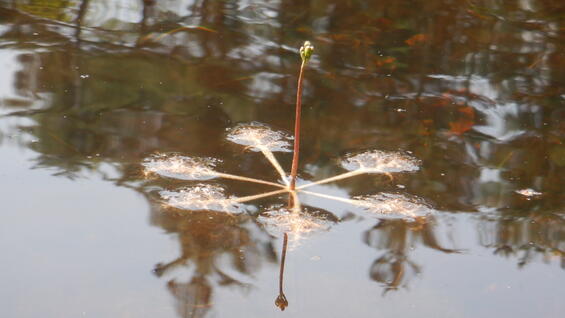
Swollen bladderwort, Utricularia inflata, an invasive aquatic species in Massachusetts.
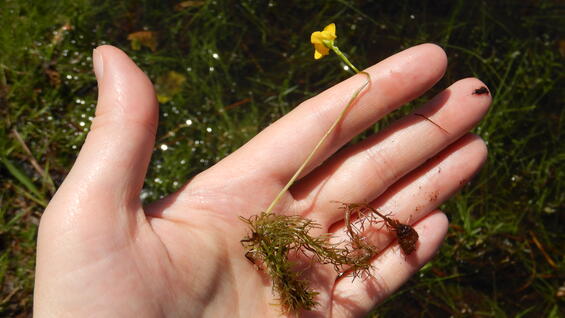
Flat-leaved bladderwort, Utricularia intermedia, a bladderwort native to Massachusetts.
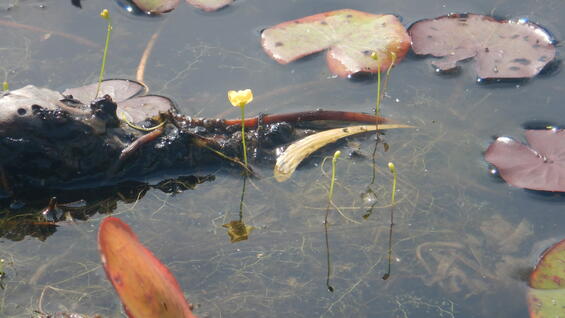
Creeping bladderwort, Utricularia gibba, a bladderwort native to Massachusetts
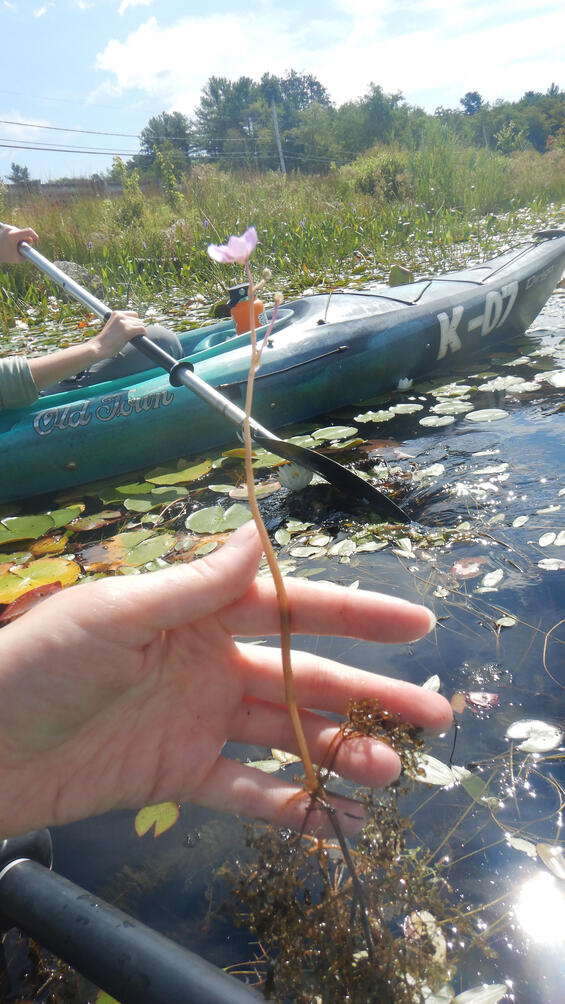
Purple bladderwort, Utricularia purpurea, a bladderwort native to Massachusetts