
- Office of Consumer Affairs and Business Regulation
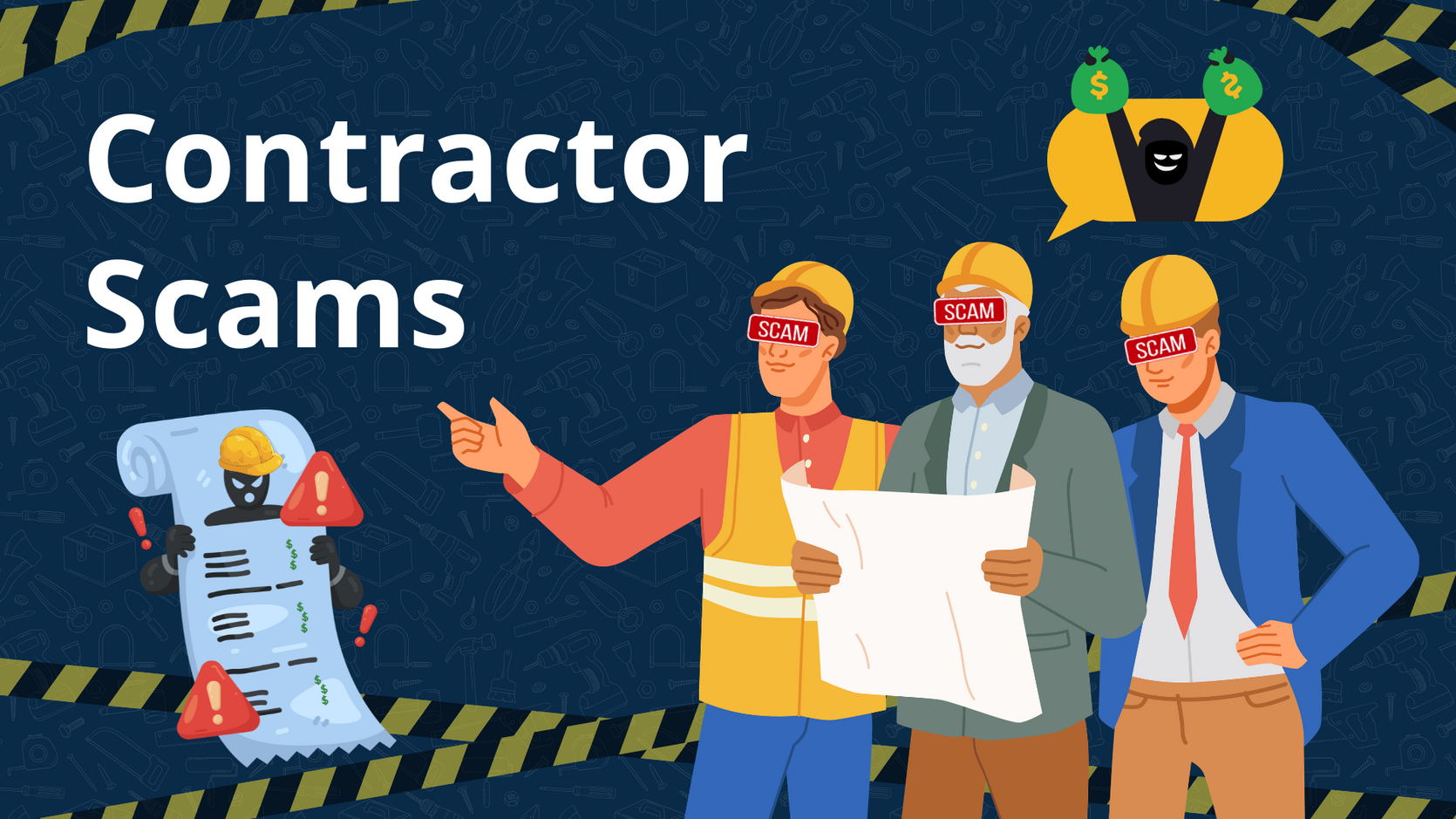
As spring starts to bloom, many people begin thinking about home improvement projects for a fresh look or needed repairs. Unfortunately, scammers posing as contractors (or contractors with bad intentions) often take this opportunity to commit fraud.
Contractor scams — also known as “home improvement scams” — happen when a person posing as a contractor or a contractor with bad intentions promises to do the work but ends up doing more damage or no work at all. They might ask for cash up front and then cease communication — leaving you with damage to your home or property, an unfinished job, or no work completed at all.
To protect yourself and ensure you're eligible for potential help from the Office of Consumer Affairs, it’s important to understand the Home Improvement Contractor (HIC) program and to only hire contractors registered on the MA Contractor Hub. You also need to know how to spot some red flags of contractor scams and what steps to take if you fall victim to one.
Home Improvement Contractor (HIC) Program Overview
The HIC program has four functions that protect homeowners and regulate contractors.
| HIC Function | Purpose | Homeowner Benefit |
|---|---|---|
Contractor Registration | Registers contractors and supports the Guaranty Fund. | Helps consumers make informed choices and avoid scams. |
Complaints | Investigates allegations made against contractors. | Provides a formal investigation process that may result in discipline for a contractor. |
Arbitration | Offers neutral dispute resolution available to contractors or homeowners. | A less formal alternative to court that may lead to a monetary award for either party. |
Guaranty Fund | A fund of last resort for unpaid judgments against contractors. | Provides compensation for actual loss up to $25,000 to those who meet eligibility. |
Hiring a Contractor: Make an Informed Decision
Hiring a contractor is a big financial decision. Make sure to check and confirm a contractor’s registration status and history. Never rush into a project with a contractor!
Before hiring a contractor, you should:
- Interview at least three contractors.
- Request a written, detailed estimate.
- Check the HIC registration status and history (like complaints) of the contractor or subcontractor by using the MA Contractor Hub search tool.
- Request to see the HIC identification card that the state issues to all registered contractors.
- Ask the contractor for proof of liability insurance and workers’ compensation insurance (if applicable).
- Look for a HIC registration number on the contractor’s website or advertisements.
- Ask for references for the contractor’s three most recent projects with names and telephone numbers of the homeowners and contact them.
- Check with the Office of Public Safety and Inspections and the Better Business Bureau to see if the contractor has complaints or disciplinary action on file.
- Confirm that the construction supervisor license (CSL) status of the contractor or subcontractor is current, if your renovations will require a CSL.
Contracts
Written contracts are legally required for jobs over $1,000, but it’s good practice to have a written contract for any job. Thoroughly read the contract and make sure you and the contractor fully understand the project before you sign the document.
Contract requirements and sample language are available at mass.gov/SampleContract.
Top Contractor Scams: Know the Signs
It’s important to catch the red flags before it’s too late. Common tactics include when a fraudulent contractor:
- Goes door-to-door and claims to be “in the area” or that they “noticed damage” to your home and offers to fix it.
- This is especially common after disasters. Be aware that the Federal Emergency Management Agency (FEMA) does not license or certify contractors.
- Claims they have materials “left over” from another job and offer a discount.
- Pressures, intimidates, or threatens you into a rushed decision.
- Asks you to pay up front in full, pay in cash, or to write a check to an individual instead of a business.
- Asks you to pull any permits.
- Refuses to provide their HIC registration number, references, or proof of insurance.
- Doesn’t have their HIC registration number displayed on their website or advertising.
Contractors might also do a poor-quality job, overcharge you for services, or breach a contract. These may not be scams but are still serious issues that could be addressed through the Office of Consumer Affairs’ complaint process or arbitration program.
10 Tips for Avoiding Contractor Scams
- Request the contractor’s HIC registration number.
- Research contractor registration status and disciplinary history at ContractorHub.mass.gov to make an informed decision.
- Know that by law, any website or advertising must have the contractor’s HIC registration number displayed.
- Don’t hire an unregistered contractor to work on your home.
- Don’t pay more than 1/3 the estimated cost upfront, unless special order materials are needed.
- Never pay in cash.
- Always have a written contract signed by both parties.
- Require that the contractor pull the building permit.
- Get references and check them.
- Ask for proof of insurance.
What To Do If You Get Scammed
Home improvement scams can be particularly upsetting, as victims are often left with home damage and financial loss. Scammers often target older adults, people with disabilities, and people with limited mobility, but scams can happen to anyone. It’s important to remember that you’re not alone.
Here’s what you can do if you get scammed.
- Immediately stop all payments, document all damages and correspondences, and secure your property.
- Alert your bank and credit card companies if you used these options for payment.
- Report the scam to local authorities and your state’s Attorney General’s Office (AGO).
- MA residents:
- Contact the MA AGO Consumer Hotline at 617-727-8400.
- File a complaint with the AGO.
- Non-MA residents:
- Find the contact information for your state’s AGO on the National Association of Attorneys General (NAAG) site.
Filing a Complaint Against a Home Improvement Contractor
If you were not the victim of a scam but have a problem with a home improvement contractor that you hired or worked with you can submit a complaint to the Office of Consumer Affairs. Filing a complaint against a contractor won’t result in a monetary award for a homeowner, but disciplinary action may be taken against the contractor, including fines or revocation of a registration. You can file a complaint against registered and unregistered contractors.
If you have questions about filing a complaint, call the Office of Consumer Affairs Hotline at 617-973-8787.
Resources
Find resources below in English, Spanish/Español, and for the d/Deaf & Hard of Hearing and ASL users.
In English
MA Residents — File a consumer complaint with the Massachusetts AGO.
Non-MA Residents — Find the contact information for your state’s Attorney General’s Office on the National Association of Attorneys General (NAAG) site.
Report a scam to the Federal Trade Commission (FTC).
Visit the MA Contractor Hub and submit a complaint if necessary at Mass.gov.
Learn more about the MA Home Improvement Contractor Program and how to file a complaint against a home improvement contractor at Mass.gov.
Learn more about home improvement contracts at Mass.gov.
“How to Avoid a Home Improvement Scam,” article from the Federal Trade Commission (FTC).
Call the AARP Fraud Watch Network Helpline at (877) 908-3360.
Get help with AARP Fraud Victim Support Groups.
Suicide & Crisis Lifeline: call or text 988, or chat online.
En Español
Residentes de Massachusetts — Presente una queja de consumidor ante la oficina del fiscal general.
Residentes no de Massachusetts — Encuentre la información de contacto de la Oficina del Fiscal General de su estado en el sitio web de la Asociación Nacional de Fiscales Generales (NAAG).
Reporte una estafa a la Comisión Federal de Comercio (FTC).
“Cómo evitar una estafa de mejoras del hogar,” artículo de la Comisión Federal de Comercio (FTC).
“Tenga cuidado con las estafas de reparación del hogar,” artículo del Departamento de Servicios Financieros de Nueva York (DFS).
Línea de Prevención del Suicidio y Crisis: llama o textea 988, o chatear en línea. Extensión de llamada: Para español, marca dos.
For the d/Deaf & Hard of Hearing and ASL users
Please note that these are additional resources and contact options to specifically serve d/DHH and ASL users. These are intended to supplement what is given above in written English and Spanish to ensure more equal access, not to replace those resources.
Massachusetts Residents — Contact the Massachusetts Attorney General’s Office:
- Online resources and contact information
- MassRelay users: dial 711 and connect via main number: (617) 727-2200
Massachusetts Residents — Contact the Massachusetts Commission for the Deaf and Hard of Hearing (MCDHH):
- Contact MCDHH online
- Voice: 617-740-1600 (available Monday through Friday from 9 a.m. to 5 p.m.) (toll-free: 800-882-1155)
- TTY: 617-740-1700 (toll-free: 800-530-7570)
- VP: 617-326-7546 (front desk)
- Fax: 617-740-1810
Contact the Federal Communications Commission’s ASL Consumer Support Line at 844-4-FCC-ASL (844-432-2275) (available Monday through Friday from 9:30 a.m. to 5 p.m. Eastern Time).
“How to identify scams during Hurricane Helene recovery,” video from the NC DSDHH containing information on home improvement contractor scams. Video in ASL with English voiceover and optional English captions.
“FEMA R6: Contractor Fraud (ASL PSA),” PSA video from FEMA Region 6 containing information on home improvement contractor scams. Video in ASL with English voiceover and optional English captions.
Contact the Suicide & Crisis Lifeline:
- Chat with the Suicide & Crisis Lifeline online
- VP/VRS: Dial 988
- TTY: Dial 711, then 988
- Text conversation: Text 988
Contact the Deaf Crisis Line:
- VP/VRS: Dial (321) 800-3323
- Contact the DCL by web (need a webcam enabled device)