
- Office of Consumer Affairs and Business Regulation
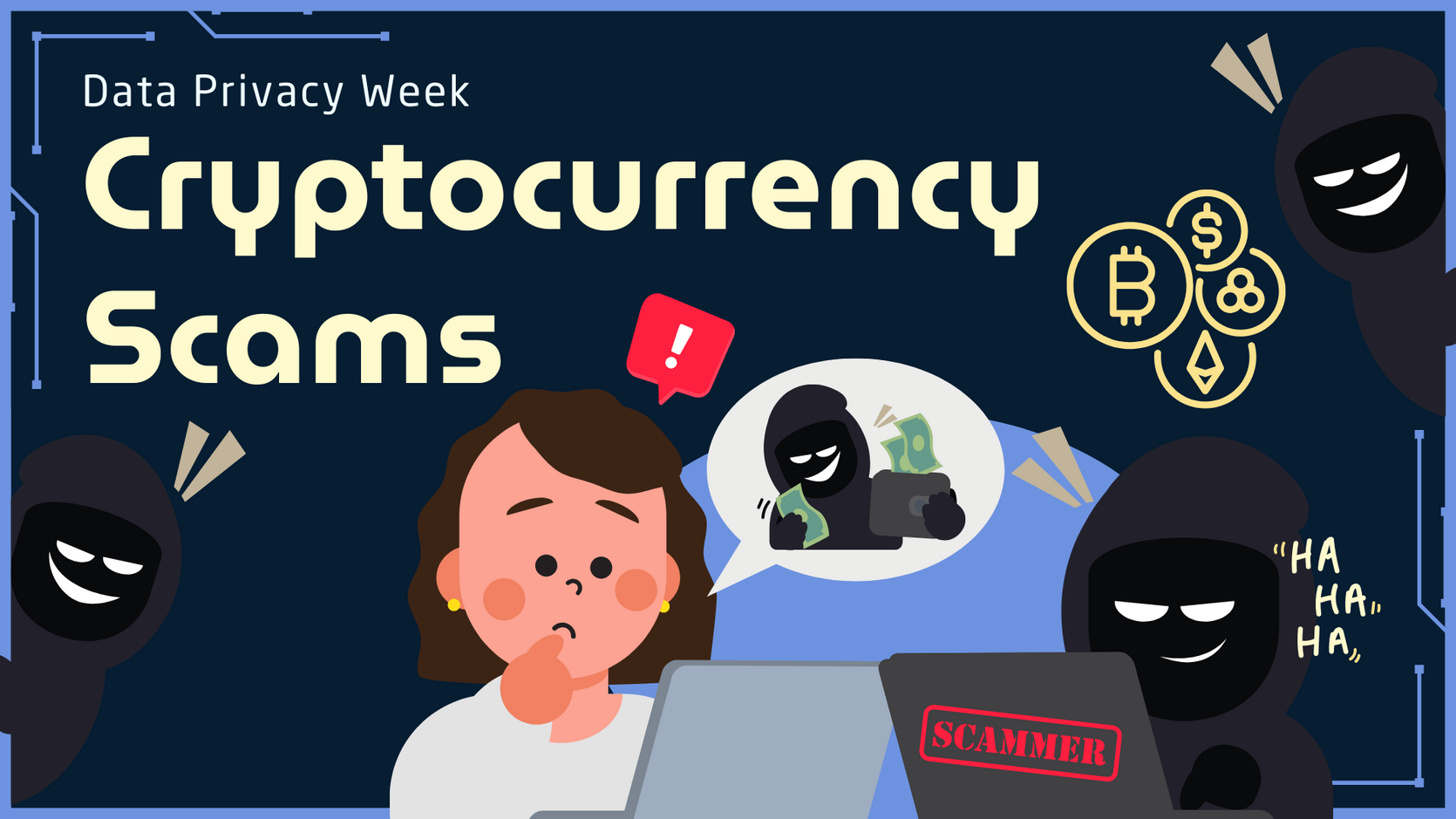
Cryptocurrency, also known as “crypto,” is a new form of digital money. It uses encrypted networks to make, verify, and record transactions. While cryptocurrency can seem exciting, according to some financial experts, it’s unstable. It’s also a growing scam opportunity.
Transnational cybercriminal organizations conduct most cryptocurrency scam operations. Their “fraud factories” get labor from human trafficking. The United Nations estimates that more than 200,000 people have been forced to conduct these scams.
Those over 60 years old and immigrant groups are most at risk, but anyone can be a victim. Don’t become an easy target. Read on to learn about common types of cryptocurrency scams, tips on how to recognize and avoid them, next steps for victims, and resources.
Key Things to Know
- Don’t engage. Unless you contact your bank or credit card company directly, never provide any payment or personal information over phone, text, or email.
- Verify. If someone claims to be from an organization, call the organization’s public customer service number and ask if they contacted you.
- Research. When searching for information, add keywords like “scam” and “fake” to the company name to see if scams have been reported.
- Be careful. It’s highly unlikely that any funds you send to a cryptocurrency scammer will be returned to you. If you get scammed, contact local police immediately and file a report.
- Always keep in mind that if it’s too good to be true, it probably is.
Types of Scams
Impersonation Scams
Scammers contact victims and claim to be government authorities like ICE, FBI, IRS, or Registry of Motor Vehicles. They demand payment via a cryptocurrency kiosk (also known as a “crypto ATM”), which converts cash to digital money that you can send to yourself or others.
- Try to stay calm. Scammers impersonate authorities to create a false sense of urgency. A legitimate company, government agency, or other organization will never ask for cryptocurrency as payment.
- Verify the source. Caller ID can be faked — contact the organization the scammer is claiming to be from to check whether a call or offer is accurate.
- Remember your rights. Do not agree to sign anything or follow urgent instructions, especially when asked for money or personal information. Contact someone you trust for guidance.
Pig-Butchering Scams
Scammers find targets on dating platforms, social media, or messaging apps, manipulating victims into expensive cryptocurrency investments. They instill a false sense of security and trust over time — like letting the victim withdraw small amounts of money a couple times — to keep victims invested. When victims try to collect their “earnings,” scammers claim added costs like “taxes” and “fees,” resulting in more money lost.
- Check to see if the person you’re talking to is real. Ask for a LinkedIn, Facebook, or other verifiable account. If the account is very recent or looks sketchy, it’s likely a scam.
- Press for details like an investment statement or identification and industry credentials. Scammers often won’t elaborate when asked for more information, both about their identity and the “investment.”
Remote Work Scams
Scammers claim to be recruiters, managers, or other officials, contacting targets over text to offer fake “part-time remote” jobs. Like pig-butchering scams, victims are pressured to send multiple large cryptocurrency payments to do things like open work accounts, get work assignments, or pay upfront for a computer or office supplies.
- Remember that legitimate companies won’t make you pay for a job.
- Do your research. Do more than one search for the company name. Add keywords like “scam” and “fake” to additional searches. Also look for business registrations with state government, employee reviews, and customer testimonials.
- Don’t rush into accepting an offer. A real hiring process is rarely easy. If you’re asked to interview and onboard quickly, and communication is done through platforms like Signal or Telegram, it’s most likely a scam.
Investment Scams
Scammers find victims over social media or text, presenting a “business opportunity” requiring victims to invest on cryptocurrency platforms, promising little risk and high profits.
- Don’t fall for the quick fix. “Low-risk, high reward” cryptocurrency investments are rare. Cryptocurrency is unstable and more likely to be high-risk and low reward.
- Learn about financial investment management. There’s no “secret method” to guarantee investment success.
- Don’t jump in right away. Legitimate financial professionals know to give potential investors time to do their research and weigh risk with reward. Remember to ask for license numbers and credentials from anyone claiming to be a financial advisor.
Help Yourself — And Others
We’re strongest and most secure when we work together as a community.
Stay on the Lookout
Watch for red flags of possible scams, especially at places like the bank and convenience stores where crypto kiosks are commonly available. You can call the police to investigate a potential incident if you notice people:
- Seeming upset, panicked, and/or rushed while trying to withdraw or deposit cash.
- Withdrawing or depositing large amounts of cash.
- Wiring large amounts of money to crypto exchanges and/or overseas.
- Giving answers to tellers/staff that seem scripted, especially if they’re on the phone.
If you know someone that suddenly became interested in cryptocurrency and calls it a “hobby,” you can mention the increase in crypto scams and fraud and provide helpful resources (see below).
Next Steps for Victims
You are not alone — there are resources that can help.
What to Do
- Do stop all communications with scammers immediately.
- Do file a report with your local police department.
- Do file a report with the Internet Crime Complaint Center (IC3), a division of the FBI.
- Do contact the attorney general’s office in your state (find your state AG here).
- Massachusetts residents can file a consumer complaint here.
Why the AGO?
The Attorney General’s Office (AGO) helps consumers with a wide range of issues, including cryptocurrency fraud. The office can deactivate scam websites, trace funds, and freeze funds. In some cases, they’re able to seize and return lost funds. The Massachusetts AGO has succeeded in deactivating more than 50 cryptocurrency fraud websites, filed more than 30 cases against cryptocurrency fraud operations, and returned $6 million in lost funds to Massachusetts consumers.
What Not to Do
- Don’t tell the scammer you reported or notified law enforcement.
- Don’t continue to engage, send money, or send personal information.
- Don’t get tricked by recovery scams, including “fraud recovery investigators” and “tracing companies” — you’ll only lose more money.
- Don’t let the stigma prevent you from getting help.
Resources
The Massachusetts AGO offers a guide to cryptocurrency scams, including a list of scam websites reported to the AGO.
Find more resources below in English, Spanish/Español, and for the d/Deaf & Hard of Hearing and ASL users.
In English
Massachusetts residents — File a consumer complaint with the Massachusetts AGO.
Non-Massachusetts residents — Find the contact information for your state’s Attorney General’s Office on the National Association of Attorneys General (NAAG) site.
File a report with the Internet Crime Complaint Center (IC3), a division of the FBI.
Report a scam to the Federal Trade Commission (FTC).
TAS Tax Tip: Learn how to deduct losses on virtual currency, cryptocurrency and non-fungible tokens.
Learn how to report and handle identity theft.
Know your rights, courtesy of the American Civil Liberties Union (ACLU).
Suicide & Crisis Lifeline: call or text 988, or chat online.
Call the AARP Fraud Watch Network Helpline at (877) 908-3360.
Get help with AARP Fraud Victim Support Groups.
En Español
Residentes de Massachusetts — Presente una queja de consumidor ante la oficina del fiscal general.
Residentes no de Massachusetts — Encuentre la información de contacto de la Oficina del Fiscal General de su estado en el sitio web de la Asociación Nacional de Fiscales Generales (NAAG).
Presente un informe en el Centro de Denuncias de Delitos (IC3) una división del FBI.
Reporte una estafa a la Comisión Federal de Comercio (FTC).
Consejo Fiscal TAS: Aprenda cómo deducir pérdidas en moneda virtual, criptomonedas y tokens no fungibles.
Aprenda cómo denunciar y manejar el robo de identidad.
Conozca sus derechos, cortesía de la Unión Estadounidense de Libertades Civiles (ACLU).
Línea de Prevención del Suicidio y Crisis: llame o envíe un mensaje de texto al 988, o chatear en línea. Extensión de llamada: Para español, marque dos.
For the d/Deaf & Hard of Hearing and ASL users
Please note that these are additional resources and contact options to specifically serve d/DHH and ASL users. These are intended to supplement what is given above in written English and Spanish to ensure more equal access, not to replace those resources.
Massachusetts residents — Contact the Massachusetts Attorney General’s Office. MassRelay users: dial 711 and connect via main number: (617) 727-2200.
Contact the Federal Communications Commission’s ASL Consumer Support Line at 844-4-FCC-ASL (844-432-2275).
Watch videos from the Internal Revenue Service's official ASL-language YouTube channel, such as a video playlist about Identity Theft (Videos in ASL, some videos also have English captions and audio).
Protecting Deaf, Hard-of-Hearing and Hearing Loss Communities from Investment Scams (Video in ASL with optional English captions and English transcript).
SEC Fireside Chat: A Video and Q&A About Red Flags of Investment Fraud Affecting the Deaf, Hard of Hearing and Hearing Loss Communities (spoken English Q&A with clearly visible ASL interpreter and optional English captions).
“We Need to Know Our Rights,” a PSA from Marlee Matlin and the ACLU (Video in ASL with English captions).
Suicide & Crisis Lifeline: VP/VRS: Dial 988. TTY: Dial 711, then 988. Text conversation: Text 988. You can also chat online.
Deaf Crisis Line: VP/VRS: Dial (321) 800-3323. You can also contact the DCL by web (need a webcam enabled device).