- Massachusetts Department of Agricultural Resources
- Division of Marine Fisheries
Media Contact
Phu Mai, Director of Communications
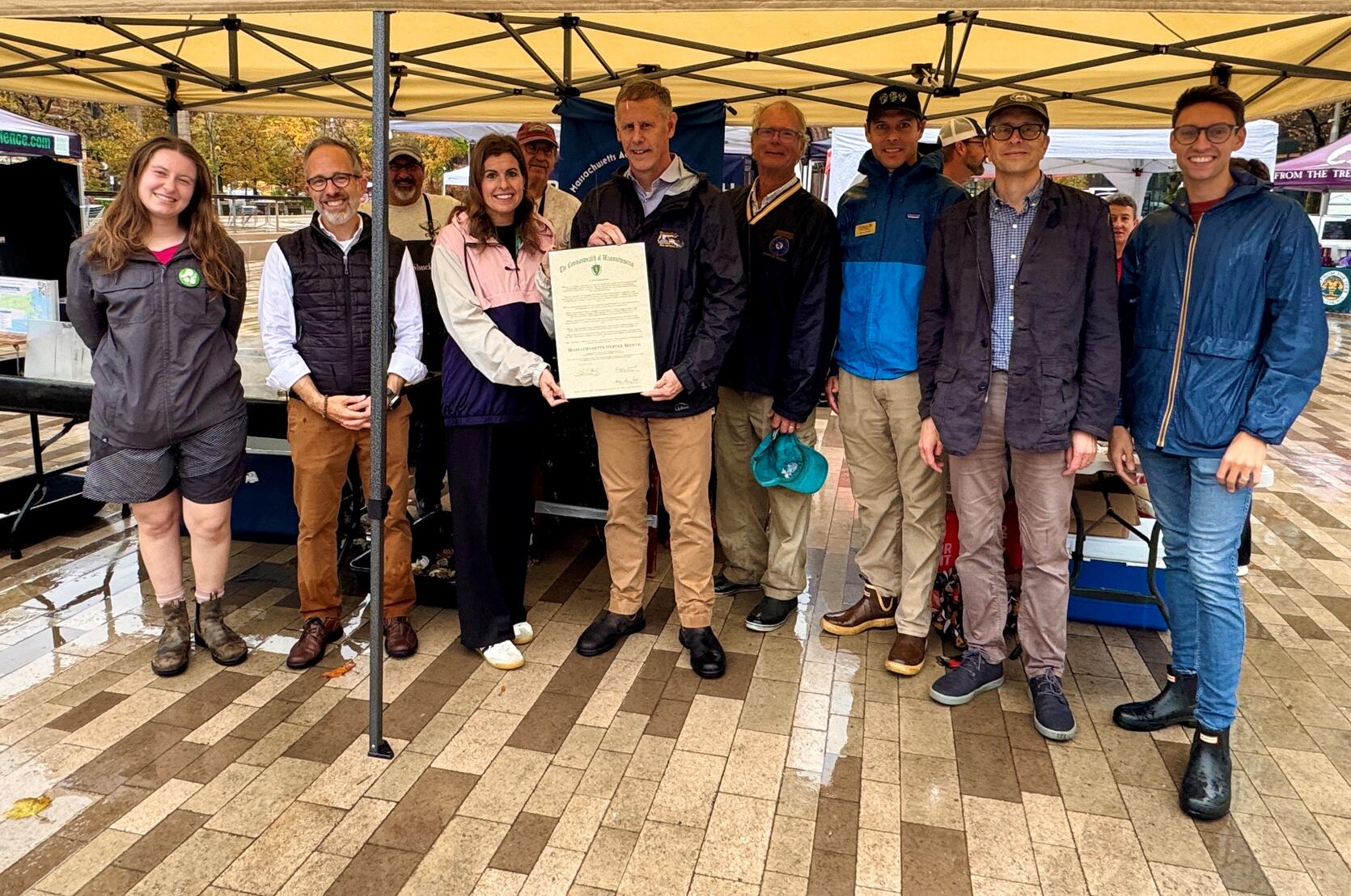
Boston — To recognize the cultural, economic, and ecological importance of shellfish cultivation to the state, Governor Maura Healey is declaring November to be Massachusetts Oyster Month. This year focuses on oysters, the state’s fastest-growing agricultural sector. Oysters have been harvested in the state since before Massachusetts was founded, as evidenced by ancient Native American shell middens.
To celebrate, Massachusetts Department of Agricultural Resources (MDAR) Commissioner Ashley Randle and Department of Fish and Game (DFG) Commissioner Tom O’Shea joined local and state officials, along with representatives from the Massachusetts Aquaculture Association (MAA), at the Copley Square Farmers Market in Boston. Attendees sampled fresh oysters from local shellfish growers and participated in hands-on shucking demonstrations to learn how to shuck their own oysters. The celebration also featured the presentation of an official proclamation, encouraging residents and visitors to enjoy and support local seafood.
“Massachusetts oysters are some of the best in the world, and the people who grow them are a big part of what makes our coastal communities special,” said Governor Maura Healey. “Our oyster industry supports local businesses, creates good jobs and helps keep our waters healthy. This Oyster Month, we’re celebrating our hardworking growers and encouraging everyone to support local and enjoy fresh Massachusetts seafood.”
“Oyster farming is an important part of our coastal communities and a growing part of our economy,” said Lieutenant Governor Kim Driscoll. “From family-owned farms to local restaurants, this industry supports jobs, strengthens our working waterfronts and brings people together. We’re proud to celebrate the growers and communities who make Massachusetts a leader in aquaculture.”
“Our coastal shorelines are home to a vibrant, multi-generational heritage of aquaculture farmers who have built this into one of our most dynamic agricultural industries,” said MDAR Commissioner Ashley Randle. “As public demand for fresh, sustainable shellfish continues to grow, we are proud to champion our local growers and ensure Massachusetts seafood remains a premier choice nationwide and around the world.”
“Massachusetts' oyster industry is a remarkable success story for our blue economy. Across our coast, our oyster growers support countless small businesses, restaurants, and tourism, all while actively boosting marine biodiversity, coastal resilience, and water quality,” said DFG Commissioner Tom O'Shea. “As the third most valuable species landed in the Commonwealth, we are doubling down on our commitment to this fast-growing industry, investing in research and monitoring, sustainable working waterfronts, and marine habitat restoration to help our aquaculture industry thrive.”
Oysters dominate the state's marine cultivation, and the industry has experienced growth over the last 15 years, with a 33 percent increase in the number of farmers, a threefold increase in oysters sold, and a fourfold increase in revenues. In 2025, Massachusetts had close to 400 shellfish farms across 33 coastal communities, alongside 27 municipalities conducting shellfish aquaculture activities to supplement naturally available resources for public commercial and recreational harvest.
During the 2025 season, more than 60 million oysters were sold, contributing over $35 million to Massachusetts’ blue economy. This represents a 12 percent increase in the value of landings compared to 2024, which itself saw a 13 percent increase compared to 2023. More than 3 million farmed quahogs also contributed to the industry’s economic value. In 2025, 372 propagation permit holders grew shellfish in Massachusetts, and several non-shellfish aquaculture permits for the culture of kelp, horseshoe crabs, and green sea urchins.
“Massachusetts Oyster Month is a well-deserved recognition of an industry that contributes far more than great seafood,” said Massachusetts Aquaculture Association President Seth Garfield. “Oyster farming supports coastal communities, creates jobs, strengthens local economies, and delivers important environmental benefits through improved water quality and habitat enhancement. The Massachusetts Aquaculture Association is proud of the growers, partners, and public officials who have helped make Massachusetts a national leader in sustainable shellfish aquaculture, and we encourage everyone to celebrate by enjoying local oysters this November.”
DFG’s Division of Marine Fisheries’ (DMF’s) Shellfish Program manages shellfish growing areas statewide to protect public health and ensure all shellfish brought to market are safe to eat. In 2013, DMF created an aquaculture program with dedicated staff for managing aquaculture operations and industry growth in the state. The program regulates shellfish aquaculture by overseeing municipally-licensed shellfish aquaculture sites, permitting growers of all marine aquaculture products, ensuring safe harvest and handling practices that promote the quality of aquaculture seafood products, and providing resources and technical assistance to support the fast-growing industry.
Additionally, DMF’s Habitat Restoration Program works to protect and restore critical marine habitats statewide to support sustainable fisheries. The program focuses on restoring eelgrass, shellfish, oyster reef, artificial reef, and kelp habitat across the state in partnership with universities, research and non-profit organizations, and community partners. Several of these projects are currently underway, including oyster reef restoration projects in Hamblin Pond in Mashpee and the Westport River in Westport in partnership with The Nature Conservancy.
The Massachusetts Department of Agricultural Resources supports, regulates, protects and enhances the state’s agricultural community, promoting food safety, animal health and “MassGrown” crops and products, as well as preserving farmland and providing technical assistance to help farms become more efficient.
The Department of Fish and Game strives to manage Massachusetts’ living marine resources in balance with the environment, resulting in sustainable fisheries, stable availability of diverse, healthy seafood, and enriched opportunities that support our coastal culture.
The Massachusetts Aquaculture Association (MAA) is a non-profit trade association formed in 1986 organized to represent aquatic farmers and related support businesses and organizations in the Commonwealth. MAA promotes the aquaculture industry through education, technology transfer, and maintaining effective networks between industry, government, and researchers.
###