- Executive Office of Energy and Environmental Affairs
- Department of Fish and Game
- Division of Ecological Restoration
Media Contact
Julia E. Hopkins, Communications Director
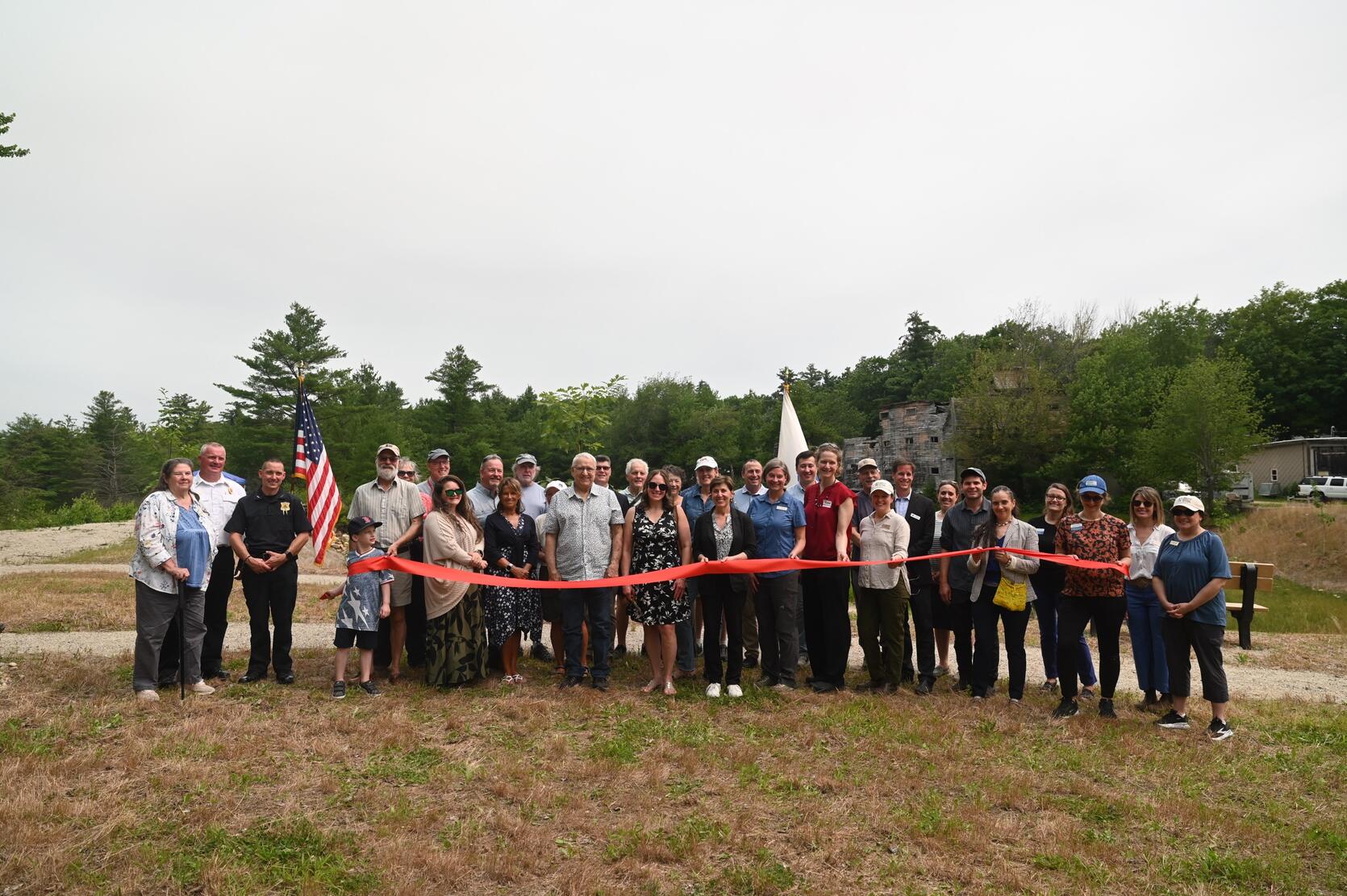
ASHBURNHAM — Today, the Healey-Driscoll Administration and Town of Ashburnham joined state, local, and nonprofit partners to celebrate the restoration of a free-flowing Whitman River for the first time in generations. The removal of the Whitney Pond Dam marks a major milestone for river health, public safety, and climate resilience in central Massachusetts.
“Projects like the Whitney Pond Dam removal make our communities safer, strengthen our environment and help Massachusetts prepare for the impacts of climate change,” said Governor Maura Healey. “We're proud to partner with Ashburnham and local organizations to restore this river, protect wildlife habitat and create a lasting resource for the community.”
“This project shows what's possible when state and local partners work together,” said Lieutenant Governor Kim Driscoll. “Removing the Whitney Pond Dam will reduce flood risk, restore a healthy river and create a beautiful public space that residents can enjoy for generations.”
“From the beginning, it was clear the Whitney Pond Dam removal would bring lasting benefits to the community, which is why we were proud to support it every step along the way,” said Energy and Environmental Affairs Secretary Rebecca Tepper. “The project removes aging, outdated infrastructure to restore the river’s natural flow, improve public safety, and creates healthier habitat for fish and wildlife. Projects like this will help the community prepare for future flooding and the impacts of climate change.”
Over several years, project partners invested significant resources to remove the aging dam, restore the river, and establish the new Whitney Pond Dam Conservation Area, which features trails, benches, and educational signage for visitors. In addition to more than $60,000 in funding from the Massachusetts Division of Ecological Restoration (DER), the $1.4 million project received state investments from the Office of Energy and Environmental Affairs’ (EEA) Dam and Seawall Repair or Removal Program, the Municipal Vulnerability Preparedness Program (MVP), and the Executive Office of Economic Development’s Inland Dredge Pilot Program. A priority project for the Massachusetts Division of Ecological Restoration (DER), the state supported permitting and construction, provided technical expertise, and project assistance to advance design and implementation to address safety concerns, restore natural river processes, and create new public access at the site.
“The Whitney Pond Dam removal is a clear example of how restoration supports the Commonwealth’s broader biodiversity goals,” said Department of Fish and Game Commissioner Tom O’Shea. “River restoration provides native fish and wildlife the connected, resilient habitat they need to not only survive, but thrive. It’s one project, but it contributes to a statewide movement to rebuild biodiversity and connect communities with nature, one dam at a time. The Whitney Pond Dam removal represents a significant achievement for the Nashua River watershed and will support future restoration work in the region.”
“When a dam comes down, a river comes back to life,” said DER Director Beth Lambert. “What we’re really celebrating today is a community choosing a healthier, safer future, one where the Whitman River can flow freely again, residents can access and enjoy the river, and nature thrives.”
The Town of Ashburnham, owner of the dam, determined that the aging structure posed safety concerns and blocked fish passage in a coldwater stream. Project work included removing the dam, stabilizing riverbanks, and planting native shrubs and trees. The Town and partners also created a public space by the river where residents can learn about the former mill and observe the river’s recovery. Since the dam came down last summer, the formerly impounded area has transitioned into a clear, flowing stream with newly vegetated floodplain wetlands. Much of the vegetation now visible emerged naturally from the native seed bank that had been buried beneath the impoundment for more than a century.
"The Whitney Pond Dam Removal Project is a tremendous example of how strategic partnerships can turn a challenge into an opportunity,” said Town of Ashburnham Town Administrator John Coderre. “By removing an aging dam and restoring the natural environment, we have improved public safety, enhanced valuable ecological resources, and created a new conservation area that will benefit the Ashburnham community for generations."
"This project is a significant achievement for the Town and the Whitman River. By removing the dam, we are not only safeguarding South Ashburnham from catastrophic flooding and reducing municipal costs, but also restoring a cooler, oxygen-rich habitat essential for the native brook trout living in the river,” said Jessica Veysey-Powell, Water Programs Director for the Nashua River Watershed Association. “The NWRA is proud to have partnered in this effort and looks forward to building on this momentum to restore free-flowing river segments just downstream."
"Whitney Pond demonstrates that successful dam removal is about more than removing aging infrastructure—it's about helping communities reduce risk, restore natural river systems, and invest in a more resilient future. It's rewarding to be part of a project that delivers lasting environmental and community benefits," said Pare Corporation Engineer Allen Orsi.
The project is part of a broader statewide effort to restore rivers, remove aging dams, and strengthen climate resilience. Across Massachusetts, interest in removing aging, obsolete dams continues to grow. In 2025, the state led the nation in dam removal, with 15 dams taken down by state agencies and partners, including Whitney Pond Dam. This supports the Massachusetts Biodiversity Goals, which set a target to remove 10% of the state’s 3,000 dams by 2050. Today, DER and its partners are advancing dozens of dam removal and fish passage projects aimed at reconnecting habitat, reducing safety risks, and supporting the Commonwealth’s biodiversity goals. The Healey-Driscoll Administration’s environmental bond bill, the Mass Ready Act, proposes more than $300 million for dam removal and flood resilience projects.
###