- Massachusetts Department of Agricultural Resources
- Executive Office of Energy and Environmental Affairs
- Executive Office of Education
- Department of Early Education and Care
- Department of Elementary and Secondary Education
Media Contact
Phu Mai, Director of Communications
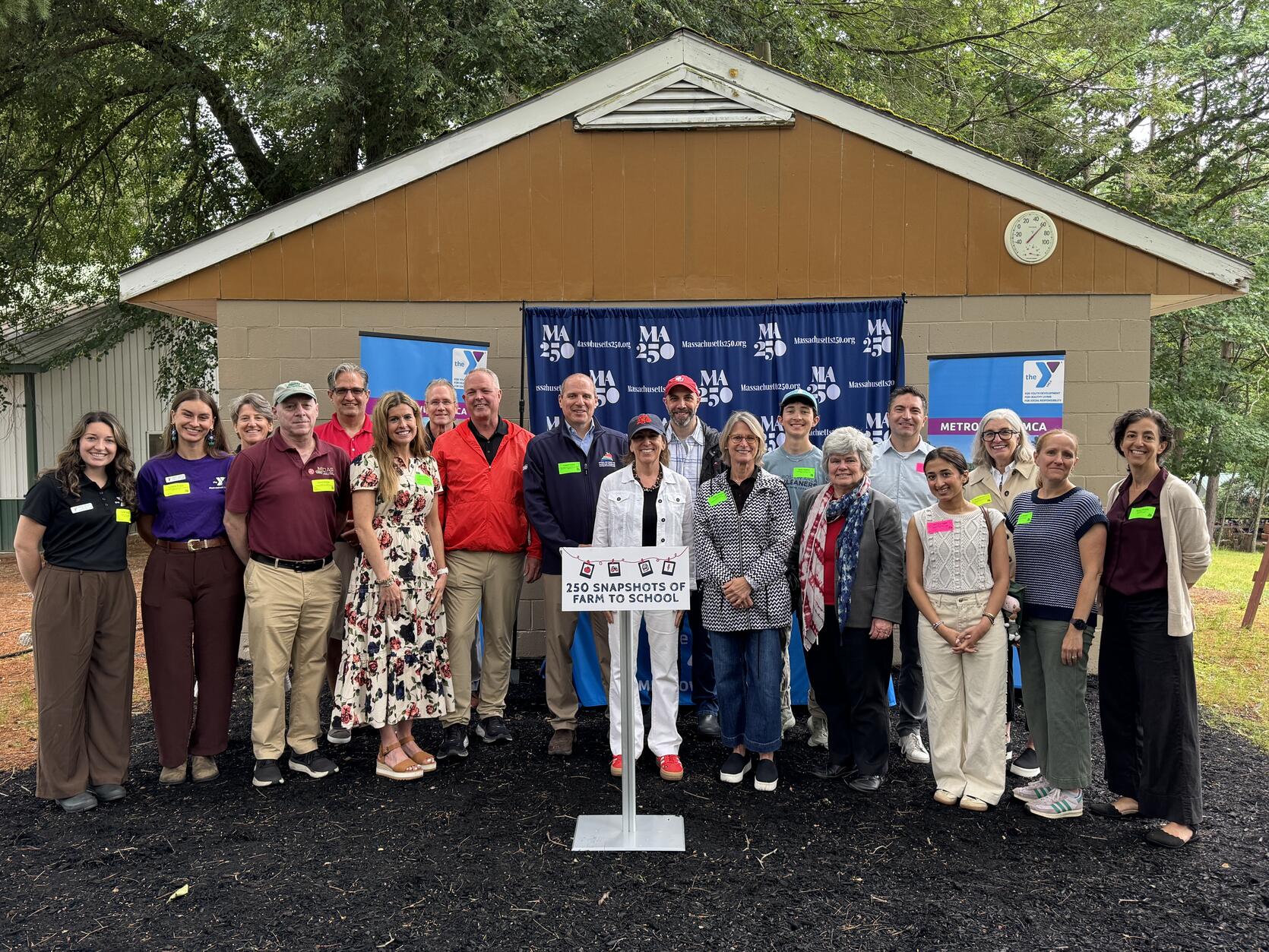
Hopkinton — Today, state education and agricultural leaders kicked off an initiative to spotlight how Massachusetts students connect with the state’s rich farming heritage and history. Energy and Environmental Affairs (EEA) Secretary Rebecca Tepper was joined by Department of Early Education and Care (EEC) Commissioner Amy Kershaw, and Massachusetts Department of Agricultural Resources (MDAR) Commissioner Ashley Randle at the MetroWest YMCA Outdoor Center in Hopkinton for an announcement of this effort that coincides with the country’s 250th birthday. The launch features a new website with 250+ "snapshots" of Farm to School programs across Massachusetts.
The project highlights how early education programs, schools, colleges, and universities across the state bring local foods into their cafeterias. It also showcases how teachers weave food and farming into their curricula. Students receive an interactive hands-on learning experience on how food is grown and harvested. At the same time, schools are building strong relationships with local farmers and community partners while supporting the local agricultural economy by purchasing food grown here.
The Farm to School stories focus on the "Three C's": Cafeteria, Classroom, and Community. Connecting these three areas help boost the local agricultural economy while improving student health. They also lead to better learning outcomes and foster closer community ties.
At today’s event, attendees experienced the MetroWest YMCA's Farm to School program in action through an interactive "Garden to Kitchen to Community" tour that demonstrates how local food, nutrition education, and community partnerships work together to improve health outcomes and expand food access.
Classroom: Growing Healthy Habits
Guests toured the Outdoor Center's teaching garden and learned how the YMCA integrates nutrition education, gardening, and local agriculture into its curriculum. Preschool students participated in hands-on activities, demonstrating how early exposure to fresh foods helps build healthy eating habits, food literacy, and a lifelong appreciation for locally grown produce.
Cafeteria: From Local Farms to Local Families
Visitors also saw how the YMCA transforms locally sourced and rescued food into nutritious meals for children and families throughout the MetroWest region. Attendees observed volunteers conduct a food preservation party, preparing fresh, healthy meals and snacks that will be distributed later that day through the YMCA's food access program. This demonstration highlighted how the Y reduces food waste, supports local agriculture, and increases equitable access to nutritious foods.
Community: Building a Stronger Local Food System
The third stop showcased how collaboration creates lasting impact. Through partnerships with local farms, food rescue organizations, schools, and community agencies, the MetroWest YMCA expands access to healthy foods while connecting families to nutrition education and additional resources. Participants in the YMCA's food access program (youth to partners) shared their experience, illustrating how Farm to School not only nourishes individuals but also creates opportunities for education, collaboration, food system resiliency, and community engagement.
"We are thrilled to showcase these 250 stories of Farm to School success in Massachusetts as we celebrate our milestone anniversary this year," said EEA Secretary Rebecca Tepper, "When we feed our students fresh, local food and teach them about agriculture, not only do they eat healthy nutritious food but they learn to appreciate how hard our local farmers work in taking care of the land and growing the food that sustains us.”
"Farm to School programs help students connect what they learn in the classroom to the world around them," said Education Secretary Steve Zrike. "Whether students spend time in a school garden, meet local farmers, or eat fresh locally grown food in the cafeteria, these experiences build healthy habits, deepen their understanding of where food comes from, and strengthen the connection to their communities.”
“For generations, Massachusetts farmers have grown some of the finest crops and this initiative showcases the synergy between farms and schools,” said MDAR Commissioner Ashley Randle. “By connecting local farms directly to schools, we are keeping our agricultural economy strong while at the same time feeding our students with the freshest, high-quality produce available. The interactive learning initiatives show exactly how agriculture works and teaches our children the value of hard work, healthy eating, and the vital role farming plays in our everyday lives.”
"We are excited to be celebrating these transformative Farm to School partnerships that help our youngest learners build healthy habits while fostering curiosity through hands-on experiences with local food and agriculture," said Early Education and Care Commissioner Amy Kershaw. "We're proud to partner with educators, families, and farmers to give children opportunities to learn, grow, and connect with their communities from an early age."
"I'm happy to celebrate Massachusetts' strong farm-to-school collaborations," said Elementary and Secondary Education Commissioner Pedro Martinez. "Schools and local farmers make a great team, creating amazing school meals and meaningful learning opportunities for our students."
“We are honored to be included as one of the 250 Snapshots of Farm to School projects and ecstatic to host today’s event,” said MetroWest YMCA Chief Operating Officer Jeanne Sherlock. “Thanks to funding from the Commonwealth, the Metrowest YMCA has expanded our food insecurity work by increasing access to locally grown foods, providing nutrition education, hands on learning through garden activities, and preparing and distributing more healthy meals to children, teens, and families. This work strengthens our entire community by connecting local farms, community-based organizations, and the Y to maximize resources allowing us to build healthier, more connected communities through local partnerships.”
“It is amazing to see such a diversity of programs and communities highlighted in the 250 Farm to School snapshots,” said Massachusetts Farm to School Co-Director Lisa Damon. “The stories included in this initiative are representative of the important work happening all across the Commonwealth to further food education and enhance student meals with local foods. We have seen tremendous growth in farm to school over the past 20 years and are excited by this opportunity to celebrate the vibrant and innovative programs here in Massachusetts."
The 250 snapshots can be found online which describe examples of hydroponic gardens in classrooms, local tastings in cafeterias, field trips to nearby farms, and many other exciting culinary and educational projects.
To learn more and view the stories, visit mass.gov/farmtoschool250
###