- Division of Fisheries and Wildlife
Media Contact
Media Contact, MassWildlife
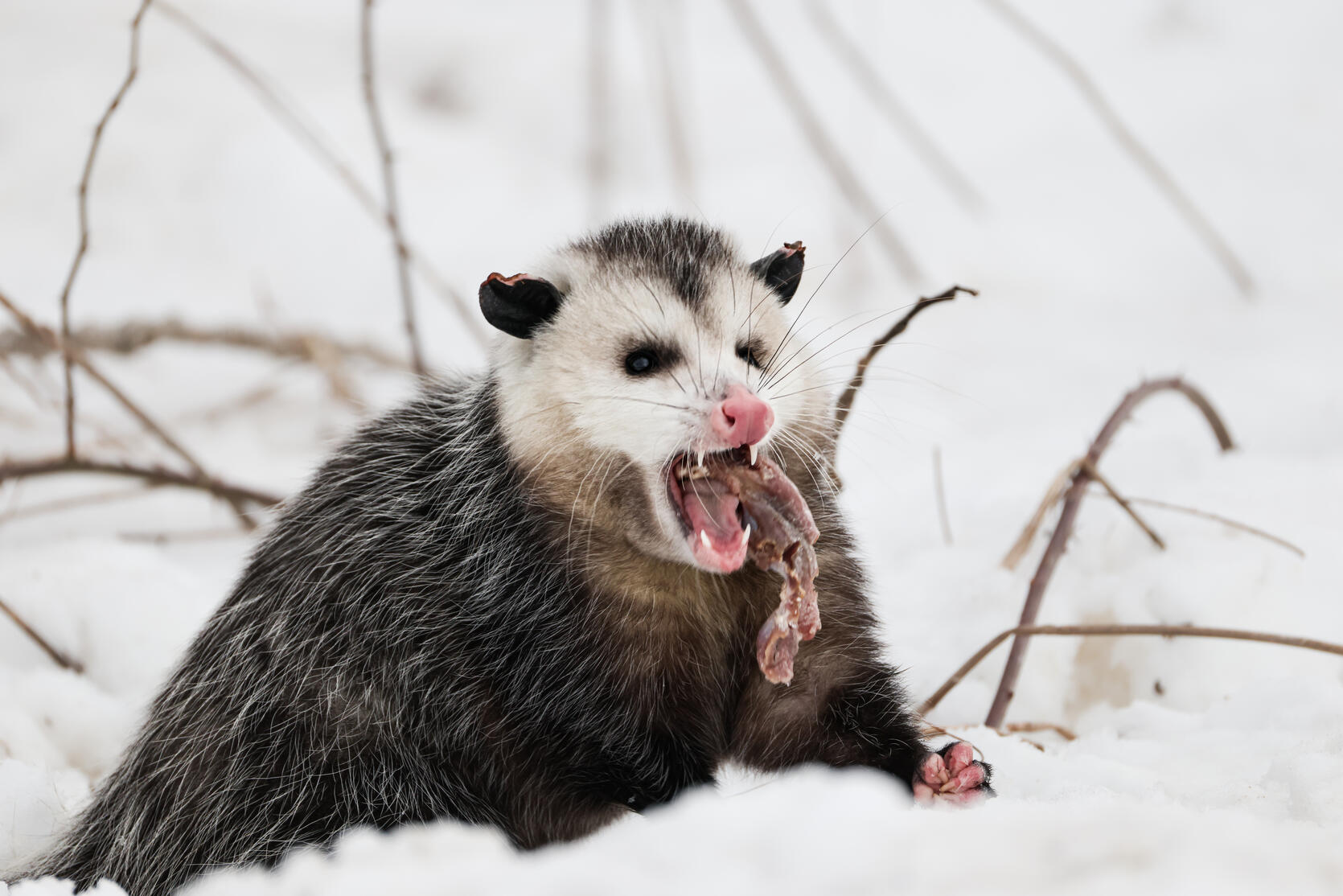
1. They’re the only mammal in the U.S. with a built-in pocket
The Virginia opossum is the only marsupial found in the United States. Marsupials are mammals that use a pouch to carry their young. Opossums mate between January and July and have a very short gestation period of only 12 – 13 days. When the young are born, they are the size of a honeybee, blind, and hairless. Immediately after birth, young crawl into their mother’s pouch and nurse for 8 weeks. Young will then ride on their mother’s back for another 4 weeks and become fully independent at 12 weeks old.
2. They have more teeth than any North American land mammal
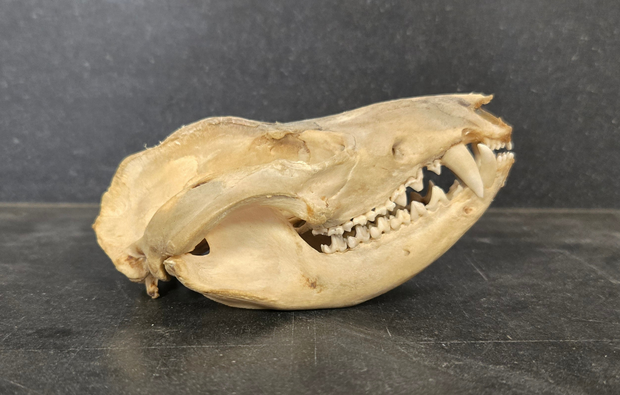
Although they’re the size of a house cat, adult opossums have 50 teeth (that’s 18 more teeth than your average adult human!). These pointed teeth are specially designed for the opossum’s omnivorous diet. Their primary foods include eggs, grains, nuts, fruit, birds, snakes, frogs, mice, and carrion (dead animals). Opossums will also take advantage of human-associated foods, such as garbage, outdoor pet food, bird seed, corn, and poultry. Despite the rumors, research shows that opossums don’t really eat ticks, so unfortunately, they do not decrease tick populations in our backyards or forests.
3. They fake their own death
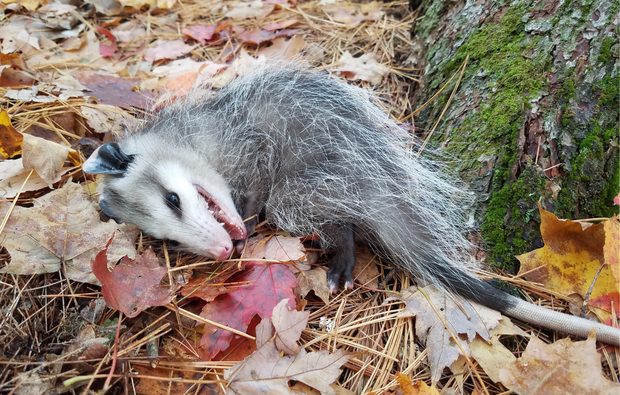
When opossums are threatened, they’ll growl, hiss, bare their many teeth, or climb a tree to escape. If they’re unable to escape, they’ll play dead for several minutes to several hours until they believe the danger has passed. This “death feigning” survival strategy is thought to work because the signs for a predator to pursue prey, like movement, disappear when the opossum becomes inactive. Even with this death-defying trick, opossums have fairly short lives of about 2 – 4 years in the wild.
4. Their tails are covered in scales
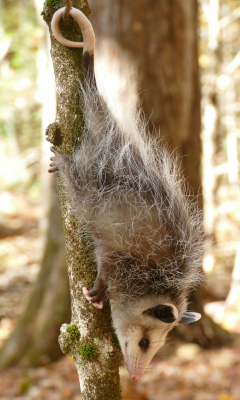
Virginia opossums have rat-like, nearly hairless, scaly pink and black tails. Opossums will use their prehensile tails like a fifth limb to gather nesting material and balance while climbing. Contrary to popular belief, adult opossums are typically too heavy to hang upside-down by their tails, but young opossums can do so briefly. Since their tails, ears, and toes are virtually hairless, it's not uncommon for opossums to get frostbite during particularly cold winters.
5. They’re highly resistant to rabies and snake venom
As a marsupial, opossums have a lower body temperature than other mammals. It’s believed that their lower body temperature makes an inhospitable environment for the rabies virus where it cannot thrive. Because of this, it’s extremely rare for an opossum to contract rabies. They also have a notable resistance to snake venom, specifically from pit vipers like rattlesnakes and copperheads, due to a protein in their blood that neutralizes the venom.