

Overview: Alcohol fast facts
Alcohol is the most commonly used substance in the U.S. Drinking alcohol increases the risk of long- and short-term health issues. There is no safe level of drinking. The less alcohol you drink, the lower your risk of harm and the better your health outcomes.
How can drinking alcohol affect you now and in the future?
Now:
- Sleep: Alcohol might help you fall asleep, but it ruins your quality of sleep, leaving you groggy and unfocused the next day
- Weight: Alcohol has “empty” calories, or calories that have no nutritional value and are often a hidden contributor to weight gain
- Safety: Consuming even a small amount of alcohol increases the risk of accidents, injuries, and violence
Later:
- Liver disease: Alcohol is processed by the liver and can cause long term damage
- Cardiovascular issues: Including high blood pressure and heart disease
- Cancer: Alcohol is a known carcinogen linked to at least seven different types of cancer
Alcohol use in Massachusetts
Alcohol’s impact on Massachusetts isn’t just a statistic. It’s something that touches all parts of our lives, including our families, our roads, and our healthcare system. Immediate risks include accidents and injuries. Long-term alcohol use is a leading, yet preventable, cause of chronic disease and premature deaths.
For example:
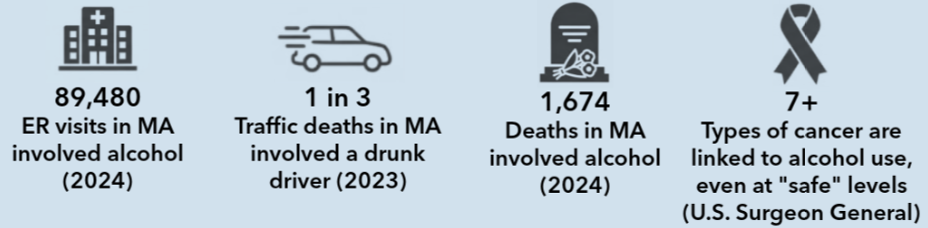
- In 2023, one in three traffic deaths in MA involved a drunk driver
- In 2024, over 1,600 deaths in MA involved alcohol
- In 2024, over 89,000 ER visits in MA involved alcohol
Data sources: National Syndromic Surveillance Program, National Highway Traffic Safety Administration, Registry of Vital Records and Statistics, Office of the Surgeon General
Alcohol use among Massachusetts adults
- It's common not to drink. Data shows that almost half of MA adults didn't drink in the past month.
- However, among those who do drink, many engage in risky drinking behaviors such as binge drinking and heavy drinking.
Data source: Behavioral Risk Factor Surveillance System
Alcohol use among Massachusetts youth
Starting to drink at a young age is linked with higher risk of having problems with alcohol and other substances later in life.
- Female high school students report more alcohol use (current, binge, and lifetime) than males
Data source: Massachusetts Youth Health Survey
Knowing your risk
Many people know alcohol affects the liver, but few realize it causes cancer. The U.S. Surgeon General has linked alcohol use to at least seven types of cancer, including breast, colon, and esophageal cancers. Risk increases with the amount of alcohol consumed. However, even moderate drinking carries risks.
Drinking less is better for your health
If you drink, learning about the effects of drinking can help you lower associated health risks.
| Weekly drinking level | Associated health risk |
|---|---|
| 0 drinks | No Risk. It can help you feel healthier and sleep better. |
| 1 to 2 drinks | Low Risk. You are less likely to have problems caused by alcohol, for yourself or for others. |
| 3 to 6 drinks | Moderate Risk. Drinking raises your risk of getting some types of cancer, including breast and colon cancer. |
| 7 or more drinks | Very High Risk. Your risk of heart disease or stroke goes up. Each extra drink raises your risk even more. |
The Canadian Centre for Substance Use and Addiction offers some helpful resources for learning about the benefits associated with drinking less.
You can also use a drinking calculator to help understand how drinking can impact your health.
You can find this information summarized in this two-page alcohol use information flyer.
Download and share
Encountered a term you’re not familiar with? Search the Recovery Research Institute’s Addictionary.
Learn more about how drinking alcohol can impact health
Dive deeper into data
Explore more data on alcohol use in Massachusetts.
How to lower your health risk
Review suggestions and learn how to lower your health risk associated with alcohol.
Access free and confidential MA helplines
Get support for yourself or a loved one.