
Monitoring and Assessment
MassDEP is responsible for monitoring environmental conditions under a number of statutes. Collecting data on the state of the environment is a foundational step towards understanding the effects of a changing climate and predicting future conditions to enable informed planning, mitigation and adaptation efforts, and tracking progress toward meeting programmatic goals.
Surface Water Quality Monitoring and Assessment
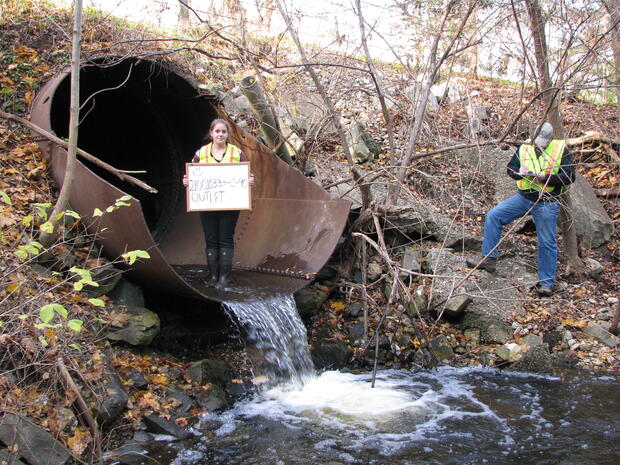
MassDEP's Watershed Planning Program in the Division of Watershed Management is responsible for evaluating the health status of Massachusetts' surface waters in accordance with the federal Clean Water Act and the Massachusetts Surface Water Quality Standards. Program staff and citizen volunteers collect data from surface waters throughout the state and these data are used to prepare detailed reports on water quality to determine if surface waters are healthy (meeting water quality standards) or impaired (not meeting water quality standards). Restoration plans are developed for water bodies that are impaired. Understanding the current condition of our waters, as well as historic water quality trends, helps to develop science-based plans under different climate conditions and ensures healthy watersheds in the future.
Greenhouse Gas Tracking / Inventory
MassDEP maintains an inventory of Greenhouse Gas (GHG) emissions in Massachusetts in accordance with the state's Global Warming Solutions Act. This work is an important part of quantifying progress in reducing GHG emissions in the Commonwealth, and informing policy tools to meet our Climate goals. Facility reporting of greenhouse gas emissions under MassDEP’s GHG reporting regulations (310 CMR 7.71 and 7.75) provides data that helps inform emission reduction targets and plans, and measure progress toward its Climate Action goals. See Global Warming Solutions Act (GWSA) Implementation section.
Chart: Massachusetts Annual Greenhous Gas Emissions Inventory: 1990 - 2022
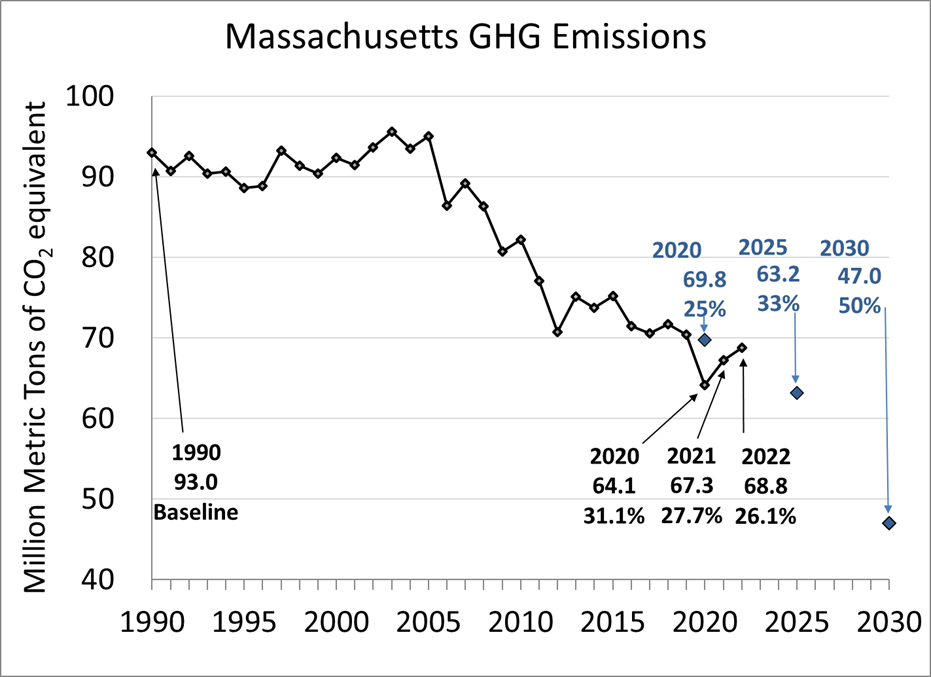
Chart shows Massachusetts GHG Emission reductions from 1990 baseline (93 Million metric tons CO2 equivalent) to 2022 (68.8 Million Metric Tons CO2 equivalent) or 26% reduction from 1990. The chart also shows reduction goals for 2025 (33%) and for 2030 (50%).
Vulnerability of Waste Sites
Increased flooding and storm damage from weather events strengthened by climate change pose a potential threat to conditions at hazardous waste sites where the cleanup is ongoing or where, after the cleanup, residual levels of oil or other hazardous materials remain on site (e.g., under a barrier). MassDEP is incorporating the consideration of potential climate change vulnerabilities at waste sites through consideration of reasonably foreseeable site conditions into the Massachusetts Contingency Plan (310 CMR 40.0000), the regulations that govern the assessment and cleanup of hazardous waste sites in the Commonwealth.
Massachusetts Oil Spill Response and Prevention Act (MOSPRA) Program
MassDEP contracted with a consultant to examine how climate hazards, adaptation and resilience efforts, and decarbonization relate to the Massachusetts Oil Spill Prevention and Response Act (MOSPRA) program activities pertaining to preparedness and response to marine oil spills. As part of the effort, MassDEP and its consultant met with climate experts and other stakeholders to identify and prioritize impacts of climate trends, projections, and policies and programs for oil spill risk, prevention, and response. The Final Report was issued in June 2024, “Evaluating and Adapting Oil Spill Preparedness and Response Capabilities for a Changing Climate”. Recommendations included updating geographic response strategies (GRS) incorporating climate hazards for vulnerable coastal areas, ensuring that oil spill response trailers are climate-ready, and considering prevention and response practices and preparation actions that require other modifications as a result of sea-level rise and other climate impacts. For reference, GRS were developed for Massachusetts through a MassDEP Bureau of Waste Site Cleanup project to protect sensitive coastal environments and resources in the event of an oil spill into marine waters. The figure below shows the coastal GRS locations in Massachusetts in each “coastal” region. DEP is working on implementing the Report’s recommendations.
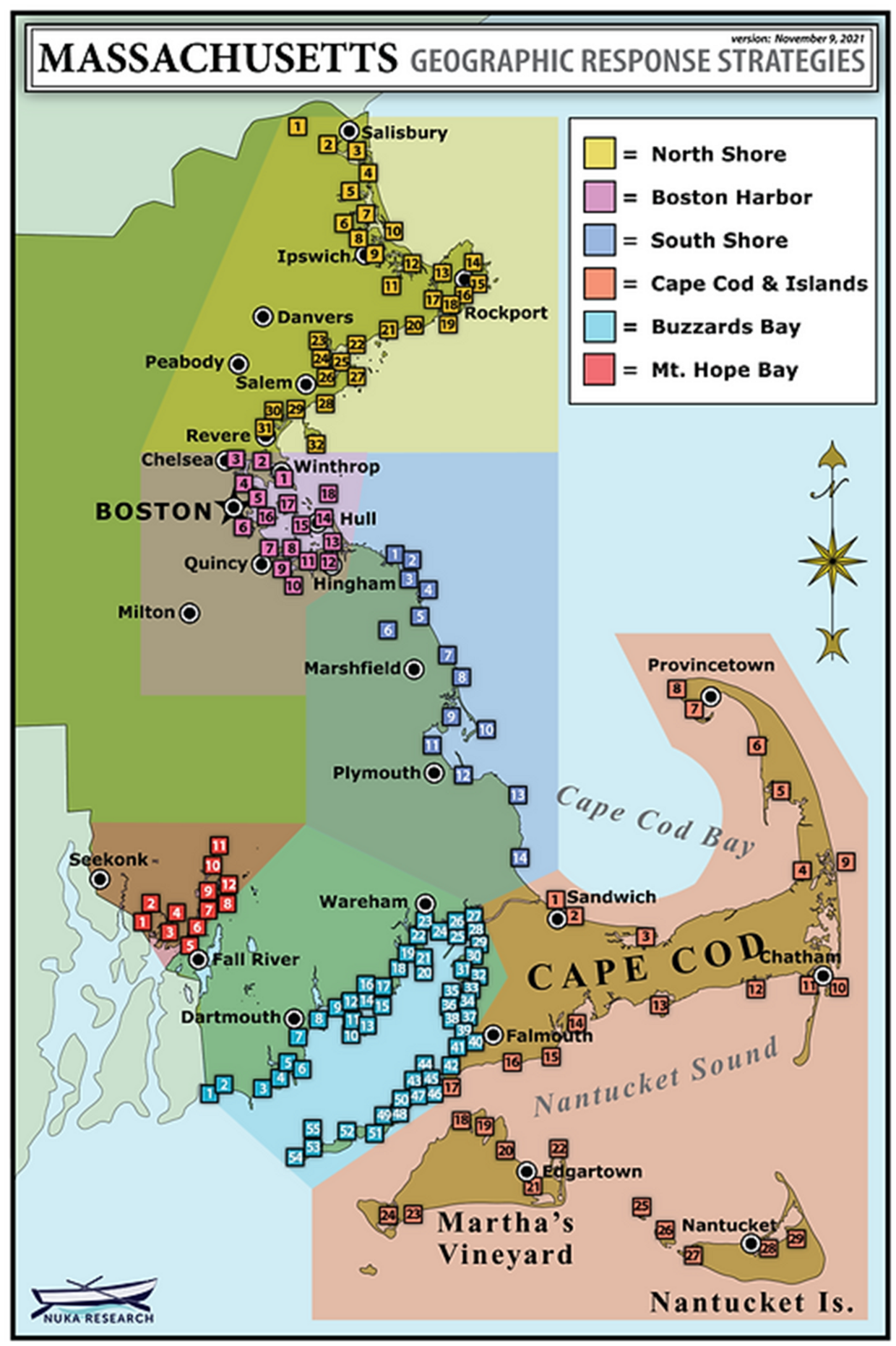
The Image depicts a map of the Massachusetts coastline broken into 6 regions (North Shore, Boston Harbor, South Shore, Cape Cod & Islands, Buzzards Bay, and Mt Hope Bay), and the locations of the Geographic Response Strategies within each of the regions.
Collaborating with other states to reduce greenhouse gas emissions
Climatic changes are driven at a global scale, and Massachusetts is responding not only at the state level, but in collaboration with other states on a regional scale. By working together to reduce greenhouse gas emissions, programmatic efficiencies have been achieved, and the scale of potential reductions are amplified, with benefits created locally that will ultimately be seen on a regional, national and global scale.
Regional Greenhouse Gas Initiative
The Regional Greenhouse Gas Initiative (RGGI) is the first mandatory market-based program in the United States to reduce greenhouse gas emissions. RGGI is a cooperative effort among northeastern and mid-Atlantic states to cap and reduce CO2 emissions from large fossil-fueled power plants. The regional initiative has been successful in reducing GHG in the participating states.
Programs to reduce greenhouse gas emissions in Massachusetts
The Commonwealth is working to meet a goal of net zero emissions by the year 2050 as required by the 2050 CECP. MassDEP is working to mitigate emissions of greenhouse gases in Massachusetts through a number of programs in a variety of regulated sectors. Mitigation efforts in the commonwealth were advanced with the enactment of the Global Warming Solutions Act in 2008 that set emission reduction goals for the entire state. MassDEP implements important components of that Act and administers other regulatory and assistance programs to achieve emission reductions.
Global Warming Solutions Act (GWSA) Implementation
Greenhouse Gas Emission Limits
The GWSA requires MassDEP to promulgate regulations to achieve specified emission limits. MassDEP has established regulations that address a number of emission source categories since the GWSA was enacted in 2008, and monitors overall progress in meeting the emission limits of the GWSA.
The GWSA also requires that all facilities emitting more than 5,000 short tons of CO2 equivalent per year report their emissions to MassDEP. Detailed reporting requirements are established in MassDEP implementing regulations. Retail sellers of electricity are also required to report emissions from generating the electricity that they sell to consumers in Massachusetts.
The Climate Roadmap Law and Clean Energy and Climate Plan
In 2021 An Act Creating A Next-Generation Roadmap for Massachusetts Climate Policy (Climate Roadmap law) was enacted which requires the EEA Secretary to set statewide emissions limit and sector-specific sublimits every 5 years. More specifically, the 2030 emissions limit must be at least 50% below the 1990 baseline, the 2040 emissions limit must be at least 75% below the 1990 level, and a 2050 emissions limit must be set to achieve net zero statewide greenhouse gas emissions (and emissions no greater than 85% of 1990 levels). It also set a deadline of January 1st, 2023 for the adoption of the 2050 emissions limits and sublimits, as well as the release of a comprehensive plan to achieve those limits. EEA released the Clean Energy and Climate Plan for 2050 (2050 CECP) on December 21, 2022 in compliance with the new law.
The climate roadmap law also directed MassDEP to develop and administer new programs, described below.
Cumulative Impact Analysis in Air Permitting
The climate roadmap law (Section 102C of Chapter 8 of the Acts of 2021) requires MassDEP to evaluate and seek public comment on incorporating cumulative impact analyses (CIA) into certain permits, and to propose regulations within 18 months requiring cumulative impact analysis for certain categories of air quality permits. In 2021 and 2022 MassDEP sought input on different approaches to CIA and provided information on the air permitting process; environmental, health, and socioeconomic indicators that could be part of CIA; and a draft CIA framework. At the end of 2022 MassDEP filed proposed regulations to require CIA analysis for comprehensive plan approval applications for new and modified facilities that would increase emissions in or near environmental justice (EJ) populations. The regulations were promulgated in March 2024. The CIA requirements include enhanced outreach to and involvement of EJ populations, assessment of existing community conditions, and analysis of cumulative impacts.
Clean Heat Standard
The 2025/2030 Massachusetts Clean Energy and Climate Plan (CECP) tasks MassDEP with implementing a "cap on emissions from heating.” A “Clean Heat Standard” (CHS) is referenced in the CECP as a potential option for capping heating emissions. To inform development of a CHS tailored to the needs of Massachusetts residents, MassDEP now plans to phase-in this standard no earlier than 2028 - find more information.
Electric & Low Emission Vehicles
In July 2022, Massachusetts along with California, Colorado, Connecticut, Hawaii, Maine, Maryland, Nevada, New Jersey, New York, North Carolina, Oregon, Pennsylvania, Rhode Island, Vermont, Virginia, Washington, District of Columbia, and Quebec released the Multi-State Medium- and Heavy-duty Zero-Emission Vehicle (ZEV) Action Plan. The Action Plan:
- Describes the need to ensure a just and equitable transition to zero-emission medium- and heavy-duty (MHD) vehicles to protect public health, especially in overburdened communities;
- Provides an overview of the developing MHD ZEV market with a focus on electrification of transit buses, school buses, and commercial fleets;
- Recommends strategies for state policymakers to support the equitable and widespread development of MHD ZEVs, including sales and fleet purchase requirements and vehicle and infrastructure purchase incentives.
In June 2018, Massachusetts along with the states of California, Connecticut, Maryland, New Jersey, New York, Oregon, Rhode Island, and Vermont released an updated Multi-State Zero-Emission Vehicle (ZEV) Action Plan, reaffirming their commitment to work together on initiatives that:
- Increase consumer awareness of, and confidence in, ZEVs;
- Make ZEVs more affordable and provide incentives for buying them;
- Support the development of charging and hydrogen fueling infrastructure to keep ZEVs running;
- Promote electrification of public and private light-duty fleets; and
- Support dealerships and dealership associations to grow consumer awareness of ZEVs.

Clean Energy Results Program
Renewable energy and energy efficiency can provide tremendous benefits to air quality and climate protection. They help reduce harmful air emissions, including Greenhouse Gas emissions, associated with the burning of fossil fuel. MassDEP's Clean Energy Results Program strengthens the environment-energy connection by supporting MassDEP and Department of Energy Resources (DOER) efforts to reduce regulatory barriers, smooth permitting pathways, and advance clean energy and energy efficiency improvements across the state.
The Gap Energy Grant program
This grant offering, part of the Clean Energy Results Program, is a streamlined funding model that has helped municipal water utilities reduce their energy usage and operating costs, become more resilient, and improve the environment. In early 2023, an expanded Gap program provided $8.1 million in a third round of funding (Gap III) that is now reaching deeper into more communities. A total of 60 organizations moved forward with grant funding to construct energy efficiency and renewable energy technology projects, including: 38 municipal drinking water and wastewater facilities, 12 non-profit multi-family affordable housing organizations, 7 agricultural and food-producing non-profits and 3 small businesses engaged in food and agricultural distribution and processing. All projects implement energy efficiency and renewable energy technologies that will improve energy independence and resilience. Long-term energy savings through these projects allow these organizations to reinvest their annual energy savings, each year, back into their community or business operations. A fourth Gap Energy Grant round of grant awards were funded in late 2025 and announced March 11 2026.
Organics Diversion and Anaerobic Digestion
Organics (food waste and other organic materials) when disposed of in a landfill generate methane, a potent greenhouse gas. The Commonwealth is aggressively seeking to divert this organic material away from landfills to food donation, animal feed, composting and anaerobic digestion. As of November 2022, businesses generating over 1/2 ton a week or more of organics can no longer send that material for disposal. Grants and technical assistance to organics waste generators, collectors, processors and end users enables these entities to establish cost efficient and effective programs.
Anaerobic digestion (AD) facilities provide a number of benefits, including diversion of organic material from landfill disposal; generation of clean, renewable energy; reduction of greenhouse gases; reduction in costs for management of organics and/or sludge or manure; and generation of revenue. The Commonwealth has taken a number of actions to promote AD, both to manage farm wastes and to manage wastewater treatment plant (WWTP) residuals, in addition to food waste. MassDEP has worked closely with DOER and the Mass Clean Energy Center on these efforts. Those actions include:
- Regulations specific to AD facilities to provide a clear permitting pathway
- Incentives such as the Renewable Portfolio Standard (RPS)
- Grant and loan opportunities
- Organics waste ban and guidance updated to reflect the goals of the Solid Waste Master Plan and 2022 regulatory amendments.
Greener Cleanups
The application and use of green and sustainable approaches for site assessment and remediation help to eliminate or reduce the overall net environmental footprint of cleanup activities to the maximum extent possible. Green and sustainable remediation addresses five core elements or factors for reducing the environmental footprint of a cleanup including:
- Minimizing total energy use while maximizing the use of renewable energy;
- Minimizing emissions of greenhouse gases and other air pollutants;
- Minimizing water use and impacts to water resources;
- Reducing, reusing and recycling materials and waste; and
- Avoiding or reducing adverse impacts to ecosystems and land resources.>
Environmental Justice and Climate Resiliency
The impacts of climate change will affect the most vulnerable populations in Massachusetts which in many cases are communities designated as EJ populations. MassDEP is using an environmental justice lens to focus resources on sectors of our populations that are most vulnerable with limited recovery capacity due to low income, limited English proficiency, or high numbers of minority residents. MassDEP also commits to provide access to information and provide services to meet the needs of the vulnerable populations that stem from social factors that can be amplified when impacts from climate change disrupt/impact the lives of those residing in geographically vulnerable areas.
Natural resources & water - centered adaptation programs
Living with and adapting to rising temperatures, changing patterns of precipitation, extreme weather events, and sea level rise are all challenges for MassDEP's water programs. From protecting wetlands systems that provide natural flood attenuation and prevent storm damage, addressing changes in water quality that come with higher temperatures, preparing for drought conditions as well as flash floods, ensuring a sustainable framework for large scale water withdrawals, and anticipating sea level rise, MassDEP's work in this area is comprehensive and deep.
Wetlands Program
The Massachusetts Wetlands Protection Act protects important water-related lands such as wetlands, floodplains, riverfront areas, and other areas from destruction or alteration. Under the Act, no one may "remove, fill, dredge, or alter" any wetland, floodplain, bank, land under a water body, land within 100 feet of a wetland, or land within 200 feet of a perennial stream or river (25 feet of a few urban rivers), without a permit (known as an Order of Conditions) from the local conservation commission that protects the wetland "interests" identified in the Act. MassDEP issues and administers regulations under the Act (310 CMR 10.00), and related guidance and policy documents.
River and Stream Continuity Project
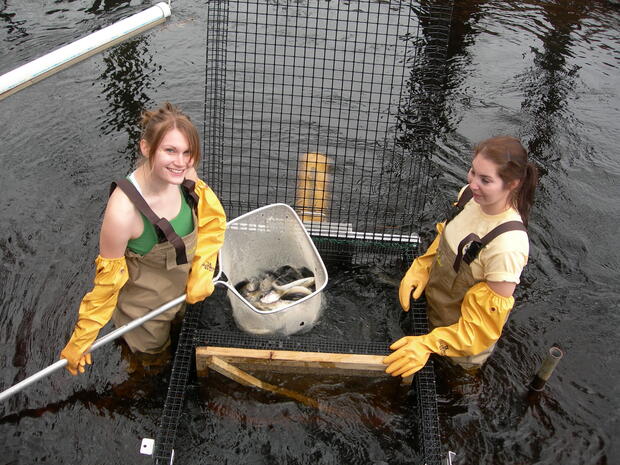
In 2004 MassDEP began working with the River & Stream Continuity Partnership, led by UMass Extension to develop the first draft of the Massachusetts River and Stream Crossing Standards. In 2014, MassDEP incorporated an updated version of the River and Stream Crossing Standards River and Stream Crossing Standards developed by the partnership into the Wetlands Regulations. The standards are important to designing crossings that allow movement of water and passage of fish and other wildlife species. Sizing and other design elements can improve habitat continuity and increase the resilience of built crossing structures to stresses of precipitation, flash flooding and erosion – all of which are exacerbated by climate change. MassDEP also provides technical assistance to communities conducting stream crossing assessments or proposing culvert repair or replacement work. MassDEP is building upon several years of prior collaboration with USGS and the University of Massachusetts at Amherst to develop a “riverine” (e.g., non-tidal) GIS-based Statewide Hydraulic Model as a Preliminary Design Tool and Stream Crossing Standards Guidelines that helps communities identify, plan, and prioritize replacement of undersized or failing culverts, preferably, before they fail. The project is also integrating tidal hydraulic geometry regression equations into the USGS StreamStats web application. Follow the latest updates on these projects on the USGS Website at: A Statewide Hydraulic Modeling Tool for Stream Crossing Projects in | U.S. Geological Survey
Drought Management
MassDEP participates with other Massachusetts state and federal officials in the Drought Management Task Force which collects and assesses data for drought management and makes recommendations related to drought conditions, minimization and management to the Secretary of EEA, the Secretary of Public Safety and Security, and the Governor.
Sustainable Water Management
The Water Management Act program oversees large volume water withdrawals in the Commonwealth. In 2014, MassDEP promulgated revised Water Management Act regulations that adopted a new methodology for defining Safe Yield and incorporation of stream flow criteria into Water Management Act permits. MassDEP implements the permitting requirements for new sources and increases in withdrawals from existing sources. The permitting process includes evaluation of the impacts of withdrawals on streamflow during low flows and droughts and consideration of measures to minimize and mitigate the impact of those withdrawals. In 2023 regulatory amendments were adopted that require reductions in nonessential outdoor water during periods of drought as declared by the Secretary of Energy and Environmental Affairs.
Natural Resource Damages (NRD) Restoration Projects
MassDEP develops claims on behalf of the Secretary of Energy and Environmental Affairs for injury to natural resources such as fish, wildlife, wetlands and groundwater due to releases of oil and/or hazardous materials. NRD claims in Massachusetts can be resolved with commitments to fund and complete restoration projects that benefit the injured natural resources. Some NRD funded restoration projects (e.g. wetland restoration, dam removal, fish passage improvements, culvert replacement) have climate change resiliency/adaptation benefits.
Waterways Program
The use and development of Massachusetts' tidelands—a vitally important public resource—is governed by the Public Waterfront Act. The Act is implemented through the waterways regulations, which regulate activities on both coastal and inland waterways, including construction, dredging, and filling of tidelands, certain rivers, and other waterbodies. To protect the interests of the Commonwealth in these areas, MassDEP is responsible for reviewing and issuing licenses for structures and uses on tidelands to ensure they serve "water-dependent uses or otherwise serve a proper public purpose."
Green Infrastructure (GI) / Nature-based Solutions (NBS)
The U.S. Environmental Protection Agency (EPA) considers stormwater the biggest threat to water quality in the United States. Historically, communities have used “gray infrastructure” (pipes and structures) to transport large volumes of pollutant-laden stormwater to nearby water bodies with little or no treatment. This practice causes flooding, damages ecosystems, and impairs local waters.
To reduce stormwater impacts, in addition to gray infrastructure MassDEP incentivizes and requires the use of green infrastructure (GI) and nature-based solutions (NBS) through regulatory programs, technical assistance, and funding opportunities. GI/NBS include natural and built features - like rain gardens, green roofs, and constructed wetlands - that use vegetation, soils, and natural processes to filter stormwater as it absorbs into the ground.
Green Infrastructure and Nature Based Solutions have multiple co-benefits:
- Stormwater management – captures and infiltrates stormwater, lessening flooding, removing pollutants from waterbodies, and reducing beach closures.
- Heat mitigation – lowers temperatures by reducing paved surfaces and increasing tree coverage.
- Energy savings – reduces energy costs by helping insulate and shield buildings from wind in winter and providing shade and cooling via evapotranspiration in summer.
- Environmental improvements – increases local biodiversity, pollinator habitat, air quality, etc.
Massachusetts Small MS4 General Permit
As climate change brings more precipitation in more intense intervals, stormwater management becomes more challenging. The 2016 Massachusetts Small Municipal Separate Storm Sewer System (MS4) General Permit took effect on July 1, 2018. The permit mandates enhanced stormwater management programs. Each covered municipality was required to customize its local ordinances, bylaws, practices, and procedures to take into consideration Low Impact Development (LID), GI, and other factors that may limit or reduce impervious cover by June 30, 2022. MassDEP provides outreach and technical assistance to the over 200 municipalities subject to the permit.
Proposed Wetlands, Waterways, and MA Stormwater Handbook Resilience Updates
MassDEP is issuing revisions to the Wetlands Regulations, 310 CMR 10.00, Waterways Regulations, 310 CMR 9.00, and the Massachusetts Stormwater Handbook. The intent is to protect against climate change impacts, improve stormwater management and water quality (e.g. pollutant removal, groundwater recharge, and managing peak flow), reduce flooding and storm damage, and protect housing stock and infrastructure.
The Resilience updates will:
- Better protect the coastal floodplain’s ability to provide a natural defense against storm surge and flooding by acting as a “sponge” that absorbs and slows down the flow of water.
- Expand the use of GI/NBS to reduce flooding and remove pollutants from waterbodies by capturing, retaining, and infiltrating stormwater on site, rather than directing it offsite or into potentially outdated and undersized stormwater infrastructure.
- Require waterfront building projects within the coastal floodplain to construct in accordance with revised Building Code requirements to reduce the potential for storm damage, and to minimize impacts to the coastal environment.
- Require certain waterfront building projects to avoid areas with coastal flooding and consider projected sea level rise during design.
Water Utility Resilience Program
MassDEP's Water Utility Resilience Program has assisted municipal resilience efforts to improve their capacity to provide continuous service in the reality of changing climatic conditions and aging infrastructure. The program supports a variety of efforts ranging from critical infrastructure mapping and adaptation planning assistance to climate preparedness and security training. These efforts have helped to assess backup power capacity, provide support for critical infrastructure operations during and after severe weather events, and facilitate related climate resilience planning, asset management, and disaster response and recovery efforts.
Water Utilities and Energy Assistance: Gap Energy Grants
Since 2007 MassDEP has worked with EPA, DOER and MassCEC, energy utilities, UMass Amherst, The Mass. Renewable Energy Trust, and the consortium for Energy Efficiency as well as others, to improve the energy efficiency of drinking water and wastewater systems in the Commonwealth, and support the generation of clean energy by those systems. The program has evolved from supporting the use of energy audits, roundtable meetings, and project implementation assistance, to providing “Gap Energy Grants” designed to fill the financing gaps that are critical to moving efficiency and clean energy generation efforts forward. The most recent rounds of grant assistance have provided energy improvement support for additional sectors: Food and Agricultural small businesses, Food distribution and multi-family non-profit housing. The effort is part of the Clean Energy Results Program.
Eelgrass Mapping
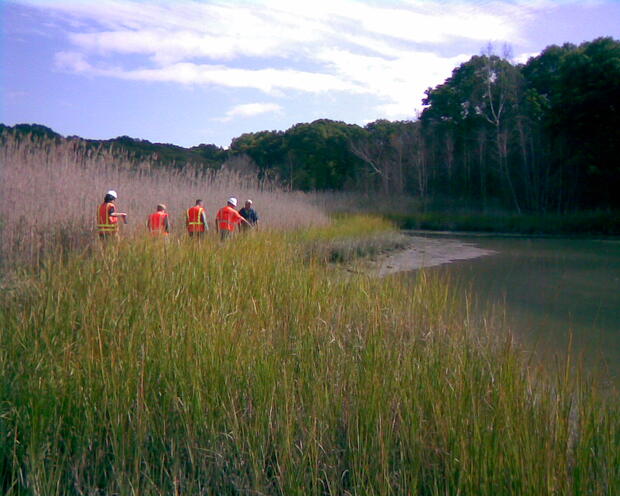
Results from studies in Massachusetts and several related national and international research programs have identified the detrimental effects of nutrient enrichment and eutrophication in coastal waters including large-scale declines of seagrass meadows. These studies suggest that seagrass can potentially serve as sentinels of coastal environmental change associated with natural and anthropogenic disturbances. With appropriate temporal and spatial scaling, monitoring environmental quality and mapping the changes in seagrass distribution and abundance can provide scientists and managers with tools for detecting and diagnosing environmental conditions responsible for the loss or gain of seagrasses. The Massachusetts Department of Environmental Protection (MassDEP) initiated a statewide "eelgrass change analysis program" in 1994. The program is now administered under a cooperative agreement with the Massachusetts Maritime Academy.
Improving Water Quality through 208 Plan Support on Cape Cod
The "208 Plan," certified by Governor Baker to improve water quality on Cape Cod, emphasizes local decision-making to determine the best, most cost-effective solutions to reduce nitrogen pollution. The plan encourages communities to share treatment systems to reduce costs, and supports innovation and natural solutions where possible. In certifying the plan, Governor Baker also directed MassDEP to develop a watershed-based permitting program to provide communities flexibility in their efforts to address water quality issues in their watersheds. These efforts may also address concurrent impacts on water quality from climate change, which include higher water temperatures and amplification of conditions conductive to eutrophication.
GIS Mapping
MassDEP's GIS unit works within the state GIS office to provide maps of the commonwealth. These resources are invaluable to state agencies, local governments and citizens to understand the climate driven changes now occurring, as well as changes predicted in the future. GIS maps can specifically be used to identify vulnerabilities in the natural and built environment, plan adaptive measures and projects, respond to and recover from extreme weather events.
MassDEP's Water Utility Resilience Program (WURP) has provided municipal technical support through its voluntary Critical Infrastructure GIS Mapping Initiative. The support includes direct assistance to public drinking water and wastewater systems through developing and updating their utility system infrastructure maps using Geographic Information Systems (GIS). This initiative has provided GIS map development and updates for 143 drinking water and wastewater systems in 89 municipalities across the Commonwealth (47 of which include EJ areas) from 2017 through 2022. All participating systems receive both a digital images and hard copy paper maps of their respective water distribution or sewer collection systems, along with the GIS data and metadata description report. These products support enhanced asset management, decision-making for emergency response and resilience planning. In addition to direct technical assistance to water utilities, the program has developed service area datasets.
Efforts are underway to improve mapping of drinking water treatment plants and NPDES dischargers along with wastewater facility locations and water management act withdrawals in order to facilitate preparedness and response to severe weather events such as coastal or storm flooding.
Changes to hydrographic basemap for Massachusetts
MassDEP and MassGIS are transitioning from the legacy HYDRO25k hydrographic basemap, which is no longer maintained, to modern, elevation‑derived national datasets.
HYDRO25k, originally compiled from 1970s–1980s USGS sources and selectively updated in drinking water supply watersheds and other priority areas, has now been largely superseded by the National Hydrography Dataset (NHD) and USGS’s 3D Hydrography Program (3DHP).
Using an EPA Exchange Network Grant, MassDEP migrated improved HYDRO25k features into NHD, updated the USGS Watershed Boundary Dataset, and created a public Water Quality Viewer, although some enhanced areas could not be fully incorporated because of funding limits and the planned retirement of NHD. In 2023, MassGIS and MassDEP convened the Massachusetts Hydrography Framework Committee to coordinate cross‑secretariat and stakeholder needs and set priorities for 3DHP implementation, including cross‑border work, flood‑prone areas, and critical surface and groundwater supplies.
MassGIS has piloted 3DHP in the North Nashua watershed and entered into interstate data development agreements with Rhode Island and Vermont, helping position Massachusetts within a New England–wide 3DHP partnership recommended for federal FY26 funding. This regional effort will deliver high‑resolution, elevation‑derived hydrography that supports more accurate watershed delineation, climate and flood modeling, and water quality management across state lines.
Clean Energy Results Program
Renewable energy and energy efficiency both provide tremendous benefits to air quality and climate protection. They help reduce harmful air emissions, including Greenhouse Gas emissions, associated with the burning of fossil fuel. MassDEP's Clean Energy Results Program strengthens the environment-energy connection by supporting MassDEP and Department of Energy Resources (DOER) efforts to reduce regulatory barriers and advance clean and energy efficient development and installation across the state.
Funding & support for climate preparedness & resiliency
Financing climate related work through grant and loan programs has been an area of MassDEP focus through a variety of programs. Traditional longstanding grant and loan programs have been used with the challenges of climate adaptation and mitigation in mind, and new programs have been developed to meet emerging needs.
State Revolving Loan Fund (SRF) for Drinking Water and Wastewater Infrastructure
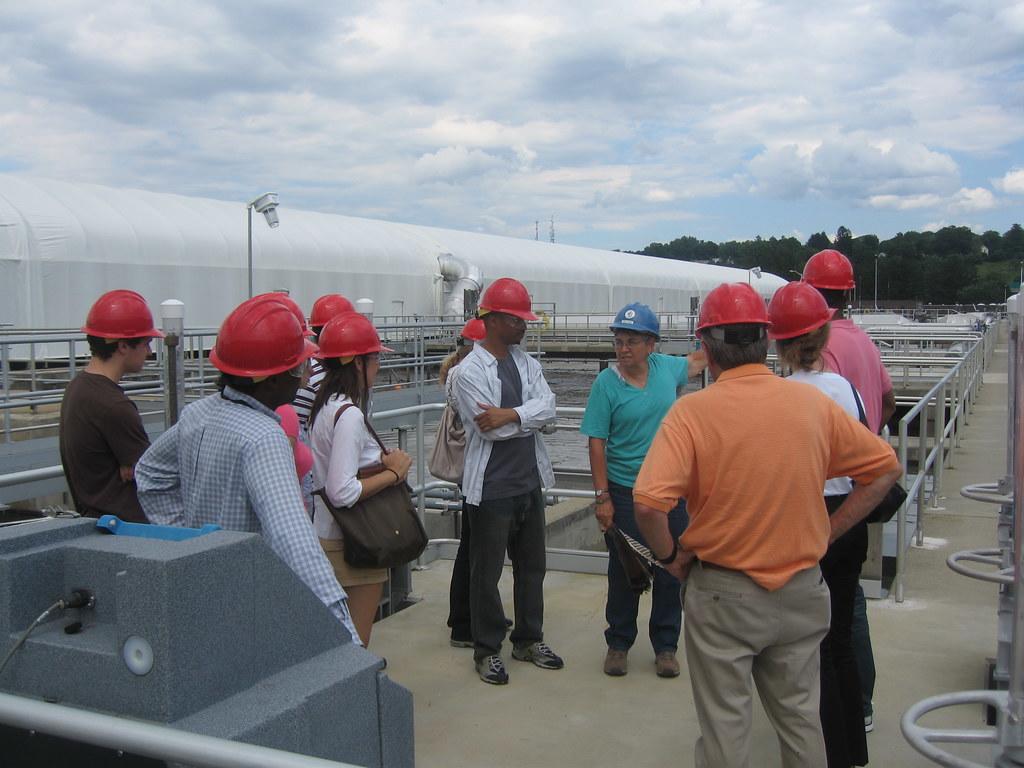
MassDEP administers the SRF programs which provide financial support for a variety of water and wastewater projects, including drinking water and wastewater treatment facilities and stormwater pollution controls. The SRF offers affordable loan options to cities and towns to help protect their clean water and drinking water. SRF-funded projects that incorporate water efficiency and green infrastructure will help make communities more resilient to a changing climate. Projects to adapt existing infrastructure in a variety of ways to changing climatic conditions can also be supported.
Electric Vehicles and Charging Infrastructure
Electric vehicles (EVs) and charging infrastructure are supported by two MassDEP grant programs - the Massachusetts Electric Vehicle Incentive Program (MassEVIP) and the Diesel Emissions Reduction Act (DERA) Program. MassEVIP is aimed at putting more EVs on the road. DERA reduces emissions from diesel vehicles and equipment by funding their replacement with cleaner models. MassEVIP helps eligible public entities acquire EVs and install charging stations for their fleets, as well as funds EV charging stations for general public use, for employees at workplaces, and for use at multi-unit dwellings and educational campuses. DERA has provided grants to convert diesel refrigeration units (that can run 24 hours a day) with electric replacements, as well as to replace old diesel medium- and heavy-duty on- and off-road vehicles with more efficient replacements. Other sources of funding have also been used, and may be used in the future, for more programs to reduce emissions from the transportation sector. To see current and recent grant programs, visit the MassDEP Air Grants Webpage.
CERP Gap Energy Grants
The Gap Energy Grant program (part of the Clean Energy Results Program) is a streamlined funding model that has helped municipal water utilitiesreduce their energy usage and operating costs, become more resilient, and improve the environment. In early 2023, an expanded Gap energy program provided $8.1 million in a third round of funding (Gap III) that is now reaching deeper into more communities. A total of 60 organizations moved forward with their grant funding to construct energy efficiency and renewable energy technology projects, including: (38) municipal drinking water and wastewater facilities, (12) non-profit multi-family affordable housing organizations, (7) agricultural and food-producing non-profits and (3) small businesses engaged in food and agricultural distribution and processing are implementing energy efficiency and renewable energy technologies. The projects’ long-term savings allow these organizations to reinvest their annual energy savings, each year, back into their community or business operations. A $5 Million Gap Energy Grant fourth round (Gap IV) will be announced in 2026.
Water Utility Resilience Program
Financial assistance provided through this program includes identifying helpful and practical resiliency resources, finding opportunities for local and regional partnerships, offering free infrastructure mapping and adaptation planning assistance, and coordinating training opportunities. Over five years (and $1.2 million) of mapping assistance has been provided to create GIS maps of water utility systems and develop statewide service area maps for community public water and wastewater systems.
Water Management Act Grants
This grant program is designed to assist eligible public water suppliers and municipalities with Water Management Act permit compliance by providing funds for planning assistance, demand management, and withdrawal impact mitigation projects in local communities. The Department has determined that the focus of these grants will be for: 1) planning projects for specific watersheds or subwatersheds to identify implementation projects to improve ecological conditions; 2) conservation projects aimed to reduce the demand for water within a municipality or a watershed, such as rate studies or drought resiliency planning; and 3) withdrawal mitigation projects that address the following: improve or increase instream flow, wastewater projects that keep water local, stormwater management projects that improve recharge, reduce impervious cover and/or improve water quality, water supply operational improvements, habitat improvement, demand management, reduction of wastewater inflow and infiltration, and other projects that can be demonstrated to mitigate the impacts of water withdrawals.
Stormwater Grants for MS4 Compliance
This grant program, introduced in 2017, enables groups of Massachusetts cities/towns; Regional Planning Agencies on behalf of groups of Massachusetts cities/towns; Massachusetts stormwater coalitions representing two or more municipalities; and non-profit organizations on behalf of groups of Massachusetts cities/towns, to complete innovative projects that will help multiple communities meet the requirements of the 2016 Small MS4 General Permit, and to reduce stormwater pollution through coordinated partnerships that emphasize resource sharing.
Clean Water Act Section 319 Grants (Non Point Source)
This grant program is authorized under Section 319 of the federal Clean Water Act for implementation projects that address the prevention, control, and abatement of nonpoint source (NPS) pollution. Increased and more intense patterns of precipitation will exacerbate NPS pollution in some areas. Generally, eligible projects must implement measures that address the prevention, control, and abatement of NPS pollution and target the major source(s) of nonpoint source pollution within a watershed or subwatershed.
Wetlands Circuit Rider Assistance
Wetlands Circuit Riders provide technical and regulatory assistance, training and outreach to conservation commissions, other local officials, wetland permit applicants and their consultants, environmental groups, watershed associations and state and federal agency staff. Circuit Rider trainings cover a wide range of subjects geared to the needs of local officials many of which are related to climate effects and wetlands management for natural resiliency. Frequent topics include: field plant identification and wetland delineation, stormwater control, guidance on municipal enforcement actions, exempt activities, site plan reading and interpretation, permit procedures, how to use the on-line eDEP forms, and guidance on how to assess project development issues for compliance with environmental performance standards.
Additional Resources
Water Management Act Grant Programs
Stormwater MS4 Municipal Assistance Grant Program
Emergency response & storm recovery
Emergency Response and Preparedness
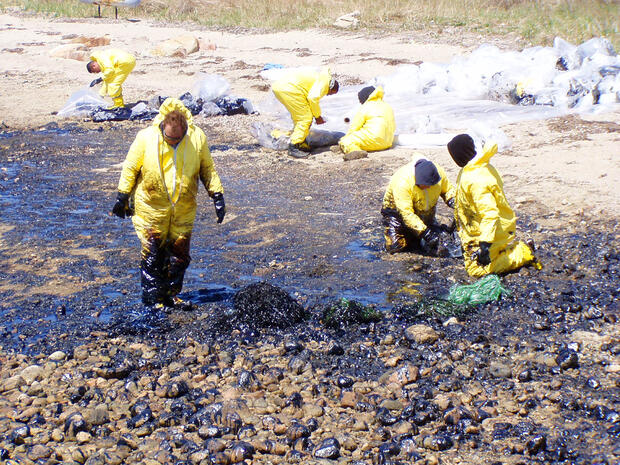
Extreme weather events, which are predicted to increase due to climate change, typically contribute to spills and other releases of oil and hazardous materials to the environment. Flooding may cause waste and fuel storage tanks to breach, and whenever our transportation infrastructure is impacted by extreme weather there is an increased risk of spills from trucks and trains that transport harmful materials. The Emergency Response Program at MassDEP responds to releases and threats of release of oil and hazardous materials to the environment on a 24/7 basis. The Emergency Response Program's actions include approving, directing, and otherwise ensuring that adequate immediate response actions are taken to contain/mitigate the incident/spill. When a Potentially Responsible Party (PRP) is unable or unwilling to retain a response contractor to address the release/spill, MassDEP, through the use of a bond fund, will activate a response contractor for the immediate response actions. For large incidents, MassDEP has the ability to activate its Field Assessment & Support Team (FAST) mobile response unit to assist with the response actions.
Resilient Mass Plan
MassDEP contributed to this first in the nation Plan that integrates statewide hazard mitigation planning with climate adaptation planning. Executive Order 569 called on EOEEA and EOPS to lead the effort to create the first Integrated Hazard and Climate Plan. The plan includes an agency specific analysis of adaptive capacity, as well as vulnerabilities and strengths, to create the statewide plan that was released in September 2018. Now known as the Resilient Mass Plan, it was updated in 2023 for submittal to the Federal Emergency Management Agency in 2023. MassDEP’s action items are set out in the plan and can be viewed on the public Resilient Mass Plan Action Item Tracker.
Debris management – solid waste
MassDEP supports the Commonwealth’s State Debris Management Plan (Plan), revised in 2022, developed by Massachusetts Emergency Management Agency (MEMA) in coordination with state agencies. The Plan also includes guidance for local communities, guidance on disposal of tree debris and stockpiling tree debris after natural disasters, and bird and animal carcass management planning. MassDEP also has additional resources on its website providing disaster debris information specifically for local governments.