
Fall trout stocking
MassWildlife will stock over 70,00 trout into waterbodies across the Commonwealth starting in late September. Over 43,500 rainbow trout will be over 14 inches long and the remaining rainbow and brown trout will be over a foot long. When stocking begins, visit mass.gov/trout for daily updates.
As the weather cools down, the fishing heats up! With fewer crowds, fall is the perfect time to get on the water. Check out our best fall fishing tips, including how to target bass and trout.
Where trout grow
Ever wonder how thousands of trout go from tiny fry to the fish stocked in your favorite waters? MassWildlife's Hatchery Staff work year-round to raise high-quality trout for Massachusetts anglers to catch. New informational signs have been installed at four hatcheries allowing visitors to take a self-guided tour to see trout in different stages of growth. Hatchery locations:
- Bitzer Hatchery, 37 Hatchery Rd., Montague, MA 01351 (open daily 9 a.m. – 3 p.m.)
- McLaughlin Hatchery, 90 East Street, Belchertown, MA 01007 (open daily 9 a.m. – 3:45 p.m.)
- Sandwich Hatchery, 164 Rte 6A, Sandwich, MA 02563 (open daily 9 a.m. – 3 p.m.)
- Sunderland Hatchery, 559 Amherst Rd., Sunderland, MA 01375 (open daily 8 a.m. – 3 p.m.)
Opossum? More like Op-awesome
From pouches to playing dead, here are 5 reasons why the opossum may be our state’s weirdest wild animal.
1. They’re the only mammal in the U.S. with a built-in pocket
The Virginia opossum is the only marsupial found in the United States. Marsupials are mammals that use a pouch to carry their young. Opossums mate between January and July and have a very short gestation period of only 12 – 13 days. When the young are born, they are the size of a honeybee, blind, and hairless. Immediately after birth, young crawl into their mother’s pouch and nurse for 8 weeks. Young will then ride on their mother’s back for another 4 weeks and become fully independent at 12 weeks old.
2. They have more teeth than any North American land mammal
Although they’re the size of a house cat, adult opossums have 50 teeth (that’s 18 more teeth than your average adult human!). These pointed teeth are specially designed for the opossum’s omnivorous diet. Their primary foods in
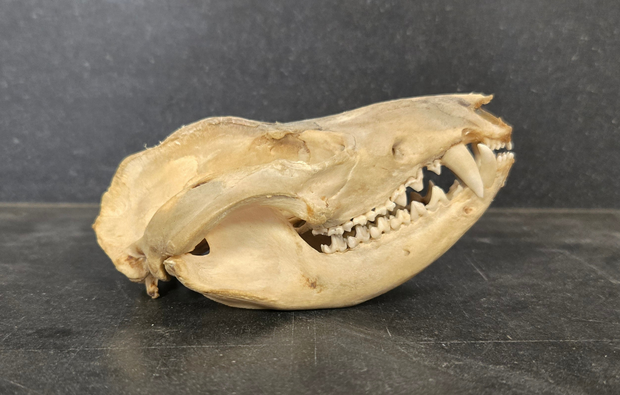
clude eggs, grains, nuts, fruit, birds, snakes, frogs, mice, and carrion (dead animals). Opossums will also take advantage of human-associated foods, such as garbage, outdoor pet food, bird seed, corn, and poultry. Despite the rumors, research shows that opossums don’t really eat ticks, so unfortunately, they do not decrease tick populations in our backyards or forests.
3. They fake their own death
When opossums are threatened, they’ll growl, hiss, bare their many teeth, or climb a tree to escape. If they’re unable to escape, they’ll play dead for several minutes to several hours until they believe the danger has passed. This
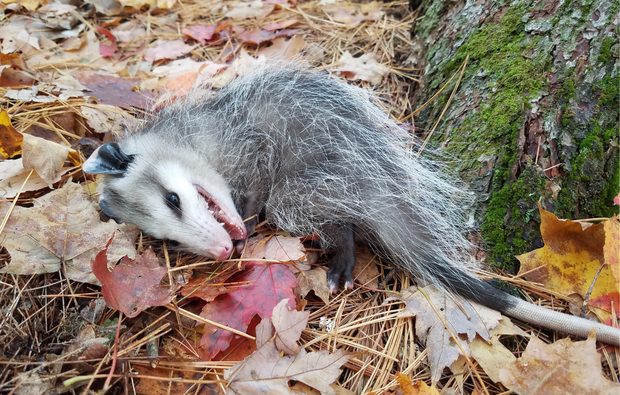
“death feigning” survival strategy is thought to work because the signs for a predator to pursue prey, like movement, disappear when the opossum becomes inactive. Even with this death-defying trick, opossums have fairly short lives of about 2 – 4 years in the wild.
4. Their tails are covered in scales
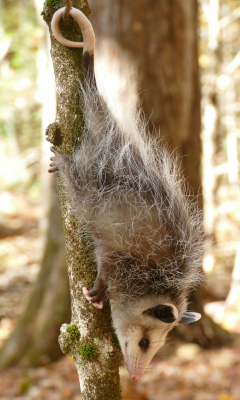
Virginia opossums have rat-like, nearly hairless, scaly pink and black tails. Opossums will use their prehensile tails like a fifth limb to gather nesting material and balance while climbing. Contrary to popular belief, adult opossums are typically too heavy to hang upside-down by their tails, but young opossums can do so briefly. Since their tails, ears, and toes are virtually hairless, it's not uncommon for opossums to get frostbite during particularly cold winters.
5. They’re highly resistant to rabies and snake venom
As a marsupial, opossums have a lower body temperature than other mammals. It’s believed that their lower body temperature makes an inhospitable environment for the rabies virus where it cannot thrive. Because of this, it’s extremely rare for an opossum to contract rabies. They also have a notable resistance to snake venom, specifically from pit vipers like rattlesnakes and copperheads, due to a protein in their blood that neutralizes the venom.
Shifting sands: The impacts of deer on coastal ecosystems
Tourists aren’t the only ones who love the Massachusetts coast. Overabundant deer on sand dunes and salt marshes can have surprising and serious effects on these unique habitats.
When most people think about ideal white-tailed deer habitat, they think of forests and fields. However, deer can thrive in coastal areas with few trees in sight, living comfortably among beach dunes and salt marshes. Deer are even fantastic swimmers, often seen swimming among the Boston Harbor Islands, within the Cape Cod Canal, and along the Elizabeth Islands, Martha’s Vineyard, and Nantucket.
When deer populations grow too large in coastal habitats, it can come at a significant cost to the local ecosystems. In areas like Nantucket and Martha’s Vineyard where there are no natural predators and limits on hunting, densities can exceed 100 deer per square mile.
Adding to coastal erosion
According to the Massachusetts Office of Coastal Zone Management and the U.S. Geological Survey, approximately 68% of the Massachusetts shoreline is currently experiencing long-term erosion driven by climate change, with some vulnerable areas losing up to 12 feet of coastline per year. Erosion leads to habitat loss and immense economic consequences for coastal communities. Unfortunately, deer activity can also exacerbate coastal erosion.
Coastlines are dynamic, but they rely on vegetation to stabilize them. Overabundant deer strip away beach grasses through browsing, bedding along the beaches, and movement along deer trails. These coastal plants are critical for slowing erosion by stabilizing sand dunes. Without the stabilizing roots, winter storms, high tides, and powerful winds can quickly blow the sand away. Natural deer behavior further compounds these issues along cliff-side edges, where compressed deer trails become new cleave points for whole sections to collapse onto the beaches below.
Changing hydrology in salt marshes
Salt marshes act as a natural buffer against coastal erosion with interwoven root systems locking fragile sediment in place while thick surface vegetation absorbs and dissipates waves and storm surges. Each salt marsh maintains a local hydrologic cycle of flooding and draining during tides and storms as ocean waters come in and out. These hydrology cycles are critical for delivering essential sediment for building/maintaining elevation, flushing toxic soil byproducts, and maintaining salinity balance that native, soil stabilizing grasses require to survive.
Along Martha’s Vineyard and many southeastern Massachusetts coastal communities, high deer abundance is changing the local hydrology. Heavily used deer trails compact marsh soil and lead to a loss of critical vegetation and its roots. This compaction reduces the marsh’s capacity for water absorption during daily tide cycles and exposes sediment to erosion, allowing it to wash away with receding tides and storms.
Impacting local biodiversity
The fragile maritime ecosystems of the Massachusetts coast provide an irreplaceable refuge for rare flora and act as a vital corridor for migratory birds. However, overabundant deer threaten the resilience of these habitats, causing cascading harm to the wildlife they contain.
Beyond habitat loss due to coastal erosion, deer directly affect vulnerable plants and animals. Deer are browsers and tend to prefer native plants, including the endangered lion’s foot plant, a favorite food of deer found on both Martha’s Vineyard and Nantucket. Intense grazing and soil mixing from deer movement can prevent native marsh grasses from recolonizing disturbed areas, locking the ecosystem in a damaged state that favors the Eastern mud snail, a nuisance species that thrives in degraded habitat. Excessive deer activity along beaches and in salt marsh areas can also threaten birds, like endangered roseate terns and saltmarsh sparrows, by trampling nests, exposing nests to predators, or even predating on the nests themselves while opportunistically browsing.
Taking action
Addressing overabundant deer in coastal communities is a complex issue that requires collaboration to increase the harvest of deer through legal, regulated hunting.
Increasing the donation of harvested deer to MassWildlife’s Hunters Share the Harvest program has been one successful approach to reaching new record deer harvests while also addressing local food insecurity. Through partnerships with the Martha’s Vineyard Island Grown Initiative, MV Hunt Club, Nantucket Land Bank, Nantucket Food Pantry, and Nourish Nantucket, an astounding 14,000 meals were distributed during the last hunting season to local families in need. Martha’s Vineyard led the state, with more than 11% of all harvested deer being donated.
Expanding hunting opportunities can also increase the deer harvest. Through recent regulatory changes, MassWildlife expanded deer hunting seasons in many coastal wildlife management zones.
Local communities can also play a role by opening more municipal land to hunting, removing bylaws for written permission or implement restrictions, and welcoming hunters onto private property. Increasing hunting access is the most efficient tool to manage deer populations and restore ecological balance.
Program highlight: Hunter Education
Take a deeper look at how MassWildlife is cultivating safe and knowledgeable hunters. Learn about course offerings, new program leadership, and the importance of volunteers.
Safety starts with education
As the fall hunting seasons begin, MassWildlife is highlighting the importance of hunter safety. Through the Massachusetts Hunter Education Program, thousands of new hunters each year build the knowledge and skills needed to be safe, legal, and ethical hunters.
Basic Hunter Education is required for all first-time adult hunters before they can purchase a hunting license. In Massachusetts, these courses are at least 12 hours long and offered for free throughout the state. The curriculum covers a variety of topics, including the safe handling and storage of hunting arms and ammunition, hunting laws and ethics, care and handling of game, and wildlife conservation. Students also learn practical skills, like identifying
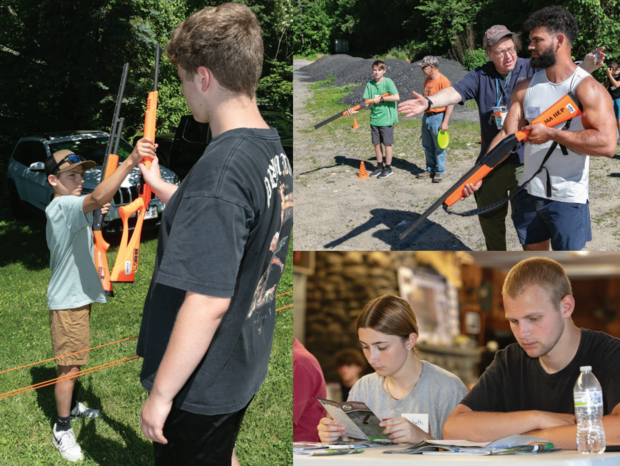
firearm action designs, safely loading and unloading, carrying a firearm in the field, crossing obstacles, and understanding safe zones of fire when hunting with others.
For anyone new to hunting, Basic Hunter Education is the place to start. Upcoming course dates and registration information are available here.
For many hunters, completing the required course is just the beginning. MassWildlife’s Learn to Hunt classes offer new hunters hands-on instruction and a chance to hone their skills and build community. This fall’s offerings include deer scouting, waterfowl hunting, squirrel hunting, and deer field dressing and processing. Register for a free Learn to Hunt class today.
A deeper look at hunting safety
Want to learn more about what goes into keeping hunting safe in Massachusetts? The latest issue of Massachusetts Wildlife magazine features “Lessons in Safety,” an article by Nicole McSweeney, MassWildlife Assistant Director of Outreach and Education. The article takes a closer look at hunting safety and the important role education plays in helping hunters develop the knowledge and skills they need to stay safe in the field. Preview the article here.
Massachusetts Wildlife is MassWildlife’s quarterly magazine that features stories and photography about conservation, wildlife, fishing, hunting, natural history, and the outdoors in Massachusetts. Subscriptions are $6 for one year or $10 for two years; learn how to subscribe.
Meet MassWildlife’s new Hunter Education Program Leader
A strong hunter education program depends on dedicated leadership and a committed network of instructors. MassWildlife is pleased to announce that Astrid Huseby has been named the new Hunter Education Program Leader,
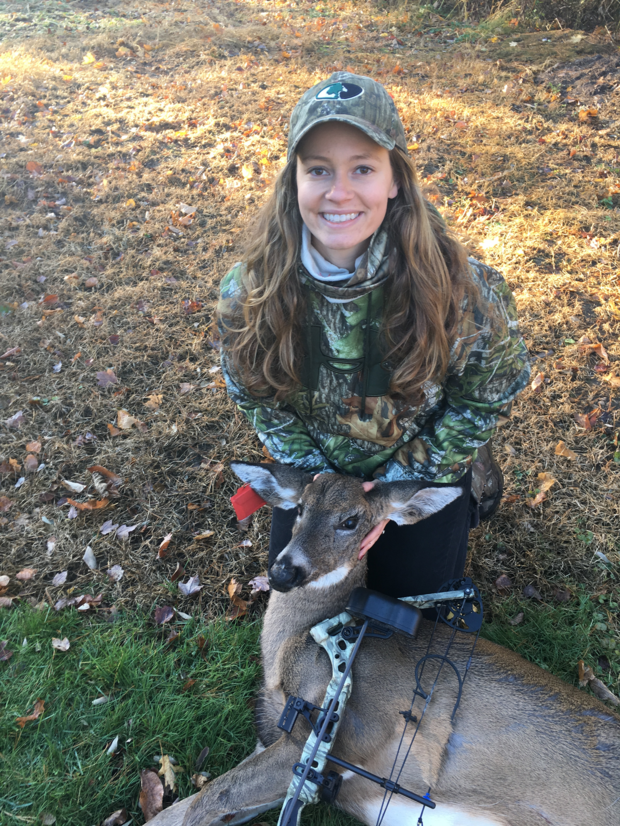
succeeding Susan Langlois, who retired last year after many years of service to the agency and Massachusetts hunters.
Huseby brings more than a decade of experience with MassWildlife to the role. Since 2012, she has served as the agency’s R3 Coordinator, leading efforts focused on the recruitment, retention, and reactivation of hunters. She has coordinated and advanced programs including Learn to Hunt, Becoming an Outdoors-Woman, Youth Hunts, and National Archery in the Schools. She has also led implementation of the Massachusetts R3 Plan, working with state, regional, and national partners to advance hunting and shooting sports education and participation.
In her new position, Huseby will lead MassWildlife’s Hunter Education Program and its network of volunteer instructors, continuing the program’s work to prepare the next generation of hunters to take the field safely and ethically.
Make a difference as a volunteer instructor
Hunter education starts with committed instructors who share their knowledge and experience with new hunters. MassWildlife relies on a dedicated team of over 250 volunteer instructors to teach hunter education courses across the Commonwealth. These courses would not be possible without their support. If you're passionate about the outdoors and want to help pass on the hunting tradition, please consider becoming a hunter education instructor. To learn more, contact us at (508) 389-7820 or hunter.education@mass.gov.
Antlerless Deer Permit announcement
If you applied for an Antlerless Deer Permit by July 16, log into MassFishHunt to see if you were awarded a permit.
Limited surplus permits for zones 1, 3, 4S, 5, 7, 8, 9, & 12 go on sale at 9 a.m. on September 16. Permits for zones 10, 11, 13, & 14 are available now and have no daily or season purchase limit. Click here to get full details.
Fall outdoor safety tips
The return of cooler weather means many Massachusetts sportsmen and women will head into the woods for the fall 2026 hunting season. Massachusetts residents may be wondering where and when hunting will be taking place this fall. Early Canada goose hunting began on September 1, black bear hunting season opened statewide on September 7, while pheasant hunting season opens October 17. Archery deer and turkey hunting seasons begin statewide on October 5. A new early deer hunting season on Martha's Vineyard and Nantucket is open from September 2 thorough October 1. Get a summary of all 2026 hunting seasons.
Hunting is a safe activity and non-hunters should feel comfortable using the woods at any time of year. Although hunting accidents are extremely rare, wearing blaze orange will help minimize your chances of being mistaken for game animals during the hunting season. While hunters are required to wear blaze orange during certain seasons, all outdoor users who are in the woods during hunting seasons should wear a blaze orange hat or vest as a precaution.
Safety tips for non-hunters
- Be safe, be seen. A brightly colored orange vest or hat will help you stay visible. Avoid wearing any earth-toned or animal-colored clothing. The use of blaze orange has dramatically reduced the number of hunting-related accidents in the field. Watch a short video on the Effectiveness of Blaze Orange. Remember, hunters are often active during the early morning and late afternoon when animals are most active. Be especially aware of your own visibility during these times when light is dim.
- Keep pets leashed and visible. Place a blaze orange vest or bandana on your pet to keep it visible.
- Know when and where hunting is allowed. Review hunting regulations and season dates. Sunday hunting is not permitted in Massachusetts.Wildlife Management Areas, Wildlife Conservation Easements, and Access Areas are open to hunting. Most state parks and forests are open to hunting, and many towns allow hunting on municipal lands. Learn about lands open to hunting in Massachusetts. Research the property you plan to visit to learn if hunting is allowed. If being in the woods during hunting season makes you uneasy, find a location where hunting is not allowed or plan your outing for a Sunday or another day outside of hunting season.
- Make your presence known. Talk loudly or whistle to identify yourself as a person. You may also consider wearing a bell. If you see someone hunting or hear shots, call out to them to identify your location.
- Be courteous. Once you've made your presence known, don't make unnecessary noise to disturb wildlife or hunting. Hunter harassment is against state law. Avoid confrontations with hunters. If you think you've witnessed a fish or wildlife violation, report it to the Massachusetts Environmental Police at 1-800-632-8075.
Experience the unique habitats of Massachusetts with guided walks
MassWildlife is hosting a series of walks at locations across the Commonwealth. Lace up your hiking boots and come learn about successful restoration projects that support rare and common wildlife. Explore our unique landscapes and discover how MassWildlife works to conserve and restore habitat for wildlife. This fall, join habitat biologists for a series of guided walks at biodiversity hotspots in Massachusetts. From invasive species and habitat restoration to rare wildlife and the distinctive pine barrens ecology, each walk offers an opportunity to learn more about the species that make these landscapes special—and the conservation work helping them thrive. Click here for dates, locations, and more information about each guided walk.