
A Coordinated, Statewide Effort
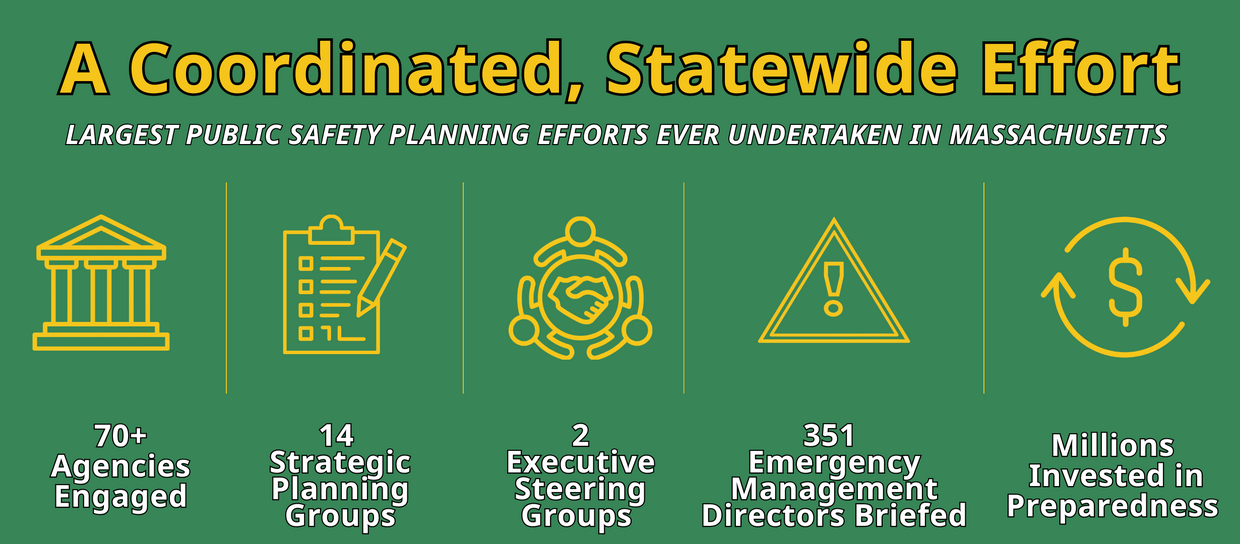
Public safety planning for the World Cup is one of the largest coordinated efforts ever undertaken in Massachusetts.
- 70+ agencies are actively engaged in planning and operations
- 14 specialized planning groups are developing detailed operational plans
- 2 Executive Steering Groups are guiding statewide coordination across public safety and public health
- 351 local emergency management directors have been briefed statewide
- Millions in federal and state funding supporting preparedness, training, and security capabilities
This effort is coordinated by the Massachusetts Emergency Management Agency (MEMA) in partnership with the Executive Office of Public Safety and Security (EOPSS), Massachusetts State Police, the City of Boston, the Town of Foxborough, Kraft Sports & Entertainment (Gillette Stadium), and the FIFA World Cup Boston 26 Host Committee.
Planning also includes close collaboration with federal partners—including the US Department of Homeland Security, US Department of Justice, FEMA, FBI, ATF, CISA, US Secret Service, and others—as well as regional coordination with Rhode Island and national coordination across host cities.
Planning for a Complex, Global Event
The World Cup will bring hundreds of thousands of visitors to Massachusetts, with matches at Gillette Stadium and events across the region.
To prepare, Massachusetts has established a comprehensive Public Safety and Security Planning Framework that:
- Defines roles and responsibilities across agencies
- Enables real-time coordination and information sharing
- Supports unified decision-making during operations
- Integrates public and private sector partners
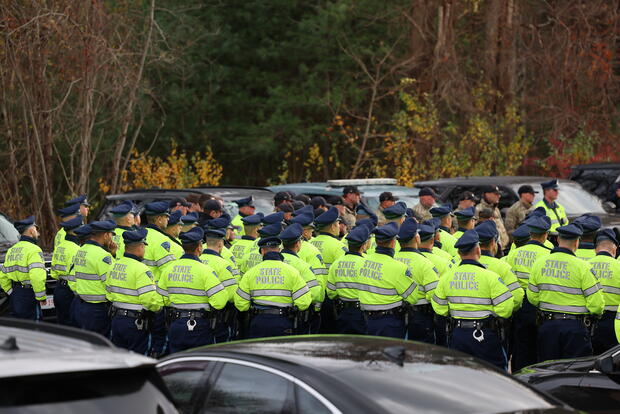
At the center of this effort is a multi-agency planning structure supported by mission-specific teams focused on key areas such as:
- Emergency management and incident response
- Crowd management and venue security
- Intelligence and threat monitoring
- Transportation and infrastructure security
- Cybersecurity and communications
- Public information and emergency alerts
These teams are continuously assessing risks and developing strategies to ensure a safe environment before, during, and after the tournament.
Training and Excersises
Massachusetts is actively preparing responders and partners through training and real-world exercises.
- 15+ training sessions and seminars conducted since 2025
- 5 major exercises testing emergency scenarios and coordination
- Additional exercises planned ahead of the tournament
Trainings have included:
- Crowd management and large-event safety
- Venue evacuation planning
- Multi-agency coordination and incident command
- Cybersecurity preparedness
These efforts ensure that first responders, emergency managers, and public safety officials are ready to respond effectively to a wide range of scenarios.
Preventing and Addressing Human Trafficking
As part of World Cup preparations, Massachusetts and its partners are advancing a coordinated Human Trafficking Preparedness Plan to address the unique risks related to sex and labor trafficking and the tournament.
This effort brings together state agencies, local governments, law enforcement, public health partners and community organizations, and is grounded in trauma-informed, survivor-centered principles.
The Plan focuses on:
- Prevention and risk identification
- Training for frontline personnel
- Coordinated response across agencies
- Public awareness and outreach
- Access to victim services and support
These efforts strengthen coordination across sectors such as public health, protecting young people, victim services, transportation, labor, and public safety, while building long-term capacity to detect, prevent, and respond to trafficking.
Massachusetts is leveraging the World Cup to enhance protections for residents, workers, and visitors both during the event and beyond.
Advanced Technology and Security Investment
Massachusetts is investing in advanced tools and technology to strengthen public safety for the World Cup and other large-scale events.

This includes:
- Expanded communications systems to ensure seamless coordination across agencies
- Enhanced cybersecurity monitoring and threat detection
- Deployment of real-time intelligence and situational awareness tools
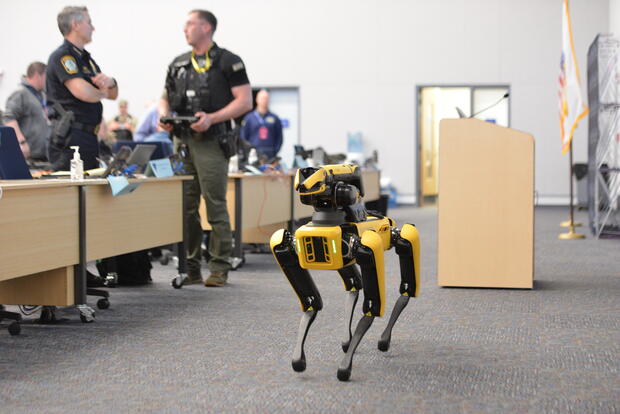
- Significant investment in drone detection and counter-drone capabilities (C-UAS)
In January 2026, Massachusetts was awarded $21.2 million in federal funding through the FEMA Counter-Unmanned Aircraft Systems (C-UAS) Grant Program to protect against malicious drone activity.
These funds support:
- Specialized equipment and technology
- Training and personnel for law enforcement
- Enhanced protection at major venues and events
Funding will directly support the Massachusetts State Police, Boston Police Department, and Foxborough Police Department, strengthening security for World Cup matches and related events across the region.
In addition, the Commonwealth has committed $10 million in state funding to support public safety, transportation, and event operations.
Regional and National Coordination
Planning for the World Cup extends beyond Massachusetts.
- Coordination with Rhode Island for regional impacts, including team facilities and travel
- Collaboration with other U.S. host cities through national security planning efforts
- Engagement with international partners and FIFA security teams
Massachusetts is also preparing for multiple major events occurring in the same timeframe, including America 250 commemorations and Sail Boston, requiring integrated planning across agencies and jurisdictions.
What This Means for the Public
While planning is ongoing, the public can expect:
- A strong and visible public safety presence
- Coordinated emergency response systems
- Clear, timely communication before and during events
- A safe and welcoming environment for residents and visitors
Massachusetts has extensive experience hosting major events—and is building on that expertise to ensure a successful World Cup.
Related Links
