
Auto Body Shop in Dorchester
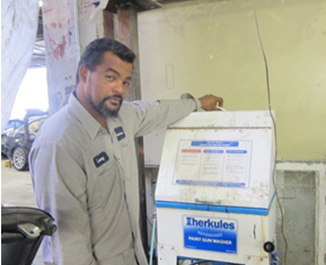
Larry Dossantos, owner of 912 Auto Center, stands beside a water-based paint gun washer that improves worker safety.
Originally located in Mattapan, 912 Auto Center moved to Dorchester in 2007. Fueled by owner Larry Dossantos’ commitment to enhancing product quality, the working environment, and their stewardship of the community, they used the relocation as an opportunity to make several operations changes.
Project
Reduced their toxic chemical use by switching from primarily solvent-based to primarily water-based painting and paint gun washing systems. Explore the 912 Autobody Case Study.
Benefits
Increased product performance, ease of use, and worker safety; improved worker satisfaction; reduced environmental impact and operating costs (annual savings: $3,356).
Testimonial
“My business (is) a safer and healthier place of work, not just for me but for my employees and my customers as well (…) I am happy with the water-based technology and am eager to show other businesses that it is possible and profitable to move toward more environmentally friendly chemicals and technologies.”
Auto Body Shop in Allston
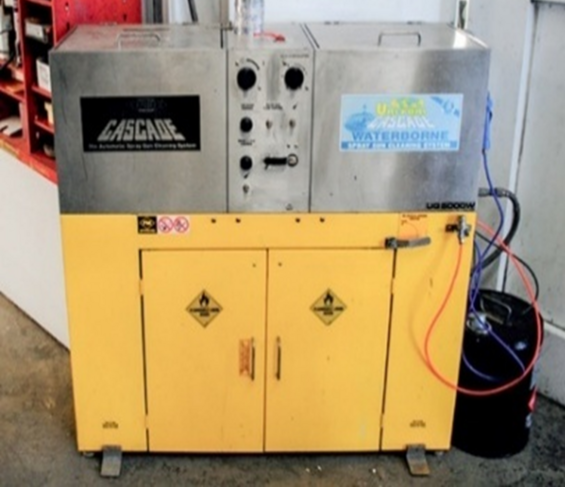
A dual-tank spray gun cleaning station for solvent-based and water-based paints.
Allston Collision Center is a small, third-generation, family-owned business committed to protecting the health of its employees and the surrounding community.
Project
Reduced toxic chemical use and waste by switching from solvent-based to water-based paints, transitioning to a computer system that determines how much paint is required for each job, recycling and reusing paint thinner, and began an extensive recycling program. Explore the Allston Collision Center Case Study.
Benefits
Increased product performance and worker safety; decreased environmental impact and overall costs (annual savings: $1,934). Allston Collision Center’s supplier estimates the switch to water-based paint eliminates over 1,200 pounds of volatile organic compounds (VOCs) from their yearly emissions.
Woodworking Shop in Newburyport
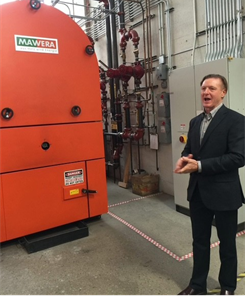
Mark Richey discusses woodworking operations at Mark Richey Woodworking.
Mark Richey Woodworking MRW of Newburyport crafts high-end architectural millwork products and takes steps behind the scenes to reduce its use of toxic chemicals, reduce waste, and improve worker safety.
Project
Purchased a solvent recycling unit, an ultrasonic spray gun cleaner, and a robotic spray line; prioritized the use of water-based coatings to minimize the use and release to the environment of solvents and VOCs; implemented an aggressive program to reduce all types of waste from the facility; utilized tax credits and grants to install a wind turbine and solar array. Explore the Mark Richey Toxics Use and Waste Reduction Case Study, and the Mark Richey Energy Efficiency Case Study.
Benefits
Reduced toxic chemical use, emissions, waste generation, and costs (annual savings: $16,435); shifted to fully renewable energy systems; improved worker safety.
Auto Body Shop in Fall River
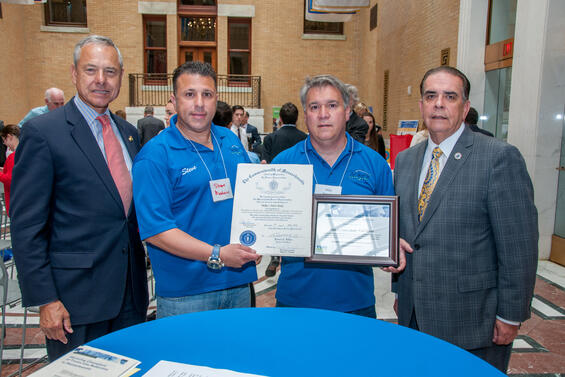
Mike’s Auto Body receives recognition as a Champion of Toxics Use Reduction at a State House awards ceremony in 2016.
Mike’s Auto Body is a leader in the Massachusetts automotive industry and prides itself on being responsible to its workers, community, and environment – creating a safer and healthier workplace. They also offer multilingual services to local customers.
Project
Switched to safer alternatives for both auto body and repair services and products (e.g., wheel wash, spray gun wash, brake cleaner, degreaser, and lead wheel weights). Explore the Mike’s Auto Body Case Study.
Benefits
Reduced use of toxic chemicals and materials and reduced net cost
(annual savings: $1,371).
Testimonial
“We feel that using safer products is the right thing to do. We want to make our shop safer for our workers and better for the environment. We were pleased to receive financial and technical assistance from TURI [the Massachusetts Toxics Use Reduction Institute] and OTA. It gave us information that made us aware of how bad some of these products are and how to make a safer workplace.”
Brass Instruments Manufacturer in Holliston
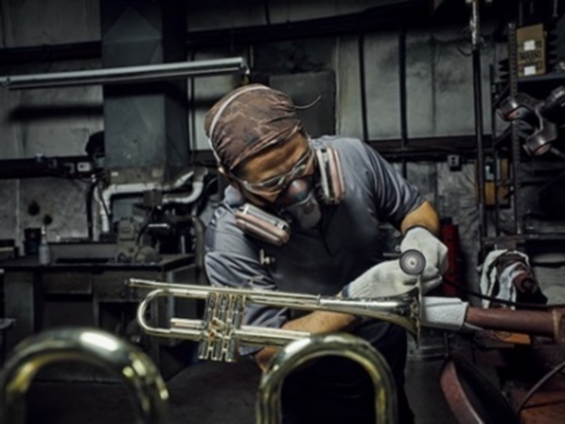
A worker at S.E. Shires Company uses personal protective equipment while working on a trumpet.
Originally founded in Hopedale, S.E. Shires Company relocated to Holliston in 2018 and focuses on brass instrument design and craftsmanship. Since the mid-1990s, the company has worked with OTA to improve worker health and safety and reduce the presence of toxics on the shop floor.
Project
S.E. Shires replaced the use of trichloroethylene with aqueous and semi-aqueous cleaners and replaced the use of methylene chloride with an aromatic alcohol. During their relocation planning process, the company evaluated opportunities to upgrade equipment and make improvements to environmental and worker safety in the new facility, which allowed them to increase production with new process equipment using less toxic chemistries. Explore the S.E. Shires Case Study.
Benefits
Reduced toxics use, eliminated approximately 3,600 pounds of trichloroethylene and about 300 pounds of methylene chloride annually, and improved environmental and worker safety.
Testimonial
“I’m proud that we’ve been able to implement these changes and improve safety for our workers. OTA has been helpful and encouraging throughout this process and through all of the years that we’ve worked with them.”
Biotechnology Company in Wilmington
ChemGenes Corporation’s work with OTA and TURI to reduce and recycle solvents and improve overall efficiency illustrates the ability of small companies to lead the way in creating a better future for overburdened communities.
Project
Reduced annual chloroform and hexane use; invested in a new chromatography system and a new system to recover and recycle hexane and ethyl acetate. Explore the ChemGenes Case Study.
Benefits
Reduced solvent use, toxic solids, and hazardous waste; significantly improved manufacturing process efficiency; reduced operational costs.
Testimonial
“ChemGenes is very appreciative of OTA for planting the seeds of thought for this successful project. Toxics Use Reduction is part of our continuous effort to improve operations, product quality, and reduce environmental impact.”
Oriental Rugs Importer and Restorer in Cambridge
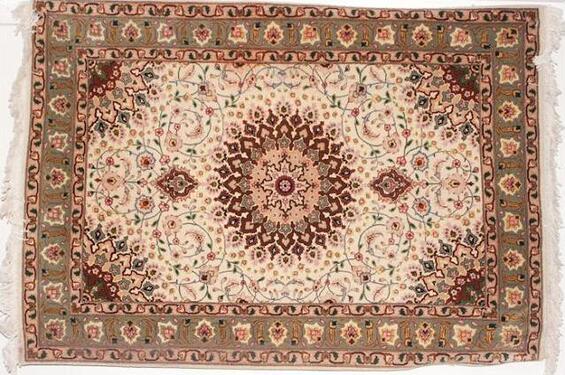
Tabriz rug, Iran.
OTA staff provided assistance to Noor Oriental Rugs, a small family-owned business with an over 300-year heritage of weaving and repairing Persian rugs, to determine whether it could make claims that its cleaning processes are “green.” OTA carefully evaluated every step in the cleaning and rug restoration process and assisted in researching ingredients. OTA confirmed that Noor could claim that its process is “greener” than those that use machine-washing, petroleum-derived soaps and dyes, and industrial disinfectants, deodorizers, and moth-repellants. Explore the Noor Oriental Rugs Case Study.
Published: 2026