
Introduction
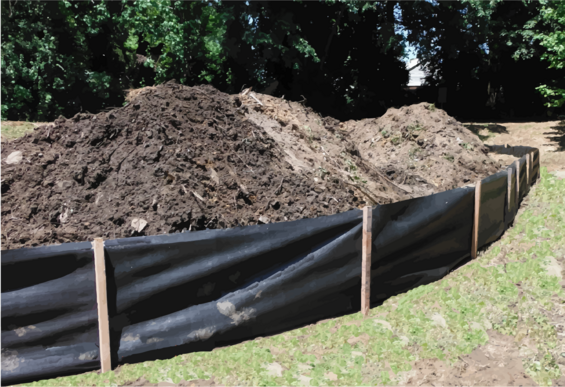
A silt fence installed around a pile of topsoil helps prevent sediments from being washed into storm drains and waterbodies when it rains.
Erosion and sediment controls include methods that reduce erosion of exposed soils, capture sediments and attached pollutants, and slow or redirect the flow of stormwater. These techniques are typically used when soils are disturbed during construction activities, since even small home-construction projects can release damaging amounts of sediment offsite. Sand, soil, silt, and other sediments in runoff can fill storm drains, obstruct channels, reduce water levels in ponds and other waterbodies, cloud aquatic habitats and limit plant growth, and smother wetlands. These sediments can also carry nutrients and other attached pollutants that can further harm water quality and habitats and pose a health hazard at swimming beaches. Erosion and sediment control options—such as covering exposed soils with erosion-control blankets, surrounding storm drains with filter socks, and redirecting runoff to vegetated areas—can help prevent these impacts while also reducing quick-moving, channelized flow that may otherwise increase flooding and erosion on adjacent properties. This fact sheet discusses approaches that can be put in place before, during, and after construction to maximize successful stormwater management on site.
Controlling erosion and stabilizing sediments are particularly important in coastal areas to prevent potential impacts to property and landforms, wildlife habitat, and fragile resources (like salt marsh and other wetlands). Controlling and managing runoff can also significantly reduce erosion of coastal banks, dunes, and beaches, helping to ensure that these landforms can protect inland areas from storm damage and flooding. See CZM’s StormSmart Properties fact sheets for specific measures to reduce coastal erosion and storm damage, including Controlling Overland Runoff to Reduce Coastal Erosion.
Impacts to Neighboring Properties - Stormwater management practices must be designed to responsibly collect, convey, and/or infiltrate (i.e., filter into the ground) runoff from your property without transferring stormwater to neighboring properties, roads, and municipal drainage systems. Techniques that collect and hold stormwater have the potential to overflow in major storms and could cause muddy water to run off your property—so be sure that there is enough area on your property to effectively capture and treat any overflow onsite. Management practices that redirect or divert stormwater (such as berms, filter socks, or re-grading the land surface) can similarly cause flooding problems in roadways or neighboring yards, basements, or leach fields (potentially causing a septic system failure). These projects must therefore be designed to ensure that stormwater is not transferred offsite. Carefully following design guidelines in the Stormwater Solutions for Homeowners fact sheets will help you avoid impacts to neighboring properties. If in doubt about offsite impacts, consult a professional, such as a civil engineer or landscape architect.
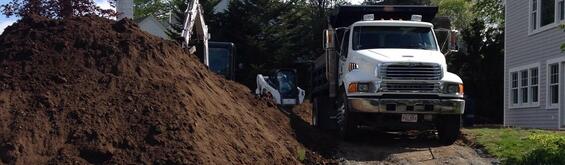
Reducing stormwater impacts by minimizing erosion and preventing sediment from running offsite can be particularly beneficial on properties near beaches, coastal banks, dunes, floodplains, rivers, salt marshes, wetlands, and other “resource areas” protected under the Massachusetts Wetlands Protection Act (WPA).* Projects that alter or disturb areas on these properties typically require a permit through the local Conservation Commission (along with the use of specified erosion and sediment controls). For larger projects, an erosion and sediment control plan may be required as part of the Stormwater Management Standards of the WPA. Additional permits may also be needed from the U.S. Environmental Protection Agency (EPA) under the National Pollutant Discharge Elimination System (NPDES) program or from other state agencies and local departments, depending on the location and the work involved (e.g., the EPA Construction General Permit is required for sites larger than 1 acre and Massachusetts Department of Environmental Protection [MassDEP] review may also be required if the site is in or near Outstanding Resource Waters; see the Stormwater Construction General Permit section within Environmental Permitting in Coastal Massachusetts for further details). To maximize benefits and avoid negative impacts to resources and adjacent properties, permitted projects and all stormwater controls must be properly designed, installed, and maintained. For any project, homeowners are encouraged to contact their local Conservation Commission before undertaking work to determine whether a resource area exists, what permitting requirements may apply, and how to avoid impacts. An experienced professional may need to be contacted to help identify the resources on or near the property and to design a project that meets the relevant regulatory standards.
*MGL Chapter 131, Section 40 and corresponding regulations at 310 CMR 10.00.
Before Project Activities Begin
Before soils are disturbed, follow these guidelines to capture, limit, and manage potential runoff to prevent stormwater pollution.

Long grasses help slow and absorb runoff before reaching resources areas, like salt marsh. (Photo credit: Matt Naughton, Belle Isle Marsh—Mass.gov Image Library)
- Discuss Details with Your Contractor - If you hire a contractor, discuss erosion and sediment controls before work begins to clarify details—such as buffer zones and clearing limits (the amount and location of vegetation that is to be preserved or removed), timing and phasing of work, and specific control options selected—as well as who is responsible for purchasing materials and conducting work. Make sure the location of streams, wetlands, or other sensitive resources is noted and marked so that heavy equipment and machinery can keep a safe distance. If a construction site has potential to become muddy (particularly in the wet spring months), request that your contractor install gravel pads or other mats where trucks exit the site to help remove excess sediment from tires. If wind-blown dust is a potential issue, request that the contractor install vegetative cover, mulch, or stone. See the Massachusetts Clean Water Toolkit’s Construction Entrance and Dust Control pages for details on these options. For other helpful practices that can be implemented by your contractor, see MassDEP’s Massachusetts Erosion and Sedimentation Control Guidelines for Urban and Suburban Areas (PDF, 4 MB) and Massachusetts Stormwater Handbook.
- Create a Buffer Zone - Leave an unaltered and undisturbed buffer of vegetation along waterbodies, beaches, salt marsh, and other sensitive areas to slow and capture stormwater and filter sediments and pollutants. Plants can also help prevent erosion by shielding the ground from rainfall and stabilizing soils with their roots. Lawn in the buffer zone can be left unmowed—longer grasses more effectively intercept and absorb runoff and capture and filter sediments. For more detailed information, including tips for leaving this buffer as a permanent feature (and even allowing the plants to further transition to woody shrubs and trees), see Stormwater Solutions for Homeowners Fact Sheet: Vegetated Buffers.
- Temporarily Divert Water - Until the site can be stabilized with vegetation or other erosion-control methods, ensure that water is directed away from bare soils and slopes, which are more vulnerable to erosion. To slow and divert water, construct a berm (i.e., a mound of gravel, compost, or vegetated/stabilized sediment) to redirect water, or regrade the area so that the stormwater flows to a vegetated and stable section of your property. See the Massachusetts Clean Water Toolkit’s Filter Berm page and the Stormwater Solutions for Homeowners Fact Sheet: Reducing Impervious Surfaces for details on building berms and other methods for diverting stormwater.
- Dissipate and Slow Stormwater Flows - To avoid concentrated flows of water that become channelized and cause flooding, erosion, and scour, use techniques that dissipate the runoff, such as applying bark mulch or a layer of compost on top of exposed surfaces. These materials can help intercept rainfall and improve water infiltration. Erosion-control blankets made of natural fibers (such as straw, burlap, or coconut husk—also known as coir) can also be placed over exposed surfaces to intercept and slow water (for more on these products, see “Install an Erosion-Control Blanket or Coir Roll” in After the Project. Since steeper slopes have faster water flows that exacerbate soil erosion, install berms or natural fiber rolls (long, cylindrical rolls of mesh packed with coir fibers) along the bottom of slopes. Placing a layer of gravel or crushed stone on slopes is another option to effectively filter and dissipate runoff. These materials also cover finer-grained silts and sediments to help keep them from eroding when runoff flows across the site.
- Surround Exposed Soils - Install silt fences, compost filter socks (mesh tubes filled with compost), or compost filter berms (berms of compost) around any exposed soils or at the perimeter of the project site (particularly in the low-lying areas) to prevent soil and silt from being washed off the site or into sensitive resource areas. Silt fences should be installed so that the bottom of the fabric is dug into the soil and posts are properly staked to help prevent water and sediment from flowing underneath.
- Surround Storm Drains - Install compost filter socks or filters made of crushed rock around nearby storm drains to help prevent sediments from flowing into the storm drains and out to water bodies.
- Plant a Vegetated Buffer or Filter Strip - Down-slope from exposed soils, plant vegetation so that water flows through the planted area before leaving the site or before flowing to other stormwater controls, such as silt fences and compost socks. These vegetated buffers or filter strips can slow stormwater and filter sediments and pollutants, helping to improve the effectiveness of other stormwater management practices. Vegetated filter strips can also be planted along the top and face of steeper slopes to help slow and infiltrate runoff, trap sediments, and reduce erosion.
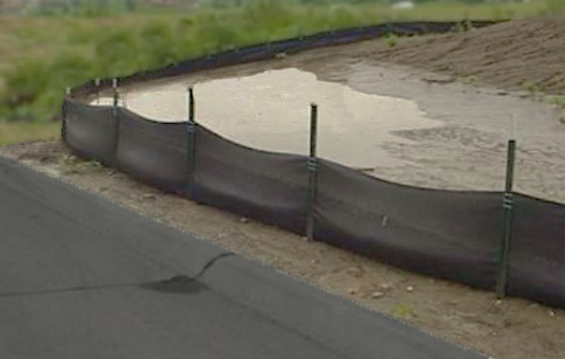
Silt fence surrounding exposed soils
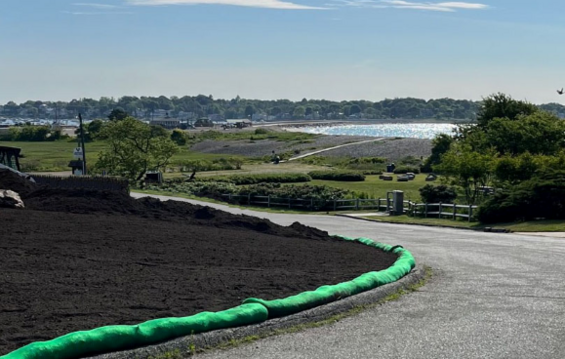
Compost filter sock surrounding exposed soils
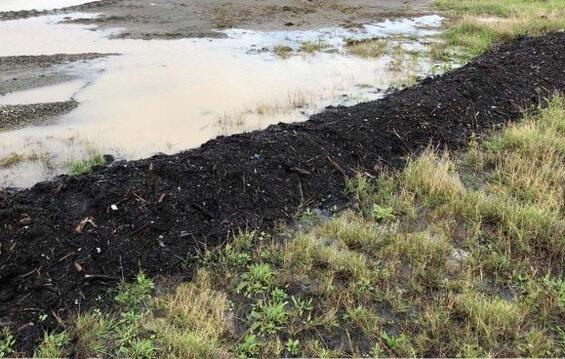
Compost filter berm to slow and divert water
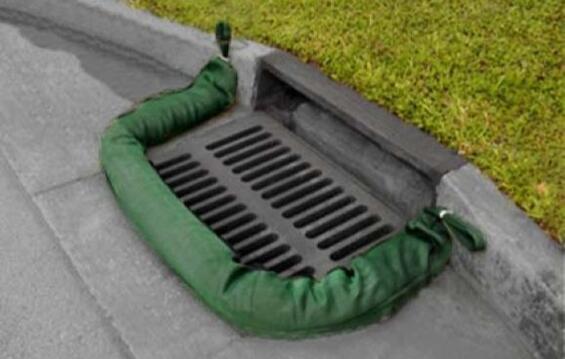
Compost filter sock surrounding a storm drain
During the Project
These tips will help minimize the exposure of soils to potential erosion and runoff while activities are underway.
- Phase the Work - Minimize soil exposure by sequencing the timing of site disturbance. Clearing vegetation and moving soils in phases as the project proceeds will expose smaller areas and make it easier to control erosion and retain sediments.
- Limit Vegetation Removal - Keep areas vegetated and undisturbed to the maximum extent possible. Care should be taken to preserve trees, since they shelter soils from rainfall, stabilize sediments, and take up water (among many other benefits). A no-disturb buffer around each tree can help prevent root damage and ensure survival.
- Provide Temporary Cover - Apply a compost blanket, a layer of mulch or gravel, or other temporary covers to break the impact of rainfall, protect exposed soils from erosion, reduce and disperse stormwater flows, and promote infiltration.
- Watch the Weather - Avoid grading and digging work during heavy rains when exposed soils are more vulnerable to erosion. When a storm is forecast while soils are exposed, ensure that sediment controls (such as silt fences, filter socks, and temporary covers) are in good working condition.
- Maintain Stormwater Controls - Improperly maintained stormwater controls can sometimes worsen runoff problems or generate debris if materials are not biodegradable. To help keep erosion and sediment controls in working order and prevent impacts to slope stability, existing vegetation, or adjacent properties:
- Check stormwater controls once per week and after significant rainfall (typically 0.25 inch or more) to ensure that they are stable and operating effectively.
- Make any necessary repairs immediately.
- Clean out sediments that have accumulated behind silt fences, compost filter socks, or other containment methods to allow additional sediments to be captured.
- Clean or replace gravel when it becomes clogged with silt and other sediments and no longer drains standing water.
- Protect vegetated areas from foot or vehicle traffic.
- Inspect plants to determine if they require weeding, water, or fertilizers (use compost or slow-release fertilizers where necessary).
- Sweep the roadway of sediments and debris if necessary (but do not empty sweepings into storm drains).
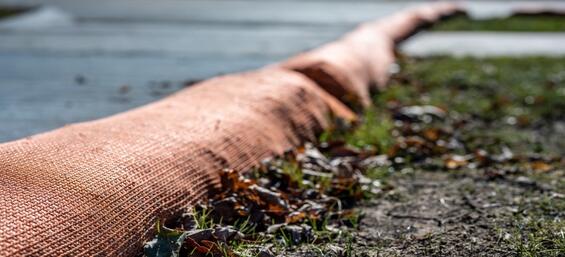
Make sure erosion and sediment controls are in place (before and after storms) and clean out sediment, leaves, and other debris that may accumulate over time.
After the Project
Once the project is complete, stabilize soils with these methods:
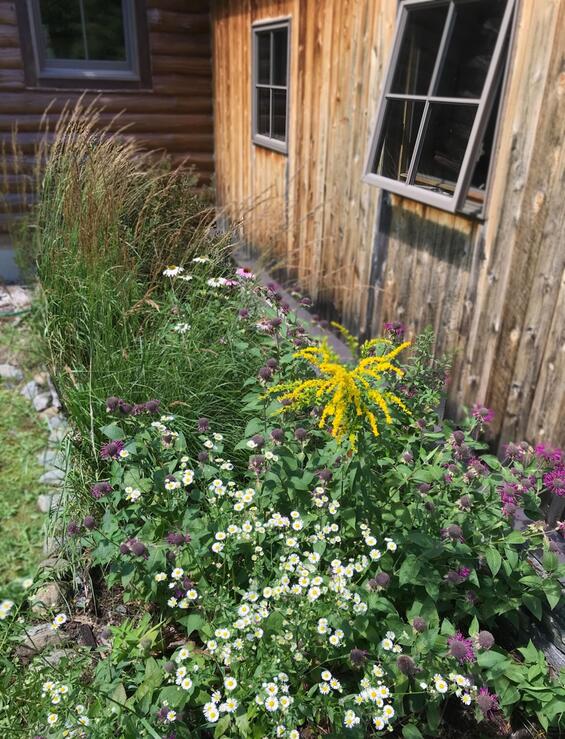
Grasses and perennials, such as beebalm, coneflower, fleabane, and goldenrod, can be planted (or allowed to self-seed) around the foundation of a house to capture and absorb roof runoff and help stabilize soils. Native plants will also help provide valuable habitat for birds, beneficial insects, and other wildlife.
- Plant Native Erosion-Control Plants - Plants protect and bind soils to provide long-term erosion control. Vegetated buffers, perennial beds, foundation plantings, wildflower fields, shrub borders, stands of trees, and other planted areas are therefore excellent options for stabilizing soils and reducing stormwater pollution. Native species (i.e., those that originally grew in this area) are the best choices for planted areas because they are adapted to local conditions and consequently require less maintenance, watering, fertilizer, and pest control than introduced species. The following Stormwater Solutions for Homeowners fact sheets discuss specific techniques for preventing runoff pollution with plants: Vegetated Buffers, “Green” Lawn and Garden Practices, Rain Gardens, and Vegetated Swales. CZM’s Coastal Landscaping website also provides landscape plans, recommended plants (many that are appropriate for both coastal and inland sites), information about environmental benefits from landscaping, and more.
- Install Erosion-Control Blankets or Coir Rolls - For sites vulnerable to erosion, cover exposed soil with biodegradable, erosion-control blankets to stabilize the soils until plants become established. Natural fiber blankets are most effective when placed in close contact with the soil or sediments (by anchoring them down with stakes or staples and biodegradable twine) so that plant shoots can grow up through them. Natural fiber rolls can be used to help stabilize the toe of banks or berms or other areas prone to erosion. Both the natural fiber blankets and rolls can be planted with live vegetation, which will take over the job of site stabilization as the fibers degrade (for details on these practices, see StormSmart Properties Fact Sheet 5: Bioengineering - Natural Fiber Blankets on Coastal Banks and StormSmart Properties Fact Sheet 4: Bioengineering - Coir Rolls on Coastal Banks).
- Apply Mulch - For flat areas or slight slopes, cover plant beds with a layer of mulch that is 2-3 inches thick to help retain moisture, lower soil temperatures around plant roots, prevent erosion, and reduce weed growth. A finer mulch, such as triple shredded bark, is recommended for its ability to stay in place. Keep mulch about an inch away from stems and tree trunks to avoid rot. Once plants become well established and the plant cover is dense enough to serve as a “living mulch,” mulch application is no longer necessary (for more information on living mulch, see the Stormwater Solutions for Homeowners Fact Sheet: “Green” Lawn and Garden Practices). Also, allowing leaf litter to remain in place can serve the same purposes as mulch with the added benefit of providing habitat for beneficial insects.
- Install Long-Term Stormwater Control Methods - CZM’s Stormwater Solutions for Homeowners fact sheet website includes information on a variety of methods for long-term stormwater management, including: Vegetated Buffers, Rain Gardens, and Vegetated Swales. Wait until construction/grading of the property is complete and the land is stable before installing these options to ensure they are not compromised by excess sediments from construction activities.
- Manage Plantings - Maintain and water seeded and planted areas, apply compost and/or mulch where necessary, and replace failed plants to obtain a vigorous, dense vegetative cover. For more information on planting techniques, see the Stormwater Solutions Fact Sheets on Vegetated Buffers and “Green” Lawn and Garden Practices.
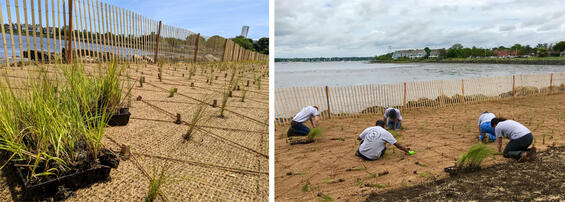
An erosion-control blanket was installed next to a cove and planted with salt marsh grasses. The blanket provides a stable medium for the plants to grow while preventing erosion of exposed sediments.
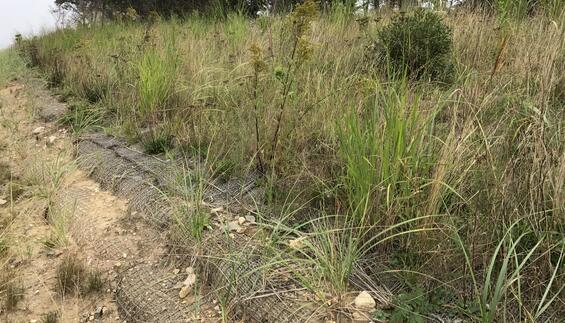
Coir rolls were installed along a coastal bank, one of which has been planted with vegetation prior to installation.
Additional Information
- For related fact sheets, see the CZM Stormwater Solutions for Homeowners fact sheet website.
- The MassDEP Massachusetts Erosion and Sediment Control Guidelines for Urban and Suburban Areas (PDF, 4 MB) provides best management measures for project sites, including details on erosion and sediment control practices.
- MassDEP’s Massachusetts Clean Water Toolkit offers information to help managers and residents understand and implement many different options for prevention and control of nonpoint source pollution, and includes a suite of fact sheets on Erosion and Sediment Control.
- MassDEP’s Massachusetts Stormwater Handbook is the official guidance on the Stormwater Policy as part of the Wetlands Protection Act.
- The International Erosion Control Association (IECA) Northeast Chapter website provides erosion information, including erosion and sedimentation control projects in New England, upcoming seminars and events, a newsletter, and educational opportunities to increase awareness and to help implement positive solutions.
- CZM’s Environmental Permitting in Coastal Massachusetts briefly describes major environmental permits required for projects proposed in Massachusetts, including the Stormwater Construction General Permit.
- CZM’s Coastal Landscaping website provides information on landscaping coastal areas with salt-tolerant vegetation to reduce storm damage and erosion.
Other Available Stormwater Solutions Fact Sheets
Fact sheets are currently available on these techniques:
- Vegetated Buffers - Trees, shrubs, high grasses, perennials, and other vegetation can be strategically planted to help slow, capture, and filter runoff and reduce stormwater impacts.
- “Green” Lawn and Garden Practices - Environmentally friendly yard care methods—such as planting native species, conserving water, and reducing fertilizer and chemical use—help to protect water quality and can save time and money.
- Rain Gardens - Rain gardens are specially designed and planted depressions in the ground that collect, filter, and treat stormwater.
- Vegetated Swales - Vegetated swales are channels with moisture-loving plants and amended soils that intercept, treat, and slowly convey stormwater runoff to where it can be effectively infiltrated.
- Reducing Impervious Surfaces - Impervious surfaces (such as asphalt driveways and concrete patios) allow greater volumes of stormwater to flow quickly offsite, carrying contaminants and causing local flooding and erosion. Replacing impervious surfaces with gravel driveways, planted areas, and other options that infiltrate or absorb water can significantly reduce stormwater problems.
- Minimizing Contaminants - Household contaminants—such as oil from automobiles, toxins from pesticides and cleaning products, and bacteria from pet waste and septic systems—can contribute to stormwater pollution. But simple changes at home, from reducing fertilizer use to properly disposing of batteries and other hazardous household products, can help keep inland and coastal waters clean.