- Department of Fire Services
Media Contact
Jake Wark, Public Information Officer
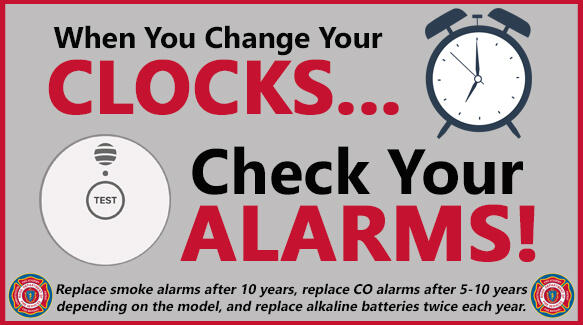
STOW — With daylight saving time beginning on March 8, State Fire Marshal Jon M. Davine is reminding residents to check their smoke and carbon monoxide (CO) alarms when they change their clocks.
“Smoke and CO alarms save lives, but only if they’re working properly,” said State Fire Marshal Davine. “As we spring forward this weekend, remember to check your alarms when you change your clocks. The manufacturing date is printed on the back of the device, so take a look and replace any alarms that have gone out of date. And unless you have newer alarms with sealed, long-life batteries, this is a great time to replace the alkaline batteries in all your alarms.”
Smoke and CO alarms are like any other appliance – they don’t last forever. Smoke alarms need to be replaced after 10 years, and carbon monoxide alarms need to be replaced after 5, 7, or 10 years, depending on the make and model. If your alarm is out of date, or if there’s no date at all, it’s time to replace it. Outdated alarms may not offer the life-saving protection that every household needs.
Most Fire Deaths Take Place at Home Overnight
Of the 44 fire deaths in Massachusetts last year,[1] 90% took place in residential settings – and 28 of these took place in the overnight and early morning hours.
“Most fire deaths take place at home and they’re most common when we’re sleeping,” State Fire Marshal Davine said. “Tragically, we see this fact pattern play out again and again, especially with seniors in homes without working smoke alarms. Smoke alarms should be on the ceiling of each bedroom and in the hallway outside so you can hear the beep where you sleep.”
Older Adults at Greatest Risk
More than half of last year’s residential fire deaths involved adults aged 65 and older. State Fire Marshal Davine asked residents to check in on older relatives, friends, and neighbors who may need help installing, testing, or replacing their alarms. Seniors can also contact their local fire department, council on aging, or senior center for assistance: Department of Fire Services’ Senior SAFE grant program awarded nearly half a million dollars to fire departments across Massachusetts last year to support assistance with alarm installation and testing.
Replacing an out-of-date alarm?
The Massachusetts Comprehensive Fire Safety Code requires replacement battery-operated smoke alarms in older one- and two-family homes to have sealed, long-life batteries and a hush feature. These alarms are easier to maintain and less likely to be disabled while cooking or by someone using the batteries for other household appliances.
Alarms that meet UL Standard 217, 8th Edition or later, use the latest multi-criteria detection technology to prevent alarms caused by cooking smoke. Fire officials recommend choosing these alarms to reduce nuisance alarms – and the risk that a user will disable the alarm after burning food in the oven.
“Disabling a smoke alarm puts you and everyone in your building at risk,” said State Fire Marshal Davine. “Never remove the batteries from a smoke alarm until it’s time to replace them or the alarm itself.”
Fire officials recommend that you choose alarms from a well-known, national brand. Look for the mark of an independent testing laboratory such as UL or Intertek. Many Massachusetts fire departments have found alarms purchased on Amazon and other online retailers that do not meet the Fire Code – and may not perform when they’re needed most.
“If the price seems too good to be true, then it probably is,” said State Fire Marshal Davine.
Carbon Monoxide Hazards
Heating equipment is the leading source of carbon monoxide at home, State Fire Marshal Davine said, but CO remains a hazard even in warmer weather. While many carbon monoxide incidents involve furnaces and other heating appliances, CO is also produced by stoves, grills, and vehicles, as well as generators put into use during a power outage.
“Massachusetts firefighters report detecting carbon monoxide at about 5,000 calls each year,” the Marshal said. “We can’t see, smell, or taste carbon monoxide. Working CO alarms are the only way to detect this silent, invisible killer. Please be sure you have them in place at home. If you hear them sounding, get out to fresh air right away and call 9-1-1 for help.”
[1] Excluding motor vehicle collisions with a subsequent fire
###