Many of the Snapshots featured participate in one or more Massachusetts programs supporting Farm to School efforts in Massachusetts. Learn more about those programs here:

MFG: MA FRESH: Massachusetts Farm to School Grant Program: Supports K-12 schools and early education programs to access local food and educate students, teachers, and school nutrition professionals about the local food system. In FY25, DESE introduced an additional subgrant entitled MA FRESH CORP (Coordination and Optimization of Resources and Partnerships) to invest in personnel and community partners dedicated to coordinating farm to school activities.

FSC: Farm to School Census: USDA Food and Nutrition Service periodically assesses the state of farm to school activities across the U.S by surveying all school food authorities participating in the National School Lunch Program.

FSI: Farm to School Institute: A year-long professional learning opportunity from MA Farm to School for early education programs and schools/districts. Participating programs form teams representing a variety of roles.

FSIG: Food Security Infrastructure Grant Program: FSIG supports initiatives that improve food security and ensure equitable access to locally grown, raised, harvested, and caught foods by strengthening Massachusetts’ food supply chain.

TT: Terrific Trays: Department of Elementary and Secondary Education (DESE) recognized school meals that feature local foods sourced from Massachusetts farms, dairies, and fisheries made and served to students across the Commonwealth.
Below we recognize the farmers, fishers, teachers, school nutrition professionals, school foodservice personnel, students, partners, and programs moving Farm to School forward in Massachusetts. Read about the Farm to School Programs below and explore the map to find out what’s happening in your area.
Snapshots of Farm to School
1: Farm to School reaches over 526,000 Massachusetts students at 1400 schools with 341 (78%) of Massachusetts school food authorities participating in Farm to School. FSC
2: The Massachusetts Department of Agricultural Resources (MDAR) partners with state and non-profit organizations to support Farm to School including The Department of Elementary and Secondary Education (DESE) Office for Food and Nutrition Programs, Massachusetts Farm to School and Massachusetts Agriculture in the Classroom. MDAR is also a participating member of the state agency Local Food System Education Taskforce, convening entity of the statewide Food Policy Council as well as a co-chair of the Governor’s Anti-Hunger Taskforce where innovative collaborations that support the local food system, such as those demonstrated in farm to school programming, are elevated and celebrated. MDAR’s MassGrown map helps schools locate Massachusetts farms and lists nearly 100 farms that offer school tours. The MassGrown Exchange, an online business to business platform, helps make connections between farmers, fishers and food buyers including school food service directors, and MDAR’s Food Security Infrastructure Grant Program (FSIG) supports infrastructure projects such as school projects to expand schools’ ability for scratch cooking with local foods.
3: Benson’s Pond Cranberry Farm in Middleboro offers engaging educational field trips for schools, homeschool groups, camps, and other youth programs, all centered around the fascinating world of cranberry farming. The programs highlight how this native Massachusetts fruit travels from the cranberry bog to store shelves. During the visit, children explore a real cranberry bog and get hands-on with the growing cranberry buds. They learn about the life of a cranberry farmer, how cranberries grow, and the different harvesting methods used on the farm. The rich history of cranberries in Massachusetts is shared, including how the industry works—from harvest, to handlers, and finally to grocery stores. To make the experience even more meaningful, each child creates their own mini cranberry bog in a cup to take home.
4: The Department of Elementary and Secondary Education's (DESE) Office for Food and Nutrition Programs (FNP) works closely with a variety of partners including school districts, childcare centers, family day care homes, and Summer Eats community organizations across the Commonwealth to administer eight Federal Child Nutrition Programs and four Food Distribution Programs federally funded by the United States Department of Agriculture. Building upon the Commonwealth's investment in Universal Free School Meals, FNP supports Child Nutrition Programs in investing in Massachusetts' food system by providing procurement and farm to school programming technical assistance; investing in a dedicated staff position - FNP's Local Food System Specialist - and contracted partners with farm to school expertise; convening a state agency Local Food System Education Taskforce to identify statewide best practices and areas for growth; administering a statewide farm to school grant program - MA FRESH; executing an annual Healthy Kids, Healthy Programs Summit with a full day dedicated to food literacy content; hosting the Terrific Tray Competition, and by continually identifying opportunities for farm to school intersection in FNP's longstanding programs including the Fresh Fruit and Vegetable Program (FFVP) and USDA Foods.
5: Springfield Public School District is integrating school gardens into early care classrooms through professional development and capacity building in alignment with the district’s Wellness Policy, providing farm field trips to a local farm which supplies produce used in their school lunches and creating a school garden food safety plan. MFG
6: Massachusetts Farm to School is a statewide organization founded in 2004 as a grassroots initiative to increase access to healthy, locally grown food in schools and other institutions across the state. Massachusetts Farm to School’s mission is to strengthen local farms and fisheries and promote healthy communities by increasing local food purchasing and education at schools. Mass. Farm to School believes that all students - regardless of race, place, or class - deserve access to local food and food education in school. Massachusetts Farm to School works in the following ways to impact local food procurement, promotion, and education in institutions across the state. 1) Providing training and technical assistance to school food service professionals, farmers and fishermen, distributors, educators, and other advocates; 2) Coordinating local food outreach and promotion through their Harvest of the Month campaign; 3) Facilitating networking of farm to school practitioners; and 4) Providing leadership to advance policies that support expanded farm to school activity.
7: The Chicopee Food Service Department hosted a Family Cooking Night designed to bring students and their families together around local food and hands-on learning. Families worked side by side to prepare enchiladas using locally made tortillas and seasonal Massachusetts produce, including butternut squash, onions, and kale. The event gave participants the opportunity to learn about the ingredients, practice simple cooking skills, and experience how local foods can be incorporated into healthy, family-friendly meals. Once their enchiladas were assembled, families could enjoy their meal together on site or take their dish home to bake later.
The evening strengthened connections between the cafeteria, classroom, and community by showcasing how local foods can bring people together. Events like this help families engage with the local food system while building excitement around farm to school initiatives and the fresh ingredients served in school meals.
8: North Adams Public School District is procuring local produce to provide more scratch-cooked meals; strengthening existing relationships with local farmers; expanding education to help students make informed food choices and improve their diets and recognize the role local farms play in the community. MFG
9: New Bedford Public Schools transformation of their high school basement kitchen to a modern, state-of-the-art Culinary Center has expanded their capacity to be able to purchase and serve local foods. FSIG
10: Ascentria Care Alliance SNAP-Ed supports farm to school efforts within Fitchburg’s Making Opportunity Count (MOC) Head Start programs through required, hands-on garden and nutrition education for all staff. Programming includes garden builds, technical training and follow up leadership development for educators, and experiential learning that is now expanding to families. This work is building toward farm to school integration for meals and snacks, strengthening connections between early education, families, and local food systems.
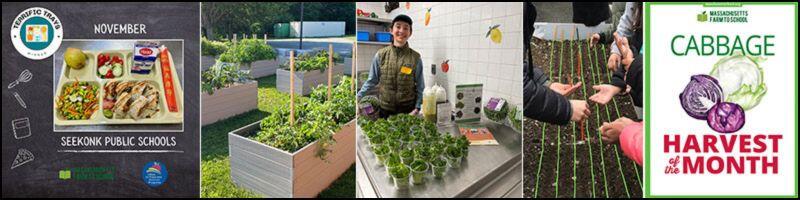
11: Walpole Public Schools featured a Roasted Vegetable Kale Salad with Brussels sprouts and carrots from Joe Czajkowski Farm in Hadley. TT
12: The Massachusetts Department of Agricultural Resources, MA Agriculture in the Classroom and The Massachusetts Food System Collaborative hosted an Agricultural Literacy Summit, bringing together educators, agricultural professionals, nonprofits, and stakeholders to discuss strategies for strengthening agricultural education in schools. The summit included panel discussions, breakout sessions, and collaboration focused on improving agricultural and food system literacy for students across the Commonwealth.
13: The Farm to School Northeast Podcast, hosted by Massachusetts Farm to School’s Dinah Mack, shines a spotlight on the inspiring people and programs transforming school food and food education across the region. Released monthly, the podcast features 30 episodes exploring how local food is making its way into school cafeterias while highlighting how food systems education comes alive in classrooms and school gardens. Episodes feature educators, school nutrition professionals, farmers, students, policymakers, and community leaders sharing innovative ideas and real-world stories from across the Northeast. Topics have ranged from student-led composting and youth food activism to garden-based learning, scratch cooking, social-emotional learning in school gardens, and sustainable agriculture projects. The podcast amplifies diverse voices and celebrates the creativity, collaboration, and impact of the farm to school movement while providing inspiration and practical examples for listeners interested in strengthening local food systems in their own communities.
14: Boston Public School District is implementing a strategy to build, manage, and execute relationships with local farmers, schools, and food service providers to increase the procurement and serving of fresh, locally sourced foods for school meals to promote healthy eating habits and support sustainable food systems. This includes taste tests; student engagement; and building educational bridges between school meals and local sustainable food and academic learning within Boston Public Schools. MFG
15: Island Grown Initiative welcomes 700 students yearly to their farm to learn about regenerative agriculture and to harvest produce for their school cafeterias and to donate to food equity organizations on Martha’s Vineyard. Additionally, every school on Martha's Vineyard has a garden that is maintained as an outdoor learning space through a collaboration with Island Grown Initiative. Students grow, prepare and enjoy nourishing food in their school gardens.
16: Greater Lawrence Regional Vocational Technical is developing an after-school club which will involve a living wall garden and composting system to provide students with hands-on experiences in growing food, understanding sustainable agriculture, and managing organic waste, while promoting health, environmental awareness, and cross-collaboration learning. MFG
17: Gill Elementary School is lucky to partner with their neighbors at Upinngil Farm. Every year Upinngil hosts 100+ students, K-6, on walking field trips to visit their livestock and to pick strawberries and raspberries. In the spring Upinngil leads classes across the newly planted fields, of potatoes (sometimes just in time to help collect potato beetles!), sweetcorn, pumpkins and squash.
18: Massachusetts Agriculture in the Classroom (MAC) is a 501(c)(3) nonprofit that has been promoting agricultural literacy among Massachusetts educators since 1983. MAC offers workshops, free curriculum-aligned lesson plans, and mini-grants to help teachers integrate agriculture into their classrooms. Their programs have reached more than 13,000 educators statewide, connecting them to the foods, fibers, and agricultural products they encounter every day. As part of the national Agriculture in the Classroom initiative, MAC supports farm to school efforts by equipping teachers with the knowledge, skills, and resources to bring agriculture to life for their students, fostering a deeper understanding of where food comes from and the vital role Massachusetts agriculture plays in our communities.
19: Falmouth’s Farm to School Team connected local farms to their Harvest of the Month Program, and empowered students to explore food systems, equity and sustainability. The Culinary Arts Program expanded hands-on learning with a second greenhouse. FSI
20: Orange Public Schools Fisher Hill Elementary School linked a farm field trip for Grades 1 & 2 to their social studies curriculum, specifically “Topic 4 Economics: Resources and Choices” of the Massachusetts’ Social Studies Curriculum Framework. The school also had a speaker from Seeds of Solidity and conducted a MA Farm to School curriculum lesson. MFG
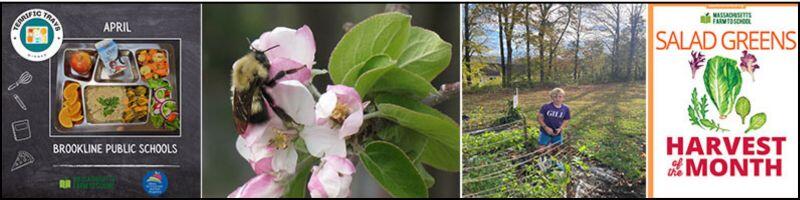
21: Smith Vocational and Agricultural High School in Northampton actively supports Massachusetts Farm to School initiatives through integrated, hands-on programs in agriculture, culinary arts, and FFA leadership. Students in Horticulture, Animal Science, and Agricultural Mechanics engage directly with local food systems. Horticulture students cultivate greenhouse crops using sustainable practices, supplementing both the culinary program and the school cafeteria. Animal Science students raise livestock—including cattle, pigs, sheep, and goats—while studying food production. Meats such as beef, pork, chevon, and mutton are featured in the school’s student-run restaurant, offering an authentic farm-to-table experience. Agricultural Mechanics students maintain essential farm infrastructure and equipment. The school cafeteria also prioritizes sourcing from local farms when available. Through FFA events, community dinners, and local food initiatives, students build agricultural literacy, strengthen partnerships with Massachusetts farms, and gain real-world experience connecting agriculture, education, and regional food systems.
22: Pittsfield Public School’s Beef Meatball Sub was served with roasted butternut squash from Plainville Farms in Hadley and Cortland apples from Pine Hill Orchards in Colrain. TT
23: In 2016, Massachusetts Farm to School (MFTS) named its first “Kale Blazers,” at the biennial Farm & Sea to School Conference. Going forward MFTS has honored 24 Kale Blazers to celebrate all things Farm to School. The Kale Blazer recognizes an individual or group of individuals who have demonstrated excellence and leadership in farm to school activity in Massachusetts. These are people or groups at the forefront of the farm to school movement – innovating and setting inspiring examples for others to learn from. Past Kale Blazers have included educators, school nutrition professionals, food producers, non-profit partners, advocates, and policymakers.
24: Acton-Boxborough Public Schools bought a refrigerated van tilt skillet, outdoor freezer and renovated their high school cafeteria serving line. New recipes that are scratch-made and feature local ingredients are prepared in the centralized kitchen at the high school. The van allows them to transport meals and ingredients safely across the district during the school year. New partnerships with food hubs and vendors have been formed. FSIG
25: Northampton Public Schools served New Field Fritters from Commonwealth Kitchen, carrot sticks from Joe Czajkowski Farm in Hadley, and lettuce from Little Leaf Farms in Devens. TT
26: At PACE Head Start in New Bedford children in the Early Head Start and Head Start programs engaged in a "seed-to-table" journey by planting cucumber seeds in their classrooms and transplanting them into the Smith Street gardens. After a summer of tending the garden, students harvested both cucumbers and dill to create homemade pickles. This initiative culminated in a community tasting event where families joined their children to make and take home their own jars, one of their tastiest home-school partnerships to date!
27: Tyngsborough’s Innovation Academy Charter District is providing professional development for nutrition staff, opportunities for students in garden setup, growing, and harvesting; interactive field trips, and creating a school-wide composting program. The district is engaging families and the community by providing student-grown spices and produce which can be used in meals families create for the school’s multicultural potluck dinner. MFG
28: As a MA fisherman and seafood cooperative, catching, processing, packing, and delivering their own catch, this past year, The Chatham Harvesters Cooperative delivered monkfish to 7 different schools within the Nauset Public School system on Cape Cod. They also organized several "meet your fishermen" events were their crew shared stories with the kids. The students loved the local, abundant fish.
29: Since 1970, Land’s Sake Farm in Weston has engaged middle school-aged youth in their Green Power program. Between February and March, middle school students participate in tapping, collecting, and boiling as part of the maple sugaring process, culminating in a community education opportunity at the Sugaring Off Festival, which celebrated the maple season.
30: Greater Lowell Family YMCA is connecting young children and their families to the local food system through hands-on gardening, nutrition education, and meaningful food experiences. By integrating both indoor and outdoor garden-based learning into the preschool curriculum, they are offering children opportunities to grow, care for, and explore fresh fruits and vegetables. Farm visits and meals and snacks prepared with locally grown ingredients are being offered. MFG
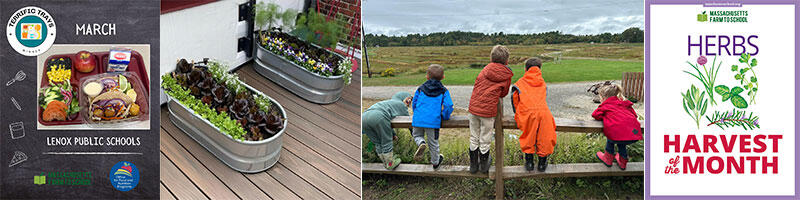
31: Auburn Middle School STEM B students participate in a curriculum unit involving simple machines. As part of this unit they learn about food systems that include growing agricultural commodities, and aquaculture. One of the student assignments is to create food maps or webs that focus on apples. Students watch a video about Lyman Orchards to give them a better understanding of the steps that are involved in bringing apples from the orchard to customers. Some of the food maps and webs students create include themselves in their depiction as apple picking, visiting farm stands, and even getting apples as part of their lunch or breakfast in the school cafeteria.
Additionally, students involved in Auburn Middle School's Home Economics Club have made apple and cranberry sauces. The students learned about the various simple machines that are used in harvesting, processing, and preparing these sauces. The main goal is to help students to better understand where their food comes from. The "No farms, no food" sticker is always a good starting point for the lesson.
32: Frontier Regional School District’s Farm to School Team launched pilot Farm to School Programs focused on hands on food education and student engagement and community connections at Conway Grammar School and Sunderland Elementary laying a strong foundation for future expansion. FSI
33: Boston Food Hub is a wholesale aggregator and distributor of fresh produce, dedicated to supporting local and regional growers by streamlining the process of bringing farmers' most plentiful harvests to the wholesale market and has been supplying dozens of Massachusetts schools since 2023 with access to affordable, fresh fruits and vegetables grown by Massachusetts farmers for their daily menus and educational events. The schools enjoy items such as apples, lettuce, cherry tomatoes, and lightly processed items like peeled and cubed butternut squash and coined carrots. Boston Food Hub also collaborates with schools to host educational events about local produce, such as their recent hydroponic lettuce tasting with Braintree High School’s Nutrition Lunch Lab.
34: Springfield Public Schools featured a Chicken Caesar Salad with lettuce from Little Leaf Farms in Devens. TT
35: The Sustainable Nantucket Farm to School Program creates curriculum for first and second graders at the Nantucket Public School about making healthy food choices. The Nantucket Nutrition Project teaches through experiential learning in an outdoor garden, where students are introduced to the importance of a balanced diet and taught how to build nutritious meals with fresh, wholesome ingredients.
36: Metro West YMCA in Framingham is enhancing the impact of their work across classrooms, cafeterias, and communities and is building new year-round relationships with additional farms and local food sources so the meal programs can preserve harvests from the YMCA farms to utilize in school meals, and source local, fresh food, year-round. During the 2025 season, Metro West YMCA hosted workshops, volunteer days, and family dinner nights and grew 765 pounds of produce at their garden sites. MFG
37: Berkshire Agricultural Ventures (BAV) is expanding the reach of local food through their Farm to Institution initiative, recently bolstered by a USDA Regional Food System Partnership (RFSP) grant. BAV serves as a critical bridge between Berkshire-region farmers and local schools, providing the technical assistance and financial coordination necessary to scale up local procurement.
The work focuses on building a resilient "middle-of-the-chain" infrastructure, ensuring school foodservice directors can reliably source fresh, seasonal produce from Massachusetts growers. Through the RFSP project, BAV is streamlining distribution logistics and helping farms adapt their processing to meet school meal requirements. By fostering these direct relationships, BAV ensures that students across the Berkshires have access to nutritious, locally-grown ingredients while simultaneously strengthening the economic viability of regional farm partners.
38: The Massachusetts Department of Elementary and Secondary Education’s (DESE) Office for Food and Nutrition Programs (FNP) collaborated with Ocean Spray Cranberries, Inc. in Middleborough to process 100% MA grown and harvested cranberries into Craisins® Dried Cranberries that will be available exclusively for MA K-12 school districts through their United States Department of Agriculture (USDA) Foods Program. Craisins are currently packaged using cranberries grown and harvested from Massachusetts, Wisconsin, and New Jersey, co-mingled in the packaging plant. This new offering guarantees only cranberries from Massachusetts are packaged, supporting local growers!
39: Amherst-Pelham Regional School District’s Farm to School Team expanded local food procurement, provided school garden education for all 53 elementary classrooms (over 960 students) and held field trips, while the middle school hosted a climate justice event featuring 20 workshops from local and regional organizations. FSI
40: Provincetown Public Schools installed a new orchard area containing native apple & pear trees, and a native fruits garden containing blueberries, raspberries, blackberries, elderberry and beach plum. Expansion of the gardens increased resource output and supported the contribution of grown food to the school kitchen and community food pantry. MFG
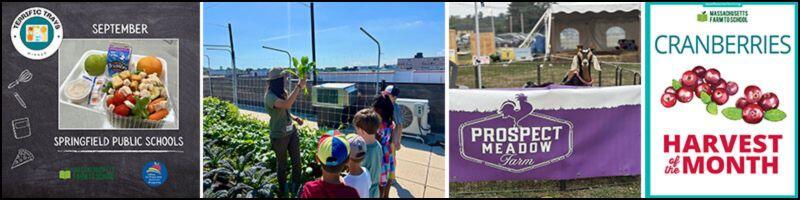
41: At Robin’s Children’s Programs in Attleboro, educators incorporate Farm to School into their entire program - School Age and Preschool. Raised beds are used at Robin’s Children’s Programs to help preschoolers develop early science skills, build responsibility, and strengthen their connection to healthy foods through planting, watering and harvesting vegetables. Children at Robin’s Children’s Programs also participate in field trips year-round with several local farms including Langwater Farm in Easton, Adam’s Farm, Cumberland, RI, and Ward’s Berry Farm in Sharon. These experiences support sensory learning, encourage curiosity about nature, and help children understand the journey from garden to table in a meaningful, age-appropriate way. Robin’s Children’s Programs’ participation in the Harvest of the Month program also gives children the opportunity to help prepare and taste a variety of foods that showcase each month’s featured harvest. The children truly enjoy the experience and eagerly anticipate each new month.
42: Chicopee Public Schools served Potato Wedges and Pickle Spears from Joe Czajkowski Farm in Hadley – delicious extras to complement a burger as part of their school lunch. TT
43: The Farm School in Athol has enhanced their teaching facilities for students. With funding from FSIG, they have procured a refrigerated van, new caterpillar tunnels, mechanical bottle filler, a wash and pack facility, walk-in refrigerator, dairy barn construction, and fencing to meet their goals of immersing students in farm life and serving their local community and food pantry. FSIG
44: Greenfield Public School District participates in MA Farm to School's Harvest of the Month Program. Each month, elementary students get to learn about and taste test local foods in a recipe that is planned by Kyle Zegel of DigIn! The students get to vote afterwards, to share their opinion on the food. The recipe appears on the school menus later in month and is prepped on a large scale by the skilled food service staff. November featured local kale in a black bean quesadilla, and February featured local butternut squash in a squash mac n cheese!
45: Webster School District’s Farm to School Team expanded the number of garden beds and created new growing plans. They expanded the frequency of Harvest of the Month taste tests, both in classroom and cafeteria, and partnered with local farms to bring more local produce into school meals. FSI
46: Our Place, The Salvation Army Massachusetts Division (Cambridge) is offering field trips for preschoolers to local farms and nature-focused programs. These trips give children ages 2-5 the chance to explore fields, greenhouses, and gardens while learning about where their food comes from, and the importance of healthy eating through hands-on planting activities, games, art projects and close-up experiences. MFG
47: Coastal Foodshed is a farmer food hub connecting local farms with school districts across the Southcoast of Massachusetts. Through their Farm to School program, they make it easier for schools to source fresh, locally grown food for their cafeterias. Coordinating aggregation and distribution from regional producers supports student access to nutritious meals while strengthening the local agricultural economy and building meaningful connections between schools and their local food community.
48: Lenox Public Schools showcased a meal featuring locally sourced and cafeteria grown ingredients, demonstrating how the district has more than tripled spending on locally grown foods.The winning tray included cabbage from David Mokrzecki Farm in Hadley, maple syrup from Ioka Valley Farm in Hancock, a local apple from Pine Hill Orchards in Colrain, and a side salad with greens from Little Leaf Farms in Devens, all served alongside 1% Hood milk from Crescent Creamery in Pittsfield. The Terrifc Tray also includes fresh cilantro and salad greens grown by Lenox students and staff who gain hands on experience with hydroponic growing through their Fork Farms towers, located right in the cafeteria. Fresh lettuce and herbs grown on site are incorporated into school meals like Lenox’s Terrific Tray, connecting students directly to the food they eat. TT
49: At least weekly, 52.9% of Massachusetts school food authorities serve local fruit, 46.2% serve local vegetables, and 46.9% serve local milk. FSC
50: Sustainable CAPE works with over 1,000 students in elementary schools from Brewster through Provincetown, where they grow food with children weekly, and connect it to the Massachusetts state science & health standards, healthy food choices and sampling, and environmental sustainability.
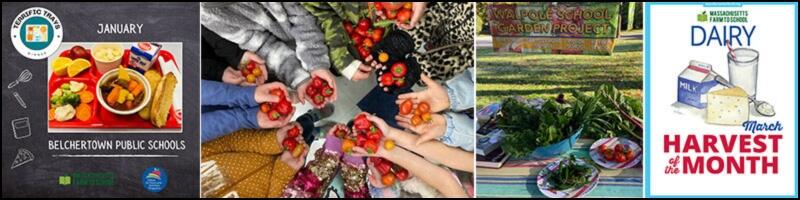
51: In 2023, Massachusetts Farm to School celebrated Kelly Erwin as the original Massachusetts Farm to School Kale Blazer. Kelly began connecting MA farmers with school customers in the early 2000s as an employee of the Massachusetts Department of Agricultural Resources. In 2004, she took this idea further and founded Mass. Farm to School, one of the first statewide farm to school organizations in the country. She was involved in the development of the National Farm to School Network in 2007 and later the launch of Farm to Institution New England in 2011. Kelly has always had a bold vision for the powerful potential of school, farm and community partnerships. She fostered countless relationships between school customers and local growers and is foundational to the farm and sea to school movement in the Commonwealth.
52: Medway Community Farm, offers educational programs that embody a commitment to learning from the land. The cornerstone of their educational work is the elementary school-to-farm program. Each spring, local 4th graders participate in multiple garden-based and experiential learning trips to the farm, tending to vegetables in their own raised beds and participating in sessions on beekeeping, soil science, pollinators, composting, nature journaling, and more. On the final field trip in the series, students work to harvest, wash and sell their vegetables at the farmstand. Beginning with just 2 classes in 2012, this program has grown to serve every 4th grade student in the town of Medway each year. This has been a tremendous learning experience for students, with several former 4th grade farmers having returned to the farm as summer staff and volunteers, as well as pursuing higher education in soil science, ecology and related fields.
53: Seekonk Public Schools made a Cucumber and Tomato Citrus Salad with cucumbers and tomatoes from Ward’s Berry Farm in Sharon. TT
54: Worcester Public Schools implemented a Spring Harvest farm-to-school unit, culminating in a field trip for 26 classrooms to a local farm, complemented by books, classroom and home activities, and cooking experiences centered around locally grown spring produce. MFG
55: CommonWealth Kitchen’s, Farmer Value-Added Program helps Massachusetts farmers turn surplus or “imperfect” crops into ready-to-sell products like tomato sauce, pickles, pesto, and applesauce. Commonwealth Kitchen handles recipe development, scaling, pricing, and regulatory approvals, making it easy for farmers to participate. Farmers deliver surplus produce to the facility, and Commonwealth Kitchen’s team transforms it into finished, branded products for farm stands, CSAs, and retail shelves. This program creates a valuable new revenue stream for small and mid-sized farms while making better use of what they grow. Some products also become nutritious K–12 school menu items across Massachusetts, including pizza sauce and field pea fritters. By turning excess produce into shelf-stable goods, food waste is reduced and is kept out of landfills, helping to lower methane emissions and build a more sustainable food system.
56: Over the past year Evan Reseska from Holliston’s Boston Honey Company has partnered with The Holliston High School 9-12 Global Citizenship Program and Mrs. Frost's Introduction to Global Citizenship course. As part of the partnerships he visits the class, talks about the cycles of beekeeping, the impact we have on local and larger agricultural needs for pollination as well as the production of honey. The students have opportunities to ask questions about apiculture, the business, and the ability to taste different honeys and compare the differences.
57: Everett Public School’s Acai Bowl was served with a Honeycrisp apple from Carlson Orchards in Harvard, and a quinoa kale salad with kale from Everett Community Growers. TT
58: The Acton Boxborough Food and Nutrition Department is supporting local, scratch-cooked menus through recipe development, staff development, and student and community-based outreach, championing sustainable changes to benefit students, staff, and the community. Part of the grant includes the creation of after school cooking clubs where elementary school aged children can engage in learning how to cook using fresh ingredients. MFG
59: Waltham Public Schools Nutrition Department supports farm to school initiatives by connecting students with local foods, gardening, and nutrition education. Across the district, they maintain seven grow racks in elementary and middle schools, giving students hands-on opportunities to grow herbs and vegetables and learn where food comes from. They also collaborate with school gardens and community plant sales to help students bring plants and gardening experiences home. Their Fearless Foodies program provides nutrition education led by a Registered Dietitian, teaching healthy eating behaviors and highlighting local foods through interactive lessons and taste tests, and they partner with Waltham Fields Community Farm to incorporate their crops, when available, and provide field trips and classroom education.
To support Massachusetts farms, Waltham Public Schools works with Boston Food Hub, spending $22,000 on local foods in the 2024–2025 school year and estimating $20,000 this year to bring a variety of regional products into school meals.
60: The Massachusetts Department of Agricultural Resources Produce Safety Program along with MA Farm to School and school garden practitioners developed a School Garden Food Safety Manual containing a standard framework and assessment for maintaining food safety in the school garden. The manual includes a garden safety assessment tool, best practices, sample logs and signage, and links to school garden resources.
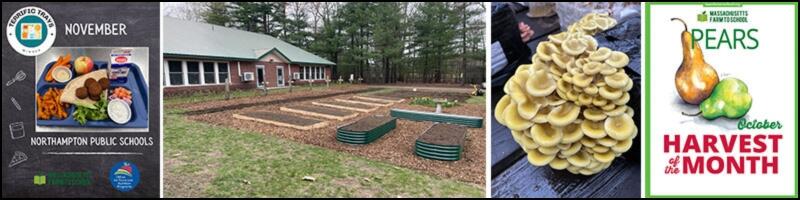
61: Greater Lowell Technical High School’s Farm to School Team incorporated student grown nasturtiums and squash into cafeteria meals, provided food systems lessons, developed curriculum, and ran an active greenhouse programs and student-run plant sale. FSI
62: Easthampton Public School District is building a new garden at Mountain View School that will supply fresh produce to the school meal program and serve as a hands-on learning space for students using a collaborative curriculum developed by the health and garden teachers. An afterschool garden internship will engage students in planting, tending, and harvesting crops for school meals. MFG
63: Students at The Dr. Franklin Perkins School in Lancaster enjoyed a taste of Mexican cuisine with Pulled Pork Pozole that featured local ingredients including corn, bell peppers, and onions from Harper’s Farm and cucumbers from World Farmers both from Lancaster, sweet snack peppers from Ward’s Berry Farm in Sharon, poblano peppers from Silverwood Organic Farm in Sherborn, Gala apples from Bolton Orchards in Bolton, and homegrown scallions from a staff member’s home in Clinton, MA! TT
64: On March 23rd, 2026, Boston Public Schools hosted its first-ever Food Literacy Summit at the Food and Nutrition Services Central Office in Dorchester. They invited educators, staff, cafeteria workers and students to present on their work related to food literacy, network and brainstormed how to grow and collaborate, including the creation of a district-wide directory. Participants learned about school gardening from teachers, staff and the Green City Growers, urban farming and youth development from The Food Project, and other classroom-based initiatives.
65: The UMass Dining Farmer Spotlight Series showcases local agriculture in Massachusetts by highlighting the farmers behind the food through short, engaging videos, bringing transparency and storytelling into the dining experience at the flagship campus. These videos and photos share the story of the partnerships UMass Dining has with local farmers and the foods they grow for campus to help students better understand and connect with the regional food system and the importance of supporting it.
66: Over 300 Massachusetts schools, colleges, and universities directly connect to Massachusetts fishermen through Red's Best. Along with nutritious seafood, Red's Best provides educational materials to schools about wild seafood harvesting as well as in-school programs where fishermen speak about the fishing vessels they captain and how they catch fish, and students "meet" and touch various species that thrive in Massachusetts waters.
67: The Massachusetts Agriculture Youth Council was created by The Massachusetts Department of Agricultural Resources (MDAR) to cultivate and foster the next generation of leaders in the agriculture industry. Each year, the council is comprised of high school students in their junior and senior year and meets monthly to discuss agricultural issues, hear from guest speakers from the agriculture industry, learn about the legislative procedures and workforce development opportunities, attend special events and tours, and enhance professional skills. Participating in the Council provides students with an opportunity to learn about the varied agricultural sectors in Massachusetts, emerging trends and innovation in farming, and deepen understanding of other states’ agricultural issues through connections with youth councils across the United States. Members of the Council also can share ideas, which may be used to help in the further development of MDAR programs and support of agriculture in Massachusetts. Members of the council also have the opportunity to tour farms and agricultural businesses such as dairy farms, cranberry bogs, oyster farms, maple sugar shacks, etc.
68: In Massachusetts, 43.7% of school food authorities provide food, nutrition or agricultural education such as taste testing, gardening and farm field trips. This includes 109 school food authorities that have edible gardens, 87 that hold taste tests and cooking demos and 66 that host field trips to farms. FSC
69: In 2024, Springfield’s Renaissance High School students collaborated with White Street Elementary School students to pilot the expansion of their existing food composting program in elementary schools. High school students visited White Street Elementary to teach lessons on composting and collect food waste. They later returned to report the amount of food waste and to teach students how to run their own composting program to reduce waste. With help from Commonwealth Sustainability, White Street students have been composting for almost two years now. Renaissance has since expanded their program to include Washington Elementary School.
70: Ralph C. Mahar Regional School District in Orange, featured Squash Parmesan with Koginut squash from Ward’s Berry Farm in Sharon. TT
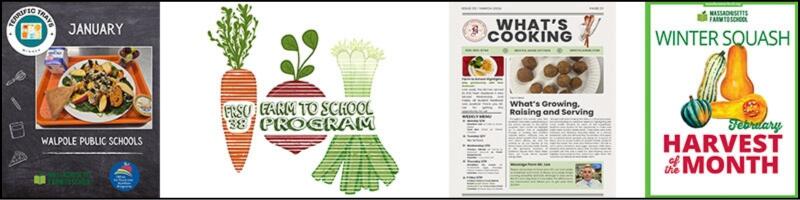
71: All K-6 students in Amherst and Pelham participate in year-round garden learning through the School Garden Program. Students tend the school gardens, select which crops to grow, and care for them through harvest. In fourth grade, all students have a chance to interview elders from their families and communities to learn about the foods of their cultures and heritage. They select crops to reflect themselves and their foodways and plant them in the school gardens. These crops are harvested in fifth grade and in sixth grade and students attend a field trip to a local catering business and work with the chefs to prepare recipes inspired by the crops they chose and planted in fourth grade.
72: Through a dynamic farm to school approach, Danver’s Essex North Shore Agricultural & Technical School students actively grow, raise, and harvest food that supplies their own cafeteria, supports the culinary arts program, and feeds the broader community through local food banks. Hands-on learning extends beyond the classroom as students manage Community Supported Agriculture (CSA) programs for meat and produce, creating sustainable revenue streams while gaining real-world business experience. Deeply connected to the local food system, students collaborate with area farmers, engage in agricultural advocacy alongside policymakers, and contribute to shaping the future of the industry. Strong partnerships with alumni, who return as mentors and vendors, and with the Topsfield Fairgrounds further enrich these experiences. Supported by Future Farmers of American (FFA) leadership and community engagement, Essex North Shore students are cultivating not just crops—but the next generation of agricultural leaders.
73: Marlborough’s Assabet Valley Regional Vocational Technical High School’s Farm to School Team created an action plan and vision for an underutilized campus greenhouse which was used to grow lettuce, tomatoes, mushrooms, strawberry plants, peppers and herbs for use in the cafeteria and for students in the Culinary Arts Program. FSI
74: Lisa Huang, a dietitian with Brockton Public Schools through Chartwells K12 hosted a mushroom farm last year using MA FRESH funds and introduced gourmet mushrooms to its students and community. As the lead cultivator, Lisa was able to grow many different varieties such as oysters, shiitakes, and lion's mane. Says Lisa, “It was such a fun learning experience for everyone”! MFG
75: The Cambridgeport School, a local public elementary school, partnered with Hannan Healthy Foods Farm (HHF) in Lincoln for a second year to host a community farm stand. This collaboration raised funds for student scholarships for the annual 5th-grade overnight trip to The Farm School in Athol. HHF donated an ample surplus of organic produce, from carrots and tomatoes to squash and kohlrabi. Cambridgeport parents led the harvesting and managed the farmstand. Families were invited to take produce for free or via optional donation, alongside select items that were sold for fundraising. The stand drew interest from a diverse crowd as families in the community come from many ethnic backgrounds. One parent returned the following day with Biryani to share, made from the farm stand bounty. By successfully connecting farmland to the schoolyard, this partnership increased access to healthy produce and demonstrated an inclusive model for community-based food security and education.
76: Across Worcester, schoolyards become vibrant outdoor classrooms through the Regional Environmental Council’s (REC) School Gardens Network. REC supports 35 school garden sites - 28 at Worcester Public Schools, including all four Head Start locations - engaging students from preschool through graduation. Reaching more than 3,000 students each year, the program connects classroom learning to the local food system through hands-on garden education. Students explore seed starting, harvesting, pollinators, and nutrition while building connections between what they grow and what they eat. Visits to the YouthGROW Urban Farm extend learning beyond the schoolyard. REC also provides seedlings, compost, soil testing, and technical support, while volunteers and School Garden Stewards help sustain each garden and strengthen school communities.
77: Warwick Public School District is engaging students, staff and community in learning about food production, sourcing, accessibility and sustainability through an indoor growing space, kitchen, and outdoor garden, and by creating related curriculum which aligns with Massachusetts standards to supplement classroom learning with experiential learning. MFG
78: Connors Farm in Danvers hosts school field trips where students can see the farm animals and an observation beehive and enjoy a hayride among other farm activities.
79: Wheel-View Farm in Shelburne welcomes school groups and other visitors to see their herd of cattle, and to their farm store and museum. The farm has lots of old farm tools and is a nice gathering place where presentations are given about what goes on at the farm year-round.
80: Boston Public Schools Food and Nutrition Services creates, prepares, and serves scratch-cooked, locally sourced, culturally relevant meals for their 49,000 diverse students to enjoy. Through an FSIG grant, they bolstered the capacity of their central kitchen to prepare summer meals and afterschool supper meals, as well as certain bulk items for distribution to schools with onsite cooking, and to make upgrades needed in refrigerated and frozen storage at nine school sites to assure food quality retention. FSIG
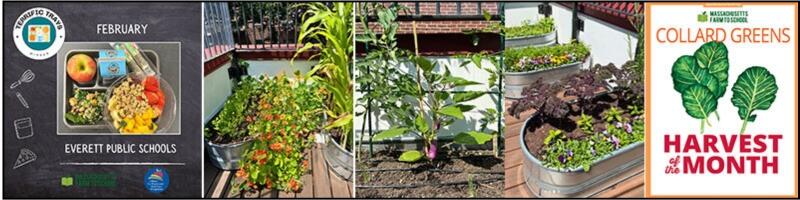
81: Learning First Charter Public School’s Farm to School Team in Worcester developed a first time Farm to School Program. The team hosted a Winter Sow event where students learned about seeds and plants, worked with students to build raised garden beds and a pollinator garden; collaborated with food service staff to procure local foods for meals, and held farm field trips. FSI
82: The Department of Elementary and Secondary Education’s (DESE) Comprehensive Health and Physical Education (CHPE) Framework (updated in 2023) provides a pathway for, and encourages all schools, to implement educational programming and strategies that enhance students' mental, emotional, and physical health while recognizing the critical role of school climate and culture on student outcomes. Integrated into the framework’s learning standards are food literacy objectives that help students explore how the food system contributes to their personal and overall community’s health. To support educators in selecting and implementing standards-aligned materials covering food literacy topics, DESE has developed a Comprehensive Health and Physical Education Curriculum Guide, which reviews over 32 curricula to ensure teachers have access to high quality instructional materials when teaching about the food system.
83: Arlington Public School’s Khmer Curry Tray included sweet potatoes and carrots from Joe Czajkowski Farm in Hadley, cauliflower from Kitchen Garden Farm in Sunderland and a donut peach from Pine Hill Orchards in Colrain. TT
84: Merrimack Valley Men’s Christian Association in Lawrence provided opportunities for preschool youth to learn about where their food comes from and the food chain through hands on activities and experiences. Educators received training to support curriculum development. Students grew vegetables and herbs in classroom gardens. Parents were engaged with programming focusing on picky eaters, the importance of healthy breakfasts and lessons on healthy meal preparation. MFG
85: Nauset Regional School Districts Farm to School Team brought a range of activities to the district. A hydroponic Flex Farm became a hands-on learning tool, taste tests aligned with Harvest of the Month crops, cooking lessons and visits from Wampanoag educators visited classrooms to share indigenous foodways and traditions. FSI
86: The Farm to School Northeast Podcast featured Meghan Arquin, The Farm Lab (Momentum Ag), which uses climate-smart and research-driven farming practices to grow vegetables while studying sustainable agricultural methods. The produce grown through this agriculture research is distributed via Feast Box, a school-based food access program providing students at New Hingham Elementary in Chesterfield and Conte Community School in Pittsfield with free weekly boxes of locally grown vegetables. In 2024, Megan and her team distributed 2400 Feast Boxes and donated over 17,000 lbs. of produce grown on two acres.
87: Preschool Classroom Educator, Paloma Peixotoin, at Attleboro’s Robin’s Children’s Programs has facilitated several Farm to School related activities and projects including paper making, hydroponic growing, Adopt-A-Cow (via DiscoverDairy), Garden Club, Sun Bread baking and sustainable art projects, including tie-dye shirts using turmeric, spinach, and red cabbage and well as using applesauce/yogurt pouch tops to create flowers decorations for the garden. During Taste Test Fridays, Palmona helps make veggies and fruits from Robin’s Children’s Programs’ garden and partnering farmers including Ward's Berry Farm, Sharon, and Wright’s Dairy Farm, North Smithfield, RI, available to children to try.
88: October is Farm to School Month (#F2SMONTH) here in Massachusetts! Established through state legislation passed in 2016, every October, Massachusetts celebrates all the amazing local food purchasing, promotion, and education happenings in schools and communities across the Commonwealth. Throughout the month Mass. Farm to School and partners highlight stories of different farm to school champions and provide tools to take action to advance farm to school policies and programs.
89: A long with halal chicken wings from Maine Family Farms, Watertown Public Schools served a crisp garden salad this winter featuring eight varieties of lettuce all grown by high school students in Watertown Public Schools’ own Freight Farm. Funded, in part, by the MA FRESH grant program, to date, the Freight Farm has helped bring such diverse lettuce varieties as Red Oakleaf, Sweet Crisp Exponent, and Red Gem Cocotine to district salad bars. TT
90: The Mesivta of Greater Boston serves over 500 students, providing more than 1,000 meals daily, including meals that meet strict religious dietary requirements. Through its project BostonKitchen.org, a fiscally sponsored initiative of the Mesivta, the program prioritizes high-quality ingredients and whenever possible incorporates Massachusetts-grown foods. Menu planning focuses on balanced nutrition, accommodating religious dietary needs while introducing students to seasonal produce. By providing healthy, carefully prepared meals each day, the program supports student wellness, respects religious observance, and contributes to the local food economy. While not a traditional farm-to-school program, BostonKitchen.org demonstrates how large-scale school meal service can align with Farm to School goals by promoting nutritious, locally conscious choices for all students.
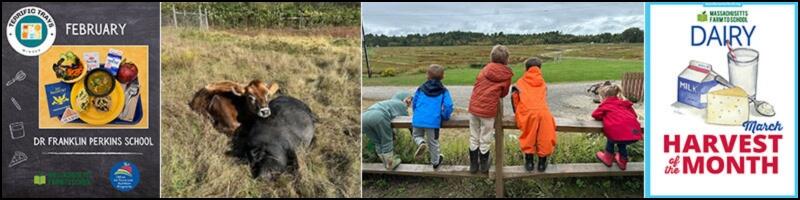
91: People Incorporated in Fall River focused on Science, Technology, Engineering, and Math (STEM) for preschoolers and prioritized hands-on, interactive learning. Children met farmers from the community and learned about the magic and science of growing food in their classrooms and their outdoor organic gardens. MFG
92: Jacob Hiatt Magnet School’s Farm to School Team in Worcester developed hands on learning opportunities and community partnerships. Grade six students helped build two raised garden beds while Grades 2 and 3 planted in the beds with support from staff. A mini farmers market introduced students to food literacy and making healthy food choices. A “grain to loaf” experience had students grind wheat, knead dough, bake bread and make homemade butter. FSI
93: During the summer, Sustainable Nantucket hosts multiple camps at the Farm to School Garden which provides an immersive experience where children explore sustainable agriculture, composting, and growing their own food. Farm tours for public and private schools and a summer camp are also offered so children can have the opportunity to visit working farms to see firsthand where and how their food is grown. These experiences deepen their understanding of local agriculture, nutrition, and the importance of supporting sustainable farming practices.
94: From the Berkshires to Boston, Marty’s Local in Deerfield connects Massachusetts schools with locally grown and produced foods by partnering with over 130 regional farmers and food makers. Marty’s Local is proud to support Springfield Public Schools through their “local pizza” program by supplying Narragansett Creamery mozzarella cheese and by expanding local granola offerings with Sweet Babu’s of Chicopee, and more. Marty’s Local helps food service programs easily source fresh, nutritious local products while strengthening the cafeteria with local options and linking schools with New England producers to build stronger community connections.
95: Waltham Public Schools made a Grilled Cheese with local mushrooms from Fat Moon Farm in Westford, and a summer squash and zucchini medley with squash from Waltham Fields Community Farm. TT
96: Lakeside Organic of Hadley LLC and Joe Czajkowski Farm supply produce to many schools in Massachusetts, including Boston, Springfield, Greenfield, Chicopee, Amherst and UMass Amherst. The family farm offers 30 different local items year-round, including pre-cut and pre-peeled items.
97: The Department of Elementary and Secondary Education’s (DESE) Teaching and Learning Unit has contracted and worked closely with RootEd Educational Consulting to build statewide educator capacity in food literacy instruction. RootEd offered 7 courses in 2024 (enrollment: 198!), 10 courses in 2025 (enrollment: 255!), and currently is offering its fourth cycle of courses for 2026. Courses include Growing Gardens for Wellness I & II, Nutrition for Teachers I & II, Hands-on Cooking & Food Ed in the Classroom, Reading & Eating for Equity, and From Page to Plate. Demand continues to grow, and courses repeatedly fill with a waitlist - educators are excited to engage in learning about how to bring food systems’ education to their students! MA Educators have collectively engaged in 4,830 course hours (and counting!) of food systems learning since 2024 with RootEd!
98: The MetroWest YMCA Early Learning Center students participate in the Harvest of the Month program where they engage with local Massachusetts produce in 3 different ways. Through their lunch menus, in their classrooms and garden education lessons, and in family engagement in community-based workshops. The MetroWest YMCA cooks and prepares 1,200 meals daily, and has been working to increase the amount of locally sourced food on their menus by partnering with Boston Area Gleaners as well as growing their own produce in 32 raised garden beds. In an effort to reduce food waste the Metrowest YMCA has started having preservation parties where they take excess locally grown produce and transform it into sauces, soups, pickles, breads and more to give out to the community through their free food marketplace.
99: Brad Lopes (Education & Public Program Manager, Aquinnah Cultural Center and Education Manager, Wampanoag Tribe of Gayhead Aquinnah) and Emily Armstrong (Education Director, Island Grown Initiative) discussed their collaborative efforts with the Massachusetts Farm to School’s The Farm to School Northeast Podcast. They worked together to revise Island Grown Initiative’s Farm to School curriculum to more authentically represent Wampanoag and indigenous perspectives. Their collaboration included discussions about tribal food sovereignty and how to respectfully teach indigenous traditions.
100: The Dr. Franklin Perkins School (@RFKCommunity) in Lancaster featured Jerk Chicken with chicken from Kalon Farm in Lancaster. TT
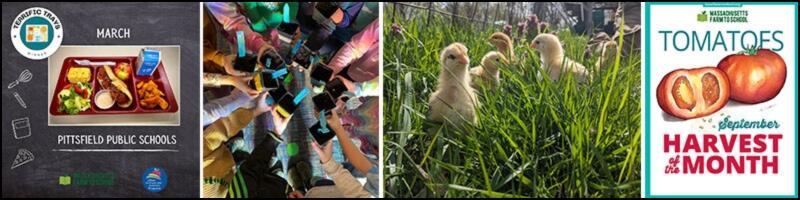
101: Andover Food Service Department has always had a strong passion for scratch cooking and farm-to-school initiatives and is always looking for creative ways to incorporate fresh produce into their menus and introduce students to new foods. This includes offering fresh fruit and vegetable bars, hosting taste tests, and participating in Harvest of the Month. The Department was also awarded a MA FRESH Grant to help bring a new greenhouse to life. While the structure was built with the school, it did not have the furnishings needed to operate. Through the grant, they will furnish the space and purchase plants and produce that will be incorporated into the school menus. Additionally, the greenhouse will serve as a hands-on learning space where students can explore the science of growing food. MFG
102: Alfred G. Zanetti Montessori School (Springfield Public School’s) Farm to School Team intentionally planned and used the school’s garden, established an afterschool garden club, promoted Harvest of the Month, and made school garden resources and lessons easily available. Students also grew microgreens in several classrooms. FSI
103: The Sustainable Business Network of Massachusetts’ (SBN) Local Food Trade Show, now in its 15th year, brings together nearly 100 local-only food producers (farms, fishing, food makers) and wholesale buyers across industries. SBN is excited about the many Massachusetts city and town K-12 nutritional/food services that have been joining in recent years, connecting with a wide array of food producers across the state. Kerry Kokkinogenis, SBN’s Local Food Program Director says, “The best part is when my 11-year-old comes home and tells me how much they love the empanadas in their school cafeteria, produced by a local maker”!
104: The Chatham Harvester Cooperative bolstered the efficiency of their seafood processing facility and commercial kitchen, enabling them to better interact with local schools and showcase local seafood to students. FSIG
105: Whitman-Hanson Public Schoolsstudents learned about hydroponics, cultivated their school garden, and developed hands-on cooking skills, while discovering the importance of sustainable practices and healthy eating through interactive lessons and activities. MFG
106: Representing Massachusetts cranberry growers, the Cape Cod Cranberry Growers Association (CCCGA) participates in myriad educational programs to teach about the Commonwealth’s No. 1 food crop and highlight the industry’s historical significance. For several years, CCCGA attended Wareham Elementary STEAM Night with a traveling bog so students can see live cranberry plants and understand the unique conditions it takes to grow this native fruit. Last fall, CCCGA worked with Mass Ag in the Classroom to host a half-day workshop for 25 teachers on how to implement cranberry lessons into their curriculum and taught 20 elementary students in the Marion Natural History Museum After School Program. CCCGA worked with As Schools Match Wits (a high school academic quiz show competition) to provide cranberry-related questions and record a bogside video question. In May, CCCGA brought their cranberry cross-section display to Our Sisters' School (a tuition-free, all-girls middle school in New Bedford) to conduct three hourlong classes.
107: The MA Department of Elementary and Secondary Education’s (DESE) Office for Food and Nutrition Programs (FNP), in collaboration with Commonwealth Kitchen, has launched a pilot program to integrate fresh Massachusetts-grown tomatoes with United States Department of Agriculture (USDA) Foods into marinara sauce available to schools in Massachusetts through their United States Department of Agriculture (USDA) Foods Program. This pilot will allow School Nutrition Programs to allocate some of the diced tomatoes they receive through USDA Foods to Commonwealth Kitchen, which will blend these tomatoes with Massachusetts-grown tomatoes to create a hybrid product that supports Massachusetts farmers and provides a more versatile product for Massachusetts school menus.
108: Beverly Children’s Learning Centers (BCLC) is enhancing its gardening program with an on-site greenhouse to further deepen the knowledge and skills of both educators and children. By extending the growing season, this project will enable BCLC to cultivate multiple, abundant harvests throughout the year and provide students with a comprehensive understanding of the entire food cycle-from seed to harvest. MFG
109: Smith Vocational and Agricultural High School’s Mediterranean Chicken Gyro was made with romaine lettuce grown by the school’s horticulture department, tomatoes and squash from Bardwell Farm, Hatfield, and cucumbers and cauliflower from Plainville Farms in Hadley. TT
110: North Coast Seafoods supports Farm and Sea to School in Massachusetts by bringing climate-smart, locally sourced seafood and seaweed innovations into school meals. Their flagship item, Seaweedish “Meat”balls, is a chef-crafted, plant-based protein made with Gulf of Maine kelp. Designed for K-12, it delivers a familiar, craveable format while introducing students to a regenerative ingredient that requires no land, no fresh water, and helps clean the ocean as it grows. The WHY is simple: serve food kids will eat while quietly improving human and environmental health. North Coast Seafoods complement this with locally sourced Redfish in kid-friendly formats including Breaded, Bang Bang, Coconut, and Milanese, offering nutritious, sustainable seafood options that support regional fisheries. Together, these products help schools make real progress on nutrition, sustainability, and student engagement…one tray at a time.
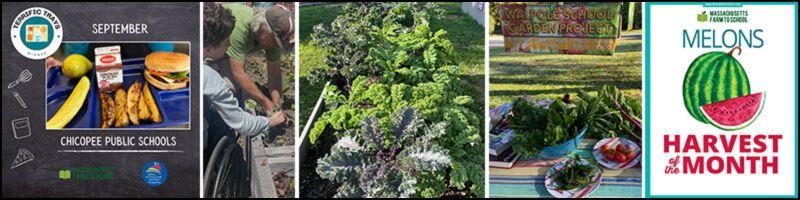
111: Massachusetts Farm to School’s Harvest of the Month (HOTM) program is a statewide initiative that helps schools and early childhood programs celebrate local foods while building connections between cafeterias, classrooms, and communities. Designed to increase students’ exposure to seasonal foods, HOTM encourages healthy eating habits, supports local farmers, and builds excitement around school meals by featuring a different locally grown food each month. Schools and food service programs receive promotional resources, recipes, sourcing support, and educational materials to help integrate featured crops into cafeterias and classrooms.
112: Ascentria Care Alliance SNAP Ed partners with West Springfield Public Schools to support Harvest of the Month programming, garden based learning, and nutrition education centered on Massachusetts grown foods. School Nutrition Services now maintain the gardens originally built through a Farm to School grant and incorporates garden to cafeteria practices, such as using fresh herbs, whenever possible. The district sources a majority of its food through a local food hub and partners with a gleaning organization to reduce food waste, strengthening sustainable and equitable Farm to School systems.
113: Oxford Public Schools integrated agricultural education with school food service, helping students understand food systems. Through growing crops in a campus greenhouse and studying soil health, students contributed fresh produce to the school meal program. The project also explored the link between agriculture, health, and sustainable food sourcing. MFG
114: Brookline Public Schools served Northcoast Seafood’s “seaweed-ish” kelp meatballs, carrots from Joe Czajkowski Farm in Hadley, lettuce from Little Leaf Farms in Devens, and used cilantro and thyme from Brookline’s own terraponic growing system. TT
115: Craic Sauce partners with schools to bring bold, local flavor into cafeterias. They craft hot sauces using 100% Massachusetts-grown peppers, including peppers Brian grows in Lowell. The sauces are designed to be flavor-forward and lower in sodium. Schools use the sauces in scratch recipes and at flavor stations, giving students a fun way to customize meals. At visits to over 40 schools for tastings, they shared their seed-to-sauce story and have connected students to local agriculture and food systems.
116: The Sheffield Elementary Farm to School (F2S) Program is a vibrant, hands-on initiative dedicated to connecting students with fresh, local food through the "3 C’s" framework: Classroom, Cafeteria, and Community. By integrating nutrition education into daily school life, students are empowered to build healthy habits and a deeper appreciation for where their food comes from. The program centers on the Harvest of the Month (HOM), featuring a monthly local crop that anchors the educational activities and cafeteria menu.
To keep students engaged and excited, the F2S team hosts consistent weekly events in the cafeteria. On Make it Mondays the F2S team perform cooking demonstrations. Students watch the culinary process and receive a freshly prepared sample, turning the cafeteria into an interactive kitchen. A recent favorite included transforming "yucky" kale into crispy garlic and olive oil kale chips—leaving students begging for seconds! Try it Thursdays encourages food exploration through low-pressure sampling. The cafeteria staff prepare bite-sized "tasters" of new or featured HOM foods, allowing students the opportunity to expand their palate in a supportive environment. Fun Fact Fridays wrap up the week by connecting food with literacy and play. Students enjoy "fun facts" about the Harvest of the Month, themed jokes, and creative coloring pages that reinforce learning. Through these "3 C's," Sheffield Elementary is growing a community of adventurous eaters and informed young citizens.
117: Lowell Public Schools taught students about the local food system by collaborating with community partner, Mill City Grows. Students engaged in hands on learning in their school gardens and learned about healthy eating by incorporating their harvests into their school cafeteria menus. MFG
118: Truro Central School District’s Farm to School Team provided food-based learning activities integrated throughout the school day to gain knowledge and skills around nutrition and gardening. Local chefs created dishes from locally sourced ingredients and brought the community together to support hand-on learning experience and environmental stewardship. FSI
119: The South Shore YMCA Family Farm provides hands-on educational experiences for children, allowing them to learn how food is grown and how to care for the environment through safe, interactive exploration. FSIG
120: Red Fire Farm in Granby is a certified organic produce farm which, along with sometimes selling wholesale produce to various school meal programs, educates Massachusetts school students about sustainable agriculture topics. Red Fire Farm frequently hosts field trips and tours of their Granby farm for classes from various schools including elementary, secondary and college classes, and have recently done class tours for Holyoke Community College, Mount Holyoke, UMass and Four Rivers Charter School. A series of class trips are arranged for the spring with Springfield Public Schools that include 2nd, middle and high school classes. Depending on the age of the participants, topics covered include Sustainable Soil Fertility and Cover Crops, Seasonality of Massachusetts Crops, Nitrogen cycle, Composting, Greenhouse Growing and Season Extension, Soil Science, Farm Architecture and Building Construction and more.
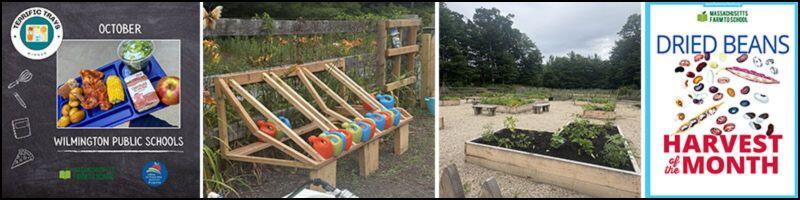
121: Communities United, Inc., Lexington provided children with taste tests of locally grown fruits and vegetables, field trips to a farm to see how food is grown, and incorporated farm to early education curriculum. Mass Audubon provided staff farm to early childhood education professional development training. MFG
122: After receiving generous grant funding from the change to Henry P. Kendall Foundation’s New England Food Vision Prize, Dartmouth Public Schools has started to build a foundation for scratch cooking as part of their efforts to increase local purchasing. In April, they hosted their first Farm to School Community Dinner that featured a scratch made, locally sourced meal; meet and greet with local farmers, seed planting activities and more!
123: In Fall 2025, The Department of Elementary and Secondary Education's (DESE) Office for Food and Nutrition Programs (FNP) in partnership with Massachusetts Farm to School, launched the Northeast Food for Schools (NFS) Challenge: a call to action for Massachusetts school nutrition programs to collectively invest $6 million in our state's local farmers, fishers, and food producers by the end of 2026. This $6 million goal represents the amount originally earmarked for local food purchases for SY2025-26 through the United States Department of Agriculture's now-terminated Local Food for Schools Program. Participating in the NFS Challenges provides school districts with access to the food purchase tracking platform, FoodTrails, which will allow school nutrition programs to track the geographic origin of food purchases. Providing transparency around where Child Nutrition Program food is produced supports state priorities outlined by the Massachusetts School Meal Nutrition Standards Commission as well as the Governor's Anti-Hunger Task Force.
124: This spring, student at Dighton’s Bristol County Agricultural High School started seeds for tomatoes, peppers, eggplants, beets, broccoli, squash, herbs, and more. What they don’t plant in their own gardens will be available for sale to the community at their spring expo. What they do grow will be used by the students and school and preserved for future use! In conjunction with the Harvest of the Month students study a featured crop and engage in hands-on cooking experiences. In February, students learned to make squash energy bites featuring squash donated from Heart Beets Farm in Berkley. In March, they made cheese using milk produced by the school’s own cows! A goal of the Bristol Aggie’s Harvest of the Month integration is to highlight local farms and partners along with incorporating impactful nutrition education highlighting local foods, and to teach students how to cook with local produce. Looking ahead, the school aims to expand summer production and preserve crops through freezing and pickling, supporting the program and the food pantry.
125: Westford Public Schools expanded a long-standing recreational school garden program which enabled students to cultivate a variety of ethnically significant vegetables that honor their heritage. Students collaborated with school nutrition professionals to work those crops into fresh new options served on the lunch line. MFG
126: Falmouth Public Schools featured a Tamale Pie with Kale from Coonamessett Farm and Peach Tree Circle Farm in Falmouth and Falmouth’s own school garden. TT
127: Students at Gill Elementary School enjoy hands-on activities and taste tests throughout the year with farm-to-school volunteers. Activities included peeling, slicing and tasting yummy local carrots, as well as learning about the history of corn and popping local ruby red popcorn for tasting. Students are also invited to participate in the school Garden Club where they help grow, weed and harvest fresh fruits, vegetables and flowers. Last year they even grew wheat and harvested, threshed, winnowed and milled flour to make waffles! Sorrel Hatch of Upinngil Farm, and Faith Rand of Bascom Hollow Farm organize the school Garden Club & Garden Stewards After School Program. Both farmers volunteer in many ways within the school, serving on the Farm to School Committee, and leading numerous food and farming activities in the classroom.
128: Boston Public Schools developed a sustainable procurement channel for local food grown by Black, Indigenous, and People of Color (BIPOC) farmers, supported by development of an educational component for students at point of sale. MFG
129: Grow Food Northampton brings every Northampton public elementary school student for a field trip each year to the organization's 121-acre community farm which becomes an outdoor classroom! Field trips focus on hands-on skills of organic farming; students plant, weed, mulch, and harvest. Farm-based lessons tied to school curricula bolster learning around plant science, climate change, pollinators, soil health, and more, and introduce concepts of food system justice including racism within the food system, justice for farmworkers, and accessibility of culturally important crops.
Grow Food Northampton’s work is guided by core values: We are all stakeholders in growing food, caring for the earth, and caring for each other; We learn how it feels to be part of a community – we internalize the importance of healthy waterways, land stewardship, and access to fresh food; We form connections with the natural world and see ourselves as part of it.
130: Brockton Public Schools established an indoor mushroom farm to promote mushroom cultivation and education within the school community. In addition to providing educational opportunities, the farm serves as a platform for community engagement through tasting sessions, lunch and learns, and special events. MFG
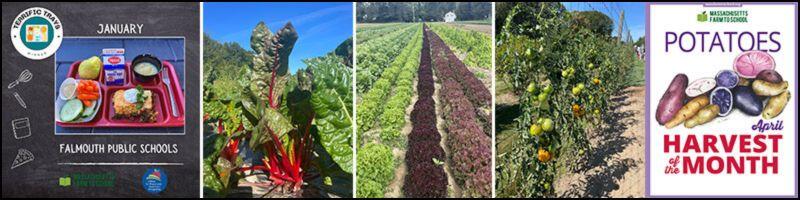
131: The Massachusetts Food System Collaborative’s Campaign for Food Literacy is a coalition of teachers, school nutrition professionals, community partners, and farmers working to ensure that all students in grades K-12 have access to food system education in school so they can learn about agriculture, nutrition, food justice, and culinary skills. Campaign members meet regularly to discuss strategies for working alongside lawmakers to pass food literacy specific legislation that supports this vision, as well as to connect and share best practices around food system education.
132: Every year, about 2,500 students learn about pollinators at Land’s Sake Farm, including visits from all of Weston’s second-grade classes each fall. This spring, Land’s Sake Farm is welcoming two new educational beehives, which will enrich their educational offerings.
133: Leominster Public School’s Culinary Arts students, Life Skills students, staff, food service management company, Chartwells, the Wellness Committee, Professional Development Committee and local partners worked together to introduce students to gardening using aeroponics and greenhouse techniques; introduced recipe development using fresh, local produce; broadened the student and school community's food knowledge and experience; and provided food literacy topics that are in alignment with DESE’s Comprehensive Health and Physical Education Framework. MFG
134: Salem Public Schools Farm to School Team supported 11 schools and 8 gardens. Kindergarteners planted garlic and third graders explored composting. A partnership with the New Entry Food Hub provided local produce for school meals and educational opportunities for students. A partnership with Massachusetts tribal members and Salem Sound Coastwatch enabled students to learn about traditional fishing weir construction, food preservation techniques, and tastings of smoked salmon. FSI
135: Chef Alan Yen of Belmont’s Food Services made a beautiful Spinach and Feta Cheese Calzone for their vegetarian meal option. The spinach came from a new vendor, Maine Family Farms. This was served this with fresh Maine blueberries and a side salad featuring Little Leaf Lettuce, a hydroponic lettuce farm from Devens MA.
136: For the past three years, Wildberry Acres Farm in Brookfield has partnered with the Quabbin Regional School District Post-Graduate Program, which supports young adults with disabilities as they transition into the workforce and community life. Students participate in meaningful, hands-on farm work alongside the farm’s team, building confidence and practical skills through harvesting produce, preparing vegetables for market, assisting with wash/pack operations, and learning how local food moves from field to community.
In addition to the school-year partnership, Wildberry Acres Farm runs a summer Youth Crew program that introduces middle and high school students to agriculture through meaningful, paid farm work. Youth participants learn crop handling, teamwork, responsibility, and the value of local food systems while helping grow produce that is sold directly through the farm stand and community markets.
Together, these programs strengthen connections between students and their local food system while supporting workforce development, agricultural literacy, and community engagement. By connecting the classroom, the farm, and the local marketplace, Wildberry Acres Farm is proud to support Massachusetts’ Farm to School efforts and help cultivate the next generation of growers, food leaders, and informed consumers.
137: The Chicopee Public School District is designing and teaching garden lessons for 2,800 elementary school students at 9 schools and providing professional development opportunities for district staff. They also installed irrigation systems at four garden spaces to more efficiently and consistently water gardens during the school year and summer months. A district-wide Harvest of the Month Trading Card Design Contest was held with custom printed, informative trading cards distributed during taste tests and garden planting and harvest events. MFG
138: Lincoln Public Schools featured a Turkey Ramen Bowl with carrots from Joe Czajkowski Farm in Hadley, portobello mushrooms from My County Mushrooms in Gardner and lettuce from Little Leaf Farms in Devens. TT
139: The Natick Community Organic Farm is a rich community resource for all ages and offers a robust range of educational programs for all ages, all year long. A highlight is the number of school and youth programs offered that enhance classroom-based learning and create connections with farming, food and nature. Programs include both on-farm field trips and in-school programming. The elementary school science programs are curriculum-aligned and during middle and high school chore-based programs they link hands-on farm chores to in-school classroom learning which helps students connect the dots.
140: UMass student farmers, are committed to providing the campus community with nutritious, organically grown, local produce. They cultivate student empowerment through hands-on agricultural production and by educating peers about the importance of creating a healthier food system to the campus community. Each season up to 15 undergraduate students take part in cooperative planning and management for a 20-acre certified organic vegetable farm. The student farmers represent a variety of backgrounds and come from many departments on campus as well as from the other Five Colleges. Over 50 tons of organic vegetables are distributed to the campus through the 120 member CSA program, through UMass Dining Services, an on-campus weekly student farmers market, Big Y Foods, Inc. and local hunger relief agencies.
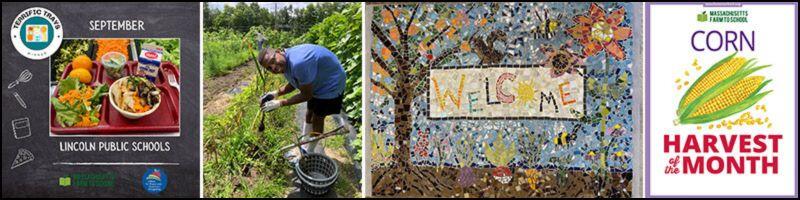
141: Lowell Community Charter Public District provides education and community engagement with monthly taste tests, an after-school agricultural club, field trips to the Mill City Grows farm and kitchen, growing vegetables in an indoor garden and offering cooking classes. This will culminate at an event in which students share their knowledge of what constitutes a healthy diet and lifestyle. MFG
142: Belchertown Public Schools made a Beef Stew with beef from Austin Ridge Acres Farm in Belchertown, and potatoes, onions, carrots, garlic and thyme from Swift River Elementary School’s Garden. TT
143: CommonWealth Kitchen has significantly increased their production efficiency and output, enabling them to process more local farm produce into affordable, minimally processed foods for schools, institutions, and emergency food providers. FSIG funding supported the purchase and installation of large-capacity kettles, a steam boiler, filling and packing equipment, a walk-in freezer, blast chiller, and trash/recycling compactors, alongside critical food and worker safety upgrades including loading dock repairs, mandatory fire suppression system updates, and blast freezer replacement. FSIG
144: The Farm School in Orange partnered with Prospect Hill Academy of Cambridge, to provide over 3,816 hours of experiential outdoor farm-based education to 62 youth over a 2-year period. Students engaged in all aspects of food production from the livestock care and vegetable production to the culinary preparation. An additional 6 students participated in 2 summer intensives totaling 1,440 hours, taking a direct role in the production of milk, eggs and vegetables that were distributed for free throughout Athol, Orange, Turners Falls and Dorchester. The Farm School also recently received a Patrick Leahy Farm to School Grant to advance school-based child nutrition program systems through structured local procurement, hands-on learning, and peer collaboration.
145: Nauset Regional Public School District is enhancing local food procurement in the school meals program, integrating farm-based education into classrooms, and managing district farming systems in alignment with cafeteria needs. The three school gardens, greenhouse, and hydroponic units ensure year-round food production while fostering hands-on learning opportunities for students. Collaborating with local farmers and through professional development for staff, menus are being aligned with locally sourced foods to promote sustainability, enrich the school community, and connect the farming and fishing community with Cape schools. MFG
146: Through a partnership between Green City Growers and Boston Public Schools, thousands of K-12 students have weekly hands-on learning opportunities in their school gardens where they're involved from seed to harvest. In 2025, students across the district helped to plant and harvest over 4,700 pounds of fresh produce to be enjoyed in the garden or brought home.
147: Boys & Girls Club of Greater Westfield, Inc. is holding monthly cooking activities, seasonal taste tests, and preparing meals featuring Massachusetts-grown produce. Their indoor and outdoor preschool garden, and visits to local farms are deepening students' understanding of where food comes from, while family events such as farmers market visits and a fall pumpkin fest are fostering community-wide engagement in farm to preschool learning. MFG
148: New Entry Food Hub’s Farm to School Programs bring fresh, local produce from new and beginning MA farmers to MA schools, including Boston, Brookline, Ipswich, Medford, and Salem Public Schools. From purple carrots to curly kale to baby bok choy, NE Food Hub connects classrooms and cafeterias with the exciting crops grown by their community farmers. Each produce delivery is accompanied by a newsletter featuring crop spotlights, farmer biographies, recipe and activity inspiration, and more! The Food Hub also facilitates farmer classroom visits, so that students can learn firsthand about the work of farming, ask questions about how the vegetables on their plates grow, and explore planting through hands-on activities led by real, small-scale farmers. So far in 2026, these farmer visits have already reached over 175 kindergarten – 4th graders!
149: The Department of Elementary and Secondary Education’s (DESE) Teaching and Learning Unit has collaborated with Lighthouse Wellness & Health Education Consulting, Inc. to develop four new practice-based food literacy health education units for Massachusetts educators serving students in kindergarten through high school. These units cover such topics as: (a) food systems and sustainability, (b) nutrition and personal health, (c) cultural connections to food, and (d) food access and equity.
150: Belmont Public School’s Fish Tacos used local fish from Red’s Best, lettuce from Little Leaf Farms in Devens, and was served with apples from Carlson Orchards in Harvard, and a noodle salad with carrots and beets from Joe Czajkowski Farm in Hadley. TT
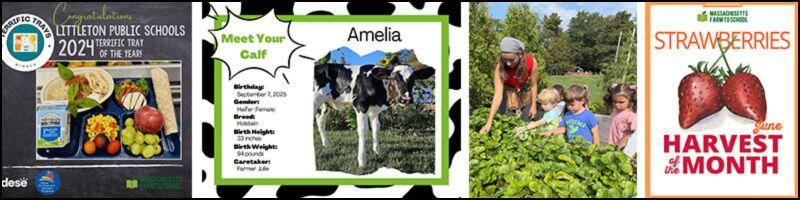
151: In 2021, the Massachusetts Food for Massachusetts Kids Coalition advocated for the establishment of the first state grant program to fund efforts that connect students in early education programs and K-12 schools to local agriculture through food education, local food purchasing, and community partnerships. With significant support from legislative champions across Massachusetts, $1,000,000 of American Rescue Plan Act funds were allocated to pilot the MA FRESH Grant Program. The MA Legislature allocated an additional $750,000 per year for the program in fiscal years 2024, 2025 and 2026. Over the 4 rounds of funding, the Massachusetts Department of Elementary and Secondary Education (DESE) has received 315 applications requesting over $8.8 million and has awarded $3.16 million to 104 schools and early education programs impacting over 250,000 students.
152: Dorchester’s Crispus Attucks Children’s Center's garden serves as an extension of the classroom—an outdoor learning environment where children engage in hands-on exploration, discovery, and care for living things. Through planting, tending, and harvesting a wide variety of fruits and vegetables, children build early STEM skills, develop responsibility, and deepen their connection to the natural world. CACC has expanded its garden infrastructure and integrated garden-based learning across its preschool classrooms, reaching over 120 children weekly through consistent, hands-on experiences. These activities are intentionally connected to the curriculum and reinforced through educator training, ensuring that garden learning supports school readiness and whole-child development. Importantly, the garden is directly connected to their nutrition program. Children regularly see the food they grow incorporated into their meals and snacks—such as fresh herbs in sauces and vegetables in seasonal dishes—helping them build healthy eating habits, try new foods, and take pride in their contributions. Rooted in a whole-child approach, CACC’s garden-based learning fosters curiosity, confidence, environmental stewardship, and a meaningful understanding of the connection between food, health, and community. MFG
153: Dan and Bonita Conlon of Warm Colors Apiary in South Deerfield have offered tours, educational programs, and Beekeeping classes for twenty-five years. The information covers introductory to expert topics aimed at all levels of interest in beekeeping. Their annual Introduction to Beekeeping has helped hundreds of new beekeepers get started with their first bee colonies. Each season local schools and colleges will visit to learn about the honeybee and the business of beekeeping. Bonita and Dan value education and enjoy the opportunity to share the importance of protecting the honeybee and pollinators.
154: One of the school lunch trays Boston Public Schools is most proud of for the 25/26 school year is their fish taco. The fish taco features Red's Best local haddock, held in a corn tortilla made by Mi Tierra in Springfield and topped with dragon slaw. The slaw featured cabbage from Abrantie Farm in Boxborough, for the month of November. The tacos are served alongside a salad bar, which features local produce with staples like carrots rom Joe Czajkowski Farm and apples grown in New England.
155: The Regional Environmental Council’s Mini Mobile Farmers Markets, a cornerstone of REC’s farm-to-school approach brings fresh, locally grown produce directly to Worcester’s schools, especially early childhood sites. Students “shop” for food to take home, increasing access to healthy options while reinforcing classroom learning.
156: Billerica Public Schools developed a long-term system to grow nutritious and local food to provide additional healthy food options to the Billerica community. The inclusion of an indoor garden allows students to overcome the challenges of a shorter New England growing season and the impacts of climate change. It will also allow students the opportunity to learn about sustainability, nutrient cycling, soil science, and vertical gardening. MFG
157: The Hampden-Wilbraham Regional School District has recently hired a district chef and one of her main jobs is to increase the amount of local foods in the menus. A partnership has been formed with Marty's Local and Arnold's Meats to help with the distribution of local foods. So far this year the district has featured products from Fern Valley Apple Farm in Wilbraham, Fernadinos Maple Syrup in Hampden, Mi Tera Tortillas of Springfield, Little Leaf Lettuce from Devens, Butternut squash fries & carrot sticks from Growing Places in Leominster, Haddock from Red's Best in Boston, Apples from Pine Hill Orchards in Colrain, Potatoes from Jekanowski Farms in Hadley and Blue Seal Kielbasa in Chicopee. They also have hydroponic growing systems in 4 of the elementary schools where students grow lettuce for use in the classroom and cafeteria.
158: Middle and high school students at Frontier Regional School in Deerfield recently participated in a logo contest in which they were tasked with creating a logo to represent Frontier Regional & Union 38 School District's Farm to School Program. The winner received a gift basket from Long River Farm Store in South Deerfield.
159: As owner of Carver’s Crystal Lake Greenhouse, Michael Paduch has always looked for local students to help with the tasks of growing their flowers. Many of the students credit the experience working hands on there as a significant part of their later success. The business and the responsibilities required are easily translated into many other fields. Students return decades later to attest to this. As President of the Massachusetts Flower Growers Association, Michael sees the opportunity to open doors for students in the state’s AG school system and has been building connections with Bristol County Agricultural High School, (specifically the Floriculture students). Michael’s hope is to inspire the students to start flower growing enterprises in Massachusetts. Says Michael, “For too long the "flower deficit" has increased and students have to leave the state for employment in the industry”.
160: Watertown Public Schools are strengthening their food literacy and local food systems education. Through hands-on, culturally sustaining learning experiences integrated into classrooms, cafeterias, and the broader school community, Watertown Public Schools is deepening students’ connections to nutrition education and their local food systems. MFG
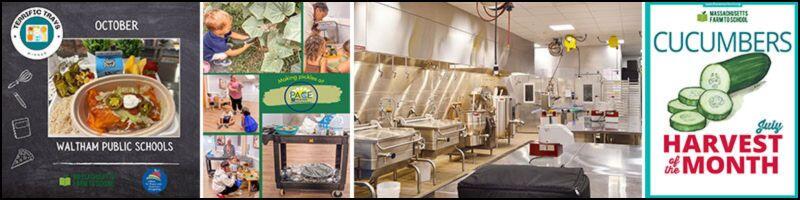
161: Seeds is a year-long introductory program that helps schools & school districts start to build an integrated farm to school plan by identifying school community members to support local food sourcing and education. Participants take part in quarterly cohort meetings, hear from expert guest speakers, explore curated resources, and receive individualized coaching throughout the year. Sheffield Elementary School is an example of a school that has completed the Seeds program and participated the following year in the Massachusetts Farm to School Institute. The school is working on farm to school projects such as building a pollinator garden and a rain garden, as well as establishing indoor hydroponic systems.
162: Acton Boxborough Public Schools served Cinnamon Delicata from Plainville Farms in Hadley and apples from Carlson Orchards in Harvard. TT
163: Community Action, Inc Haverhill offered food and nutrition programming for Head Start children, focusing on cooking, gardening, and other topics that support access to farm fresh foods. This included supporting professional development for Head Start staff; encouraging experiential learning in the classroom; and offering opportunities for families to deepen the connection in fun and engaging ways at home. MFG
164: A local wellness policy is a written document that guides a school or district’s efforts to establish a school environment that promotes students’ health, well-being, and ability to learn. In Massachusetts, there has been significant growth in local wellness policies including best practices and goals, specifically related to farm to school and nutrition and food system education. Check out Food Literacy Funding: The Impact on Massachusetts School Wellness Initiatives to learn more!
165: Bristol County Agricultural High School launched a weekly Farm to Table Newsletter, a student-driven initiative, highlighting the meal program, local partnerships, and the journey of food from the school’s farm to the cafeteria. Each edition showcases how students from the Floriculture and Livestock programs engage in growing, harvesting, and preparing fresh meals including produce cultivation, livestock management, and food preparation, reinforcing the importance of local sourcing. Through work in the vegetable beds, Floriculture students learn the full cycle of food production, from planting and maintenance to harvesting and preparation. Currently, 54 students participate in vegetable production while also learning about the nutritional value of the food they grow, supporting both the school and local community by providing fresh produce and fostering responsibility, teamwork, and environmental awareness. Bristol Aggie also collaborates with local farms, enhancing offerings and providing students with insights into agricultural businesses and regularly hosts educational programs for middle schoolers and community groups, fostering a deeper understanding of agriculture and nutrition.
166: Each spring, ServiceNet’s Prospect Meadow Farm in Hatfield becomes a living classroom, welcoming students to experience agriculture and therapeutic animal care in a hands-on way. What they grow goes beyond produce—it’s curiosity, confidence, and connection. Groups like the Academy of Charlemont join the crews for an annual in-service day, helping prepare beds, plant crops, and take part in the work that brings the farm to life. Younger students visit for field trips, exploring how food is grown and how the land is cared for. The farm also partners with Hatfield Elementary School for in-class taste tests, now in its second year, giving students the chance to try fresh, locally grown foods. Last year, the goats welcomed Nubian kids, and were socialized through visits to local schools, fairs, and community spaces. As they traveled across Western Massachusetts, they helped extend the farm’s reach beyond the fields.
167: At Duxbury High School, their courtyard garden, The Dragon's Greens, has grown to 4 raised beds which will be filled with produce to be used in the kitchen classroom. Students created the garden plan with companion crops and started many herbs, vegetables and flowers from seed which will be planted soon. The indoor tower garden is also growing microgreens and herbs. The cross-curricula faculty cohort, The Green Thumbs, are helping to oversee the garden, share knowledge with their classes and are organizing a planter and garden supply drive to involve the greater school community in their growing efforts. Let's Grow, Duxbury!
168: Frontier Public School District is working to create a district wide Farm to School Program, integrating classroom, cafeteria and community across the district encompassing four towns in Franklin County. Training enables staff to become leaders in the Farm to School Program at their schools while engaging community partners, including local farms and businesses, caregivers, teachers, and administrators. MFG
169: Lowell Public School District is constructing raised beds and refurbishing its greenhouse at the Wang Middle School to support year-round cultivation and immersive instruction in environmental science, nutrition, and sustainability, and rebuilding its outdoor garden beds at the Robinson Middle School in partnership with Mill City Grows, incorporating culturally relevant crops and food justice education. Students have also engaged in hands on learning in their school gardens and learned about healthy eating by incorporating their harvests into their school cafeteria menus. MFG
170: Sustainable CAPE runs the "Farmer-in-the School" weekly program. “Meet the Farmer” events and Farm and Farmers' Market Field Trips introduce students to their local harvesters and to share food access and affordability program information with all families. Participating students receive Fresh Kids Awards that can be utilized at local farmers markets to buy fruits and vegetables and directly participate in their local food system.
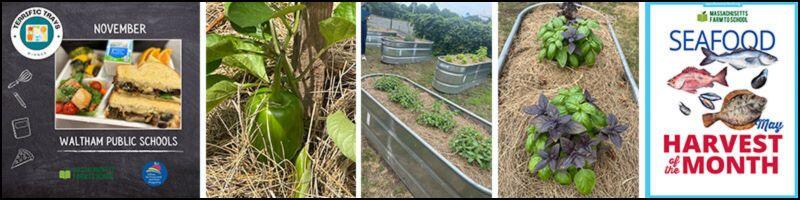
171: MIT Farm collaborates with Hannan Healthy Foods Farm in Lincoln through a reciprocal model that bridges campus and regional food systems. Students gain hands-on experience by working directly on the farm, assisting with planting, harvesting, and produce distribution. In return, the farm supplies fresh, seasonal, and culturally relevant food to MIT through a “Fresh Food Bag” program, increasing access to locally grown produce on campus. This two-way exchange strengthens the farm’s operational capacity while enriching students learning about sustainable agriculture and food systems. Additionally, students partner with the farmer to design and construct small-scale infrastructure that improves harvesting and distribution processes. By integrating education, agriculture, and community engagement, this collaboration fosters a deeper connection between students and the sources of their food while expanding the impact of farm-to-campus initiatives throughout the surrounding region.
172: New Bedford Public Schools focused on hydroponics and how hydroponics is used in the growing of produce. Lettuce as well as several herbs grown were incorporated into the school menu and meal preparation in these schools. MFG
173: Fork Farms has partnered with over 30 Massachusetts school districts to bring affordable year-round access to fresh food and hands-on learning to students with the Flex Farm hydroponic system. With their free K-12 curriculum, they are helping join food service, STEM, special education, afterschool programs and more within the districts to connect students to food while making sustainable, lasting programs possible for educators.
174: The Dennis-Yarmouth High School Community Garden was established last year to provide students with hands-on opportunities to explore sustainable gardening, prepare meals using homegrown ingredients, and deepen their understanding of soil and plant science. The program also fosters meaningful partnerships with local organizations, including Cape Abilities, the Yarmouth Food Pantry, the Brazilian Resource Center, and the Dennis Conservation Land Trust. Through a Fresh Grant awarded by DESE, the school secured funding to develop both the community garden and a hydroponics system. These resources have been integrated into new coursework, including a farm-to-table class, where students use produce grown on campus to design and prepare their own dishes, connecting agriculture, nutrition, and culinary skills in a real-world learning experience. MFG
175: Wilmington Public Schools students enjoyed roasted local chicken and summer vegetables. Food Service Director Mary Palen and team sourced rotisserie chicken from Nallie Pastures in Dracut, and corn (hand-shucked by WPS students) and other produce from several farms in Connecticut. TT
176: On September 25th, 2025, Boston Green Academy hosted a lettuce tasting in the school cafeteria. The tasting featured lettuce grown by students in the Freight Farm at the school, along with science teacher, Chris Donnelly and Freight Farm farmer, Simone Cole. The lettuce is also served daily on the salad bar in the school cafeteria. The tasting gave students an opportunity to learn about the lettuce that is being grown by their peers and served in the cafeteria every day.
177: Massachusetts Farm to School’s Farm to School Northeast Podcast featured youth leaders from The Food Project’s Dirt Crew, who shared how The Food Project empowers young people through farming, food justice, and community engagement. During the conversation, youth described how they take on meaningful leadership roles by guiding farm work, leading community events, advocating for food justice policies, and facilitating discussions on important social issues. They explained how the program has helped them become more confident, outspoken, collaborative, and socially aware while teaching them practical farming and organizing skills. Throughout the episode, youth emphasize the importance of using their voices, sharing personal experiences, and working together to create positive change in their communities.
178: Franklin County’s Frontier Regional & Union 38 School District Farm to School team collaborated with local mosaic artist, Christine Kenneally to facilitate a community art project in which students and families at Conway Grammar School created a Community Garden Welcome Sign for their school garden.
179: Collegiate Charter School of Lowell is developing new garden-based lesson plans and immersive experiences for all K-12 students including taste-testing, farm field trips, and a new garden club in partnership with Mill City Grows, Massachusetts Farm to School, and Parlee Farms. MFG
180: Willow Brook Academy in Brookfield offers a hands-on learning experience rooted in the Farm to School movement. Students actively engage with their working farm, where they care for honeybees, goats, alpacas, rabbits, chickens, and pigs while learning about sustainability and responsibility. Through seasonal projects, children explore fiber arts from shearing to spinning, plant pollinator-friendly gardens to support their bees, and discover how recycled food scraps can nourish the pigs. The 12-acre campus becomes a living classroom, trees provide habitats for wildlife, and even cattails are studied for their uses as food and natural resources, connecting agriculture, ecology, and education.
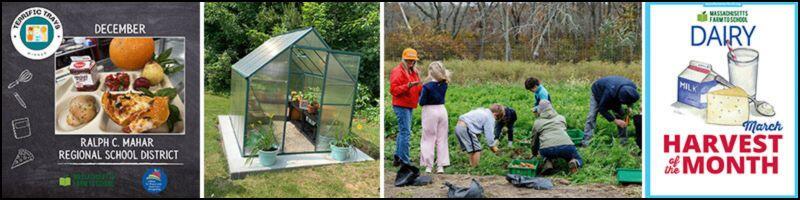
181: Gloucester Public School District, in partnership with Backyard Growers, is expanding their Harvest of the Month taste tests to include preschool and middle school students. Preschool students are taking part in two additional school garden learning experiences, which provide students with four total touchpoints in the garden per year. Backyard Growers is also providing garden guides on ways to infuse seasonal use of the garden into classroom learning. MFG
182: Morris Professional Child Care Services, Inc. in Springfield is creating an outdoor garden space to include fruits, vegetables and herbs for staff to demonstrate a connection between food and environment, and the work that goes into growing food. Field trips include visits to local farms and a community garden. MFG
183: The Marion Institute’s Grow Education Program partners with schools across Southeastern Massachusetts to bring farm to school learning to life through school gardens, classroom lessons, and hands-on activities. Students participate in planting, harvesting, and tasting fresh, locally grown food while learning about nutrition, agriculture, and environmental stewardship. Lessons are aligned with curriculum standards and explore topics such as soil health, pollinators, and sustainable growing practices. By working closely with educators and community partners, Grow Education helps students understand where their food comes from, build healthy habits, and develop a deeper connection to local food systems.
184: The Fresh Fruit and Vegetable Program (FFVP) is a federal Child Nutrition Program that introduces children to fresh fruits and vegetables, including new and different varieties, that works to increase overall acceptance and consumption of fresh, unprocessed produce among children. Many Massachusetts elementary schools integrate Harvest of the Month crops such as apples, pears, carrots, winter squash and potatoes, into FFVP, providing nutrition education to students in the classroom alongside the opportunity to try these locally sourced fruits and vegetables.
185: With funding from the MA FRESH grant, Jessica Desmarais, School Garden Coordinator and Farm to School Lead at Robin’s Children’s Programs in Attleboro notes it has been wonderful working alongside colleagues and seeing them grow, both in their passion for Farm to School and in their confidence integrating it into their curriculum. Educators at Robin’s Children’s Program were provided professional development through the Mass Audubon SEEDS Program. Statewide Early Education Manager with Mass Audubon, Rina Zampieron, and team came on site to model lessons in the classroom, followed by debrief sessions to reflect on the experience, discuss outcomes, and collaboratively plan next steps. The experience really empowered the educators and provided students with hands-on, engaging lessons about nature and gardening. Educator Giselle Benoit said that working with Rina has helped enhance her teaching, especially the introduction of garden walks and planting. MFG
186: SWITCH (School Wellness Initiative for Thriving Community Health) is a movement dedicated to supporting and advancing wellness efforts for Massachusetts schools and communities. SWITCH’s Massachusetts School Wellness Coaching Program helps districts assess local wellness policies ensuring that policies meet state and federal standards and center local priorities. The program also helps to foster sustainable wellness committees – a committee that connects the members of the cafeteria, classroom and the community to set goals and standards specific to their own district. In SY25-26, there were a few exciting changes to the program, including: 55 program participants – a record high number thanks to the state food literacy funding and support from the MA Department of Elementary and Secondary Education. Also, a new local wellness policy assessment tool was developed which included questions and resources related to nutrition and food system education. The tool was used in the coaching program, where participants were able to set goals and action plans related to connecting the classroom, cafeteria and community.
187: Project Bread's team of Chef Educators provided professional development training to school nutrition staff across the Commonwealth helping them develop the necessary culinary skills to prepare school meals featuring local ingredients. Recipes included Butternut Squash & Kale Quesadillas, Pico de Gallo, Grains & Greens Breakfast Bowl, Harvest Fri-Tot-A, and Acadian Red Fish with Coconut Lime Red Sauce. Chef Educators taught skills needed to process a variety of local ingredients, such as knife skills, recipe development and planning, and making the most of kitchen equipment
188: West Bridgewater Middle-Senior High School worked closely with Olson’s Greenhouses in Raynham to transform the courtyard at the school into a beautiful bulb and perennial garden. The school also cultivates raised bed vegetable gardens, and the Garden Club is very active in its pursuit of beauty and functionality of gardens on the school grounds.
189: Merrimack Valley Young Men’s Christian Association, Inc in Lawrence is engaging young learners through hands-on garden activities, farm and food producer tours, and interactive "Meet the Chef" experiences to help them understand the importance of farming and the local food system and providing childhood educators professional development to integrate these experiential lessons into the classroom setting. MFG
190: Bristol County Agricultural High School floriculture senior students designed and installed a vegetable garden display for the Attleboro Arts Museum annual flower show. The exhibit highlighted the school’s participation in Massachusetts Farm to School programming, including the MA FRESH CORP grant, which supported the purchase of seeds and equipment featured in the display and then reused in the school garden. This project showcased how school garden initiatives connect classroom learning with local food systems. MFG2
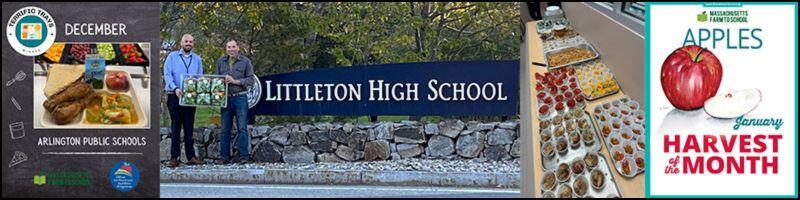
191: The Nantucket Community School's extended day program visits Sustainable Nantucket's Farm to School Garden on Mondays in the spring and fall. These sessions allow students to continue their learning outside of school hours in the garden. Whether they are planting seeds, caring for garden beds, or tasting the fruits of their labor, students leave with valuable skills that encourage healthy eating and environmental stewardship. Sustainable Nantucket’s farm to school manager also collaborated with the Nantucket Community School to host their 'Dads and Kids' group in the garden. Participants visited the garden weekly in the spring to learn about composting, growing food, and healthy eating.
192: Waltham Public Schools featured Chicken Enchilada with cilantro-lime rice, fire-roasted peppers and black bean and corn salad with onions from Abrantie Farm in Stow/Boxborough and cilantro and Shishito peppers from Applefield Farm in Stow. TT
193: Gill-Montague Regional School District provided opportunities for students to plant vegetables throughout the year through hydroponics and a small greenhouse and built a raised bed garden and hydroponic system. Educators created lessons and extensions to established curriculum to support farm-to-school programming. MFG
194: Every season, Westborough’s Nourse Farm hosts hands-on farm-to-school experiences for K–12 students, offering seasonal berry-picking field trips that connect them directly to local agriculture. During each visit, students learn about the farm’s history, how berries are grown, and the role of seasonal farming in Massachusetts. The program highlights where food comes from, sustainable growing practices, and the importance of supporting local farms. Students explore the fields, engage with farmers, and pick their own pint of fresh berries to take home - creating a memorable experience that strengthens connections between the classroom, the cafeteria, and the land.
195: The Department of Youth Services (DYS) is expanding its Plant-to-Plate Program across all state-operated sites, connecting youth to the food they eat - from planting and harvesting, to preparing healthy meals. DYS is developing a comprehensive Plant-to-Plate Guide tailored to the unique needs of DYS programs and youth and providing training for key staff and stakeholders who play a vital role in supporting youth health and wellbeing. MFG
196: Northampton Public School District’s Freshampton Collaborative strategically plans, strengthens, and aligns programs into a more cohesive and sustainable model to ensure all students have access to locally sourced, culturally relevant meals and meaningful food systems education, and supports coordinated communications to share these efforts and impacts, helping the broader Northampton community understand, celebrate, and take pride in this work. MFG
197: Walpole’s School Garden Program began with one elementary school in 2013, and this year is adding its fifth school! The students learn about planting, growing, and harvesting in the school gardens. Classroom teachers also use the gardens for curriculum-based lessons. Planting occurs in the spring with lettuce being the first crop planted so that the students can enjoy tasting their lettuce before school is out in June. Families take turns tending the gardens in the summer and on Saturdays bring their harvest to the Walpole Farmers Market. Shoppers can take as much as they want and leave a donation if they are able- but it is not necessary. The program has been self-sustaining since its beginning in 2013.
198: The Menu Strategy Matrix operationalizes the School Meal Nutrition Standards Commission recommendations by defining six core priorities for school menus statewide. The matrix serves as a roadmap, guiding districts from minimal standards through enhanced practices and toward advanced menus that are student-centered, high-quality, and grounded in the shared values of the school community. The Department of Elementary and Secondary Education is working in collaboration with The John C. Stalker Institute at Framingham State University to support schools in this endeavor through a new chef-led, hands-on culinary session that helps school nutrition professionals bring more local produce into K–12 meals using simple scratch and speed scratch techniques that fit real school kitchen operations. This culinary workshop features 10 new Massachusetts Harvest of the Month recipes.
199: Old Rochester Public School District links gardens, curriculum, cafeterias and communities for a farm to school approach to health by incorporating food nutrition lessons into every third-grade classroom across the three elementary schools, and building gardens, educating teachers & stakeholders, developing & implementing nutrition/science curriculum, and building a schoolwide culture of health. MFG
200: In August 2025, Boston Public Schools Food and Nutrition Services (BPS) invited Addison Toussaint of Adsaint Farm in Sterling to share his story as a farmer emigrating from Haiti to Massachusetts. They shared his organic vegetables with staff to take home with them. In September and October 2025, as part of the Harvest of the Month, BPS served about 3,000 pounds of Adsaint Farm's organic tomatoes on the salad bar for students to enjoy across the city.
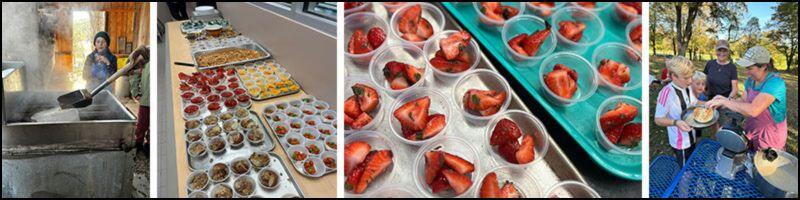
201: Ascentria Care Alliance SNAP Ed supports farm to school learning at the West Springfield Boys & Girls Club through youth led garden education, leadership development, and local food taste tests featuring Massachusetts grown foods. A train the trainer model with the Club’s Torch Club empowers teens to teach gardening and food systems concepts to younger children, creating a sustainable learning loop. Future goals include a mini market to help youth build skills related to local food systems, entrepreneurship, and community food access.
202: Massachusetts Farm to School expanded their Harvest of the Month program by introducing the Harvest of the Month for Educators Program, which provides standards-aligned curriculum, newsletters, posters, and classroom activities for elementary and secondary educators. In addition, the Early Childhood Education (ECE) HOTM program offers age-appropriate resources and activities tailored for preschool and early learning settings, helping introduce younger children to local foods through hands-on exploration and play-based learning.
203: South Shore YMCA built new breakout education areas at its Hanover Family Farmdedicated to supporting preschoolers and teachers. Designed for small group gatherings that will include farm-to-school professional development programs for about 90 preschool teachers, afterschool and summer camp staff, and teachers from around the region from other districts/programs. MFG
204: The Gill Montague Regional School District Food Service team is proud to feature a selection of premium local and regional items on their menu. They are currently sourcing fresh produce from Pine Hill Orchards in Colrain and Marty’s Local in South Deerfield, ensuring high-quality ingredients in every meal. Additionally, they have partnered with several celebrated regional vendors to offer The Good Crust: Authentic Sicilian-style pizza dough, One Mighty Mill: Fresh, stone-milled bagels and Shri Bark: Wholesome muffins and cookie rounds.
205: All seven of the Falmouth Public Schools participate in MA Farm to School’s Harvest of the Month Program since November of 2024. Chef Laura Higgins-Baltzley connects with local farms to highlight a locally sourced ingredient twice every month, once as a chef-led tasting in the seven cafeterias and a second time for hot lunch with recipes created by the chef and executed by the foodservice staff. Says Chef Laura, “While we broaden our enrichment of cultures through cuisine we begin to develop agency in our students, making thoughtful food choices and allowing their voices to be heard”.
206: Taft School’s STEAM Lab in Uxbridge hosts a classroom hydroponics system called Sprout Up Farm, where students in grades K–3 participate in hands-on learning throughout the school year. Students help maintain the indoor farm while learning how plants grow without soil and what plants need to survive. Many of the seeds used in the system come from families in the school community who own or work on local farms, helping students make meaningful connections between agriculture, their community, and the food they eat. Students help choose which types of lettuce and herbs to grow and harvest the produce for classroom snacks in STEAM and to help feed their classroom pet, Hatteras. Herbs often reflect the cultures and heritage of students in the school community, creating opportunities to learn about one another through food. Any extra produce is donated to a local nonprofit restaurant, Mendon Street Kitchen, that prepares meals for community members.
207: Revere Public School District is launching a farm to school initiative that integrates food literacy into health and academic curriculum across multiple grade levels by developing engaging, standards-aligned lessons, experiential field trips to local farms, and professional development for educators. MFG
208: Littleton Public School’s Chicken Fajita Bowl featured tomatoes from Ward’s Berry Farm in Sharon, and served with a corn salad from Stonefield Farm in Acton and apples from Fairview Orchard in Groton. TT
209: Students, families, teachers, and food service partners at Andover’s Collaborative for Regional Educational Service and Training (CREST) are engaging in expanded food literacy activities designed to build farm-to-table knowledge across all K–12 classrooms, and is committed to serving healthy school meals that feature a wide variety of locally farmed produce and protein from the Merrimack Valley, while maximizing existing Massachusetts FRESH CORP resources and educational partnerships. MFG
210: Gaining Ground, a nonprofit organic farm in Concord, partners with the Bridge Boston Charter School in Roxbury to help provide students with appealing, nutritious meals brimming with fresh vegetables, herbs, and fruits. Gaining Ground’s weekly produce donations to Bridge Boston help to ensure all students are nourished each day with three healthy meals and a snack, eliminating hunger as a barrier to learning. In addition to eating farm-fresh food in the cafeteria, Bridge Boston students also visit Gaining Ground for hands-on farm learning in the fields. To continue access to healthy food options when school is out for summer, the school coordinates a free farmers market so families experiencing food insecurity can bring the Gaining Ground harvest home.
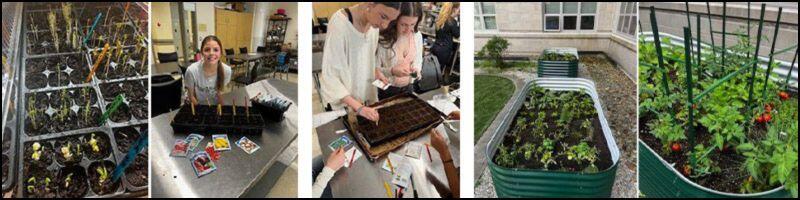
211: The Growing Places Local Food Center in Gardner lightly processes local produce that is often too labor-intensive for schools to prepare, making it possible for students in diverse communities across Massachusetts to regularly enjoy nutritious foods like beets, rutabaga, cabbage, sweet potatoes, and fresh mashed potatoes.
212: New England Dairy sponsors the Adopt a Cow program for MA educators. Adopt a Cow is a free, year long educational program from the Dairy Excellence Foundation that connects classrooms with a New England dairy farm and calf. Open to all schools, the program brings agriculture to life through interactive lessons, virtual farm tours, and direct communication with farmers. Students gain a deeper understanding of where their food comes from while exploring topics like animal care, sustainability, and nutrition. For the 2025–2026 school year, over 1,100 educators across Massachusetts enrolled in the program, reflecting strong interest in hands-on, farm-based learning. Adopt a Cow is a simple, engaging, and no cost way for schools to participate in Farm to School efforts.
213: Weston’s Land’s Sake Farm’s Education Garden engages 8,000 children in hands-on learning. Planting, weeding, harvesting, and cooking with vegetables grown in the garden create opportunities for connection with each other and with our food. Recently, their Cooking Club made sweet potato chocolate brownies, microgreen pesto pasta, maple-glazed carrots, and herby cheese crackers.
214: Brockton Day Nursery provided an opportunity for children to learn about how and where our food comes from. Children learned how certain foods are better than others for our bodies and growth, while supporting the cultural diversity of the community. MFG
215: The Hawlemont, Agriculture, and You (HAY) Program is a transformative, farm-based curriculum at Hawlemont Elementary School in Charlemont that integrates hands-on agricultural experiences into traditional learning for preschool through sixth-grade students. Celebrating over a decade of operation, the program utilizes an on-site barn, greenhouse, chicken coop, and gardens, where students take on daily responsibilities such as animal husbandry—often caring for animals loaned by local farmers—planting, and composting. By forging a strong connection with nature and community, the HAY program enhances student engagement, improves classroom behavior, and fosters skills in science, math, and literacy, with each grade having a curriculum unit directly tied to these agricultural activities. Supported by the "Friends of HAY" group, this unique approach creates a sense of purpose and perseverance that extends from the farm into the classroom.
216: New Bedford Public Schools Farm-To-School program provides hands-on learning opportunities to 1,120 third-grade students through the Marion Institute Grow Education Program. Fall Workshops: Garlic and cover crops: Classroom workshop and planting. Wampanoag Culture and Food Ways: Class workshop and a tasting of Three Sisters’ Stew during lunch: K-5 students. Winter Workshops: Harvest of the Month: Apples and Dairy workshops and tasting for students. Herbalism: Herb and tea workshop and tasting. Seed Saving: Observed local seed saving farm practices. Composting: Observed local farms and their composting process. Spring Workshops: Pollination-Beekeeping: Observed a local beekeeper, handled beehives, and tasted honeycomb. Planting: Hands-on gardening experience planting three rounds of seeds and seedlings. Additionally, 100-200 students engage in hydroponic education with Six hydroponic units in use by students at various schools. Three to four times per year, 20-25 pounds of produce is harvested by students and then Food Services uses the produce across multiple cafeterias.
217: North Middlesex Public Schools in Townsend upgraded the community garden located at the high school, increased students’ access/exposure to fresh vegetables grown locally at school and in the community and leveraged high school students to be stewards of food literacy within their building and with students in the elementary and middle schools. MFG
218: Dig In partners with Greenfield Public Schools and North Adams Public Schools to engage about 1,600 students every month in food systems education in the cafeteria through offering interactive taste tests of locally sourced, scratch cooked menu items during school lunch.
219: Friends of Holly Hill Farm in partnership with Scituate's Gates Middle School, health and wellness students get hands-on experience growing, harvesting, cooking, and learning about the connection between healthy soil and human health using fresh produce from their school garden! The garden ties into MA nutrition and mental health standards which includes this food lab experience. Seventh graders plant in the spring and return as eighth graders to enjoy the harvest, while students in both grades contribute produce to the school salad bar and Friends of Holly Hill Farm's Farm to Food Pantry Program.
220: School Sprouts, a mission-driven, woman-owned business, has been sharing the joy of growing in school gardens for over 20 years. Through collaborative planning with teachers and education professionals, School Sprouts designs customized programs that meet schools’ needs while providing programming that engages students’ hands and minds. They design and implement dynamic gardens that act as hands-on learning laboratories for scientific inquiry, writing and reflection, cultural studies, application of mathematical concepts, and health and wellness activities. School Sprouts currently collaborate with six elementary schools in the Pioneer Valley to serve over 2,000 students.
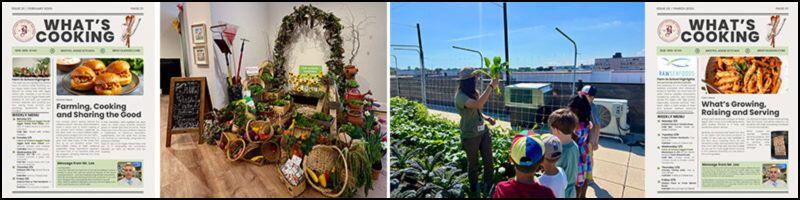
221: Fatima Seck, School Gardener at Mel King South End Academy, was featured on The Farm to School Northeast Podcast. Fatima uses the school garden as a powerful space for social emotional learning, creativity, and cultural connection for students. Her gardens help students build important life skills, such as patience, resilience, emotional regulation, communication, and self-awareness. Students gain confidence through caring for plants and contributing to their school community.
222: Fitchburg’s Making Opportunity Count (MOC Childcare & Headstart Services, Montachusett Region) is strengthening community relationships between childcare centers and local food producers through experiential learning with field trips to local farms, and on-site workshops. Professional development for educators connects these nature-based experiences to the existing teaching strategies. MFG
223: Boston Medical Center Rooftop Farms partners with Boston Public Schools each summer for a week of Farm to Table Kids programming. The farm hosts five different classes of elementary school students for a morning of food systems and nutrition programming. Our farmers teach the students about how vegetables are grown, crop identification, and beekeeping and then harvest vegetables together. The students use their harvest to prepare a garden salad, led by the Boston Medical Center Teaching Kitchen team, and learn about how the food they just harvested helps nourish them.
224: Essex North Shore Agricultural and Technical School is energizing its farming potential. Last year's foundational projects yielded 4,300 lbs. of vegetable/salad/fruit (approximately 17,000 servings), 200 dozen (2400) eggs, 2,000 lbs. of meat (beef and lamb), 12 Cords of wood and 960 buckets (19,920 stems) of cut flowers. With plans to increase the herds, flocks, and growing spaces the school is excited to see what the year brings!
225: In FY 2025, FRESH HES helped Hatfield Elementary School (HES) students build awareness of the connections among sustainable farming practices, climate change, and health promotion thanks to a local partnership with Hatfield’s Prospect Meadow Farm. Despite having storms destroy some of their newly built greenhouses, the farm connected with the local farming community to assure that a rotating variety of vegetables were made available to support eight different taste testing’s. HES student council members served as taste test leaders inviting all students to taste and vote their preference. Most students stated that they liked the taste of locally grown vegetables and learned about the nutritional benefits. Some even commented that they liked the local carrots better than store-bought ones. The FRESH HES project culminated in a field trip to Prospect Meadow Farm for all grade 5 & 6 students in June 2025. MFG
226: Children in Sustainable CAPE’s after-school & summer Children's Community Garden plant, cultivate, eat and enjoy local fruits and vegetables - resulting in improved health and a formative early connection to produce and the environment. Recipes and the produce children have grown are shared with families in "Garden Goody Bags".
227: Taunton Public Schools united students with moderate to severe disabilities and other at-promise high school students in a state-of-the-art hydroponics lab, where they grew fresh produce for the Tiger Den, a student-run restaurant, a school cafeteria taste-test, and for local families. Students learned about sustainability and the green economy and took control of the growing, packaging, and marketing processes. MFG
228: RootEd has developed and offered a series of Food Systems Literacy professional learning courses for MA public school educators in partnership with DESE, offering 7 courses in 2024 (enrollment: 198!), 10 courses 2025 (enrollment: 255!), and currently in our fourth course of 2026. Courses include Growing Gardens for Wellness I & II, Nutrition for Teachers I & II, Hands-on Cooking & Food Ed in the Classroom, Reading & Eating for Equity, and From Page to Plate. Demand continues to grow, and courses repeatedly fill with a waitlist - educators are excited to engage in learning about how to bring food systems’ education to their students! MA Educators have collectively engaged in 4,830 course hours (and counting!) of food systems learning since 2024 with RootEd!
229: The Tucker Garden Club at Milton’s Tucker Elementary School is alive and growing! Last spring the Garden Club teachers and Food Service directors linked up and participated in the RootEd Course to open the doors to a more comprehensive Farm to School Learning Practice. Staff are committed to this community connection along with families. Tucker School participated in MA Farm to School’s Harvest of the Month program where they highlighted a different Massachusetts crop each month and shared recipes and knowledge for teachers to highlight the work of local farmers and how they impact the school in a healthy way! The student gardeners grew and harvested potatoes, basil and carrots and flowers which were turned into delicious garden to table feasts thanks to the amazing chefs in the kitchen! And they are just getting started!
230: Templeton’s Narragansett Regional School District has partnered with Smith's Country Cheese in Winchendon to provide 1 ounce cheddar cheese sticks and their amazing cheddar and gouda in bulk for pizza and other offerings. You can see the dairy cows right from the Farm Store front doors - Keeping it FRESH & LOCAL!
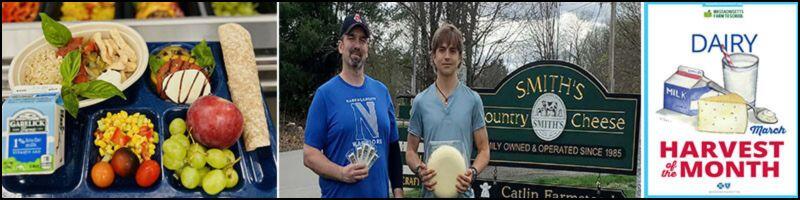
231: Littleton High School Food Services is buying Johnny Putt Farm salad greens to upgrade their fresh vegetable offerings with seasonal salad greens that are picked, packed and delivered the same day. Seasonal salad greens including microgreens, shoots and edible flowers bring some excitement for those who prefer a lighter or plant-based lunch. Farmer Gerry Cavallo says “I hadn't considered selling to a school but Aaron Breau, the Food and Nutrition Director reached out to me and made the delivery and payment process easy. I'm hoping the students will enjoy the salad greens and mention to their parents that they should sign-on to the Johnny Putt Farm home delivery service”.
232: The Cardinal Cushing School Greenhouse and Gardens in Hanover offers immersive vocational training and hands-on learning for over 100 students with intellectual challenges. Over 95% of all the vegetables are grown from seed in the Greenhouse and cared for by students with staff assistance. In spring, students transplant vegetable seedlings outdoors and sell the remaining plants to the community at the Garden Shop or at local fairs and farmers markets. Students harvest a steady flow of produce throughout summer and fall. Vegetables not consumed by students are delivered to their Café, where they are sold to the public or incorporated into the café’s menu and enjoyed by customers. Produce harvested in abundance, like tomatoes and garlic, is prepared by culinary students and saved for winter. The Roasted Tomato Soup with Cushing-grown garlic, onions, basil and parsley is a winter favorite.
233: The school food service staff at Bowie School in Chicopee along with district farm to school coordinator Brianna Jackson and science teacher Brenda Jacques, procured a hydroponic growing system using MA FRESH Grant funds through Green City Growers in Somerville. The system is used to grow lettuce that’s served in school meals during “build-your-own-salad events and served on the lunch line, while also providing a hands-on learning opportunity for more than 200 students in grades K–5. Students participate in the full growing process, from planting seedlings to harvesting the lettuce and recording the weight of their harvest. This experiential learning opportunity helps students better understand where their food comes from while connecting classroom lessons in science, nutrition, and sustainability to the cafeteria. Over 50 fifth graders have also participated in standards-aligned lessons about hydroponics led by their teacher, and a culinary demo from the school's cafeteria manager about knife skills and making salads. MFG
234: Serving up local is a big goal of Bristol Aggie’s Food Services Department. Whether its serving foods raised on campus or supporting local farms, they are leading the way and telling an exciting farm to school story! The livestock program has supplied chicken, pork and beef for an array of delicious cafeteria meals, including chicken soup, beef stew, tacos, meat sauce, and pulled pork! The cafeteria sources additional local foods such as potatoes and apples through Coastal Foodshed, and in collaboration with Raw Seafoods, school lunch has highlighted local haddock and Acadian redfish! For March, local milk and drinkable yogurts! from Westport Dairy were featured. All these fantastic collaborations are highlighted on the cafeteria menus and shared with the community in farm to school newsletters!
235: East End House SproutEd, Cambridge, created an on-site garden integrated into the curriculum of their early education program for toddlers and preschoolers. MFG
236: Round the Bend Farm (RTB), a Center for Restorative Community in South Dartmouth, supports farm-to-school efforts in Massachusetts by providing hands-on, place-based education that connects students to local food systems, agriculture, and environmental stewardship. As a 115-acre working farm and nonprofit “living laboratory,” RTB partners with local schools, nonprofits, and conservation organizations to deliver immersive field trips, service-learning projects, and workshops.
In FY2025, RTB welcomed over 11,000 visitors, including more than 1,700 students. Programs engage diverse learners—particularly from nearby SouthCoast communities—with inclusive, accessible opportunities to explore farming, nutrition, and sustainability. Through initiatives like Manifest Love, which provides organic produce and culturally relevant food education, and experiential activities such as gardening, composting, and animal care, RTB fosters meaningful connections between students, local agriculture, and healthy communities.
237: Norfolk County Agricultural High School (Norfolk Aggie) in Walpole, is proud to integrate farm-to-school practices through initiatives like the Abundance Garden, where students actively grow produce and herbs that are later incorporated into meals served in the cafeteria. The produce not used in the cafeteria is sold at area farmers markets and then the remaining items are given to local food banks so community members have access to fresh produce. This hands-on approach not only supports local food sourcing but also reinforces agricultural education by connecting students directly to the food system. In addition to garden-grown items, the food services program prioritizes the use of locally sourced meats, often raised by the students through their Animal Science programs. Together, these efforts highlight Norfolk Aggie’s commitment to sustainability, student learning, and providing fresh, locally sourced meals to the school community.
238: On November 6th, 2025, Boston Public School’s Food and Nutrition Services hosted a kale tasting at the Bates School in West Roxbury with MA Farm to School Director, Simca Horowitz as part of the Harvest of the Month initiative. Kale was sourced from Joe Czajkowski Farm in Hadley and was served on the salad bar across the district with 935 pounds of shredded kale from Joe's farm served on salad bars in every school.
239: Northampton’s HEC Academy students' civics project focused on flood mitigation and food access in their local community. Students worked with Grow Food Northampton (GFN) to plant an orchard of fruit and nut trees as a flood mitigation and food access measure. Fruit trees’ roots help to prevent soil erosion during floods, and the trees provide a food source that, once mature, grows above the flood line. HEC students also assisted GFN in planting a riparian buffer along the Mill River and weeding their edible hedgerow, which creates a barrier to protect crops from debris during floods. Students also communicated with food systems leaders and local government officials to advocate for flood mitigation policies that support local farms.
240: The Massachusetts Farm to School Food System Civic Engagement Project brings together middle and high school students, educators, and community partners to explore how food systems connect to civic engagement, sustainability, and social justice. Educators within the cohort deepen their own knowledge to guide hands-on, student-led investigations into local food systems, empowering young people to build the skills, connections, and confidence to take meaningful action in their communities. In the pilot 2025-2026 year, students worked on projects focused on food access, food waste, and sustainable seafood.
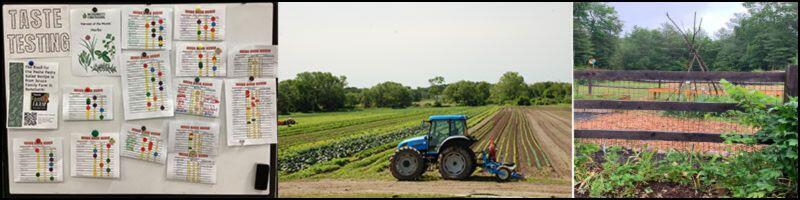
241: On March 24th, students at Sunderland Elementary School celebrated Dairy for the Harvest of the Month by sampling cheeses from VT, as well as from Thomas Farm and Dairy in Sunderland. This was a particularly meaningful Harvest of the Month experience for these students because they had the pleasure of visiting Thomas Farm in the fall of 2025. Many students wondered if they had met the goats whose milk produced the delicious cheese curds and spread!
242: Vanessa Aiello is a special education teacher that has participated in the RootEd Educational Consulting Program. The program equipped Vanessa with knowledge of food literacy resources and general health and nutrition concepts. The program provided her with ways to increase students' knowledge of nutrient-dense foods, and what constitutes decisions that are nutrient-dense or lacking nutrients in a manner that builds community in the classroom. If students are able to make nutrient-dense decisions, they can continue these decisions outside of school. Vanessa is one of hundreds of educators in over 120 distinct school districts (approximately 30% of all school districts in Massachusetts) that has received professional development through food literacy state funding.
243: Salem Public Schools are integrating farm to school, food literacy, and school garden education into Pre-K, elementary, and middle school classrooms, as well as Out of School Time programs. Farm to School Coaches will lead this work and provide professional development to educators. Salem Public Schools is also developing a School Garden Master Plan and implementing a communications strategy that shares Farm to School initiatives through weekly school newsletters, social media, and special events. MFG
244: The Frontier Regional & Union 38 School District Farm to School team was busy hosting Garden Work Bees at all of its district schools this Spring. On April 18th, the Farm to School team partnered with the Whately Agricultural Commission and the Whately Elementary PTO to host a Garden Workday in which students, families and community partners installed new garden beds, renovated raspberry beds and planted trees, berries and starters donated by many local farms.
245: Watertown Public Schools Farm to School program had its first pop up farm stand in coordination with the local farmers market to sell their student grown lettuce and herbed sea salt to the community. The “Watertown Harvests” class grows 1,000 heads of lettuce a week that is served in the school cafeteria. This was the first time selling to the community! The harvest also donates to the RJ community fridge and pantry.
246: Ashfield’s Red Gate Farm Education Center connects students to purposeful work and the daily adventures found on a farm. From morning chores to farm maintenance, they focus on creating experiences that build kindness, respect, and confidence. Days are full of magical moments: a wide-eyed child holds a tiny sleeping chick, students eagerly harvest hundreds of carrots for snack, a fourth grader bravely volunteers to help walk the 2,000-pound ox. These quintessentially farm experiences, and so many more, help children build connections to the natural world, food, and each other.
247: Boston’s Ellis Early Learning Garden Education Program brings farm-based learning directly into its urban classrooms, teaching children where food comes from, how it grows, and how it connects to health, family, and community. Since 2024, Ellis has partnered with the Somerville-based urban farming group Green City Growers (GCG) to provide hands-on urban agriculture and food literacy programming to more than 180 toddler and preschool students across Ellis's South End and Jamaica Plain campuses. Each week, GCG’s Farmer Educators visit each center to lead hands-on, age-appropriate sessions that invite children to participate in every stage of the growing process: planting seeds, caring for crops, and harvesting fresh produce. These sensory-rich experiences help children build a deeper connection with the natural world, and the food they eat. In 2025 alone, the Ellis gardens produced more than 200 pounds of produce – over 900 individual servings – and supported more than 2,500 child garden experiences. Through this program, children gain early knowledge of food systems while strengthening fine motor skills, scientific thinking, and healthy eating habits.
248: In April 2026, The John C. Stalker Institute of Food & Nutrition (JSI) at Framingham State University debuted a new, hands-on culinary workshop featuring 10 new Massachusetts Harvest of the Month recipes to bring more local produce into K–12 meals using simple scratch and speed scratch‑ techniques that fit real school kitchen operations. To strengthen ties between cafeteria and classroom, JSI is also collaborating with Pilot Light, the Massachusetts Department of Elementary and Secondary Education, and the School Wellness Initiative for Thriving Community Health to develop a 7-lesson classroom curriculum, aligned to the Massachusetts Comprehensive Health and Physical Education Framework practices and standards, for grades K-2 and 3-5 highlighting the same Massachusetts Harvest of the Month crops.
249: Berkshire Agricultural Ventures (BAV) will use Patrick Leahy Farm to School grant funding to implement a two-year pilot project that creates a regional, replicable supply chain for locally raised ground beef sourced from culled dairy cows and served in K–12 schools. Building on more than a decade of regional livestock research and value-chain development, BAV will coordinate procurement, processing, distribution, and school engagement to introduce USDA-inspected, regionally sourced beef into school meal programs in western Massachusetts. The project establishes a new institutional market for an underutilized agricultural resource—culled dairy cows—while strengthening farmer viability and increasing student access to local foods.
250: The Massachusetts Farm & Sea to School Conference has become the Commonwealth’s premier gathering for educators, school nutrition professionals, farmers, students, and advocates working to increase farm to school engagement and programs throughout Massachusetts. Over the past 13 years, eight statewide conferences have brought together more than 1,600 attendees to provide professional development opportunities, share ideas, and build partnerships. Each conference featured engaging workshops, hands-on learning opportunities, and practical strategies focused on topics such as local procurement, student leadership, culturally relevant meals, school gardens, and food justice. Recent conferences have placed a growing emphasis on youth voice and empowerment, reflecting the movement’s commitment to increasing student engagement in school food and food education initiatives. The event also continues to expand its reach, with at least 25% new attendees participating in each of the last two conferences, demonstrating strong momentum and a growing statewide interest in farm to schoolwork.