
DCR Climate Adaptation Goals and Climate Impacts
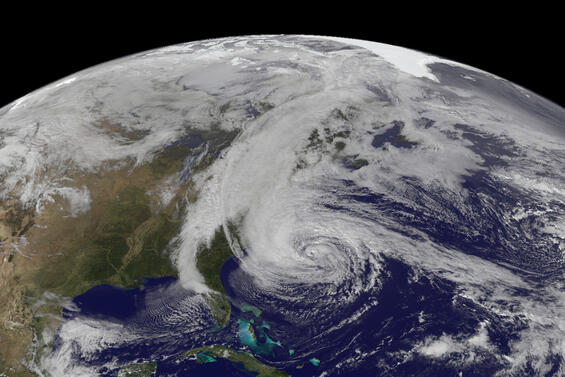
Hurricane Sandy, 2012. Image Credit: NASA
In March of 2025, DCR adopted Climate Adaptation Goals. These goals represent a whole-agency approach to answer the question: In the face of increased climate change impacts, what can DCR do differently, do more, or do more consistently across the Commonwealth? Review DCR's Climate Adaptation Goals here.
To learn more about how climate change will affect agency, explore the interactive DCR Climate Impacts StoryMap.
Climate Vulnerability Assessments
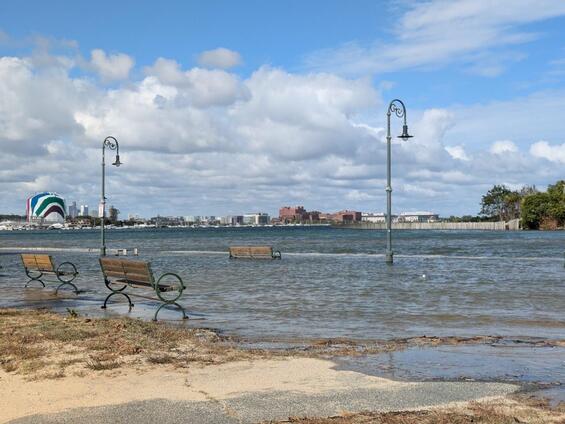
King Tide flood at Tenean Beach, Boston. Image Credit: DCR
DCR Statewide Climate Change Vulnerability Assessment
The Massachusetts Department of Conservation and Recreation (DCR) completed a Climate Change Vulnerability Assessment (CCVA) to better understand how climate change may affect the natural, cultural, and recreational resources it manages. Because DCR oversees many properties, the assessment helps identify which sites are most vulnerable and where to focus future planning, though it does not provide site-specific solutions. The assessment uses established methods and data to support long-term planning, improve resilience, and guide decisions about asset management and climate preparedness. You can learn more by reviewing the CCVA Accessibility report.
You can also review the results by exploring the CCVA Viewer.
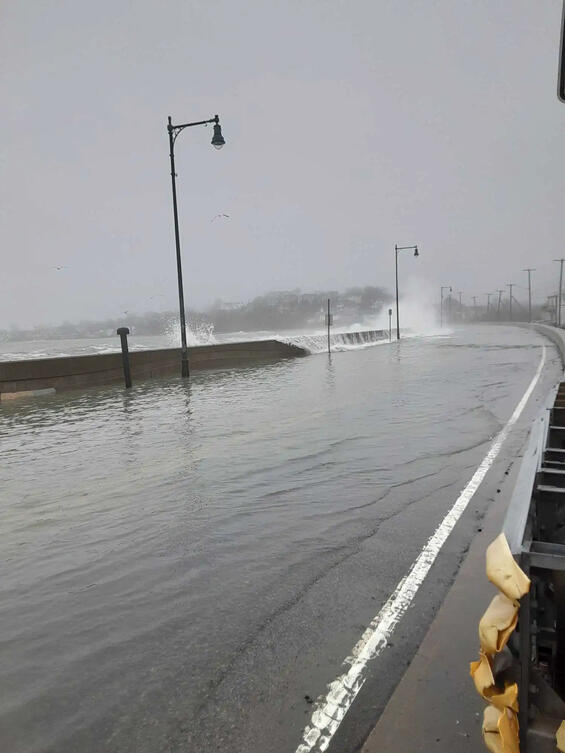
Flooding during a storm event at Winthrop Parkway. Image credit: MyCoast: Massachusetts
DCR Parkways Climate Change Vulnerability Assessment.
The DCR Parkways CCVA assesses vulnerability and risk to DCR-managed Parkways to flooding in the years 2030 and 2070, based on projections for sea level rise, storm surge, and extreme precipitation. Visit our Parkways CCVA webpage to learn more.
DCR Parkways Flood Resilience Adaptation Strategies
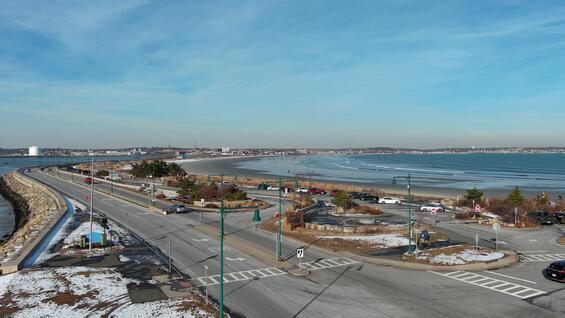
Nahant Rd and Nantasket Beach Reservation. Image credit: DCR
Building on the findings from the Parkways CCVA, DCR is exploring adaptation strategies at select vulnerable Parkways. These are early ideas meant to start conversations and gather input from community stakeholders and other agencies around preferred approaches. You can learn more by visiting the DCR Parkways Flood Resilience Adaptation Strategies webpage.
Extreme Heat Adaptation: Project Shade
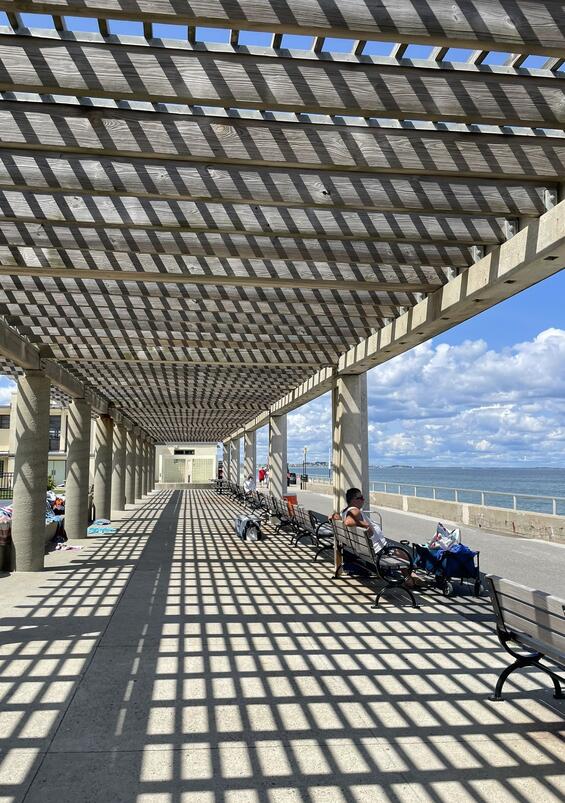
Structures and trees provide shade for park visitors. Image credit: DCR
The goal of Project Shade is to enhance the resilience of Massachusetts State Parks to extreme heat by strategically installing shade structures and expanding native tree canopy. We aim to protect the health and well-being of park visitors and staff, particularly vulnerable populations, through data-driven and sustainable solutions that mitigate the impacts of extreme heat. Visit the Project Shade webpage to learn more.
Demarest Lloyd State Park Phased Retreat Feasibility Study
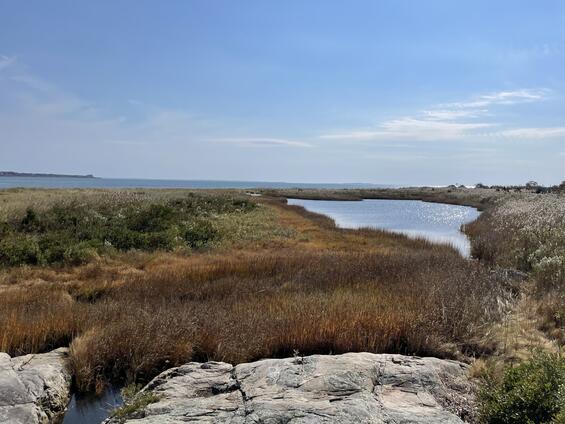
Demarest Lloyd State Park. Image credit: DCR
DCR is conducting this study to develop concepts for phased retreat at Demarest Lloyd State Park that will restore critical natural habitats and reimagine recreation that considers climate impacts. This is the first study of its kind for DCR, setting the pace for how to approach retreat at other vulnerable coastal sites. Learn more about the Demarest Lloyd State Park Phased Retreat Feasibility Study.
DCR Nature-based Solutions Case Studies
Nature-Based Solutions (NBS) are approaches and strategies that conserve, create, and restore natural resources to address climate hazards and other environmental stressors. NBS provide co-benefits that support ecosystems and people, making them a great tool for DCR to include into projects. Explore the case studies below to learn more:
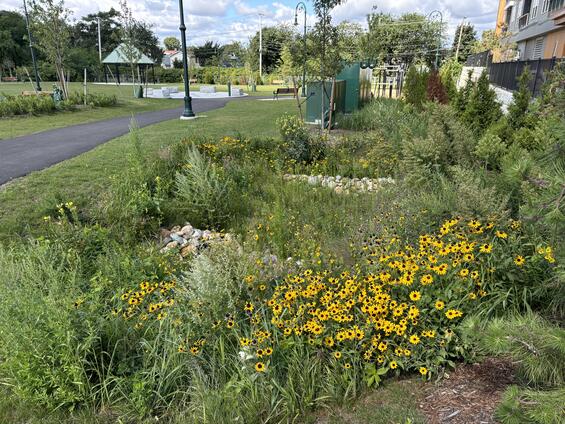
Nature-based solutions at Sullivan Park in Revere includes raingardens, bioswales, and new tree plantings. Image credit: DCR