
Following the directives of Executive Order 594: “Decarbonizing and Minimizing Environmental Impacts of State Government,” DCR adopted Net Zero Goals aimed at eliminating the use of fossil fuels in its operations. These efforts include:
- Building Heating Conversions: Converting oil, natural gas, and propane heating systems to renewable thermal alternatives, and constructing high-performance buildings
- Fleet Electrification and EV Charging: Electrifying the DCR fleet and deploying charging station for fleet and public use
- Sustainable Landscaping: Converting mowed areas to pollinator habitats and converting equipment to electric alternatives
- Solar PV Deployment: Deploying solar PV and solar-powered lights to reduce grid electricity consumption
The map below showcases examples of DCR efforts across the State and the remainder of the page provides more information about DCR's efforts and progress in these areas.
DCR Emissions Portfolio
DCR's portfolio includes a fleet of over 800 vehicles and hundreds of buildings ranging from small campground bathhouses to large ice rinks and maintenance garages. DCR also maintains and operates a diverse and unique portfolio of infrastructure, including the Charles River and Amelia Earhart Dams, multiple parkways throughout Metro Boston, fire watchtowers throughout central and western Mass, the Leo J Martin and Ponkopoag Golf Courses, and more.
As of FY24, DCR has reduced its emissions from onsite fossil fuels by about 17% compared to a 2004 baseline.
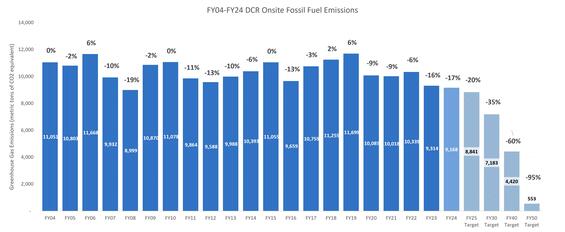
As of FY24, DCR's emissions from onsite fossil fuels have decreased by about 17% since FY04.
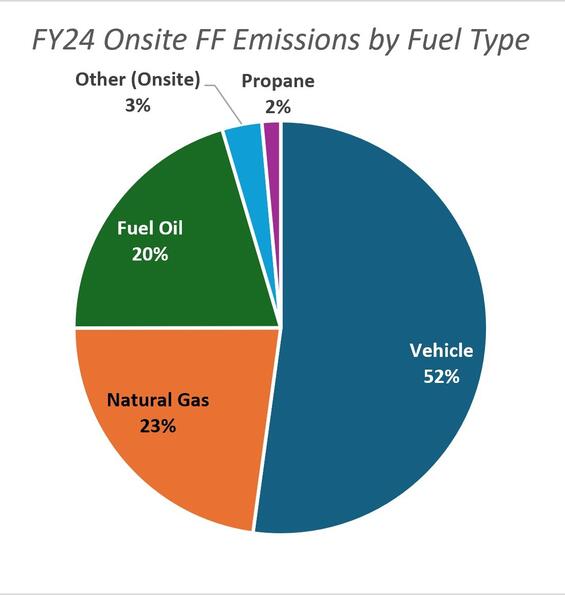
Fleet vehicles accounted for 52% of FY24 emissions
Building fuels, including natural gas, oil, and propane, accounted for 45% of emissions. This includes emissions associated with dam operations.
Operations equipment, including generators and landscaping equipment, account for the remaining 3% of emissions
DCR Decarbonization Map
The Decarbonization Initiatives Map is an interactive tool designed to showcase our ongoing efforts to reduce greenhouse gas emissions.
Building Heating Conversions and Green Buildings
Building heating makes up about half of DCR’s Scope 1 (onsite fossil fuels) emissions. DCR is working to transition its heating systems from oil, propane, and natural gas to cleaner, fossil fuel-free sources. It is DCR’s policy to avoid replacing heating systems in-kind, and instead plan ahead for the replacement of fossil fuel systems with these alternatives.
Key efforts and strategies include:
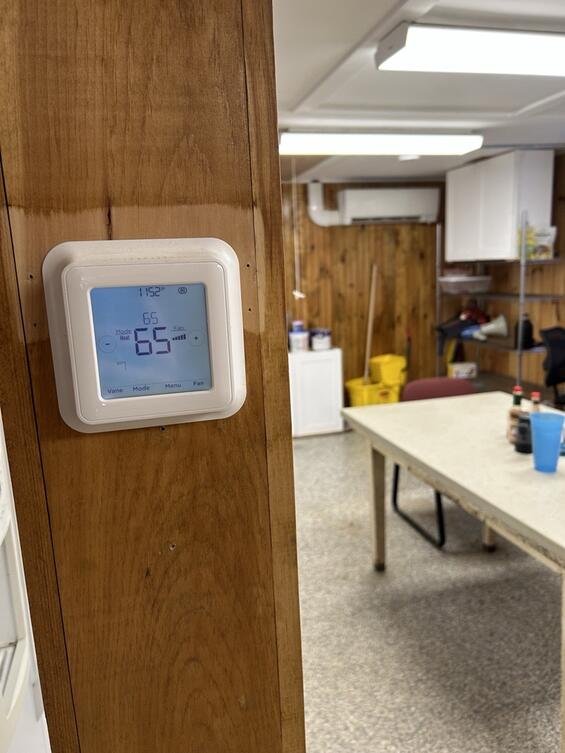
An air source heat pump installed at Mohawk Trail State Forest Headquarters. Photo credit: DCR
Air Source Heat Pumps
Air-source heat pumps are being deployed across DCR facilities to replace oil, natural gas, and propane heating systems as they reach the end of their useful lives. Heat pumps are intended to meet 100% of building heating needs, and provide the added benefit of cooling in the summer.
As of FY26, DCR has installed air-source heat pumps across 50 locations.
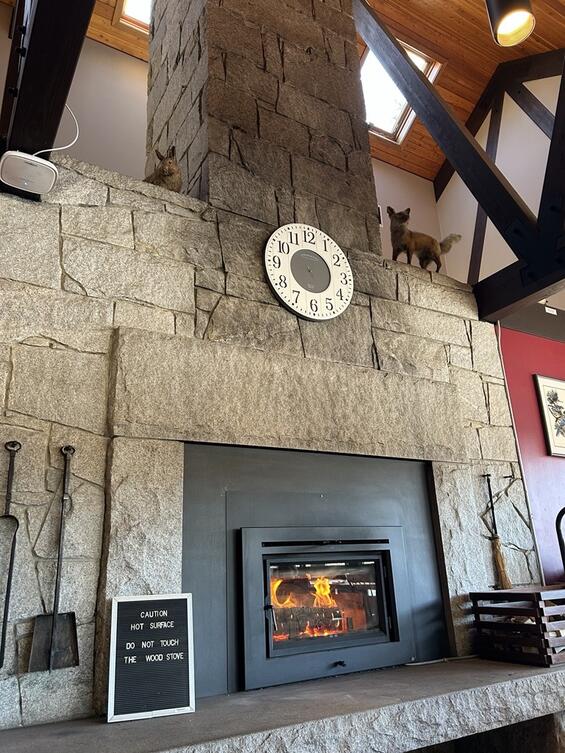
A wood stove insert at Dunn State Park. Photo credit: DCR
Modern Wood Heat
Modern wood heat systems include EPA certified wood stoves and pellet furnaces. These systems can be designed to meet 100% of heating demand where heat pumps are not viable, serve as a backup system to heat pumps, or simply provide heating that keeps in character with a visitor center or campground.
Seven DCR locations are heated with wood pellet furnaces, reducing heating oil consumption by approximately 20,000 gallons per year.
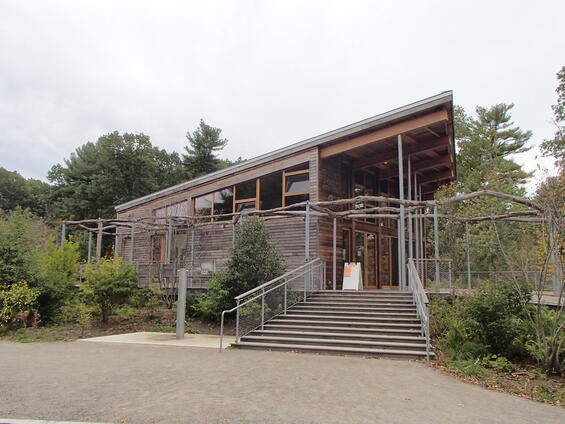
Walden Pond State Reservation Visitor Center, A LEED Gold building. Image credit: DCR
Green Buildings
A green building meets or exceeds basic standards for energy efficiency and net zero principles. DCR's "Green Buildings" include those that are LEED Certified or meet other efficiency and sustainability standards.
DCR's portfolio includes three LEED buildings:
- Walden Pond Visitor Center - LEED Gold, 2017
- North Point Maintenance Facility - LEED Gold, 2020
- Blackstone River Heritage Visitor Center - LEED Certification in progress
Fleet Electrification and Charging Stations
DCR is deploying charging stations to support the electrification of its fleet of ~820 vehicles, as well as charging stations for use by park visitors in support of the Commonwealth’s broader transportation electrification goals (See Massachusetts Electric Vehicle Infrastructure Coordinating Council).
Key efforts and strategies include:
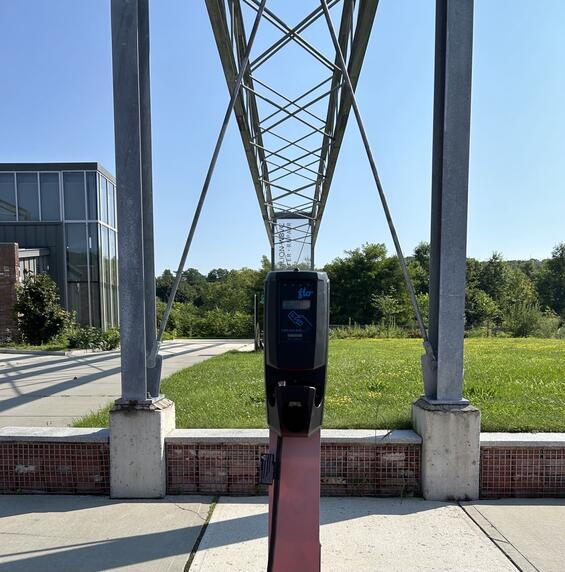
A publicly accessible EV charging station at the Blackstone River Greenway Visitor Center in Worcester. Photo credit: DCR
Public Charging Stations
To expand the availability and access to electric vehicle charging across Massachusetts, DCR is installing public charging stations so visitors can recharge their vehicles while they recharge themselves at DCR facilities. DCR developed a strategic plan in 2025 and 2026 with the intent to deploy these stations as funding becomes available. For more information, see DCR’s Public Access Electric Vehicle Charging Project page.
As of FY26, DCR has installed 11 level 2 public charging ports across three locations - Walden Pond, Bajko Rink, and Blackstone River Visitor Center.
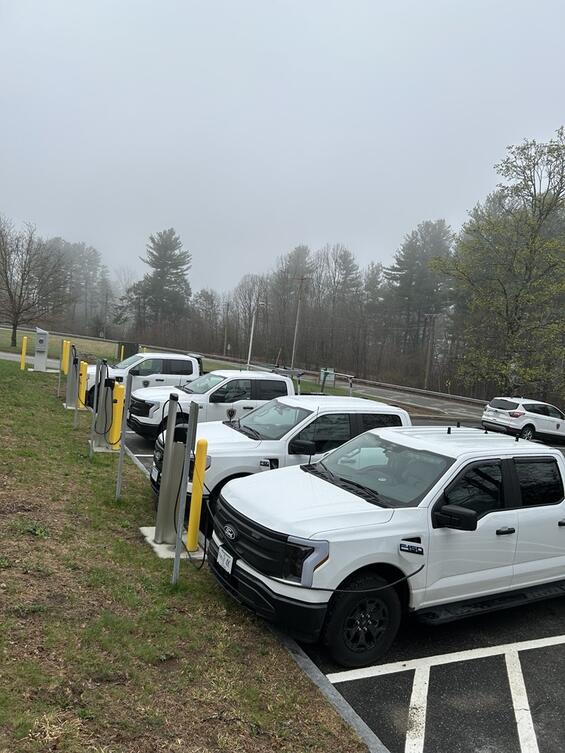
Fleet charging stations at a DCR facility. Photo credit: DCR
DCR Fleet Charging Stations
To facilitate the conversion of it's fleet to zero emission vehicles over the coming years, DCR has begun installing EV charging stations dedicated to fleet use. Stations are designed to meet the operational needs of parks, recreation, and maintenance facilities without impacting cultural, environmental, and historic resources.
As of FY26, DCR has installed 91 level 2 EV charging ports dedicated to fleet use.
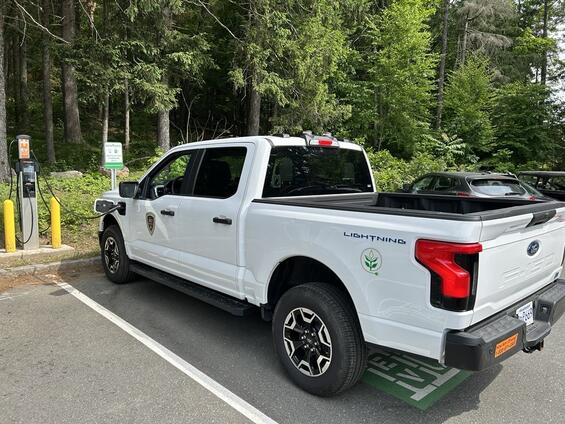
An electric DCR truck at Blue Hills Reservation
Fleet Electrification
Over 50% of DCR's scope 1 emissions come from vehicles. Under Executive Order 594, 5% of the state fleet must be electric by 2025, and 20% must be electric by 2030.
As of FY26, 61 DCR vehicles, over 7% of its fleet, is all-electric.
See videos of DCR's electric fleet in action:
Sustainable Landscaping
To reduce energy and resources consumed for lawn maintenance, and support the creation of native habitats, DCR is converting lawns into pollinator gardens and meadows. Operations staff are also reducing the carbon intensity of landscaping operations by converting to electric lawn and garden equipment, from handheld saws and leaf blowers to ride-on mowers.
For more information on pollinator habitats and to participate at home, visit Growing Wild Massachusetts.
Key efforts and strategies include:

Pollinator garden at Great Falls Discovery Center in Turners Falls.
Pollinator Gardens
DCR is installing low-maintenance gardens at visitor centers, recreational facilities, parks, and other properties to both support native plants and wildlife and reduce resources needed to maintain lawns. By using Massachusetts-native species, these gardens support the native insects and wildlife that are integral to local healthy ecosystems. As a benefit, less frequent mowing and watering has a direct reduction in fossil fuels consumption.
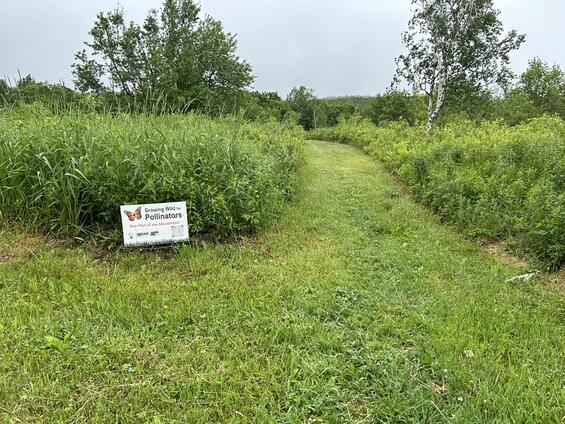
A path through a low-mow zone at Mt Greylock State Reservation. Photo credit: DCR
Low Mow Zones
DCR manages fields and meadows for a multitude of uses, including habitat management and recreational purposes. DCR is working to reduce the frequency of mowing where appropriate to both support native habitat creation and reduce the fuel and time spent mowing.
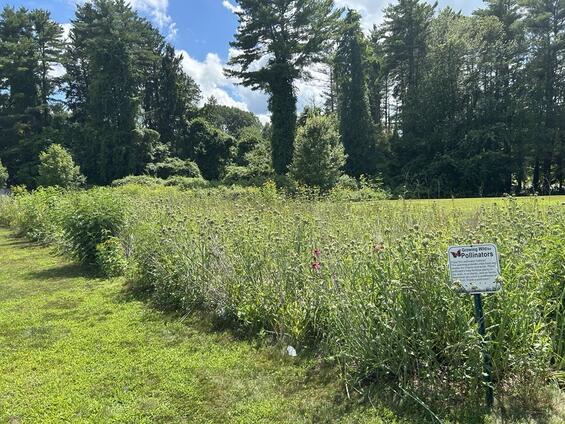
A wildflower meadow created through tilling and seeding at the Quabbin Reservoir Visitor Center. Photo credit: DCR
Managed Meadows
Managed meadows are those that are more intentionally maintained to support native habitats and the species that rely on them. This may include seeding native plants, active removal of invasive plants, prescribed burns, and other techniques to restore habitat. While these management practices may be more resource-intensive than low-mow zones, they help ensure the habitat is ideal for native plants, birds, insects, and other wildlife.
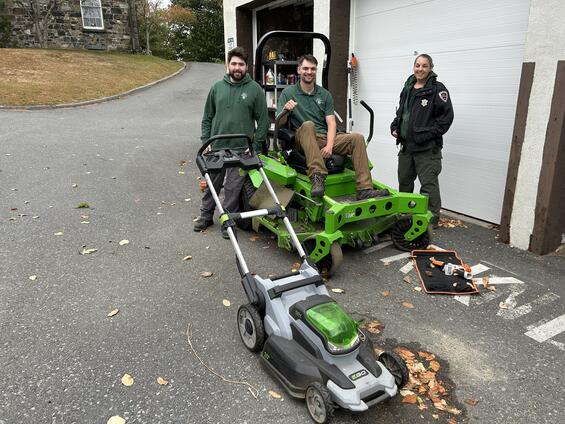
DCR staff at Middlesex Fells Reservation with electric ride-on mower, push mower, and chainsaw
Landscaping Equipment Electrification
While emissions from landscaping equipment make up a small portion of DCR's emissions, transitioning to electric landscaping equipment is an important step towards achieving net zero. Park operations staff across the state are transitioning to electric handheld equipment, push- and ride-on lawnmowers, and off-road utility vehicles.
See videos of electric landscaping equipment in action:
Solar PV Deployment
DCR is deploying solar photovoltaic (PV) systems where practicable to reduce grid electricity consumption. These efforts don't necessarily reduce DCR's fossil fuel use, but they do support the Commonwealth's broader goals to green the grid.
Key efforts and strategies include:
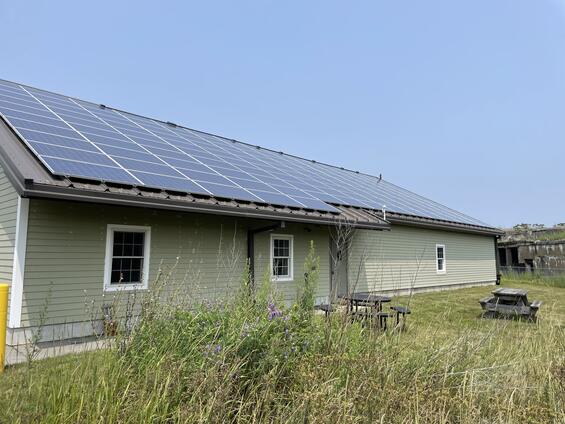
Solar rooftop at George's Island maintenance facility. Photo credit: DCR
Solar PV Arrays
DCR is working to strategically deploy PV arrays on large and small rooftops where cost-effective, especially where electricity consumption is high or grid electricity is not available.
So far, over 1 MW of solar PV has been deployed across 18 DCR sites. Collectively, these systems generate about 1,100,000 kWh per year - equivalent to the electricity usage of about 160 Massachusetts homes.
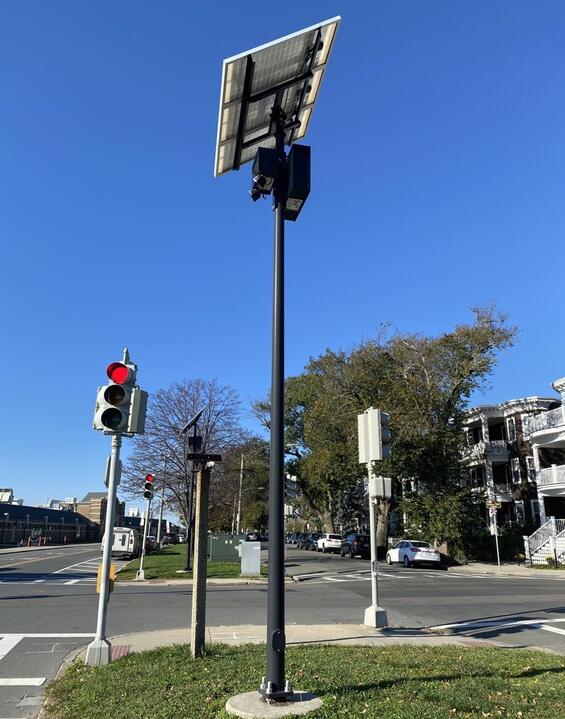
Solar-powered streetlight at William J Day Blvd, Boston. Photo credit: DCR
Solar Lighting
DCR operates hundreds of streetlights across the parkways, parking lots, and walkways it maintains. As a whole, lighting makes up the largest proportion of electricity consumption in the agency's portfolio. Solar-powered lights with integrated battery systems are allowing DCR to reduce its grid electricity consumption and improve lighting conditions where electrical infrastructure may be limited.
DCR has installed 60 solar-powered light poles as of FY25.