

Key Findings and Recommendations
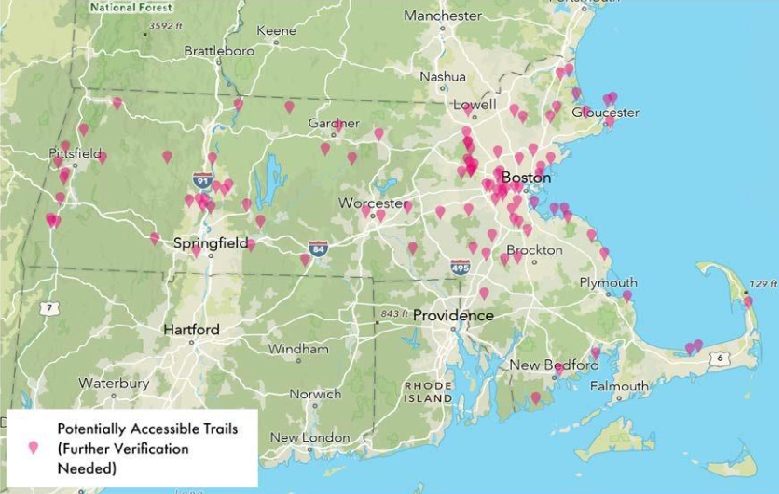
Massachusetts has a significant and growing gap between the demand for accessible outdoor recreation and the current supply of accessible trails. While approximately 26% of adults live with a disability—and up to 49% of residents would benefit from accessible trails—less than 0.5% of trails statewide are accessible.
The Trails for All initiative establishes a coordinated, statewide strategy to expand and sustain an accessible trail network that is equitable, high-quality, and integrated into existing planning, funding, and management systems.
Our Vision
- Serves residents of all abilities
- Provides a range of meaningful outdoor experiences
- Is equitably distributed across communities
- Is supported by consistent standards, reliable information, and sustained funding
Priority Actions (Next 2–5 Years)
Achieving this vision requires focused action in six priority areas:
- Establish leadership and coordinated planning
- Create a state-level Advisory Council to guide implementation
- Conduct statewide and regional gap analysis to target investments
- Identify and advance keystone trail projects that deliver outcomes
- Build a durable funding and delivery system
- Establish a dedicated, flexible funding source for accessible trails
- Prioritize accessible trails within existing grant programs
- Ensure state agency capacity and staffing to plan, deliver, and maintain projects
- Remove regulatory and implementation barriers
- Streamline contracting, permitting and regulatory processes while maintaining environmental protections
- Standardize design and user experience
- Adopt statewide accessibility standards for trail design and construction
- Build a statewide information and accountability system
- Implement a trail accessibility rating system for consistent public information
- Establish a statewide data standard and inventory to support decision-making
- Ensure long-term sustainability
- Enable ongoing maintenance funding within state and local programs
Why this Matters
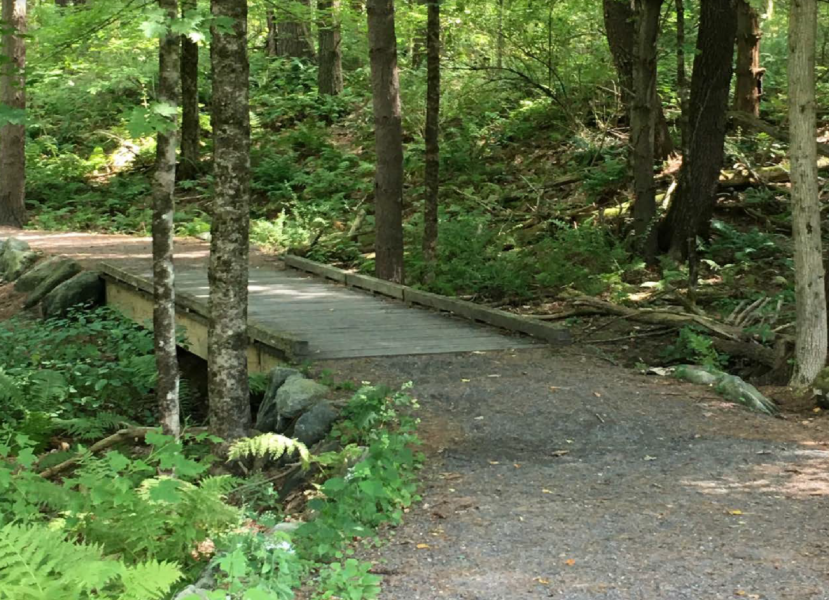
Accessible trails:
- Expand access to nature
- Improve health outcomes
- Support local economies
- Strengthen environmental stewardship
Our Call to Action
Accessible trails are not a niche amenity—they are essential public infrastructure that supports health, equity, and economic vitality across the Commonwealth.
Addressing this gap will require leadership at every level—State leaders, Public Agencies and Municipalities, Land Trusts, Nonprofit Providers, and Private Partners are all required.
The next step is not further study—it is implementation.
About The Report
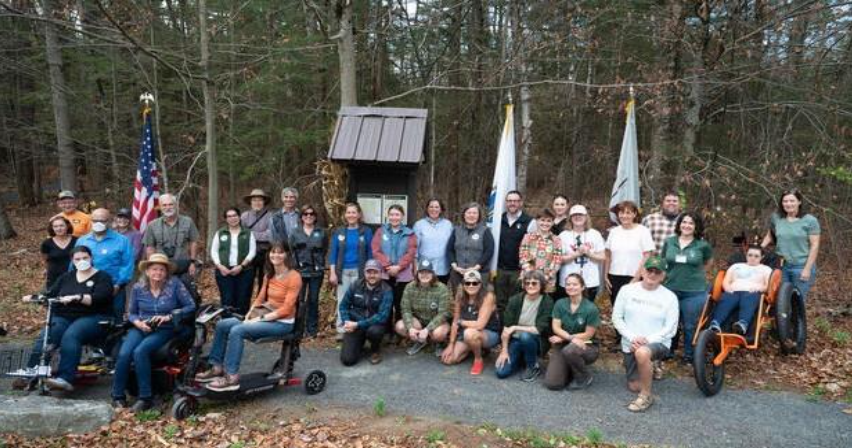
The Trails for All report reflects a year-long collaboration led by the Massachusetts Office of Outdoor Recreation in partnership with a 24-member Trail Access Working Group.
The Working Group included:
- State agencies, municipalities, and regional planners
- Trail organizations and land managers
- Advocates and nonprofit partners
- Individuals with lived experience of disability (approximately one-third of members)
Through site visits, public forums, and technical analysis, the group identified key barriers and developed actionable recommendations to expand accessible trails across the Commonwealth.
This work is grounded in the principle that accessible trails must be designed with and by the people who use them.
Explore the Full Report
Explore section by section overviews: